Shape identification Addition Worksheets for 9-Year-Olds
6 filtered results
-
From - To
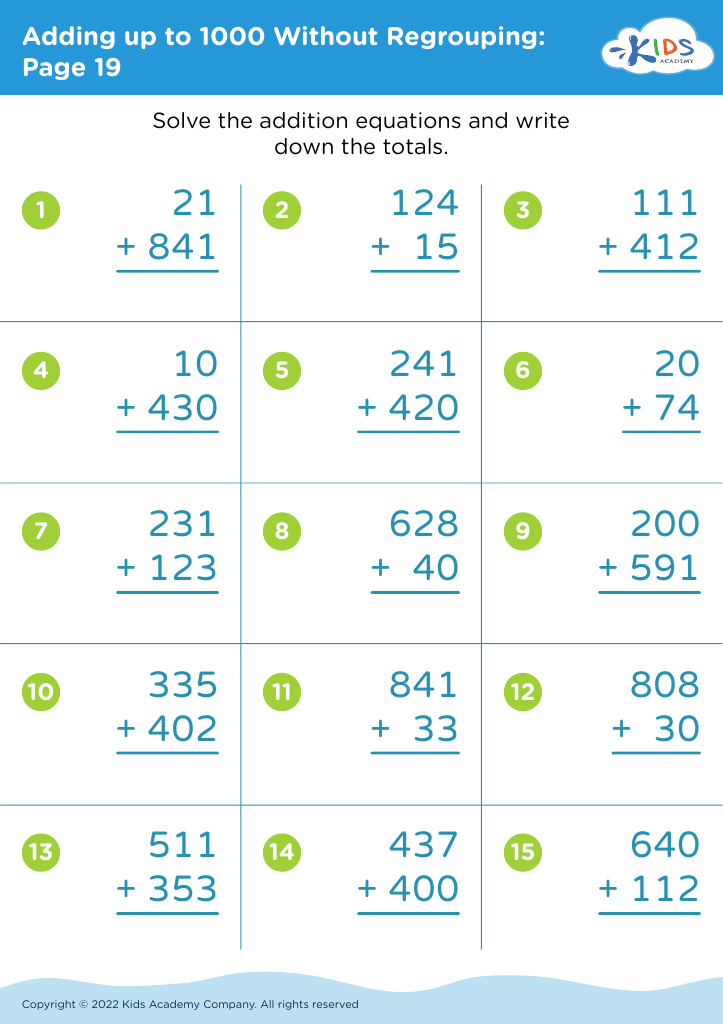
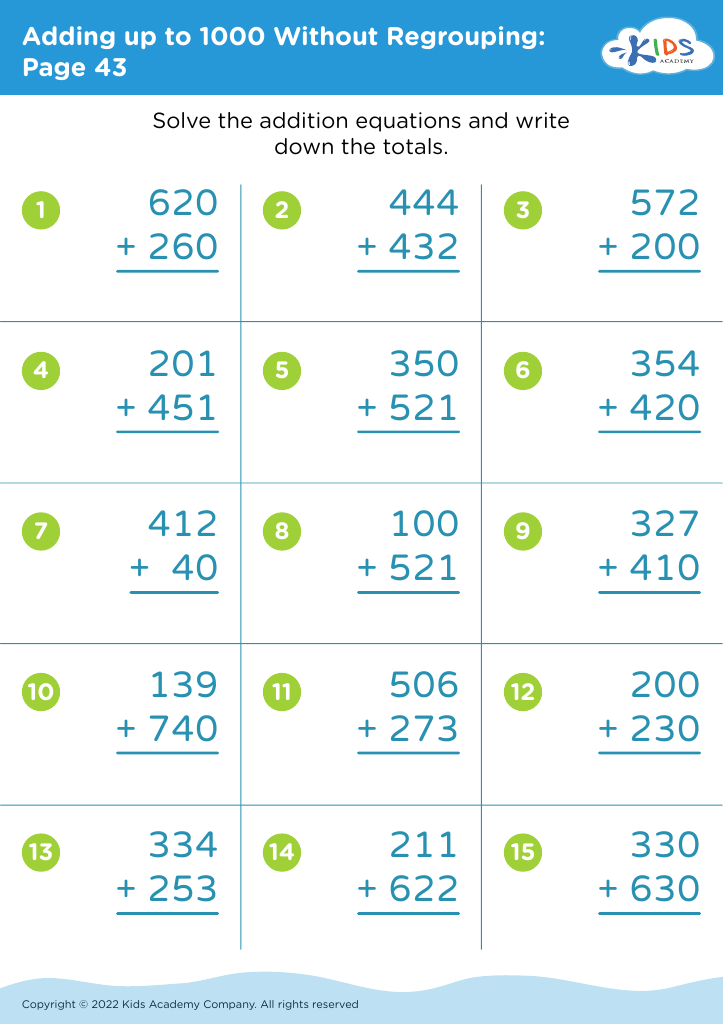
Transform math lessons into exciting experiences with our "Shape Identification Addition Worksheets for 9-Year-Olds" from Kids Academy! This engaging series combines fundamental addition problems with shape identification exercises, sparking both arithmetic and geometric reasoning. Tailored for 9-year-olds, these worksheets help students enhance their calculation, attention to detail, and visual-spatial skills through interactive activities. With colorful designs and real-world applications, kids will enjoy tackling these fun challenges, reinforcing their love of learning. Perfect for at-home practice or classroom use, our worksheets provide the ideal mix of education and entertainment! Explore and download today to start the adventure.








Shape identification and basic addition are fundamental skills that are crucial for the cognitive development of 9-year-olds. Parents and teachers should care about these skills because they lay the foundation for future learning in various subjects.
Understanding shapes is not only a key component of geometry but also helps children improve their spatial reasoning, which is essential for problem-solving in everyday life and later academic pursuits such as science, technology, engineering, and mathematics (STEM). Recognizing and differentiating shapes enhances visual perception and hand-eye coordination, skills vital for tasks ranging from reading and writing to participating in sports and arts.
Addition, on the other hand, is a core arithmetic skill that is the building block for all higher-level math concepts. Proficiency in addition ensures that children can tackle more complex procedures like subtraction, multiplication, and division with ease. It also promotes logical thinking and improves the ability to work with numbers, making everyday tasks such as counting money or simple budgeting easier to handle.
Combining shape identification with addition, such as counting the sides of shapes or adding together the values of different shapes, offers an integrated approach to learning. This enhances both subjects and ensures that children develop a well-rounded mathematical foundation, setting them up for success in the classroom and beyond.








