Understanding addition Addition Worksheets for 9-Year-Olds
3 filtered results
-
From - To
Boost your 9-year-old’s math skills with our comprehensive "Understanding Addition" worksheets. Specially designed for young learners, these engaging activities reinforce foundational addition concepts, ensuring a solid grasp of basic arithmetic. Through fun and interactive exercises, kids will explore techniques like carrying over, adding multiple digits, and solving word problems. Our printable resources make learning enjoyable while progressively challenging students to build confidence in their abilities. Perfect for both classroom and home use, these worksheets foster critical thinking and problem-solving skills, setting the stage for future mathematical success. Empower your child with a strong addition framework today!
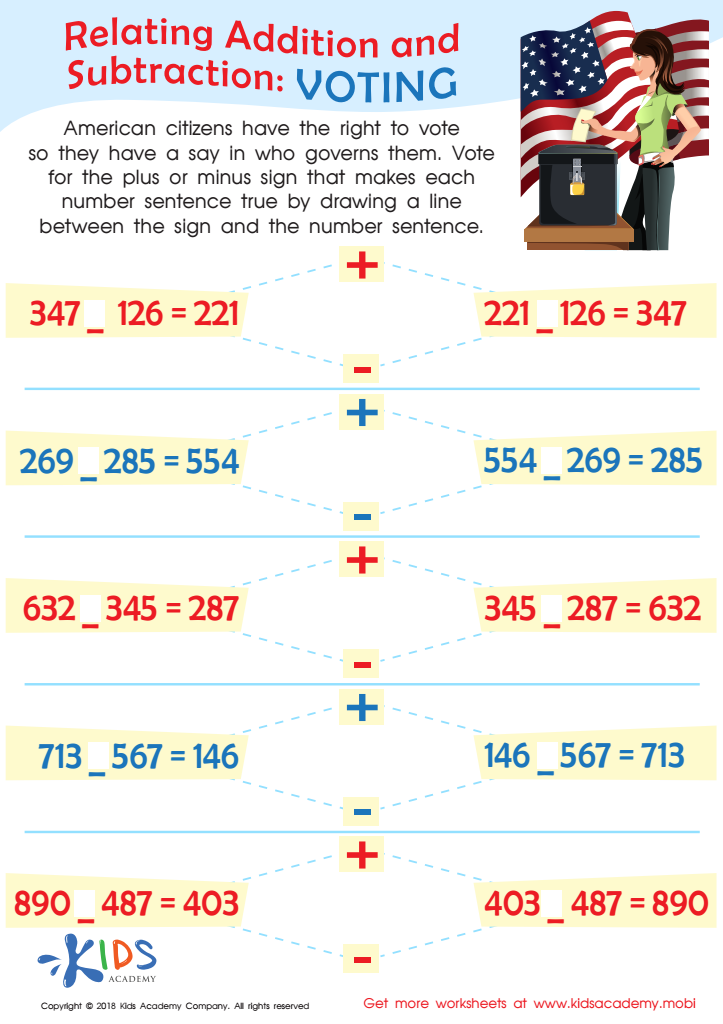
Voting Worksheet
 Assign to My Students
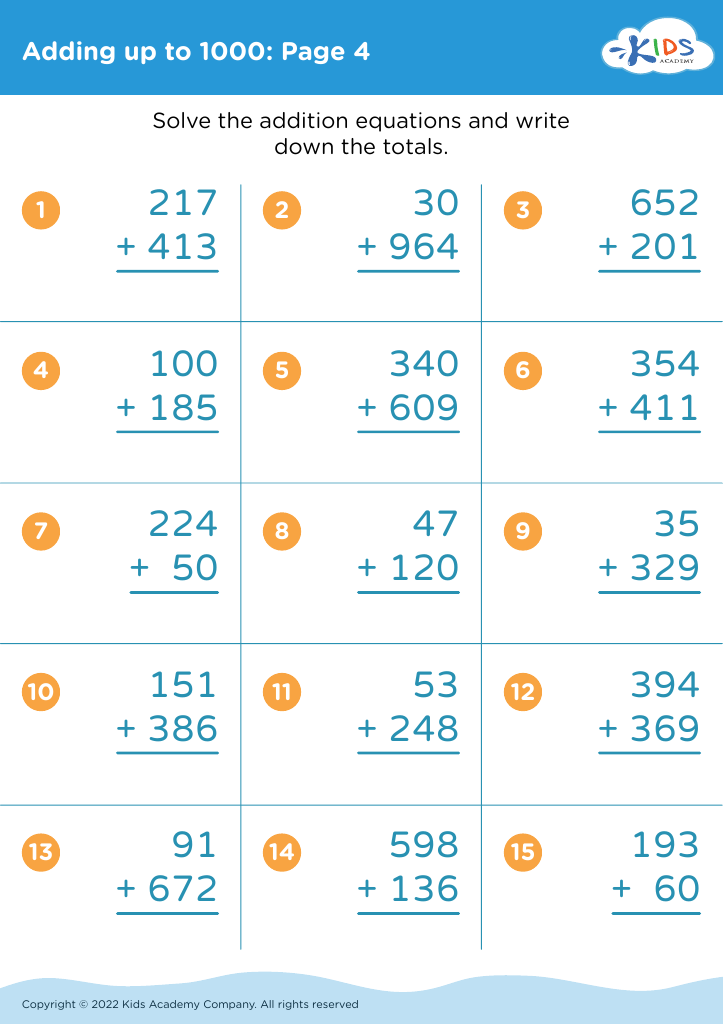
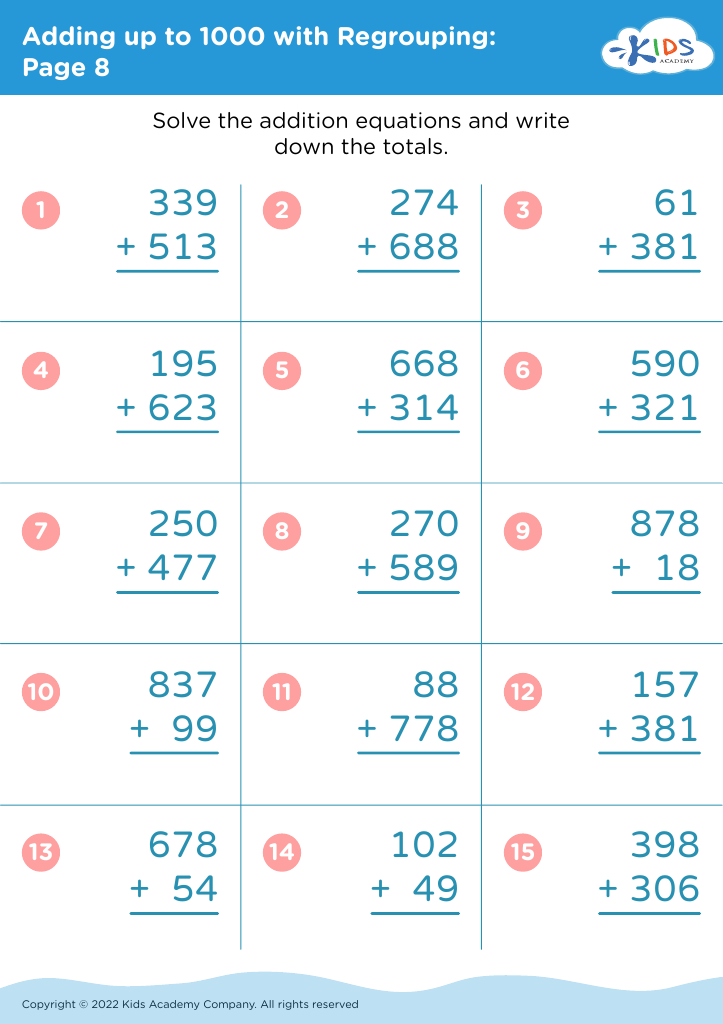







.jpg)
Parents and teachers should prioritize understanding addition for 9-year-olds because it is a foundational mathematical skill that supports cognitive and academic growth. At this age, children are transitioning from simple counting to more complex mathematical operations, and mastery of addition provides the essential building blocks for advanced arithmetic topics like subtraction, multiplication, and division.
Understanding addition enhances logical thinking and problem-solving skills. By grasping the concept, children develop their ability to strategize and solve real-world problems, fostering critical thinking that extends beyond the classroom. Fluency in addition also boosts confidence in mathematics, which is crucial as attitudes toward learning are formed during early years.
Additionally, addition is prevalent in everyday activities like shopping, measuring ingredients in recipes, and planning schedules. When children comprehend addition, they can navigate these tasks effectively, promoting independence and practical life skills.
For teachers, ensuring that students understand addition can lead to better classroom performance overall. Struggling with basic math can hinder progress in other academic subjects that incorporate mathematical concepts. For parents, a solid understanding aids in supporting homework and educational activities at home. Therefore, fostering strong addition skills at this critical developmental stage sets the groundwork for future academic success and everyday life competency.








