Understanding division Addition Worksheets for 9-Year-Olds
3 filtered results
-
From - To
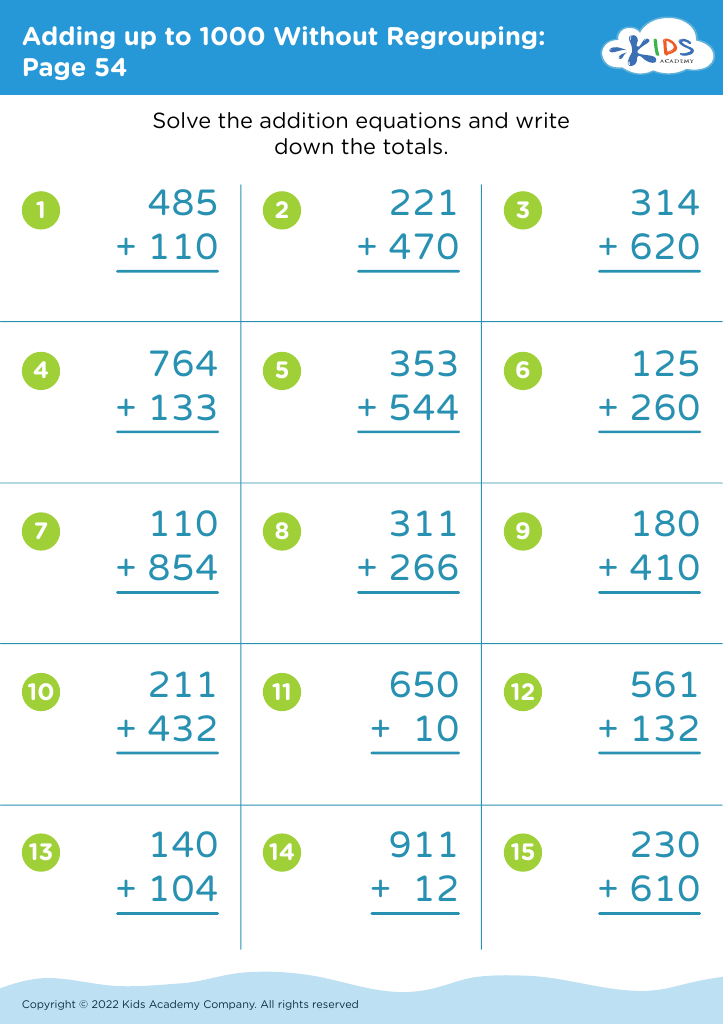
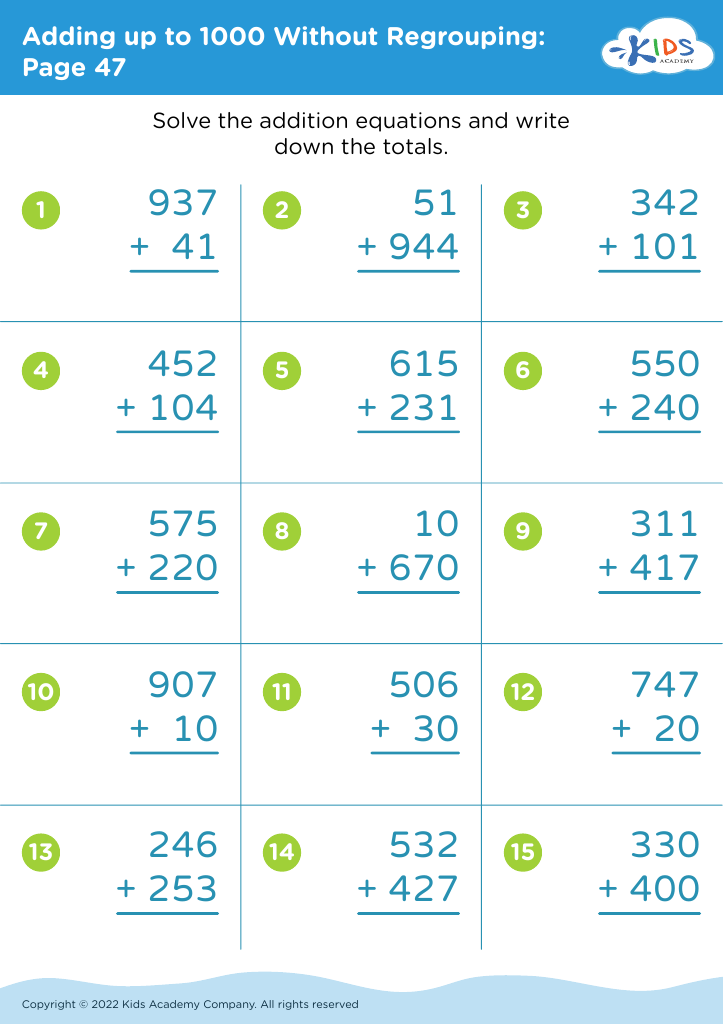
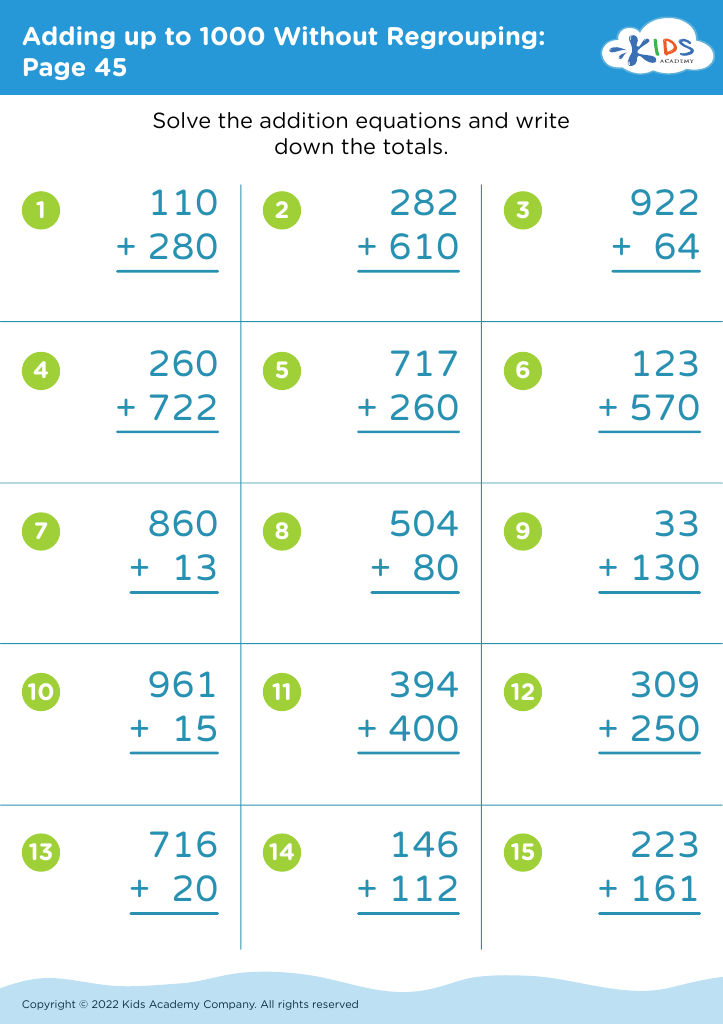
Discover our "Understanding Division Addition Worksheets" designed specifically for 9-year-olds! These engaging worksheets help young learners grasp the relationship between division and addition, reinforcing essential math skills through fun and interactive problems. Each activity encourages critical thinking and promotes mathematical fluency, enabling students to make connections between various concepts. With colorful visuals and diverse exercises, these worksheets cater to different learning styles, ensuring that every child can succeed in mastering division. Ideal for classroom use or at-home practice, our resources pave the way for a solid math foundation, making learning both enjoyable and effective. Transform your child's understanding of division today!



.jpg)




Understanding division and addition at the age of 9 is crucial because these skills form the foundation for more advanced mathematical concepts. During this developmental stage, children are transitioning from basic arithmetic to problem-solving and critical thinking. Mastery of addition helps students grasp the underlying principles of division, as they start seeing the relationship between these operations—particularly how division is essentially determining how many times a number can be added together.
Moreover, strong skills in addition and division contribute to confidence in mathematics, reducing anxiety around problem-solving and fortifying overall academic performance. These arithmetic skills are not only important in the classroom but are also essential for real-world applications, such as budgeting, sharing resources, and understanding time management.
When parents and teachers prioritize understanding these concepts, they provide kids with the tools necessary to approach more complex math topics in future grades, guiding them toward mathematical fluency. Engaging students with hands-on activities, real-life scenarios, and collaborative problem-solving can make learning both effective and enjoyable. Ultimately, fostering a strong mathematical foundation in young learners is key to their academic success and lifelong learning.








