Visual Learning Addition Worksheets for 9-Year-Olds
3 filtered results
-
From - To
Discover our engaging Visual Learning Addition Worksheets designed specifically for 9-year-olds! These worksheets incorporate vibrant visuals and interactive exercises that make learning addition both fun and effective. Ideal for reinforcing numerical concepts, our resources help students organize information visually, enhancing their understanding and retention. Your child will explore different addition strategies, solve problems using images, and develop critical thinking skills through a variety of challenges. Perfect for home or classroom use, our visually oriented worksheets support diverse learning styles and ensure that each child grasps the essentials of addition with confidence. Start enriching your child's math journey today!
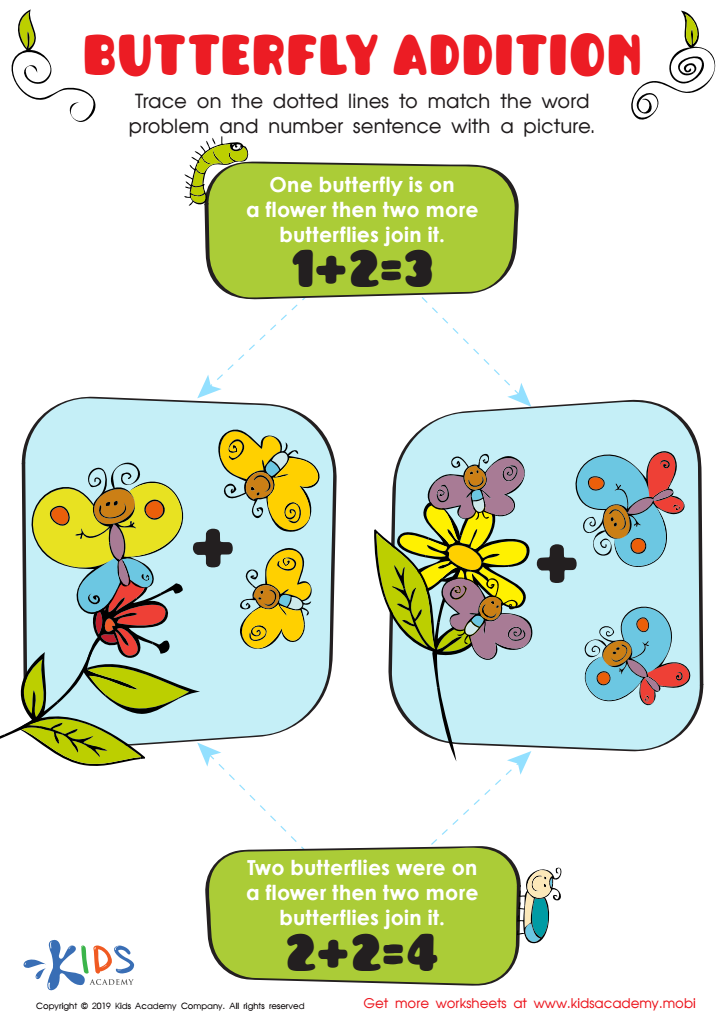
Butterfly Addition Worksheet
 Assign to My Students
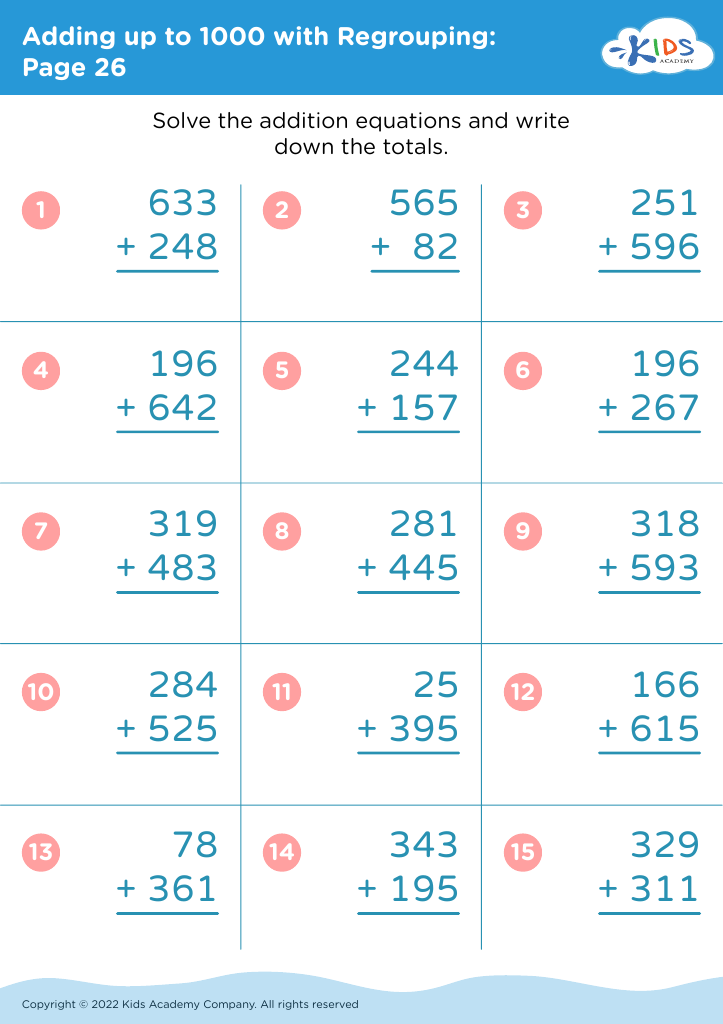
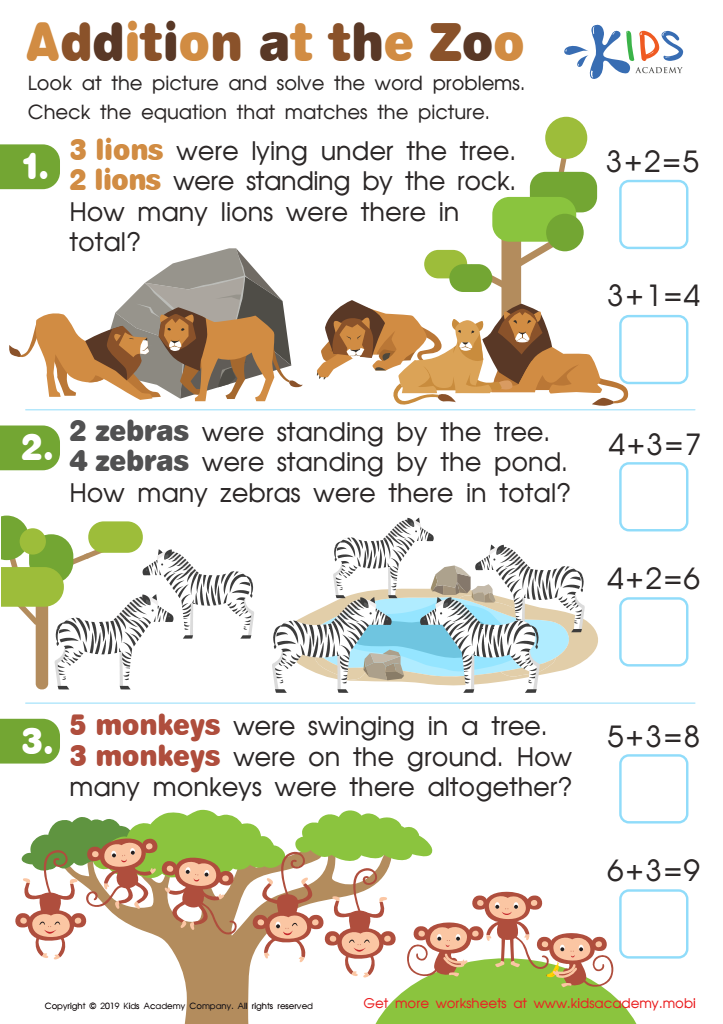
Addition at the Zoo Worksheet








Visual learning is an essential tool for teaching addition to 9-year-olds because it engages multiple senses and caters to various learning styles. At this age, children often benefit from seeing explicit representations of numbers and relationships, which makes abstract concepts more tangible. Visual aids—such as number lines, manipulatives, and visual models—can help students grasp foundational ideas like regrouping and partial sums, reducing anxiety about math while building confidence.
Additionally, visual learning encourages active participation. Children can interact with visual tools, fostering a sense of ownership over their learning. When they visualize numbers, they better understand patterns, number relationships, and problem-solving strategies. As young learners, they are often naturally curious and enjoy engaging with bright visuals that spark their interest.
For parents and teachers, incorporating visual learning strategies can lead to more effective teaching outcomes. It helps identify where a child may struggle, allowing for targeted support. Overall, understanding the importance of visual learning in addition helps educators foster a more inclusive environment, accommodate different learners, and build strong mathematical foundations that will benefit students throughout their academic journeys—ultimately preparing them for more complex problem-solving in later grades.








