Historical Knowledge Arrays Worksheets for 9-Year-Olds
3 filtered results
-
From - To
Discover our Historical Knowledge Arrays Worksheets designed specifically for 9-year-olds! These engaging worksheets blend history lessons with math skills, creating a fun and educational experience for children. Each worksheet introduces young learners to historical events and figures, cleverly integrating arrays to enhance their understanding of multiplication and division. Perfect for classroom or home use, these resources foster critical thinking and problem-solving abilities. Spark your child's curiosity and reinforce their math proficiency while exploring captivating historical themes. Download our Historical Knowledge Arrays Worksheets today and turn learning into an exciting adventure!
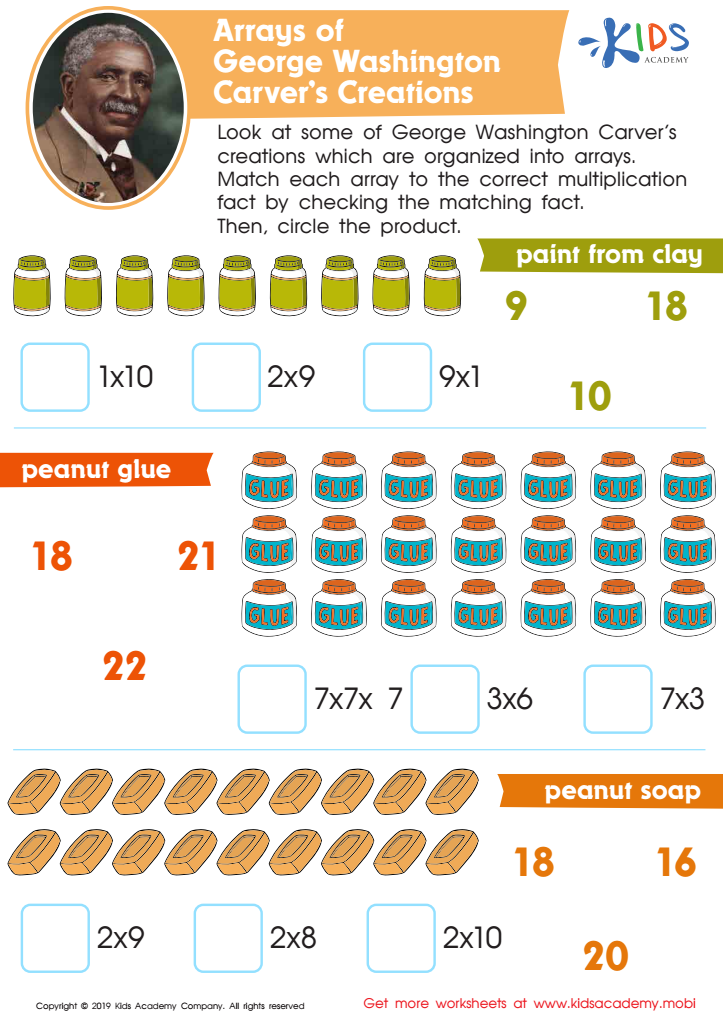
Arrays of George Washington Carver’s Creations Worksheet
 Assign to My Students
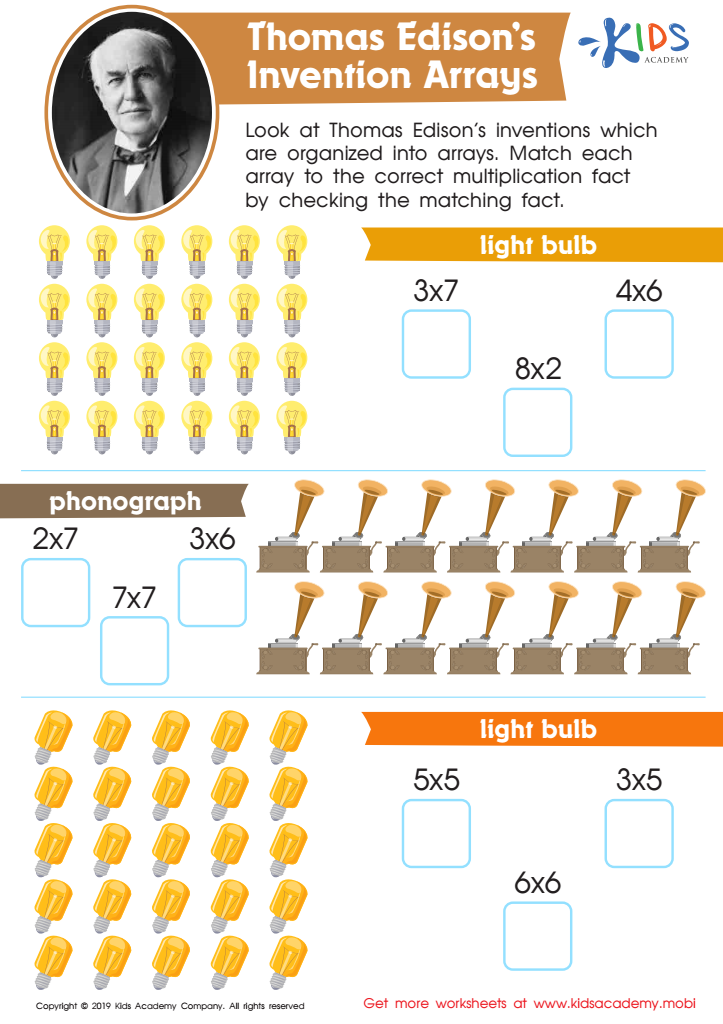
Thomas Edison’s Invention Arrays Worksheet
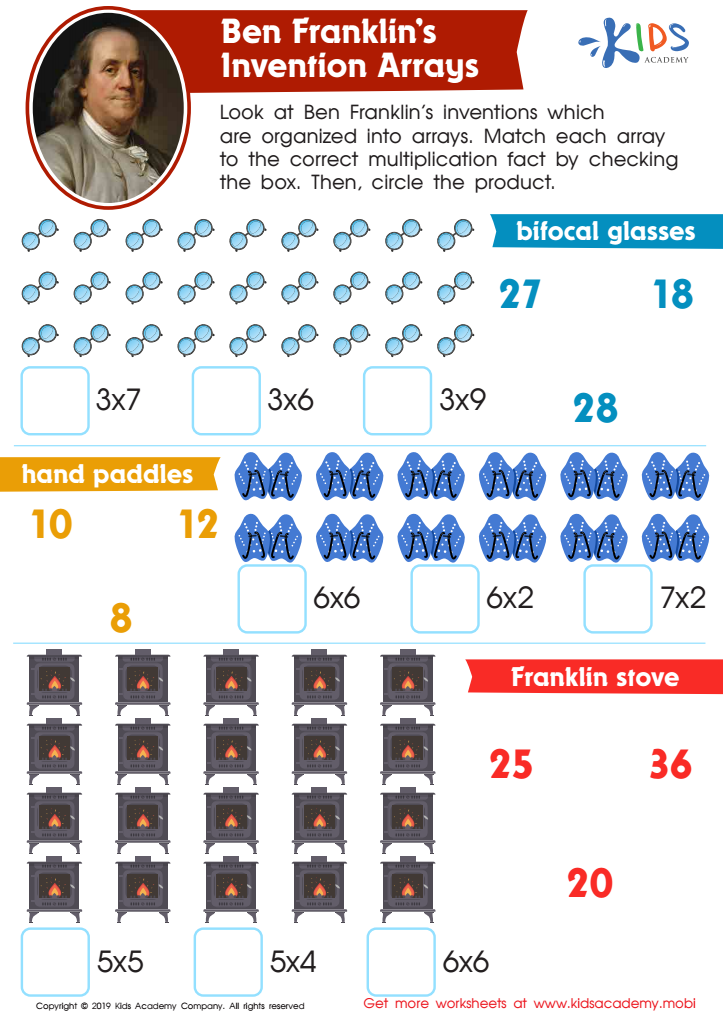
Ben Franklin’s Invention Arrays Worksheet








Historical Knowledge Arrays (HKAs) are vital educational tools that consolidate and distribute historical facts in an organized manner suitable for young learners. For teachers and parents, fostering an awareness of these devices can provide significant educational benefits to 9-year-olds.
Firstly, HKAs can enhance comprehension and retention by transforming complex historical information into manageable chunks. At this critical age, children's cognitive abilities are expanding, and organized arrays help them to contextualize and remember historical events more effectively. With succinct timelines, maps, and sorted concepts, NIHAs make history accessible and engaging.
Secondly, nurturing an understanding of history fosters critical thinking skills. Children begin to recognize cause and effect relationships, understand societal changes, and appreciate cultural diversity. These skills are fundamental in developing a well-rounded worldview, critical for their future personal and civic lives.
Furthermore, early introduction to HKAs helps cultivate curiosity and a love of learning. When history is presented as a series of connected, "child-friendly" tales, young scholars are more likely to show genuine interest and enthusiasm.
In essence, by integrating HKAs, parents, and teachers can lay a foundation for lifelong learning while nurturing informed, thoughtful future citizens. Historical knowledge isn't merely about past events but shapes how young minds perceive and engage with the world around them.








