Addition skills Money Worksheets for 9-Year-Olds
3 filtered results
-
From - To
Introduce your 9-year-old to essential math skills with our engaging Addition Skills Money Worksheets! These printable resources are designed to make counting and adding money fun and intuitive. Perfect for strengthening your child's understanding of addition and enhancing their financial literacy, our worksheets feature real-life scenarios and colorful graphics to captivate young learners. Whether they're counting coins or combining sums, these exercises will provide hours of educational enjoyment. Foster mathematical confidence and practical life skills with our expertly crafted worksheets, available now for seamless integration into any learning curriculum. Get ready to watch your child thrive with Kids Academy!
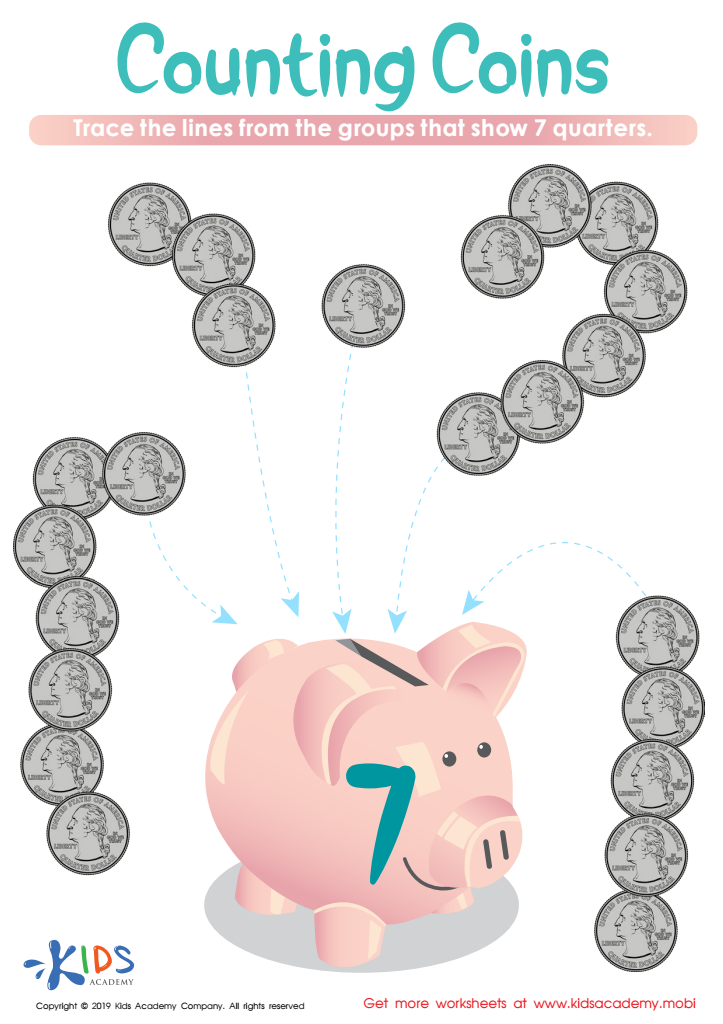
Counting Coins Worksheet
 Assign to My Students
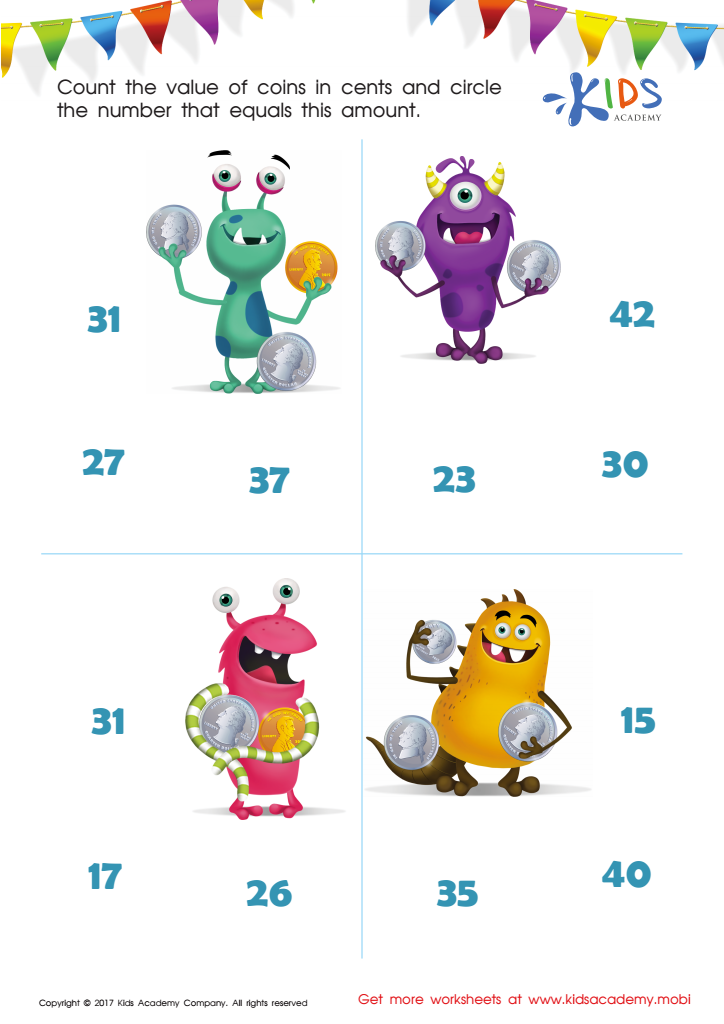
How Many Coins Money Worksheet
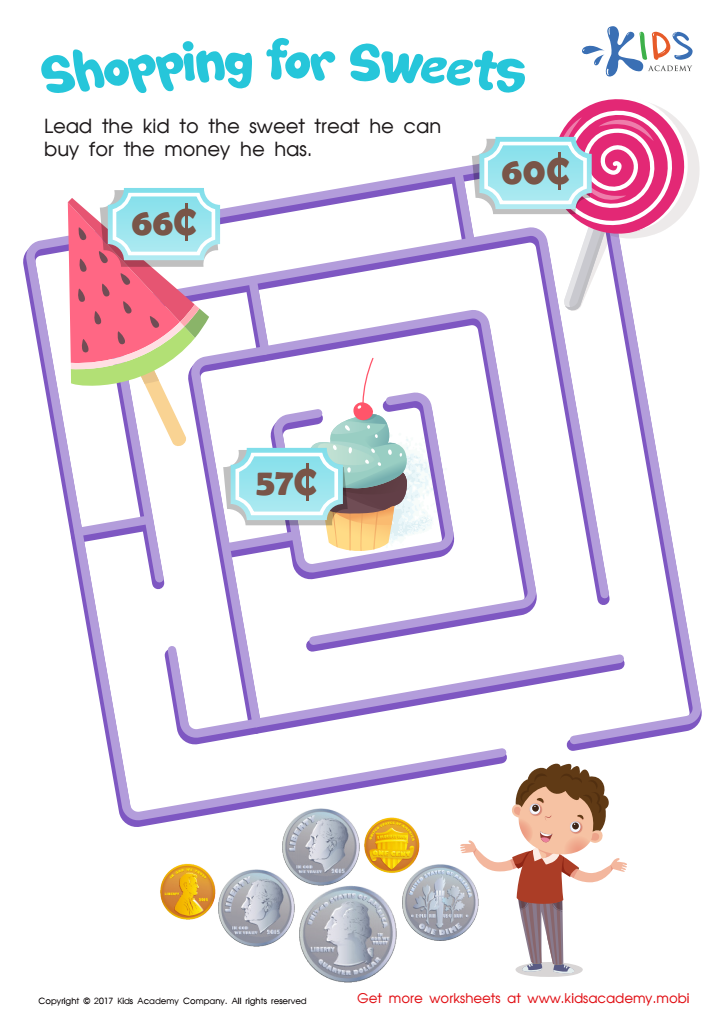
Shopping for Sweets Worksheet








Developing addition skills and understanding money are crucial for 9-year-olds as these foundational concepts lay the groundwork for more advanced math and real-life financial literacy. Here’s why parents and teachers should care:
-
Academic Development: Proficiency in basic addition is critical for success in more advanced math topics such as multiplication, division, and fractions. Solid arithmetic skills boost overall confidence and competence in math.
-
Practical Life Skills: Understanding money and basic addition helps children grasp the concept of budgeting, saving, and making informed purchase decisions. These skills are necessary for managing personal finances responsibly later in life.
-
Problem-Solving: Engaging with addition and monetary concepts enhances problem-solving abilities. When children solve real-world problems, like adding prices or making change, they improve their analytical and critical thinking skills.
-
Numeracy Confidence: Regular practice with addition and money increases numeracy confidence. Children who struggle with arithmetic early on may feel anxious about math, impacting their overall academic performance. Early mastery prevents these negative associations.
-
Social and Emotional Learning: Handle money-based scenarios like saving for a toy or comparing prices in a store helps children learn patience, delayed gratification, and responsible decision-making.
Focusing on these skills at a young age ensures that children are not only prepared academically but are also equipped with practical tools to navigate everyday life confidently and responsibly.








