Money recognition Math Worksheets for 9-Year-Olds
6 filtered results
-
From - To
Discover our engaging Money Recognition Math Worksheets designed specifically for 9-year-olds. These worksheets offer exciting activities that help children master the essential skills of identifying and counting money. Each worksheet features vibrant visuals and age-appropriate exercises, making learning a fun experience. Perfect for classroom use or at-home practice, these resources foster financial literacy by challenging kids to recognize different coins and currency, understand values, and solve practical money problems. Equip your child with invaluable money skills that will last a lifetime! Explore our comprehensive collection now and watch your child gain confidence in handling money while enhancing their math abilities.
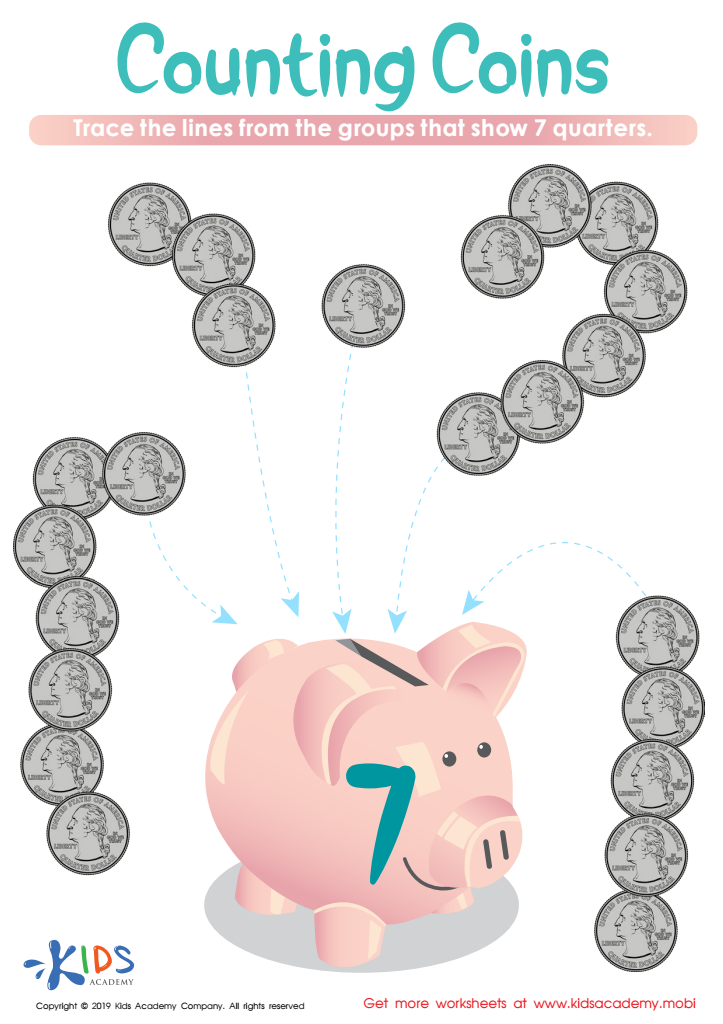
Counting Coins Worksheet
 Assign to My Students
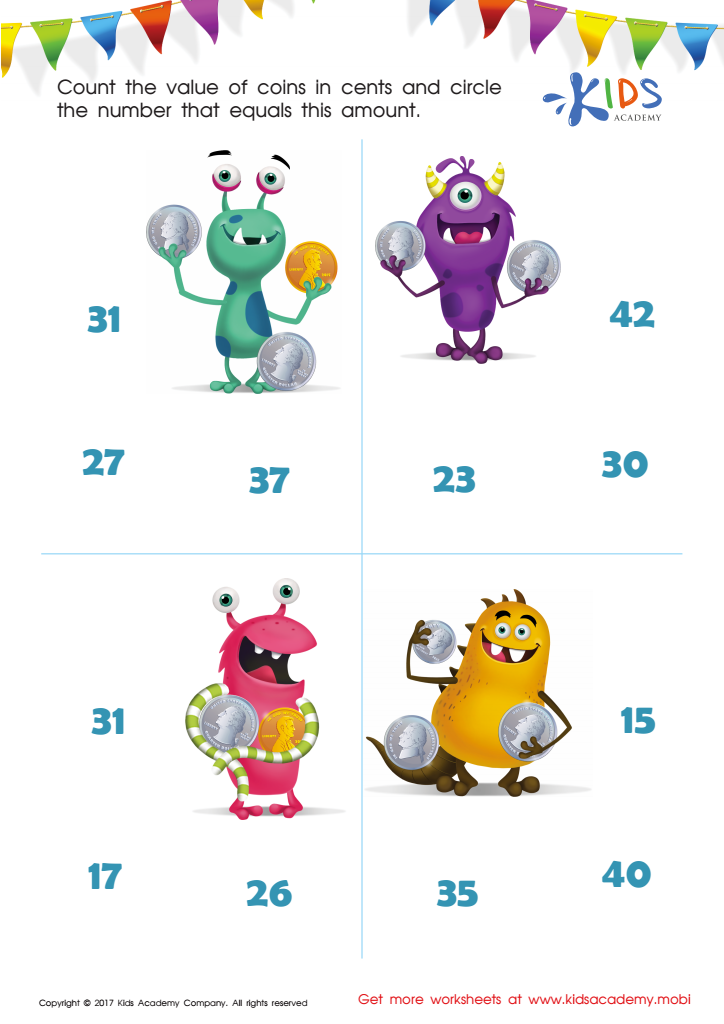
How Many Coins Money Worksheet
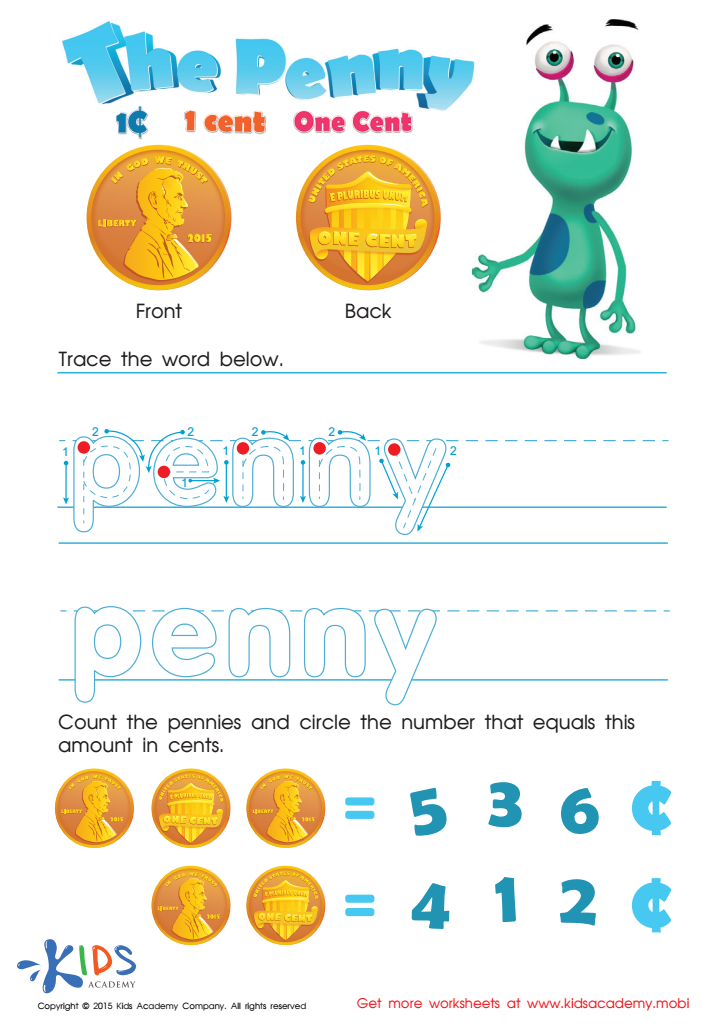
One Cent or the Penny Money Worksheet
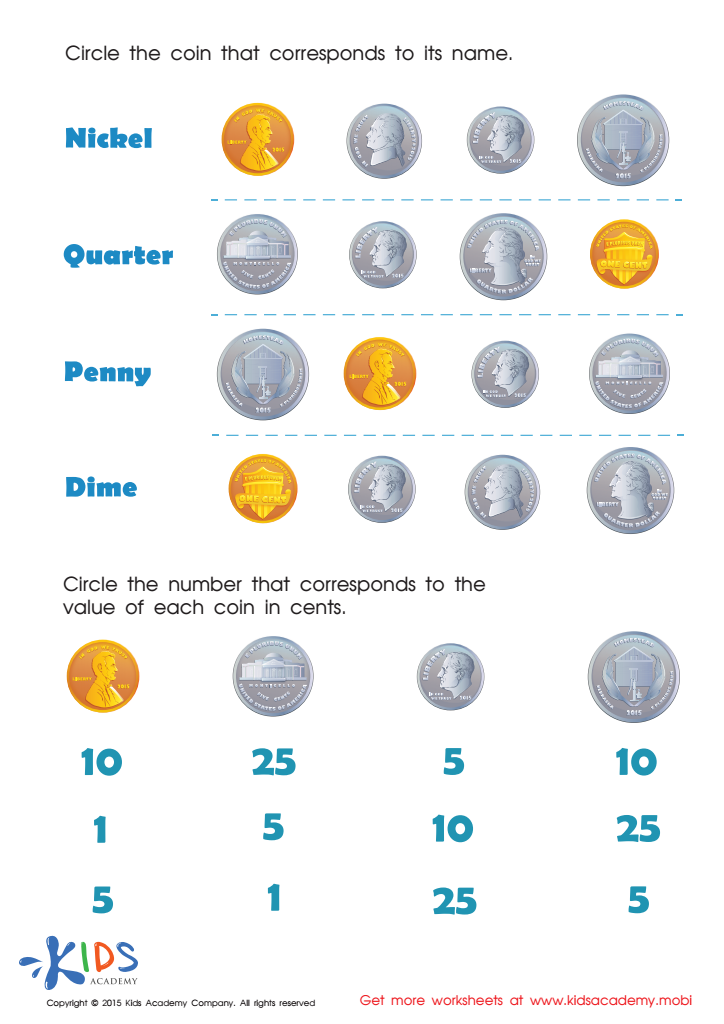
Coin Names and Values Money Worksheet
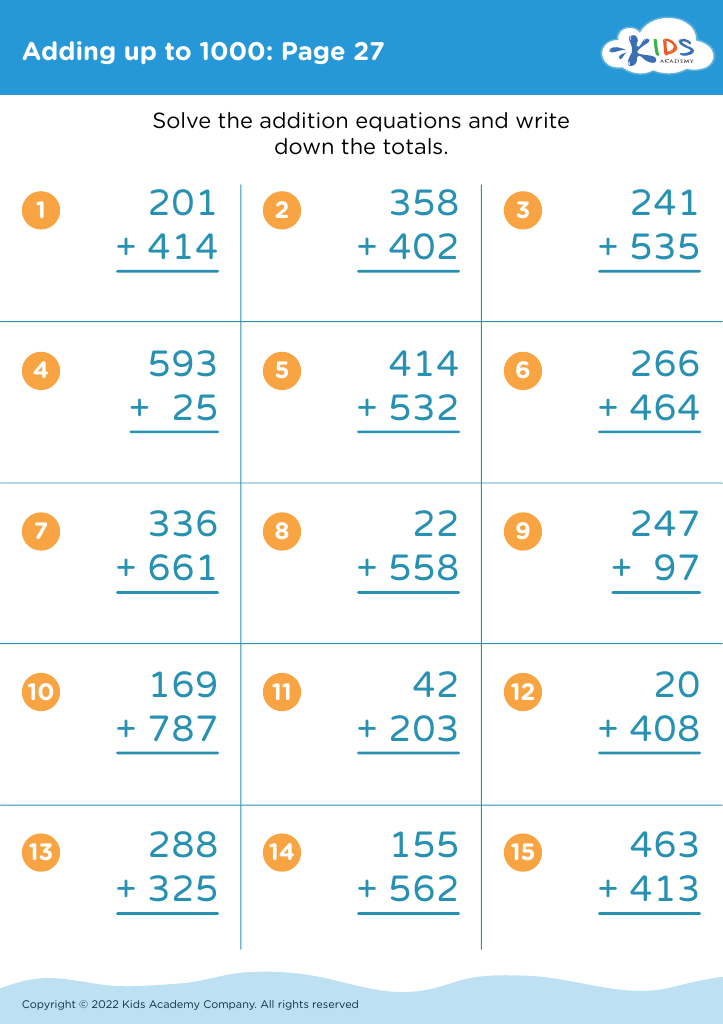
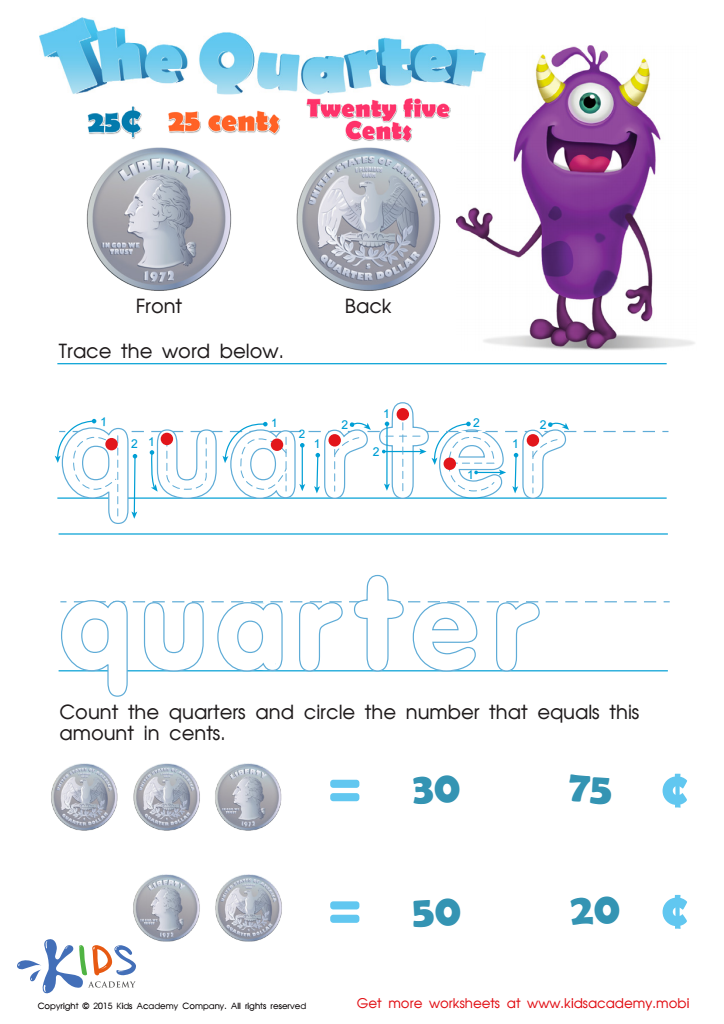
Twenty Five Cents or the Quarter Money Worksheet



.jpg)




Money recognition is a crucial skill for 9-year-olds that extends far beyond basic arithmetic. At this developmental stage, children begin to apply their mathematical understanding in real-world situations, making money recognition an important focus of learning. Parents and teachers should care about this because it equips children with essential life skills. Recognizing denominations, counting money, and making change fosters financial literacy and responsibility.
Moreover, mastering money concepts can enhance cognitive skills such as problem-solving and critical thinking. It bridges the gap between abstract math and tangible situations. For instance, when children engage in role-playing activities like a store setup, they practice addition and subtraction while learning about budgeting and saving.
Understanding money also reflects the greater lesson of managing resources wisely. For parents and teachers, reinforcing this knowledge empowers children to become confident decision-makers. Engaging children in discussions about spending, saving, and prioritizing needs versus wants fosters sound financial habits early on.
As children increase their autonomy, money recognition helps them navigate everyday situations responsibly. Therefore, investing time in this skill now lays the foundation for thoughtful consumers and financially responsible adults in the future.








