
Practical application Math Worksheets for 9-Year-Olds
3 filtered results
Difficulty Level
Grade
Age
-
From - To
Subject
Activity
Standards
Empower your 9-year-old's learning journey with our Practical Application Math Worksheets. These thoughtfully designed resources on Kids Academy enhance real-life math skills, helping children understand practical applications of mathematical concepts. From budgeting activities to measurement exercises, each worksheet makes math relevant and exciting. Tailored to align with your child's curriculum, these printables cover various topics like fractions, time management, and problem-solving, making complex concepts easily digestible. Start integrating math into daily life, boosting both competence and confidence in your young learner. Explore and download our printable worksheets to transform math practice into engaging, everyday learning experiences.
Favorites
With answer key
Interactive
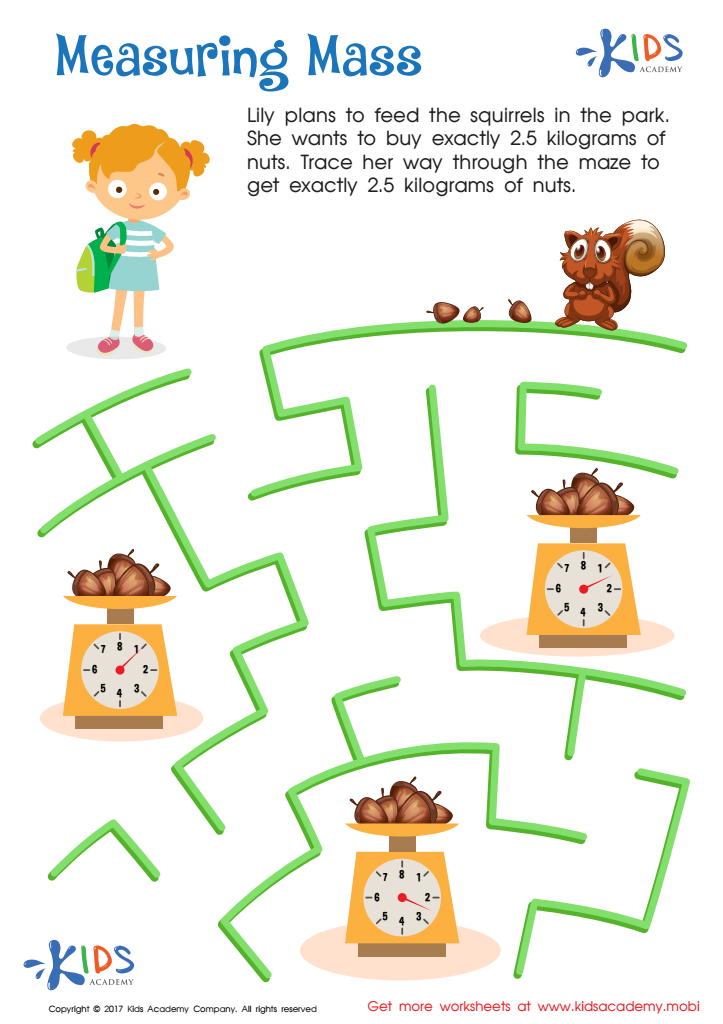
Measuring Mass Worksheet
Lily needs your child's help to find the right number of nuts to feed the squirrels. Ideal for 3rd grade!
 Assign to My Students
Measuring Mass Worksheet
Worksheet
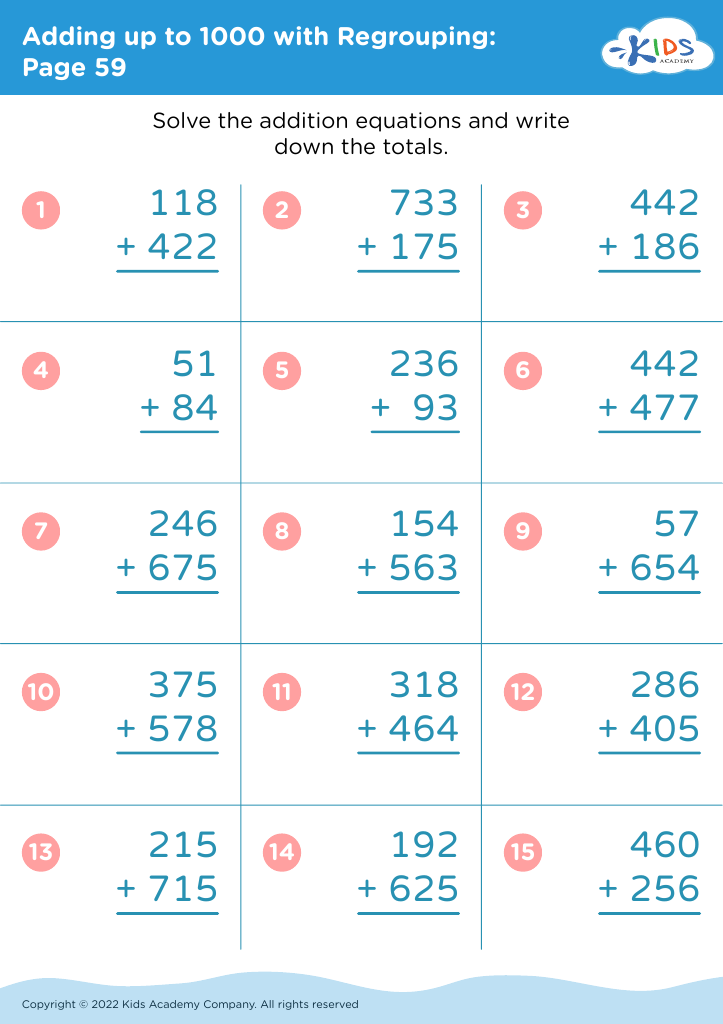
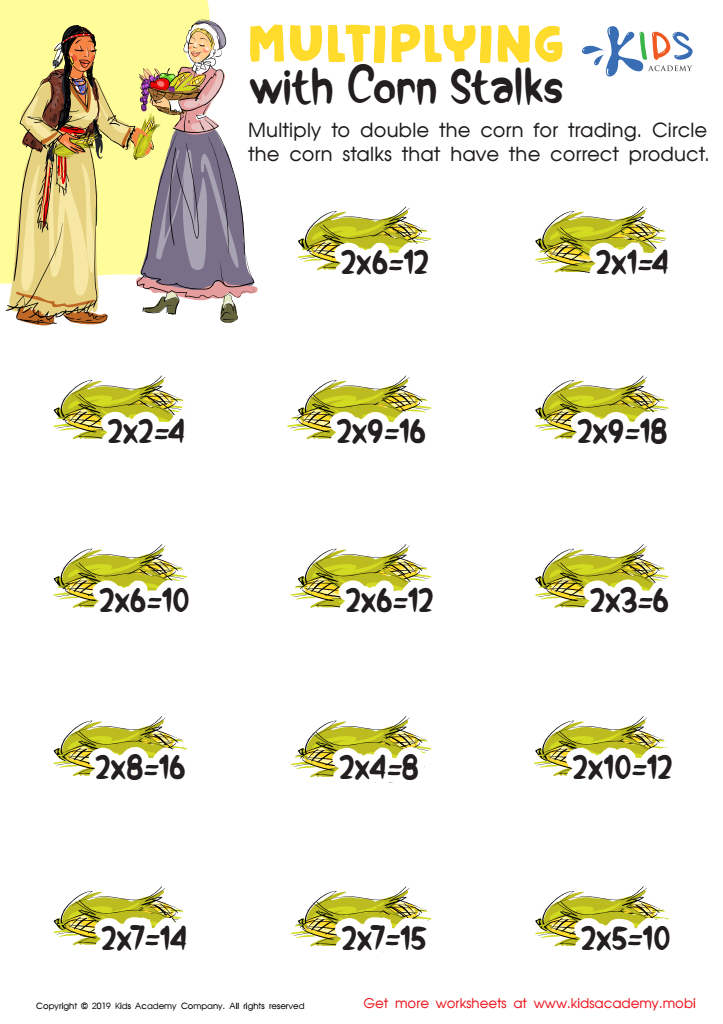
Multiplying With Corn Stalks Worksheet
Farming is profitable; corn is a versatile crop used for many things. Ask your kids what products come from corn! This worksheet is a fun way to teach multiplying with corn stalks. Farmers must multiply the stalks to double their number for trading and increase their profits. Challenge your kids to circle the correct products.
Multiplying With Corn Stalks Worksheet
Worksheet
Join Kids Academy for Free
Who is primarily going to use this learning content?


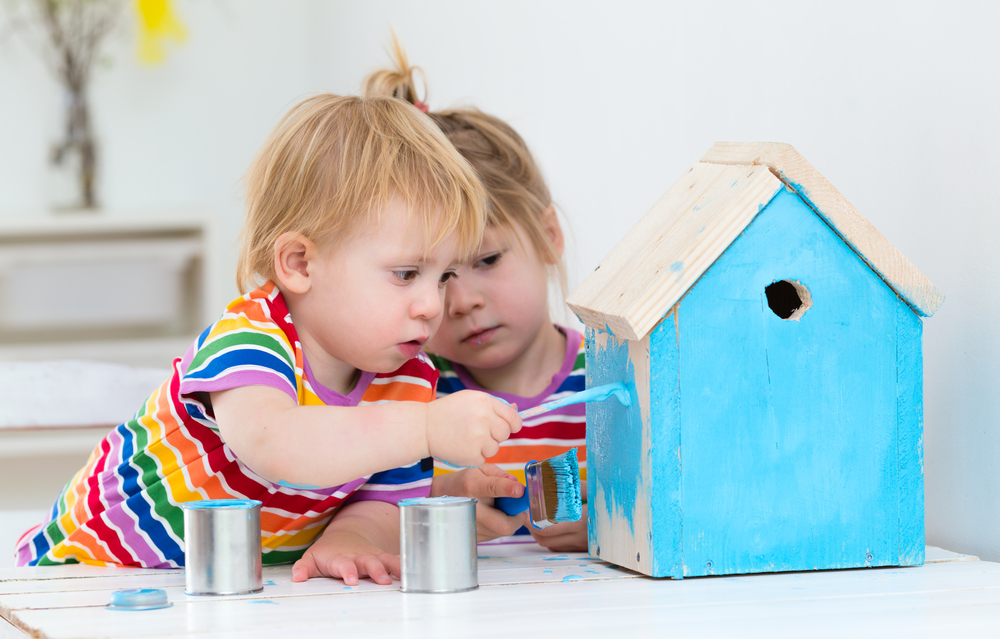



Parents and teachers should prioritize practical application of math for 9-year-olds because it fosters a deep, intuitive understanding of mathematical concepts. At this age, children are naturally curious and eager to explore real-world phenomena, making it an ideal time to integrate math with everyday experiences. When math is taught through practical applications, such as cooking, shopping, or measuring objects, children see the relevance of math in daily life, which enhances their motivation and engagement.
Moreover, practical math activities help develop critical thinking and problem-solving skills. For instance, when children calculate change while shopping or determine the amount of ingredients for a recipe, they practice logical reasoning and strategic thinking. These skills are not just foundational for advanced mathematics but are indispensable in everyday decision-making and tasks.
Additionally, practical math application supports different learning styles, allowing children who struggle with abstract concepts to grasp math more concretely. Hands-on activities cater to kinesthetic and visual learners, facilitating better retention and understanding. Lastly, mastering practical mathematics at a young age builds confidence and promotes a positive attitude towards math, setting the stage for future academic success. Therefore, embracing practical application in math education is crucial for nurturing well-rounded, competent young learners.








