Recognize patterns Math Worksheets for 9-Year-Olds
6 filtered results
-
From - To
Welcome to our "Recognize Patterns Math Worksheets" designed specifically for 9-year-olds! These engaging worksheets aim to enhance critical thinking and problem-solving skills by helping students identify and extend patterns in numbers, shapes, and colors. Our materials are aligned with educational standards, making learning fun and effective. Each worksheet offers a variety of exercises tailored to spark curiosity and confidence in young learners. Perfect for use at home or in the classroom, these resources provide a great way to reinforce mathematical concepts through interactive activities. Start your child’s journey in recognizing patterns today and watch them excel in math!
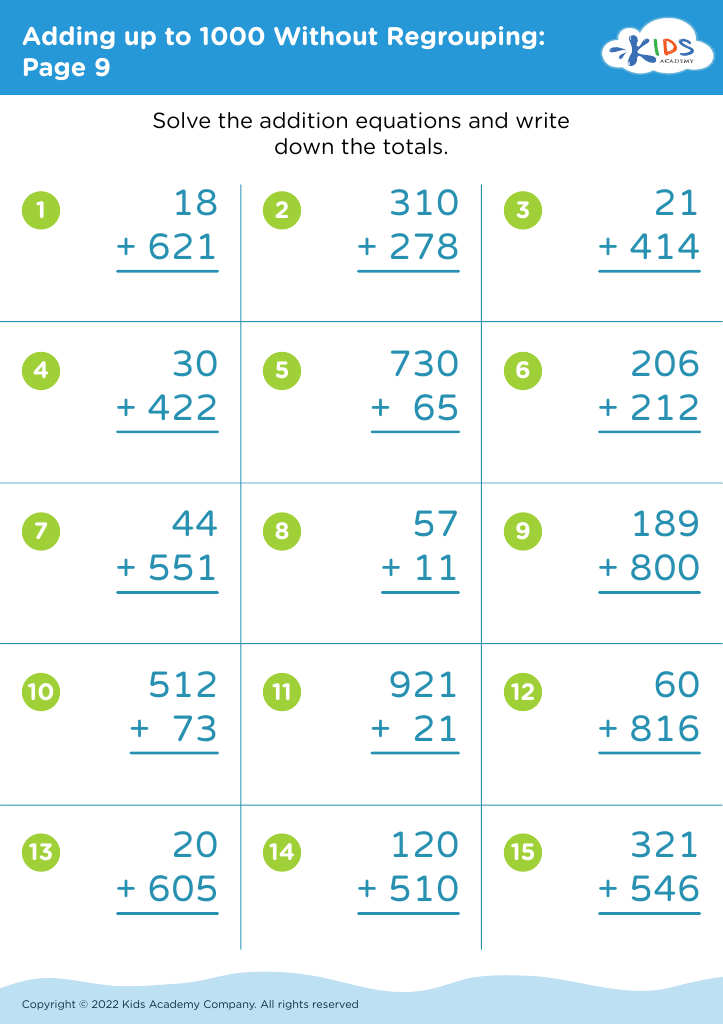
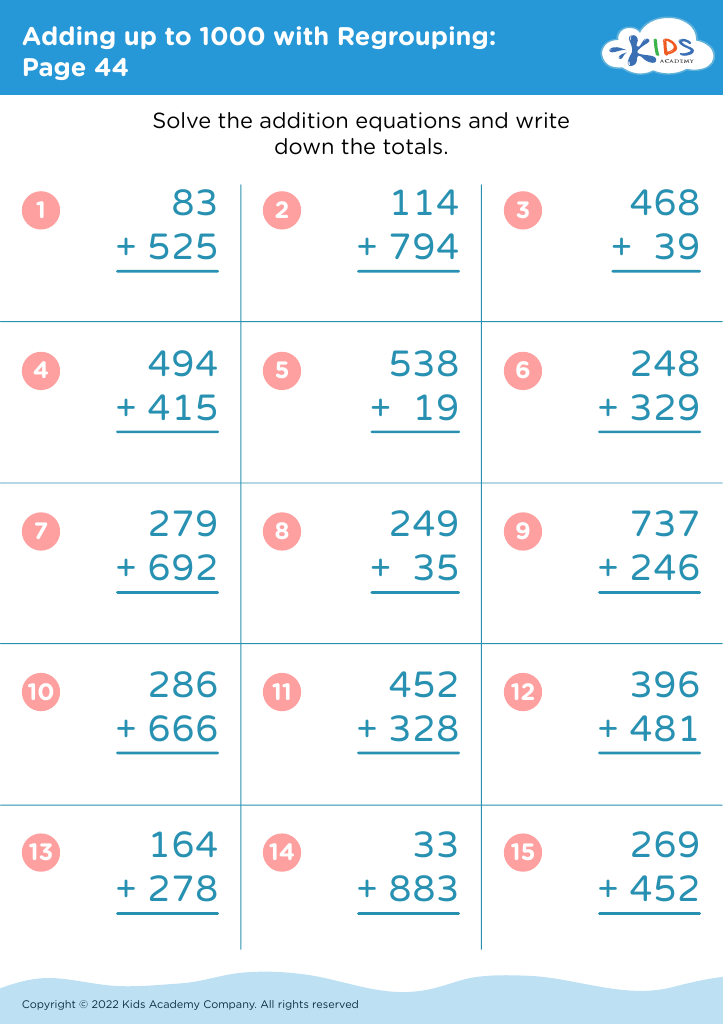








Recognizing patterns in mathematics is essential for 9-year-old children as it forms the foundation for more complex mathematical concepts and problem-solving skills. This skill enhances critical thinking, allowing students to identify relationships and structure within data or mathematical problems. By focusing on pattern recognition, parents and teachers can help children develop logical reasoning abilities, which are crucial in all areas of learning.
Moreover, pattern recognition fosters creativity, encouraging students to think outside the box when facing challenges. It enables them to make predictions and connections across different subjects, which strengthens their overall cognitive abilities. As children become adept at spotting and interpreting patterns, they build confidence in their math skills, making them more likely to engage with and enjoy mathematics.
Encouraging pattern recognition also supports emotional intelligence; when students discover patterns and solutions, they experience a sense of achievement. This positive reinforcement motivates them to tackle more challenging concepts. Therefore, when parents and teachers prioritize pattern recognition in math, they lay the groundwork for successful, confident learners who can navigate both mathematical and real-world situations effectively, ultimately leading to greater academic success and a lifelong appreciation for mathematics.








