Understanding addition Math Worksheets for 9-Year-Olds
5 filtered results
-
From - To
Discover the perfect way to boost your child's math skills with our "Understanding Addition Math Worksheets for 9-Year-Olds." These engaging, expertly designed worksheets make learning addition fun and interactive. Tailored for 9-year-olds, each worksheet helps kids practice essential math concepts, improve problem-solving abilities, and build a solid arithmetic foundation. Featuring a variety of exercises, colorful illustrations, and mindful explanations, our worksheets will enhance your child's confidence and proficiency in math. Whether for classroom use or additional practice at home, these worksheets offer the ideal resources to support essential learning milestones in your child’s educational journey.
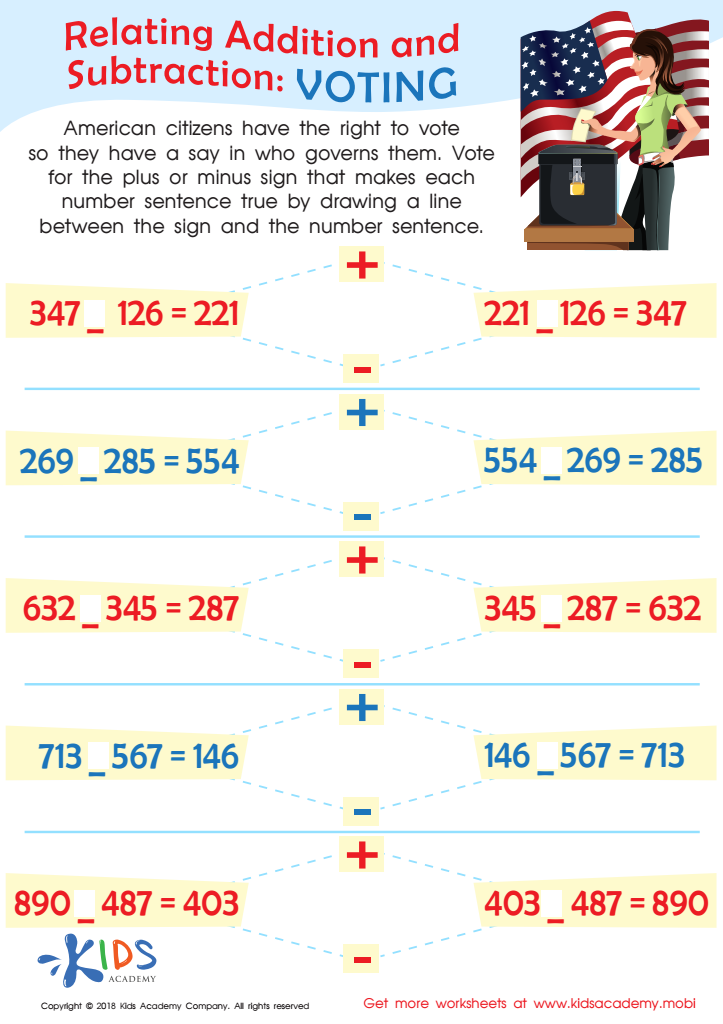
Voting Worksheet
 Assign to My Students
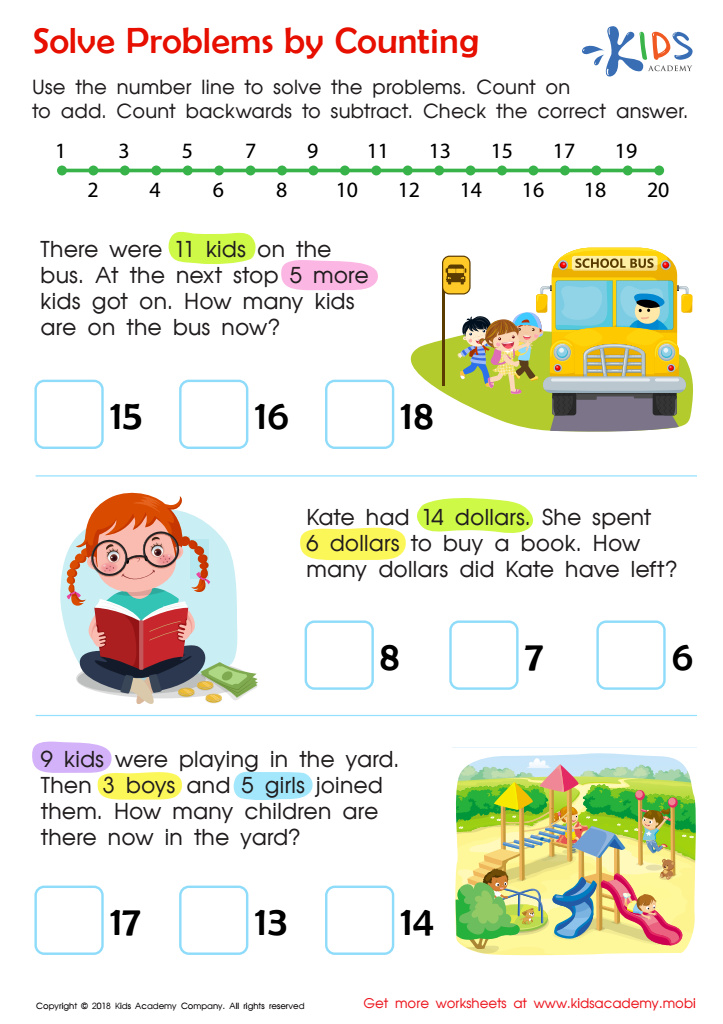
Solve Problems by Counting Worksheet
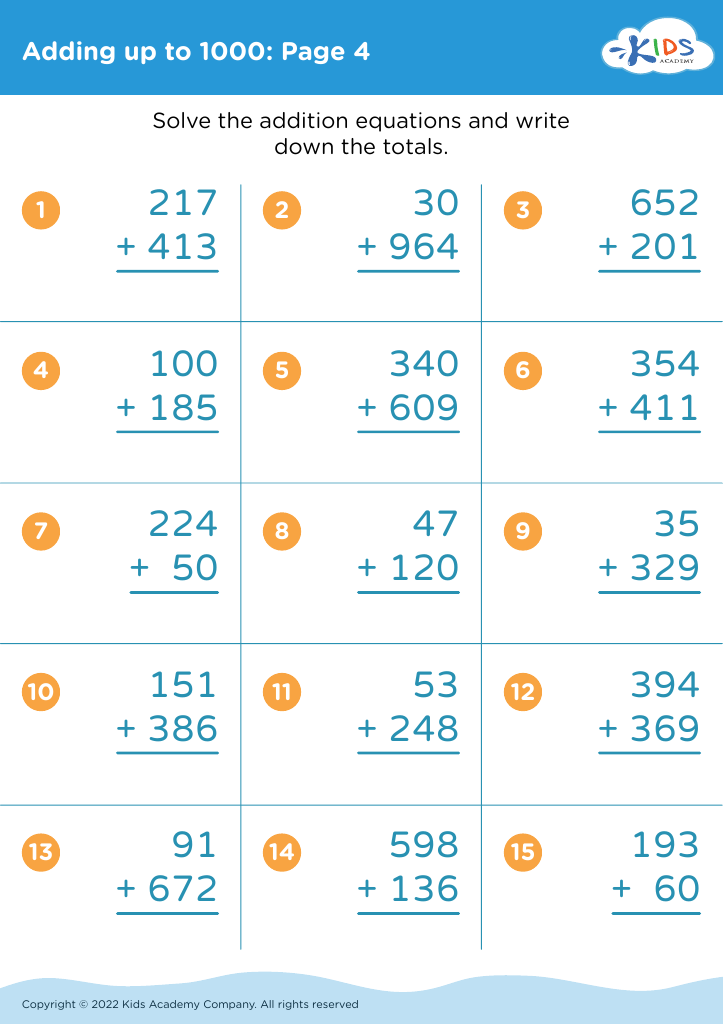
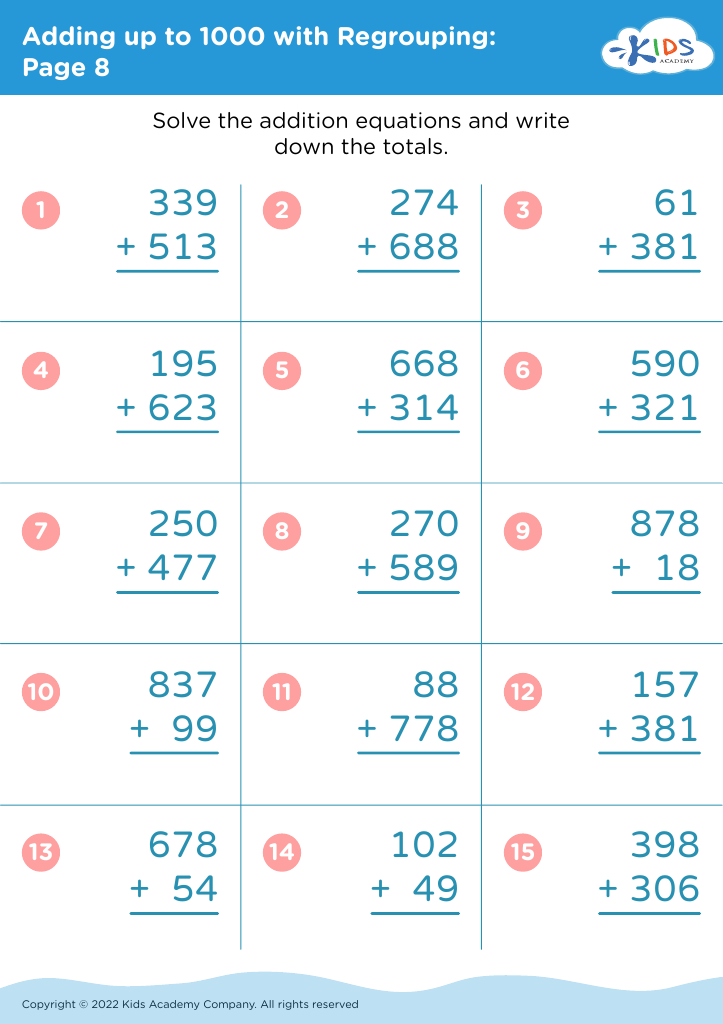
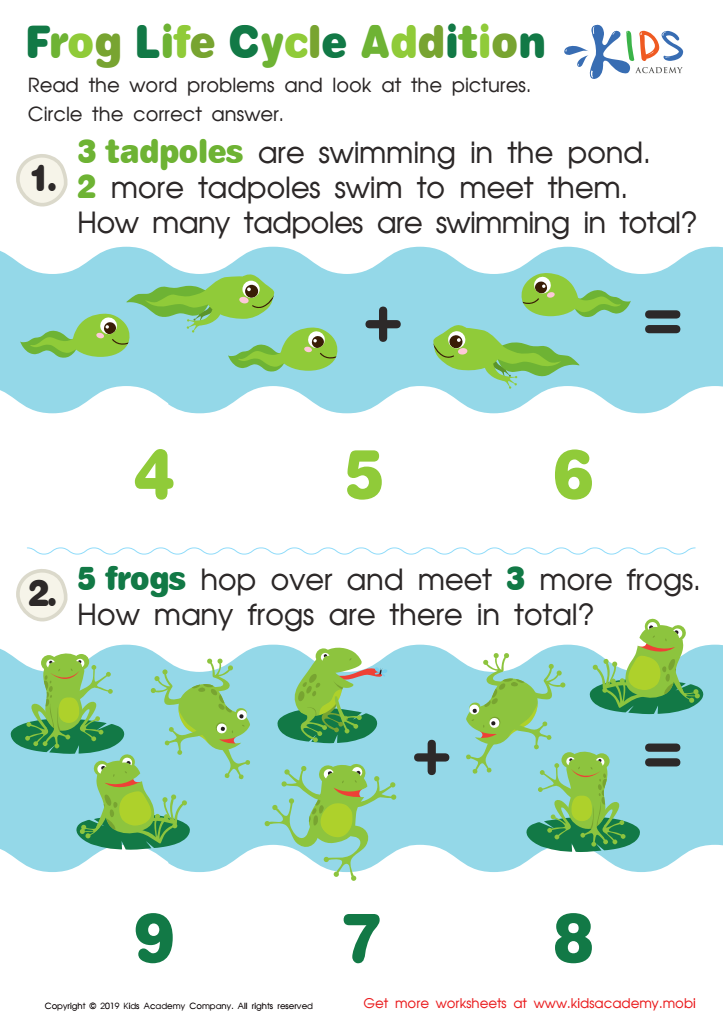
Frog Life Cycle Addition Worksheet







Understanding addition is crucial for 9-year-olds as it lays the foundation for more complex mathematical concepts. At this age, children transition from basic arithmetic to higher-level skills, such as multiplication, division, and fractions. Mastery of addition ensures they grasp these advanced topics confidently.
For parents, fostering strong addition skills aids in their child's academic progression and builds a positive attitude toward learning math. This foundational knowledge impacts their problem-solving abilities both in school and in everyday life. For example, understanding addition helps children manage money, learn to measure ingredients in cooking, and estimate time.
Teachers play an essential role in shaping how students perceive and approach math. By ensuring students comprehend addition thoroughly, teachers equip them with critical thinking skills and the ability to break down more complex problems into manageable steps. This understanding enhances their fluency, accuracy, and speed in performing mathematical operations, which are vital for standardized tests and future academic performance.
Moreover, addition is not just about numbers but also about developing logical thinking and pattern recognition. When children repeatedly practice and understand addition, they gain confidence in their abilities, fostering a growth mindset. This positive relationship with math can encourage continuous learning and curiosity throughout their educational journey.








