Check out this FREE Trial Lesson on Math for age 9!

Recognizing Common Fractions

Favorites
With answer key
Interactive
  • 9
  • Understanding fractions
  • Math
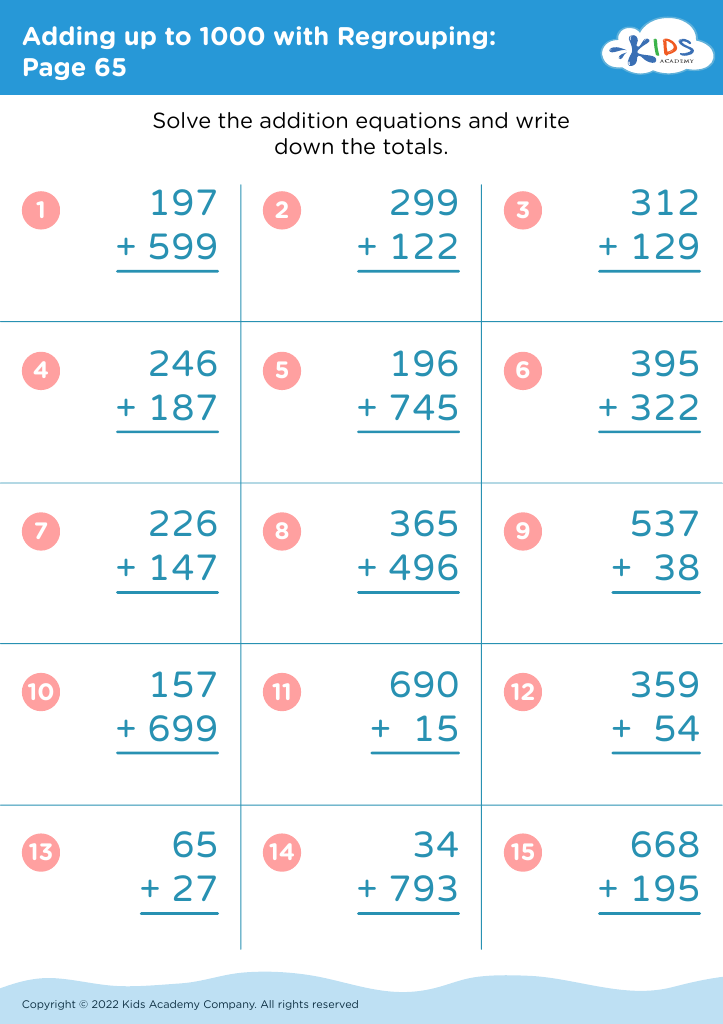
Adding up to 1000 with Regrouping: Page 65
Worksheet
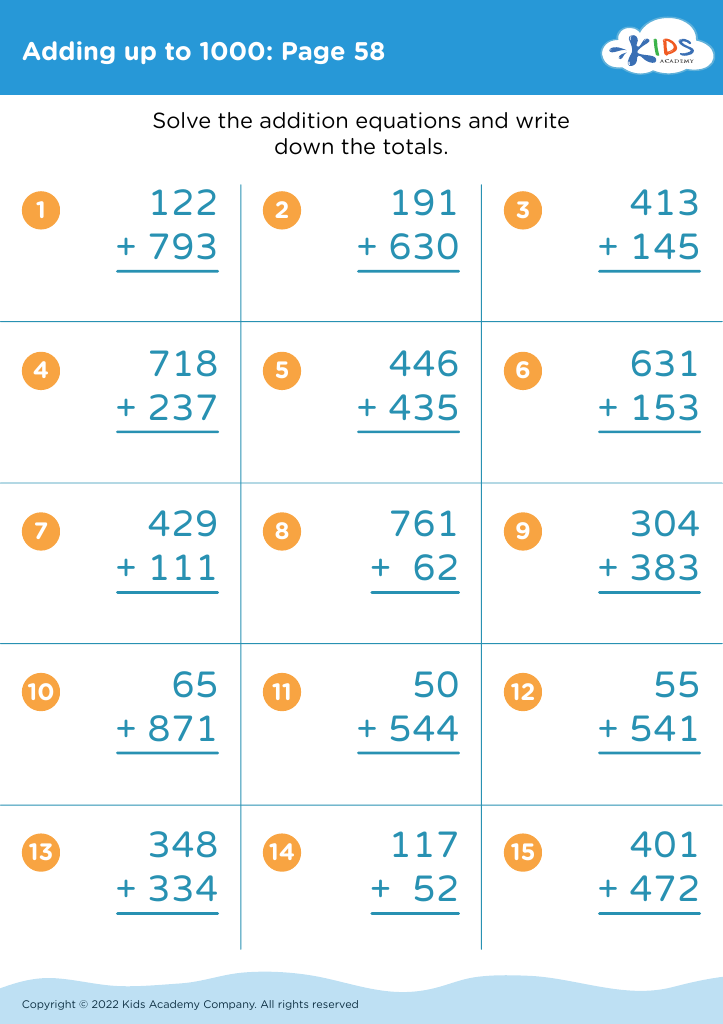
Adding up to 1000: Page 58

Adding up to 1000: Page 58

Adding up to 1000: Page 58
Worksheet
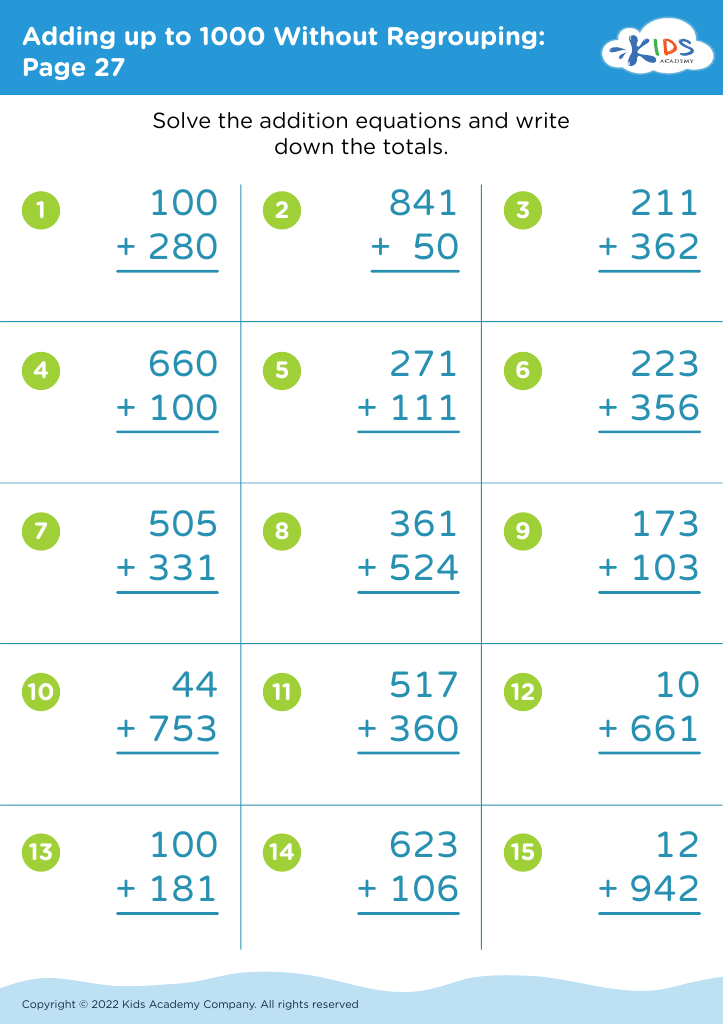
Adding up to 1000 Without Regrouping: Page 27
Worksheet
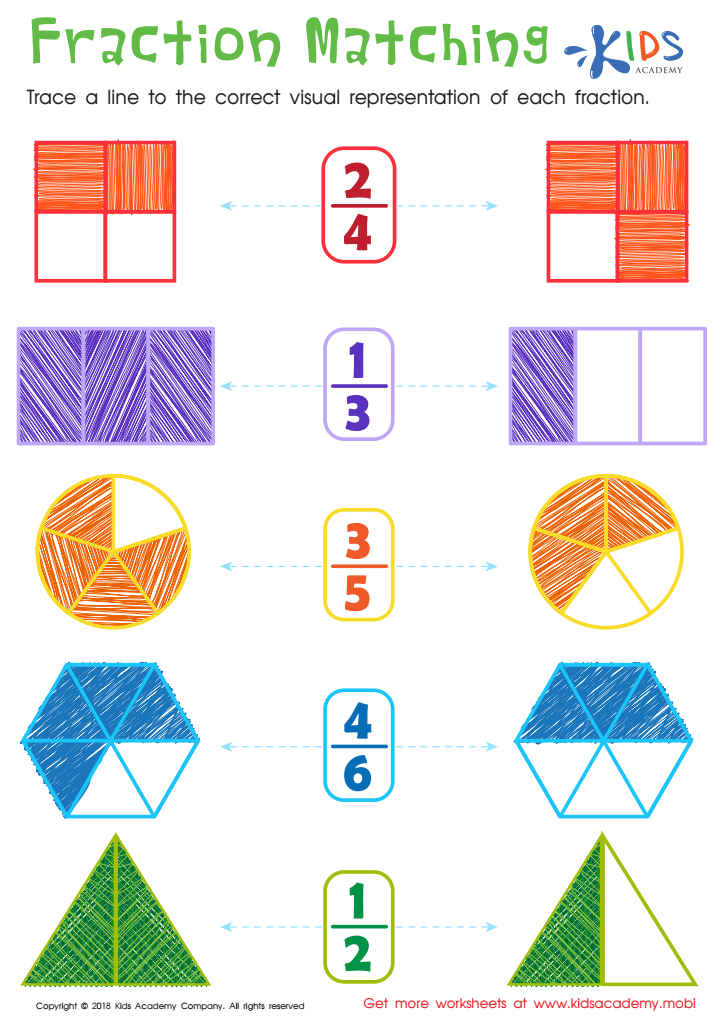
Fraction Matching Worksheet

Fraction Matching Worksheet

Teach your kindergartners fractions with this colorful worksheet. Make sure they understand numerators and denominators, then have them trace a line to the correct visual representation of each equation. There are five fractions for them to work on. With the foundation of fractions, mathematics will be much easier for them.
Fraction Matching Worksheet
Worksheet
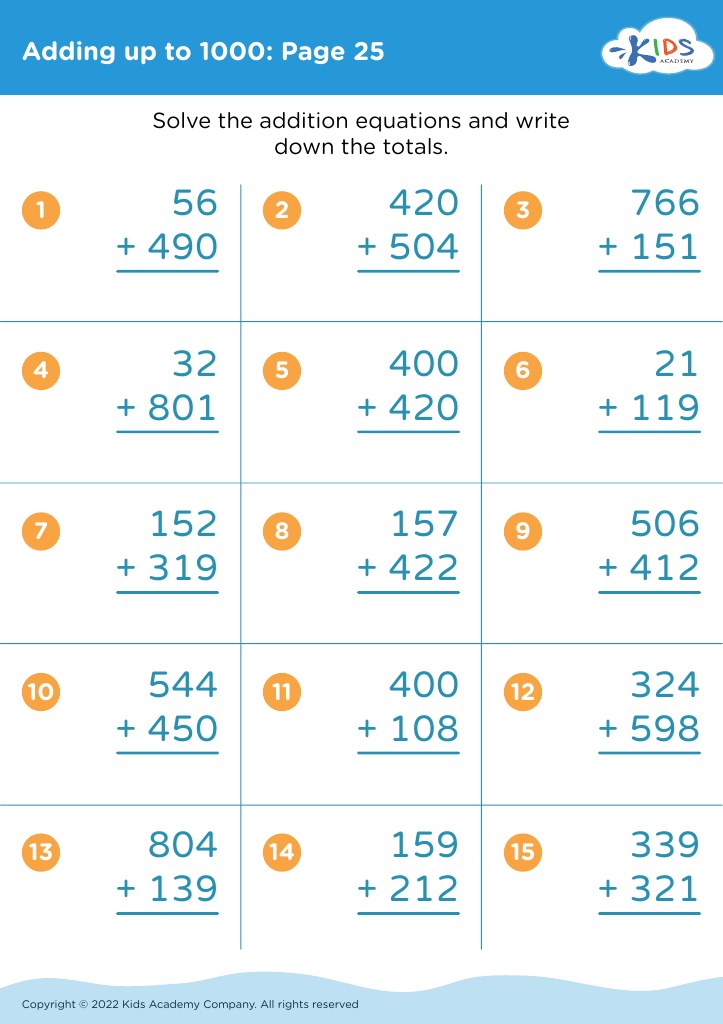
Adding up to 1000: Page 25

Adding up to 1000: Page 25

Adding up to 1000: Page 25
Worksheet
What Is the Denominator? Worksheet

What Is the Denominator? Worksheet

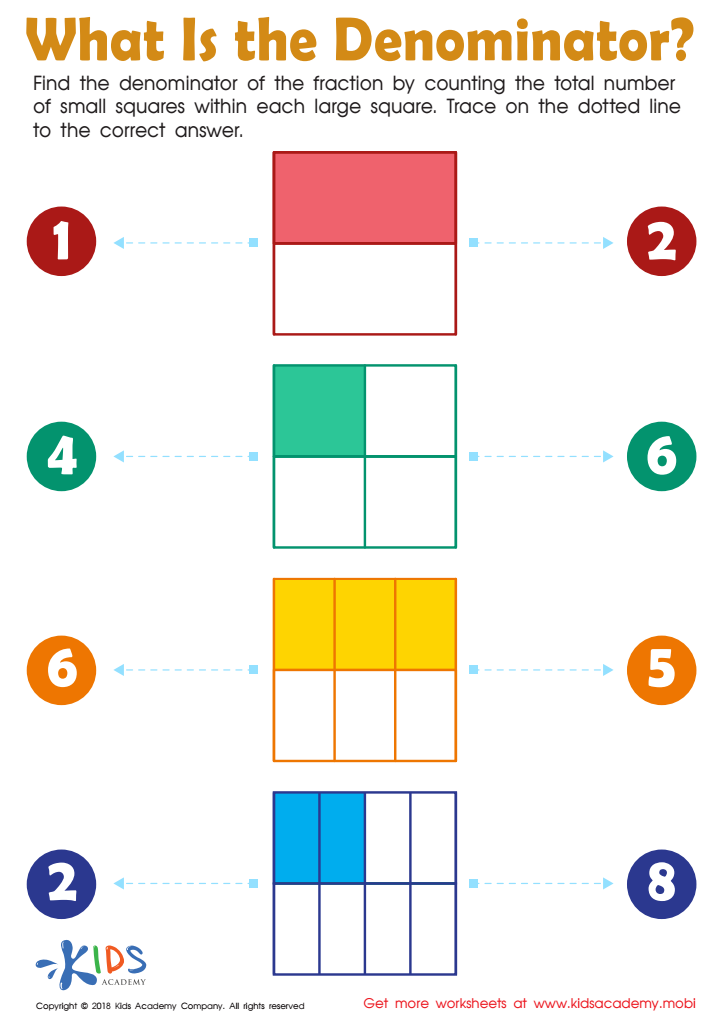
If your kindergartener is struggling with fractions, don't worry. Use this worksheet to help them understand better. Ask them to count the total small squares in each large square to find the denominator, then trace on the dotted line to answer. This printable tracing sheet will help them learn fractions easier.
What Is the Denominator? Worksheet
Worksheet
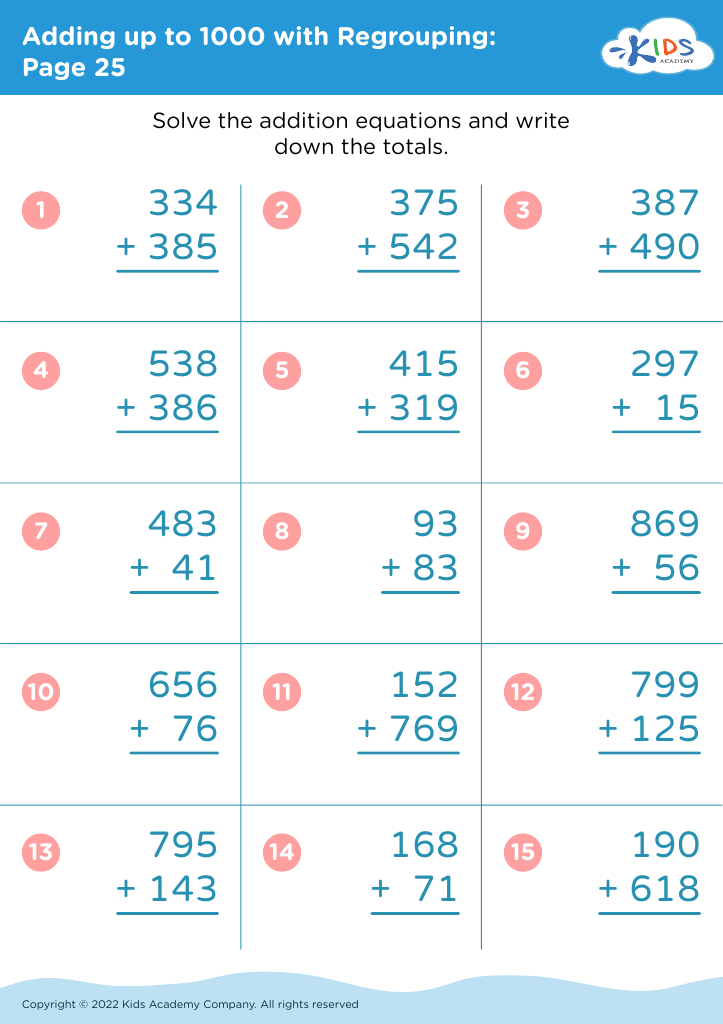
Adding up to 1000 with Regrouping: Page 25
Worksheet
Сompare fractions worksheet for 3rd grade

Compare Fractions Worksheet

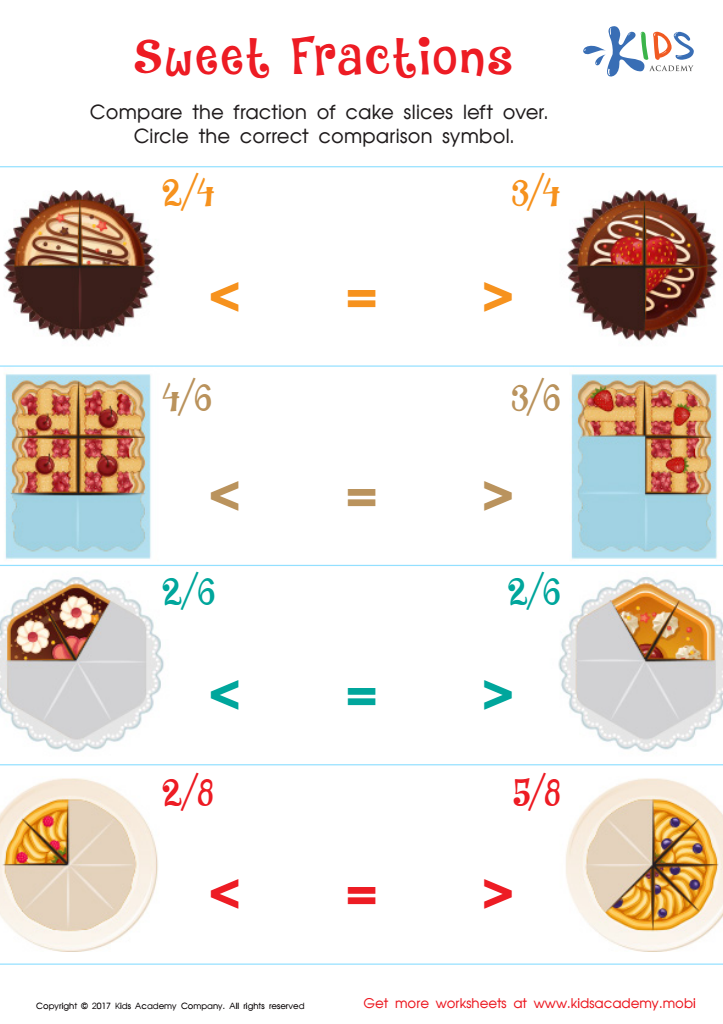
This compare fractions worksheet is great for 3rd graders to learn and understand fractions in a fun way. Let them explore fractions visually with the help of sweet treats!
Compare Fractions Worksheet
Worksheet
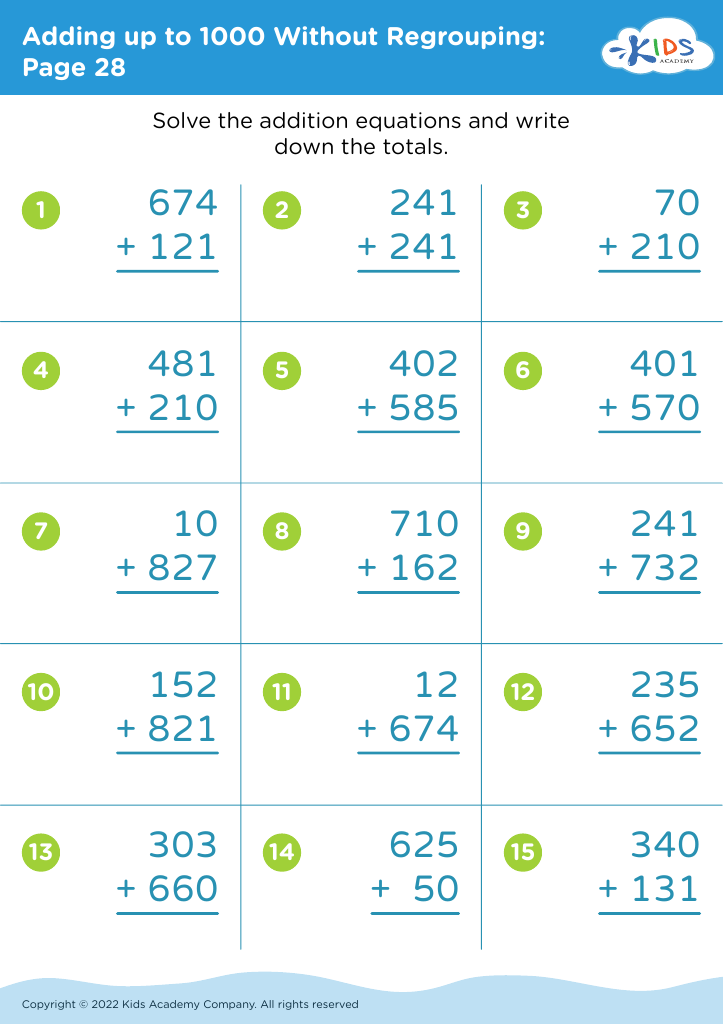
Adding up to 1000 Without Regrouping: Page 28
Worksheet
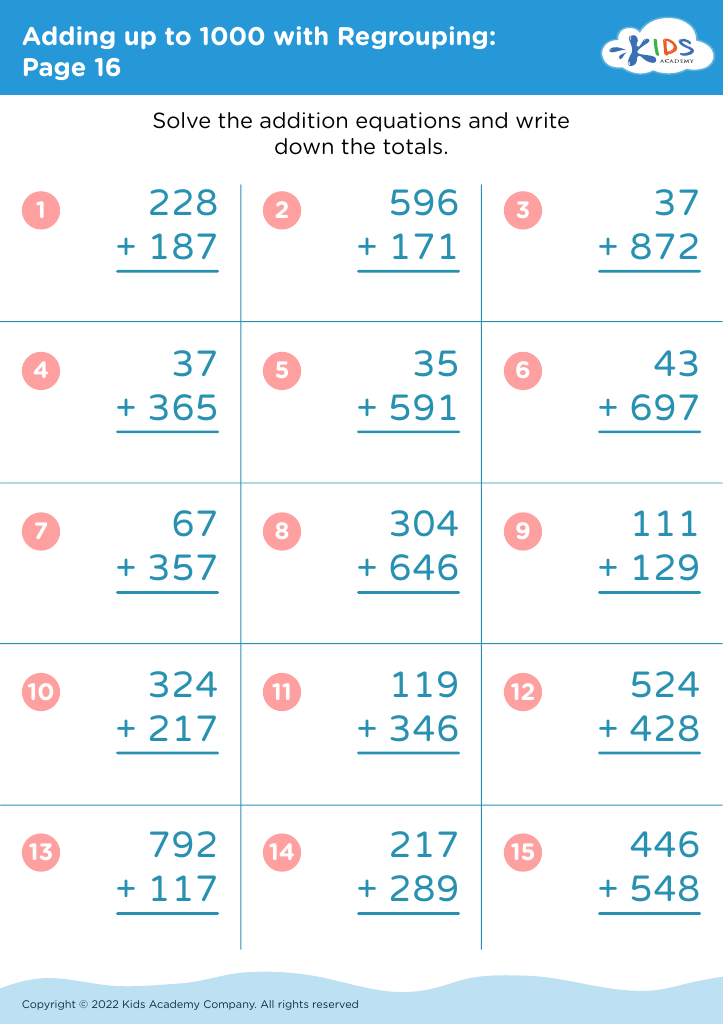
Adding up to 1000 with Regrouping: Page 16
Worksheet
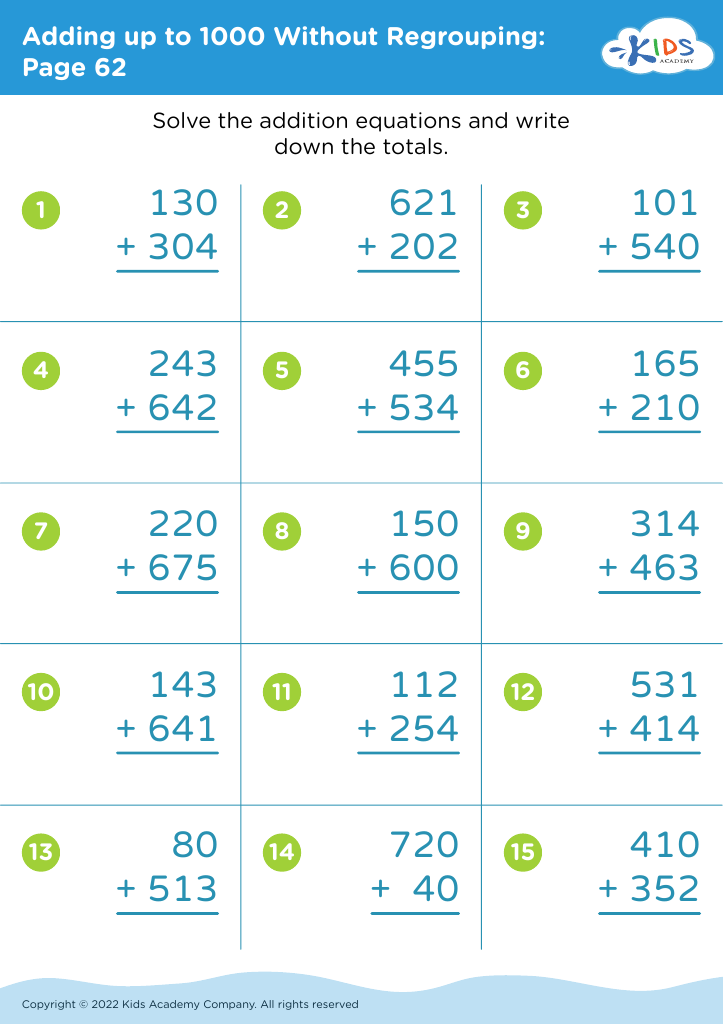
Adding up to 1000 Without Regrouping: Page 62
Worksheet
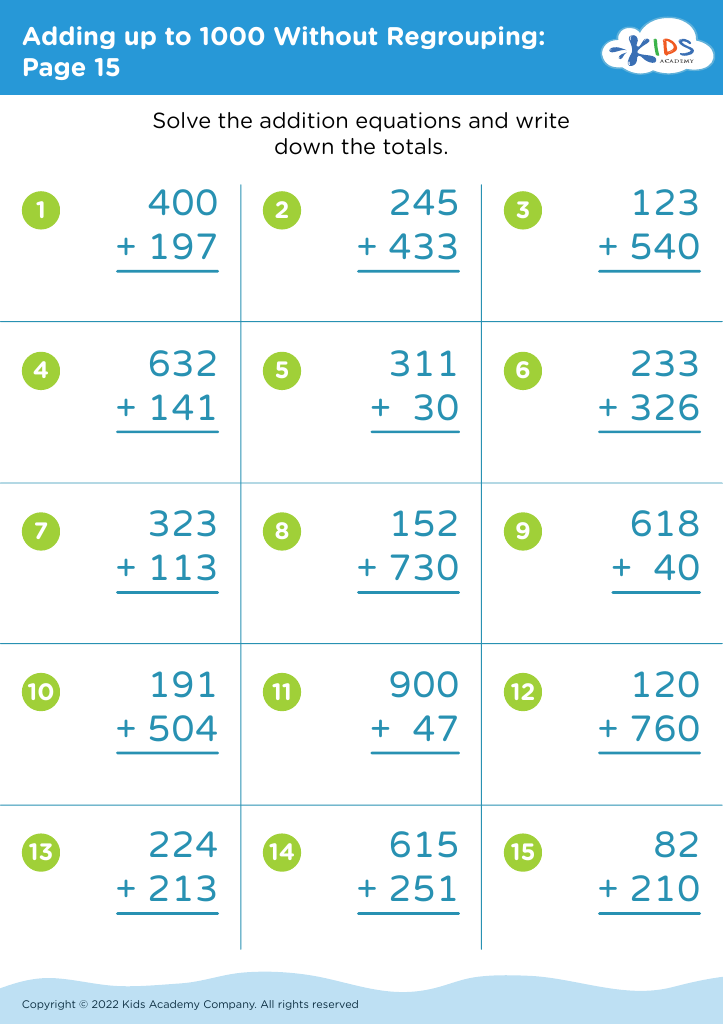
Adding up to 1000 Without Regrouping: Page 15
Worksheet
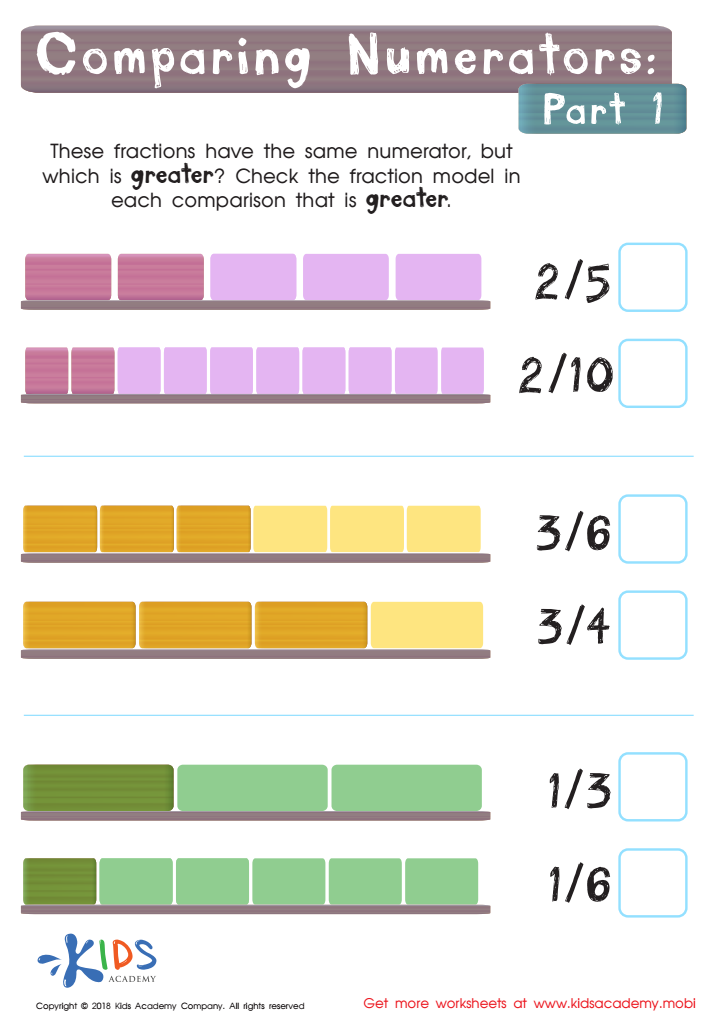
Comparing Numerators Part 1 Worksheet

Comparing Numerators Part 1 Worksheet

This worksheet has 3 fractions groups with the same numerator. Your child must determine which fraction is greater in each comparison. Check the fraction model to see the greater one.
Comparing Numerators Part 1 Worksheet
Worksheet
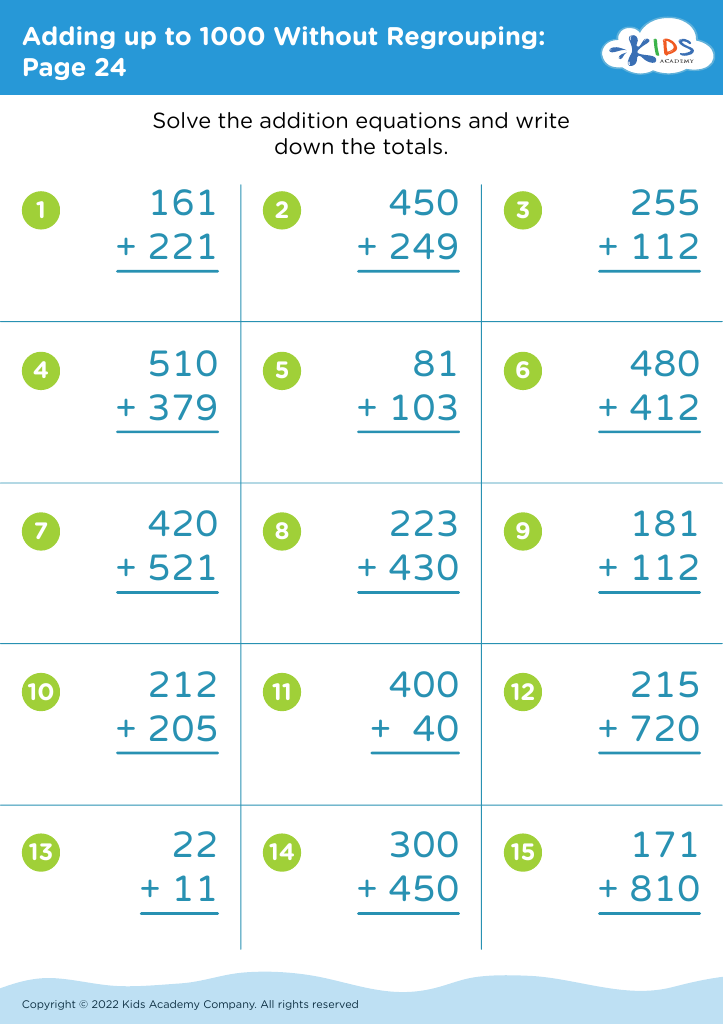
Adding up to 1000 Without Regrouping: Page 24
Worksheet


... 2 3

Understanding fractions is crucial for 9-year-olds, as it lays the groundwork for their future mathematical reasoning and problem-solving abilities. At this age, children are at a developmental stage where they can grasp abstract concepts, making it an ideal time to introduce fractions. Mastery of fractions helps students understand essential life skills, such as cooking, budgeting, and sharing, since these everyday tasks often involve dividing whole amounts.

Moreover, fractions are fundamental to more advanced mathematical topics like ratios, proportions, and algebra. If children struggle with fractions now, it can hinder their ability to tackle these subjects later, leading to increased frustration and a lack of confidence in math. Teachers and parents play a key role in fostering a positive learning environment by incorporating engaging activities and practical examples to make fractions relatable and fun. Support and encouragement from adults can help children build a strong mathematical foundation and develop a healthy relationship with math.

Ultimately, prioritizing the understanding of fractions equips children with the necessary tools to navigate both academic and real-world challenges, fostering not just strong mathematicians, but also critical thinkers and problem solvers.