Understanding symmetry Math Worksheets for 9-Year-Olds
6 filtered results
-
From - To
Unlock the world of symmetry for your 9-year-old with our engaging math worksheets! Designed to enhance spatial awareness and foundational geometry skills, these worksheets make learning symmetry fun and interactive. Each activity encourages kids to identify, draw, and reflect symmetrical shapes, building both knowledge and confidence. Our expertly crafted worksheets cater to various skill levels, providing clear instructions and exciting challenges. Whether your child is just starting with symmetry or seeking to sharpen their skills, these resources offer a perfect blend of education and entertainment. Explore symmetry with our worksheets and watch your child's math skills soar!
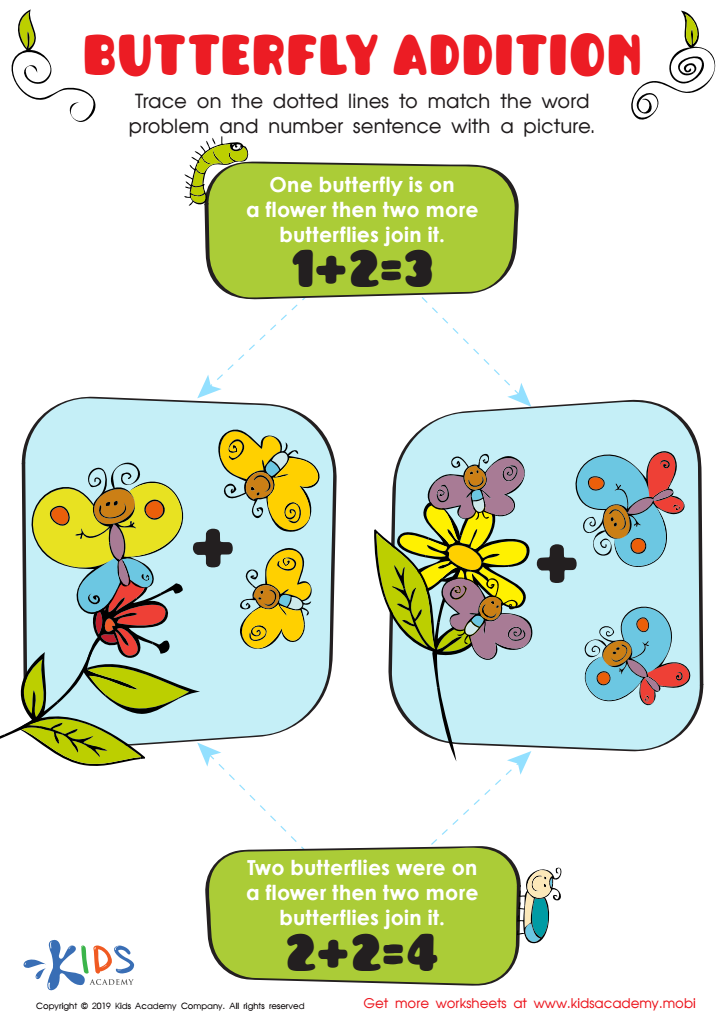
Butterfly Addition Worksheet
 Assign to My Students
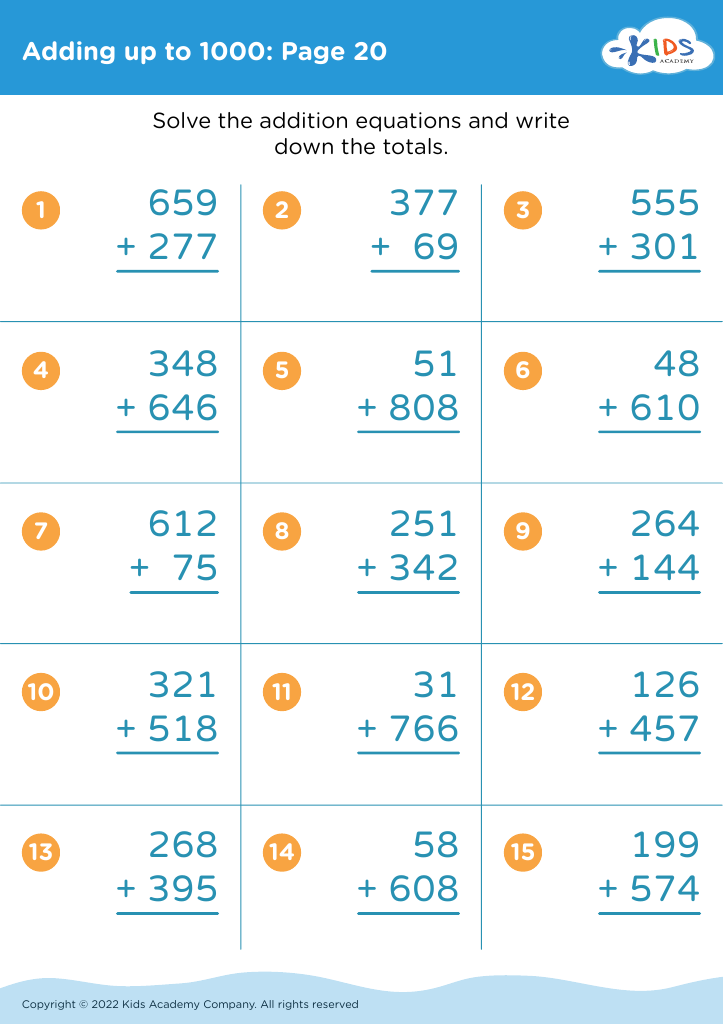
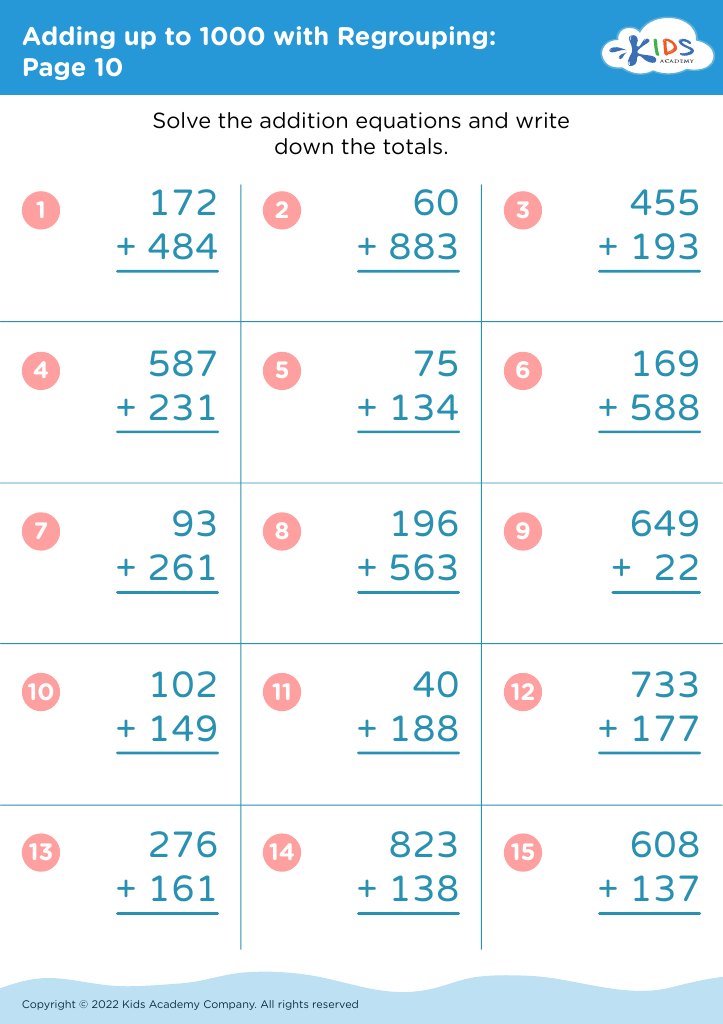
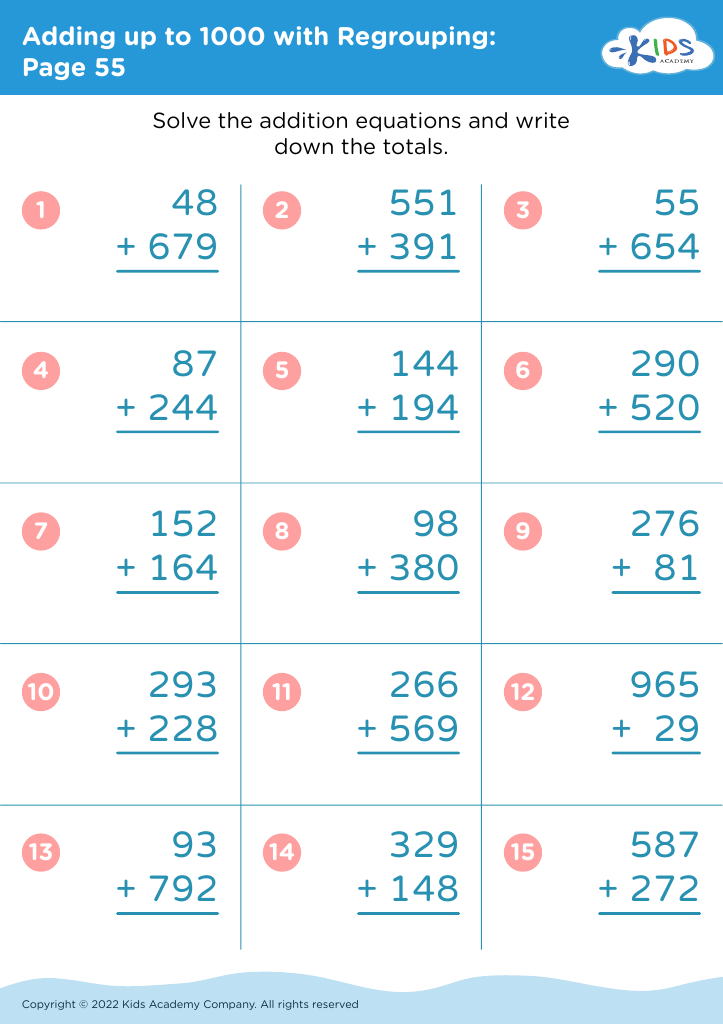
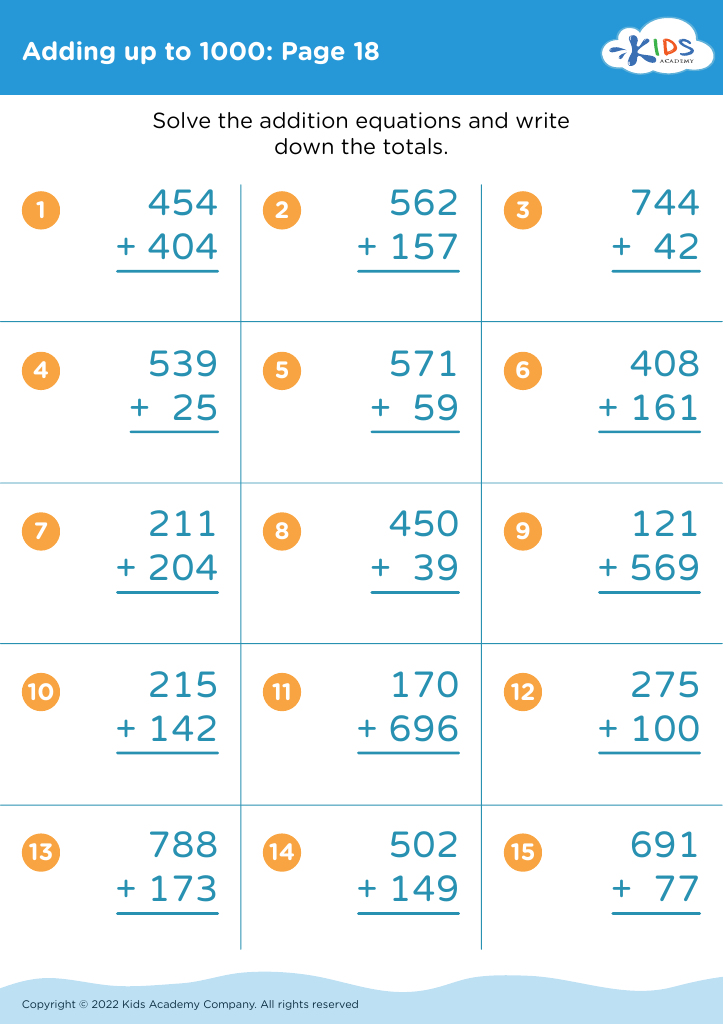
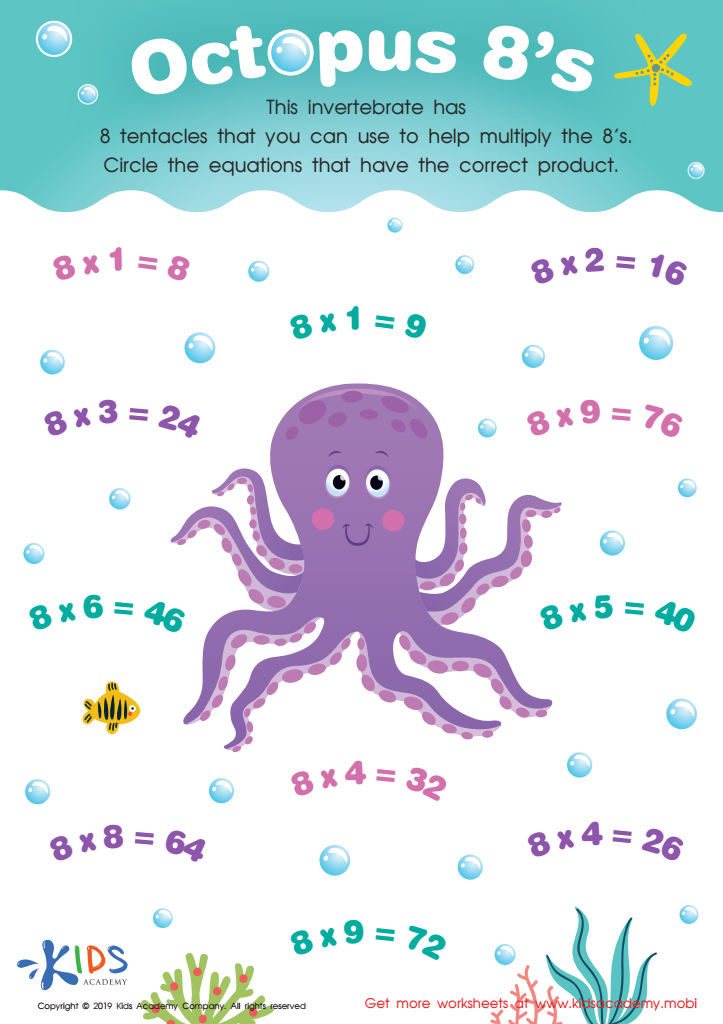
Octopus 8’s Worksheet



.jpg)




Understanding symmetry in math is crucial for 9-year-olds, not just as a mathematical concept but also for its broader educational benefits. Symmetry helps children develop spatial awareness, a critical cognitive skill that aids in understanding shapes and patterns, both in mathematics and in the real world. It influences their ability to visualize and manipulate objects, which is foundational for more advanced geometric concepts they'll encounter later.
Symmetry is also present in nature, art, and even human-made designs. Recognizing it can inspire curiosity and appreciation for the world around them. For instance, the bilateral symmetry of the human body, the radial patterns of flowers, and the symmetrical designs in architecture all offer practical applications of the concept, making math feel more personal and relevant.
Moreover, engaging with symmetry can boost problem-solving skills and logical thinking. When children recognize symmetrical patterns, they learn to predict and verify, which nurtures critical thinking. It even encourages precision and attention to detail, qualities valuable in all areas of learning.
For parents and teachers, fostering an understanding of symmetry enriches a child's holistic development, linking math with creativity, nature, and reasoning. It's a stepping stone to more complex subjects and nurtures a balanced educational growth. Essentially, appreciating and understanding symmetry can make math both fun and meaningful.








