Understanding times tables Math Worksheets for 9-Year-Olds
6 filtered results
-
From - To
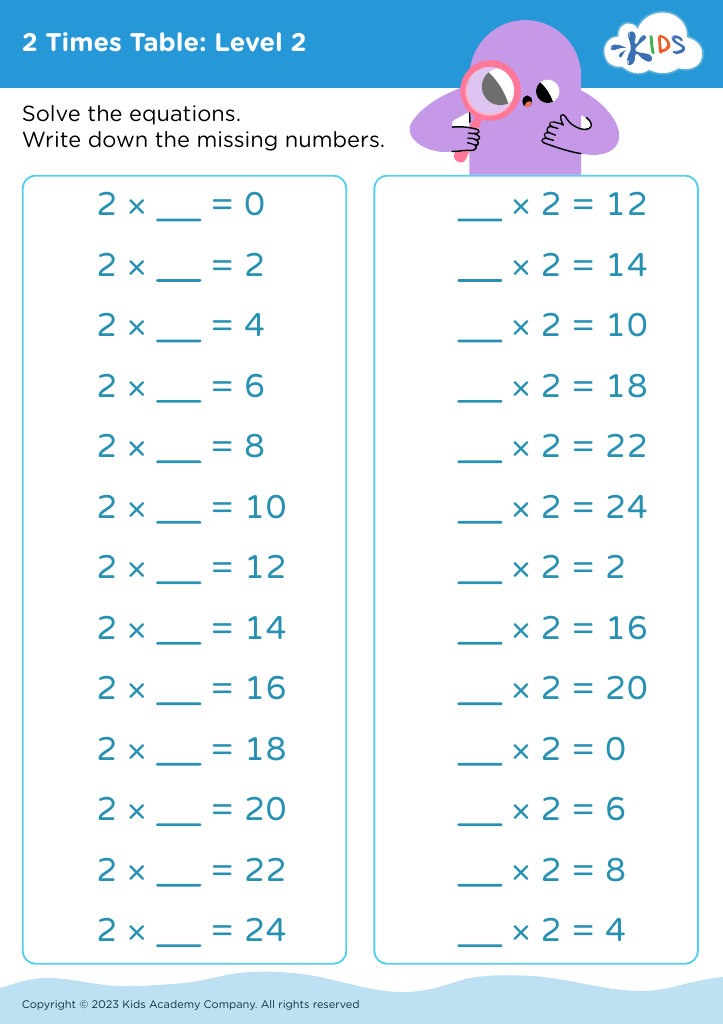
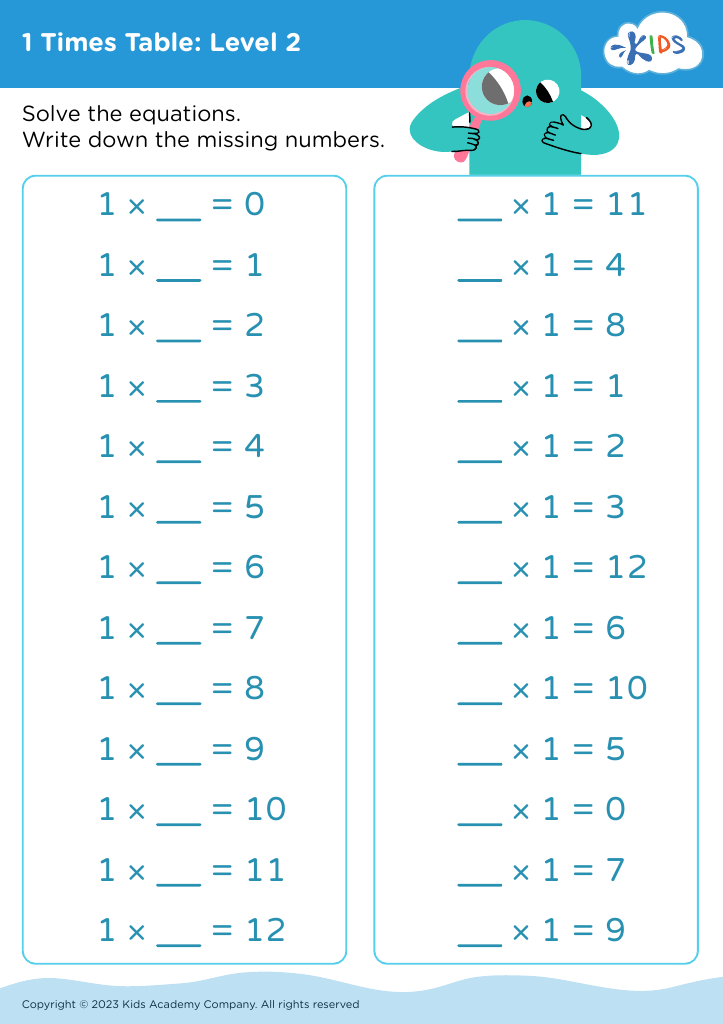
Unlock the power of multiplication with our "Understanding Times Tables Math Worksheets" designed specifically for 9-year-olds! These engaging worksheets help young learners grasp the fundamentals of times tables through fun activities and clear, easy-to-follow exercises. Our resources encourage critical thinking and enhance math skills while making learning enjoyable. With progressive difficulty levels, children can build their confidence and competence in multiplication. Perfect for classroom use or at-home practice, these worksheets are tailored to meet educational standards and foster a love for math. Dive into vibrant, interactive learning which aids retention and fluency in essential math concepts. Get started today!
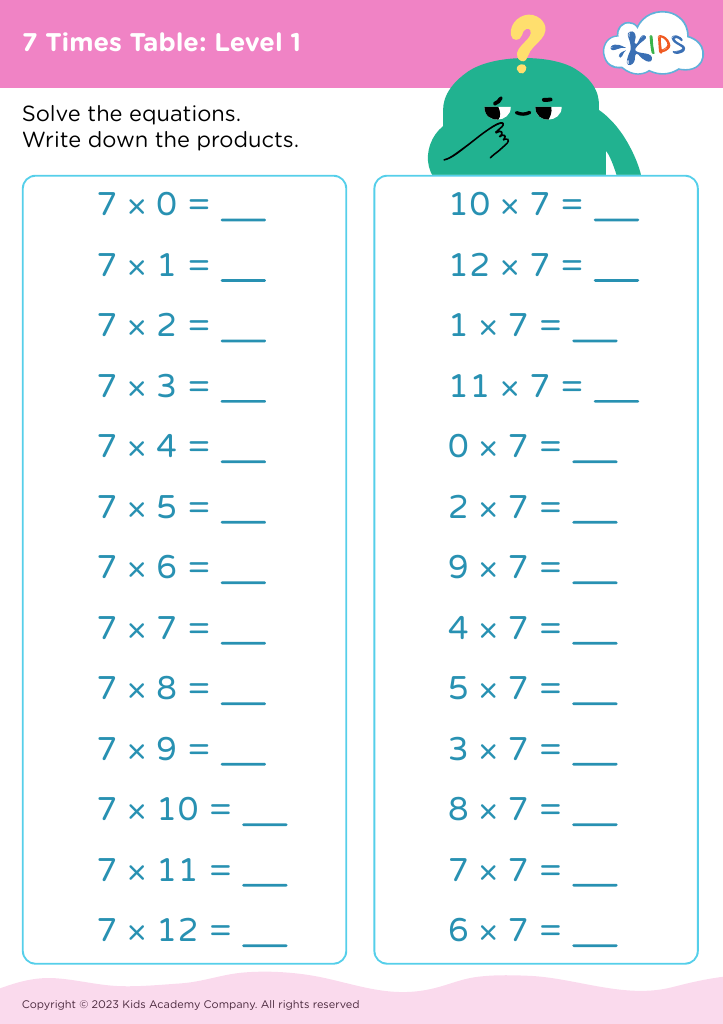
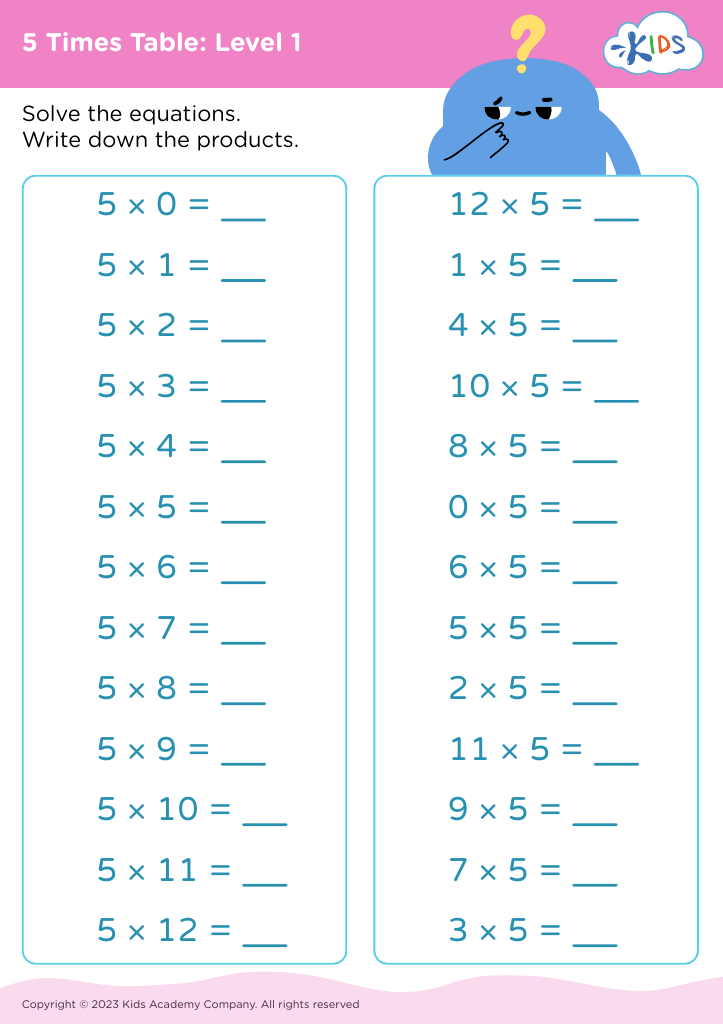
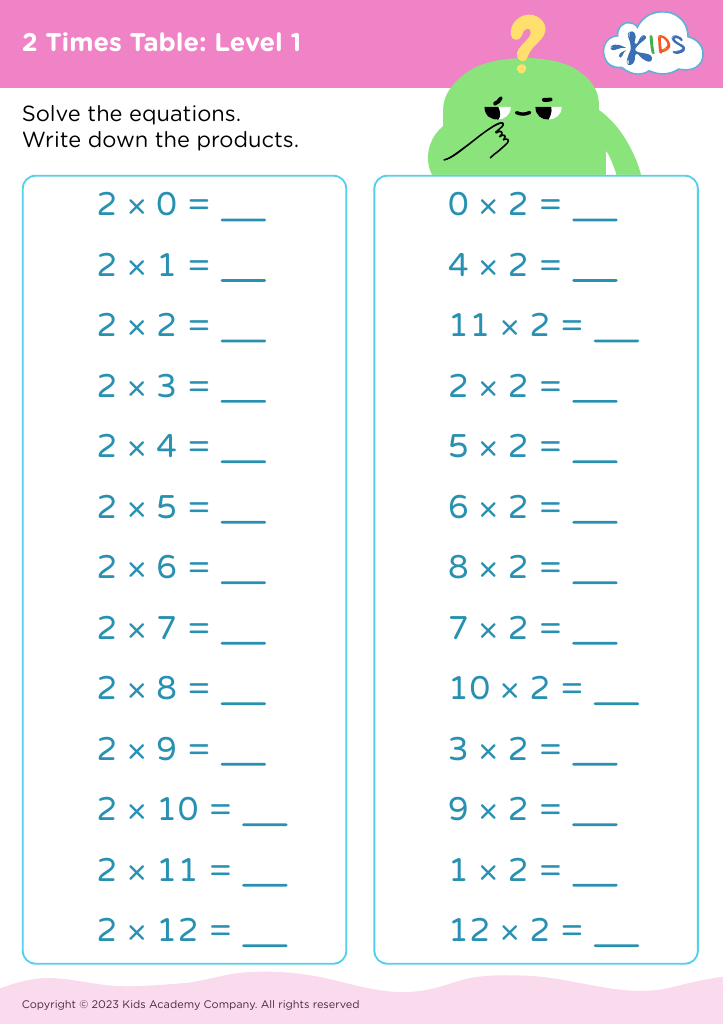
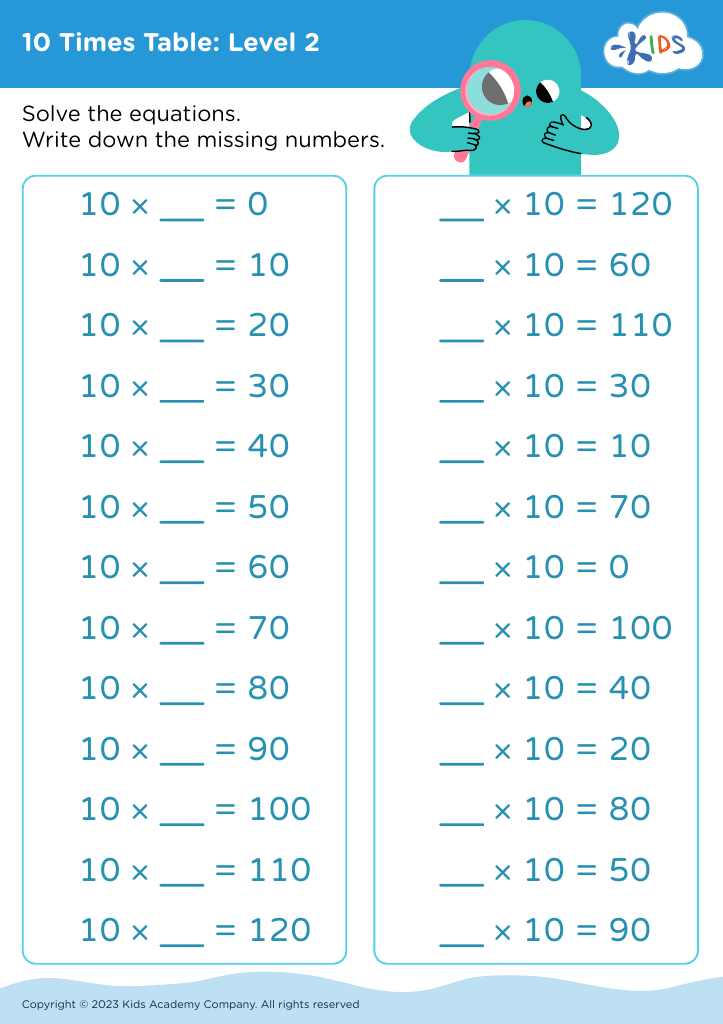




.jpg)



Understanding times tables is crucial for 9-year-olds as it forms the foundation for a child's mathematical skills. At this age, students transition from concrete mathematical concepts to more abstract problem-solving, and times tables are central to this process. Mastery of multiplication tables enhances numerical fluency, allowing children to perform basic operations quickly and accurately.
Parents and teachers should care because proficiency in times tables not only boosts confidence but also propels academic progress in various subjects. For instance, multiplication is essential for understanding concepts in division, fractions, and even algebra later on. Furthermore, these skills are frequently used in everyday situations, such as calculating costs during shopping or sharing items among friends.
Encouraging consistent practice and engaging methods like games can make learning fun and effective. When children grasp these essential math skills, they are more likely to develop a positive attitude towards math overall. This understanding also helps reduce math anxiety, enabling students to tackle more challenging problems in the future. Ultimately, a strong foundation in times tables equips children for success in school and beyond, underscoring the importance of parental and teacher involvement in their mathematical journey.








