Times table reinforcement Times Tables Worksheets for 9-Year-Olds
4 filtered results
-
From - To
Enhance your 9-year-old's math skills with our engaging Times Table Reinforcement Worksheets! Tailored to support young learners, these worksheets provide fun and interactive exercises designed to strengthen their understanding of multiplication tables. With a variety of formats, including puzzles, games, and challenges, students can practice multiplication in a lively way that's enjoyable and effective. Perfect for classroom or at-home reinforcement, our worksheets encourage mastery through repetition and application. Empower your child’s confidence in math while making learning enjoyable with resources that cater to different learning styles. Explore our collection today and watch your child's multiplication skills soar!
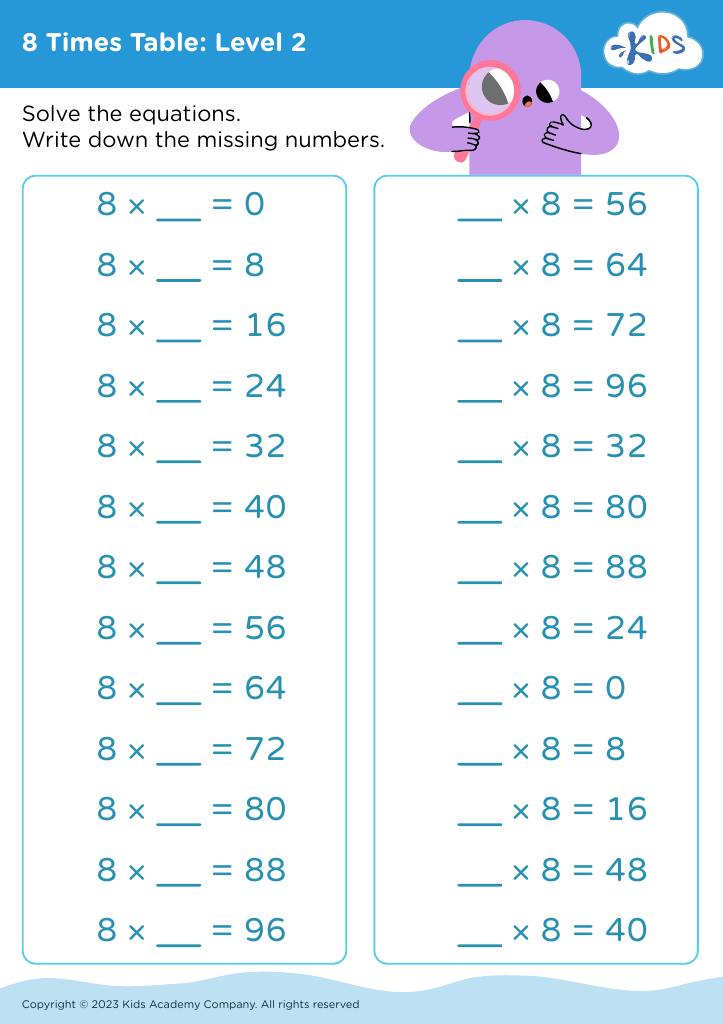
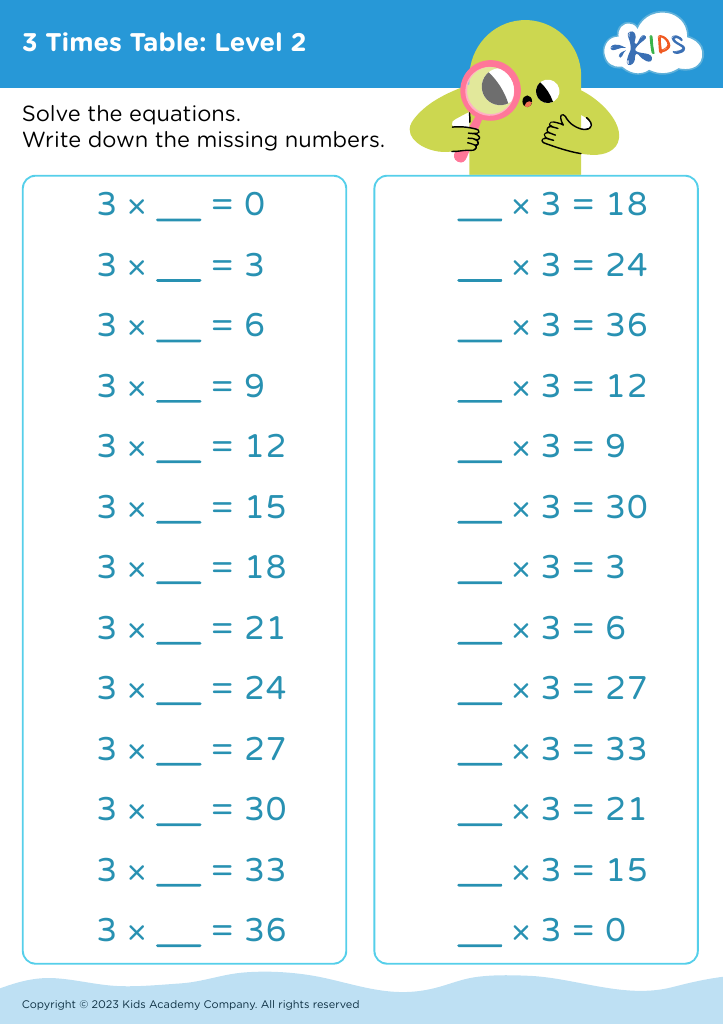
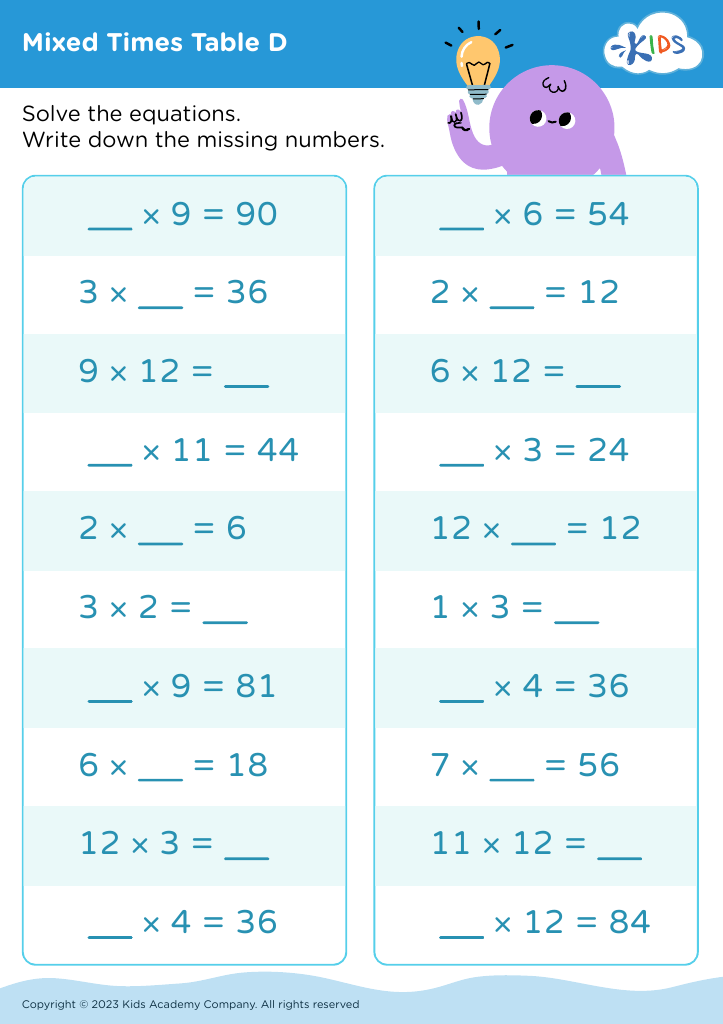
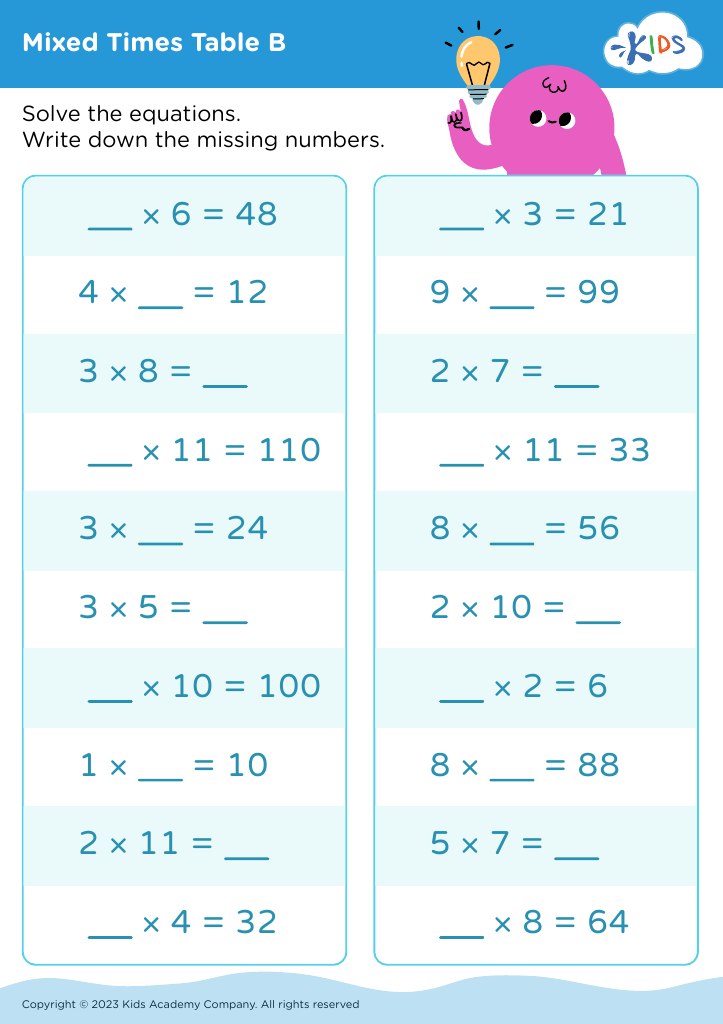





Reinforcing times tables for 9-year-olds is essential for several reasons that profoundly impact their mathematical development. First and foremost, multiplication is a foundational skill that underpins more advanced math concepts, such as division, fractions, and algebra. Mastery of times tables boosts students’ confidence while enabling them to tackle complex problems more effectively.
Moreover, strong multiplication skills allow children to participate actively in classroom activities and math-related discussions, fostering a positive learning environment. This fluency in mathematics translates to improved performance in standardized tests and real-world applications, enhancing problem-solving abilities.
Additionally, parents and teachers play a crucial role in creating a supportive learning atmosphere. By reinforcing times table practice through games, quizzes, and everyday situations, they make learning enjoyable and relevant. This engagement helps instill a life-long love for mathematics, laying the groundwork for future academic success.
Lastly, times tables often foster teamwork and collaboration when practiced in groups or pairs, promoting social skills alongside academic growth. Therefore, investing time and energy into reinforcing times tables can significantly benefit children’s mathematical proficiency and esteem, ultimately contributing to their overall academic trajectory.








