Understanding patterns Times Tables Worksheets for 9-Year-Olds
3 filtered results
-
From - To
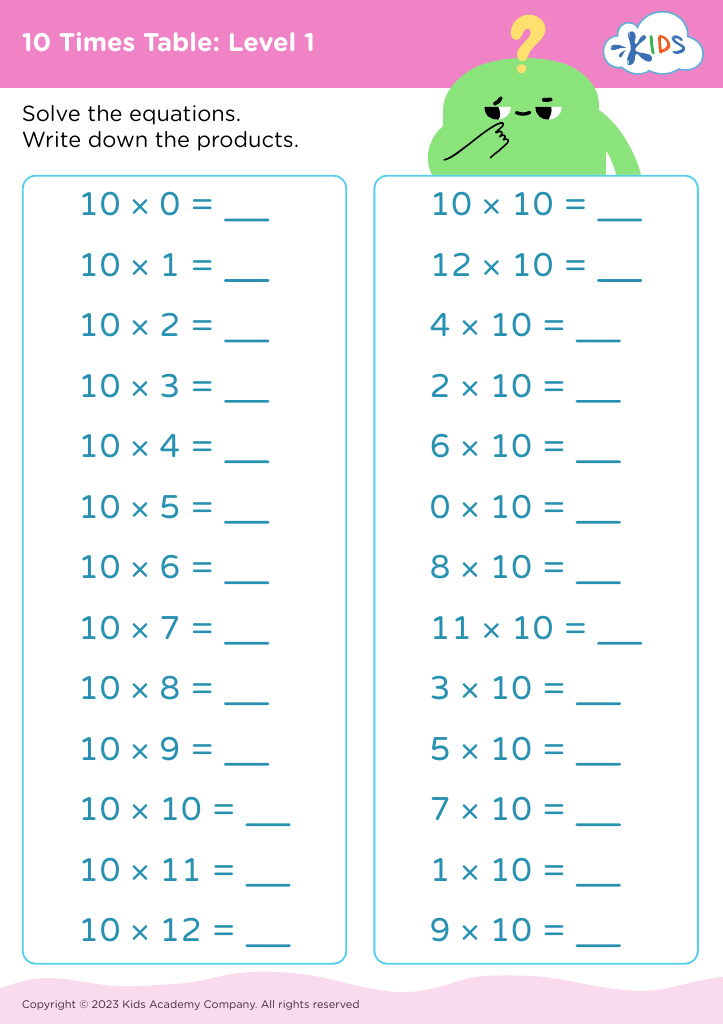
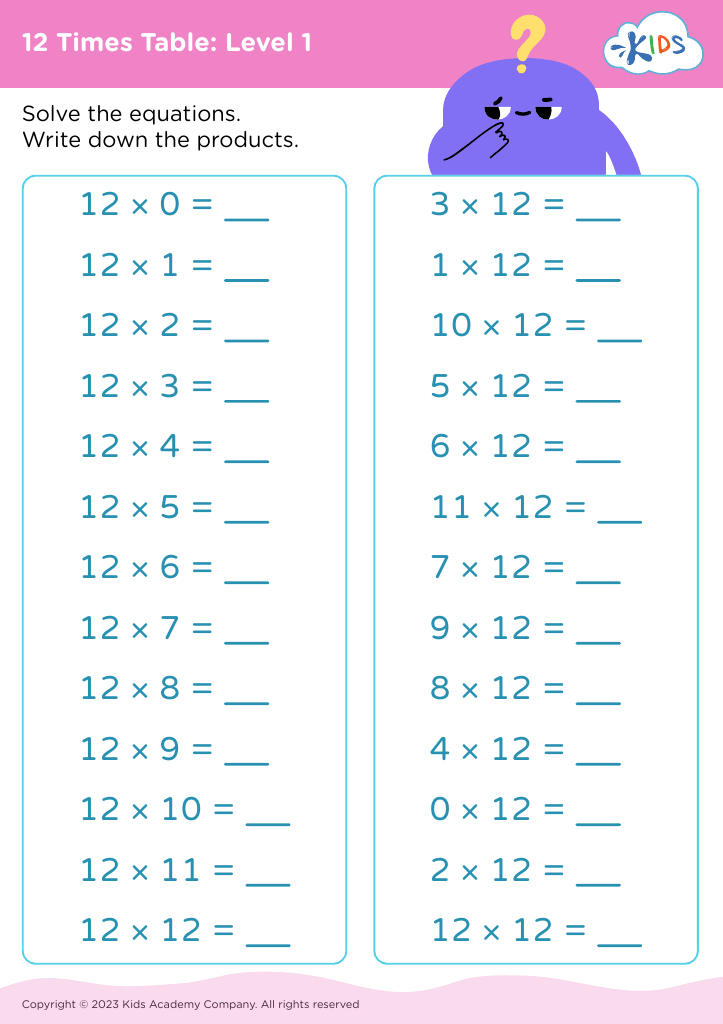
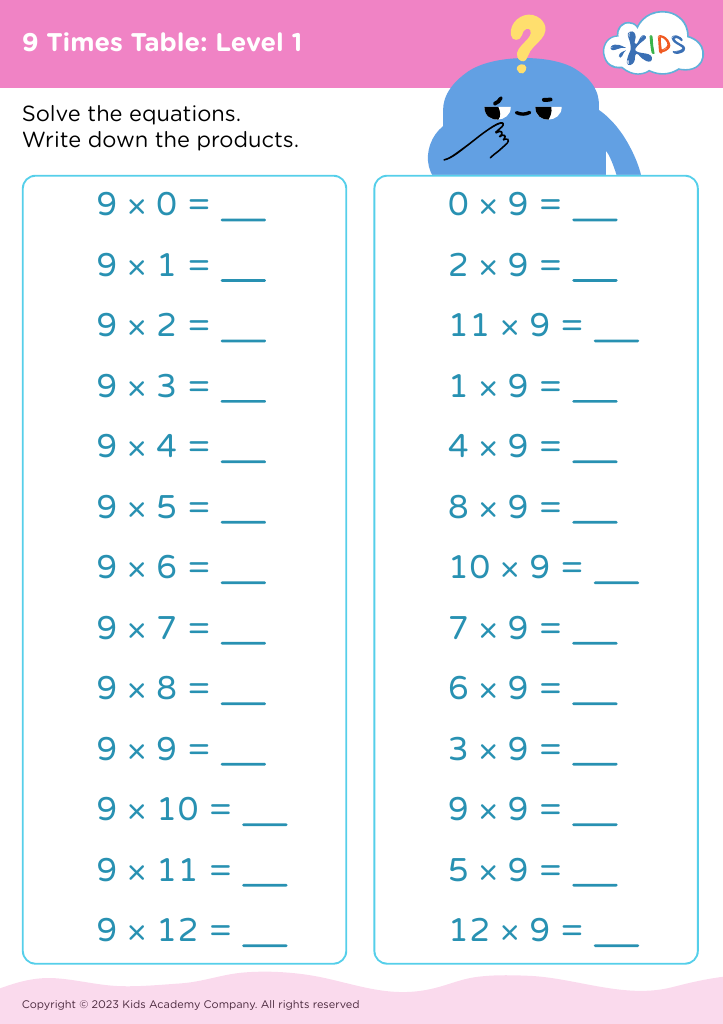
Discover a fun and engaging way to enhance your 9-year-old's math skills with our "Understanding Patterns Times Tables Worksheets." Specifically designed to help children grasp the concept of patterns within multiplication, these worksheets encourage critical thinking and improve number fluency. Through interactive exercises, kids will identify trends and relationships in times tables, making learning both enjoyable and effective. Perfect for classroom and home use, our resources foster a deeper understanding of math while building confidence in young learners. Join us in making math accessible and exciting—download your worksheets today and let the pattern discovery begin!




Understanding patterns in times tables is crucial for 9-year-olds, as it lays the foundation for not only mathematical fluency but also for deeper comprehension in various subjects. When children recognize patterns, they become more adept at solving multiplication problems efficiently. This ability boosts their confidence and decreases the fear of math, turning it into an engaging area of study rather than a burden.
Furthermore, comprehension of patterns fosters critical thinking and problem-solving skills that extend beyond math. It helps children make connections across different mathematical concepts, such as factors, multiples, and divisions. Once they identify patterns within the times tables, students can even apply this understanding to real-world scenarios, like budgeting or estimating costs.
Teachers and parents should emphasize the importance of these patterns to encourage a love for learning. Engaging children through fun rhythm-based songs, games, or visual aids can spark their interest and make the learning process more enjoyable. Ultimately, fostering a strong foundation in understanding times table patterns not only helps them excel in exams but also prepares them for future math challenges. The skills gained are valuable tools for lifelong learning in an increasingly math-centered world.








