Coloring skills Building Vocabulary Worksheets for 9-Year-Olds
3 filtered results
-
From - To
Enhance your 9-year-olds' vocabulary and creativity with our engaging Coloring Skills Building Vocabulary Worksheets! Designed to make learning fun, these worksheets combine colorful illustrations and exciting word-based activities that promote language development. As children color, they discover new words and their meanings, enriching their understanding and expression. Each worksheet focuses on different themes, encouraging imaginative thinking while reinforcing spelling and reading skills. Perfect for both classroom settings and home learning, these resources provide a joyous way to cultivate essential literacy skills and ignite a passion for learning in young minds. Foster a love for words through art and creativity today!
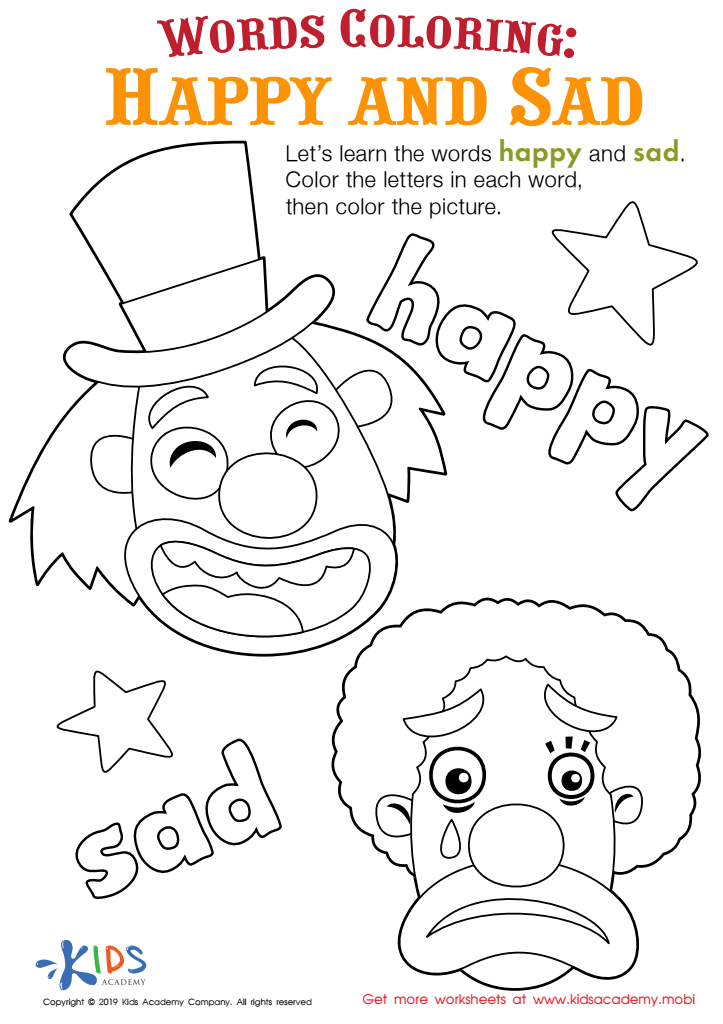
Happy and Sad Words Coloring Worksheet
 Assign to My Students











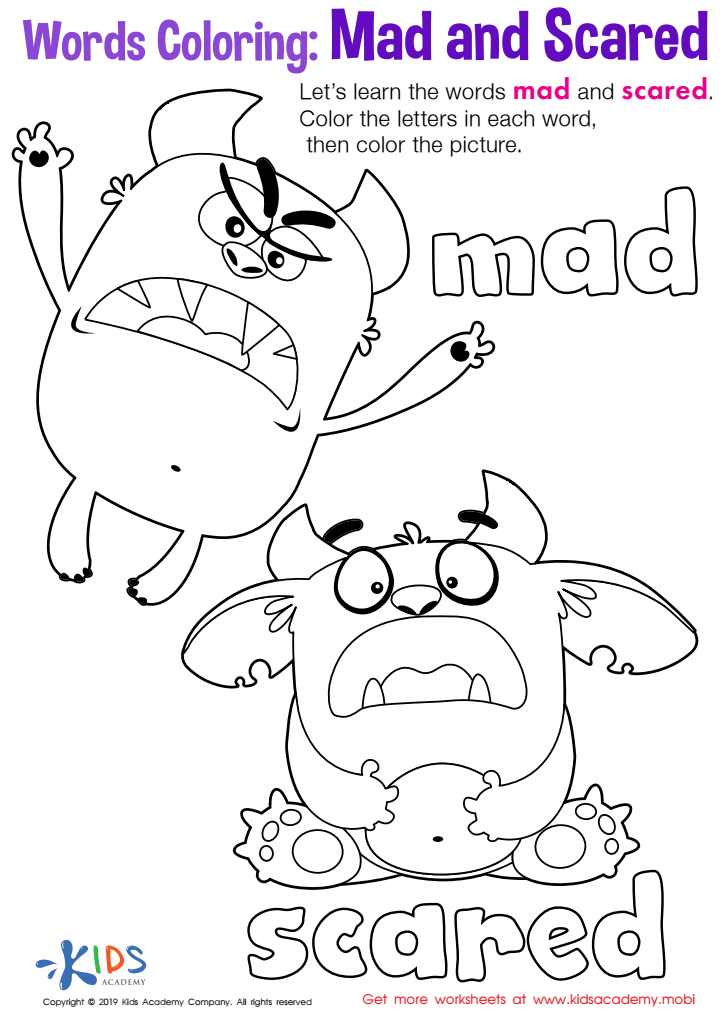
Mad and Scared Words Coloring Worksheet
Assign to My Students
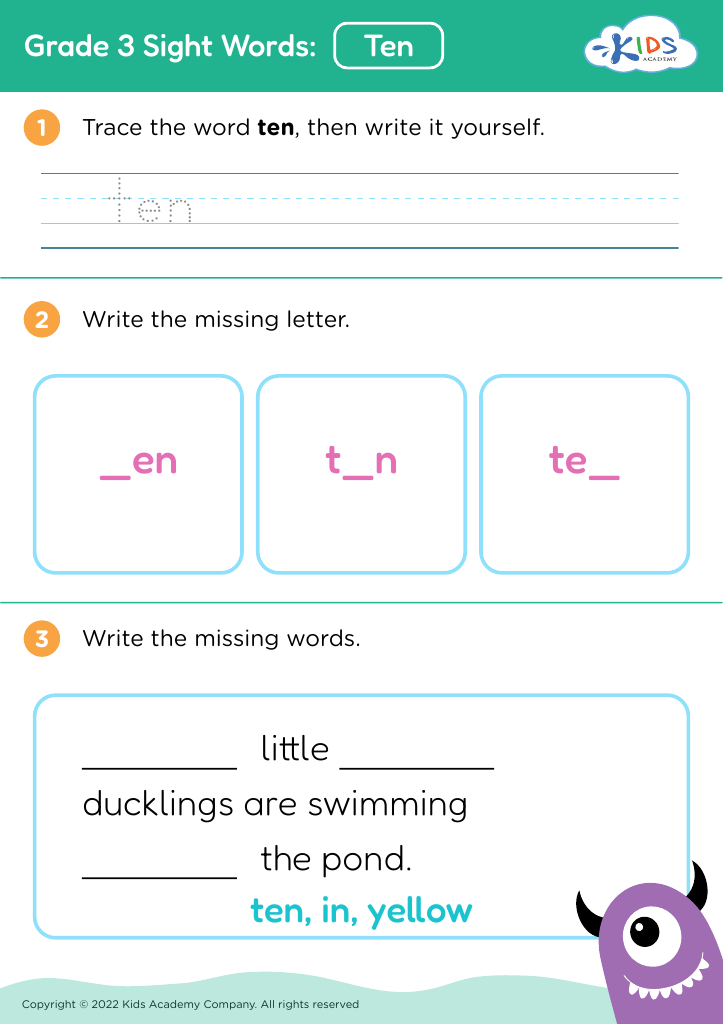








Coloring skills play a significant role in the developmental journey of 9-year-olds, offering unique benefits that extend beyond mere artistic expression. For parents and teachers, fostering these skills is vital because they significantly aid in vocabulary building and overall cognitive development.
As children engage in coloring activities, they encounter various colors, shapes, and themes that can introduce new words. For example, discussing a scene while coloring can lead to conversations about colors, objects, and actions depicted, enriching their language repertoire. By naming items and describing actions—like "shading" or "blending"—children enhance their vocabulary in meaningful contexts.
Moreover, coloring develops fine motor skills, which are closely linked to writing proficiency. Good handwriting benefits significantly from strong motor skills, facilitating clearer communication through written language. The surge in vocabulary and improved writing abilities together foster better comprehension and expression, essential skills for academic success.
Ultimately, when parents and teachers prioritize activities that encourage these developmental facets, they lay a sturdy foundation for lifelong learning. Engaging in coloring not only bolsters vocabulary but also nurtures creativity and confidence, making it a worthwhile endeavor in a child's educational experience.








