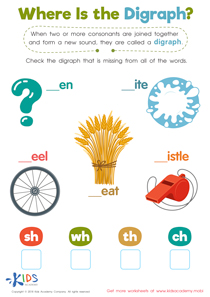
Phonics Skills Beginning Consonants Worksheets
4 filtered results
Difficulty Level
Grade
Age
-
From - To
Subject
Activity
Standards
Boost your child's reading success with our "Phonics Skills: Beginning Consonants Worksheets!" These expertly crafted resources from Kids Academy are designed to help young learners master the foundational elements of reading by focusing on beginning consonant sounds. Each worksheet engages kids with fun, interactive exercises that enhance phonemic awareness and build confidence in identifying, pronouncing, and writing initial consonants. Perfect for early grade students, these printables set the stage for fluent reading and effective communication skills. Equip your child with essential phonics knowledge they need to excel in reading and literacy. Transform learning into an enjoyable adventure today!
Favorites
With answer key
Interactive
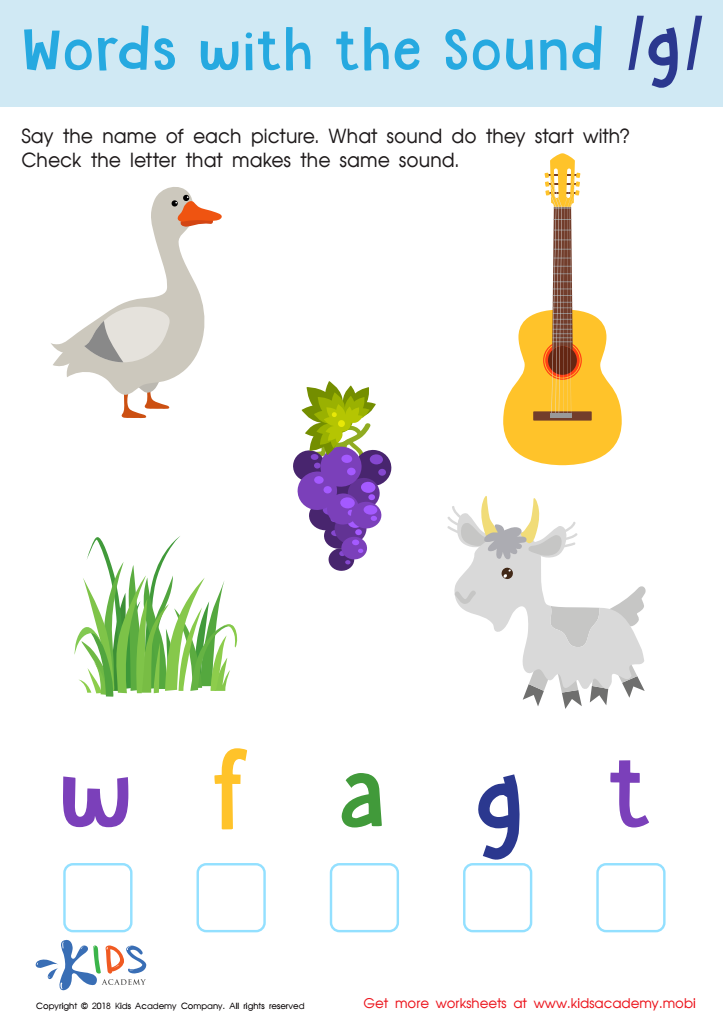
Words with sound g Reading Worksheet
Help your child learn the soft "g" sound with this phonics worksheet. Ask them to name each picture, then identify the letter sound it begins with. If it's "g", they can check the box. Have them repeat each word, listening for the soft "g" sound before moving on to the next page.
 Assign to My Students
Words with sound g Reading Worksheet
Worksheet
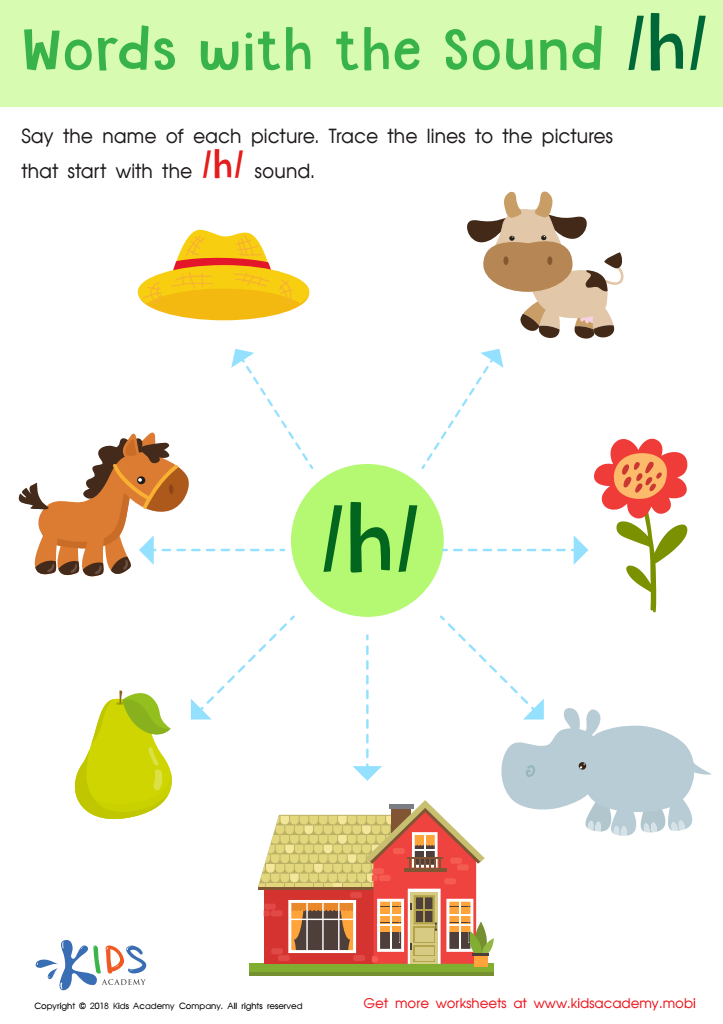
Words with sound h Reading Worksheet
The letter H can often be heard in words! Check your child's knowledge with an engaging worksheet from Kids Academy. Ask them to go around a circle and name each image aloud. Listen for the starting sound and trace the line from the middle letter to the images with the sound. This is a great way to practice phonics!
Words with sound h Reading Worksheet
Worksheet
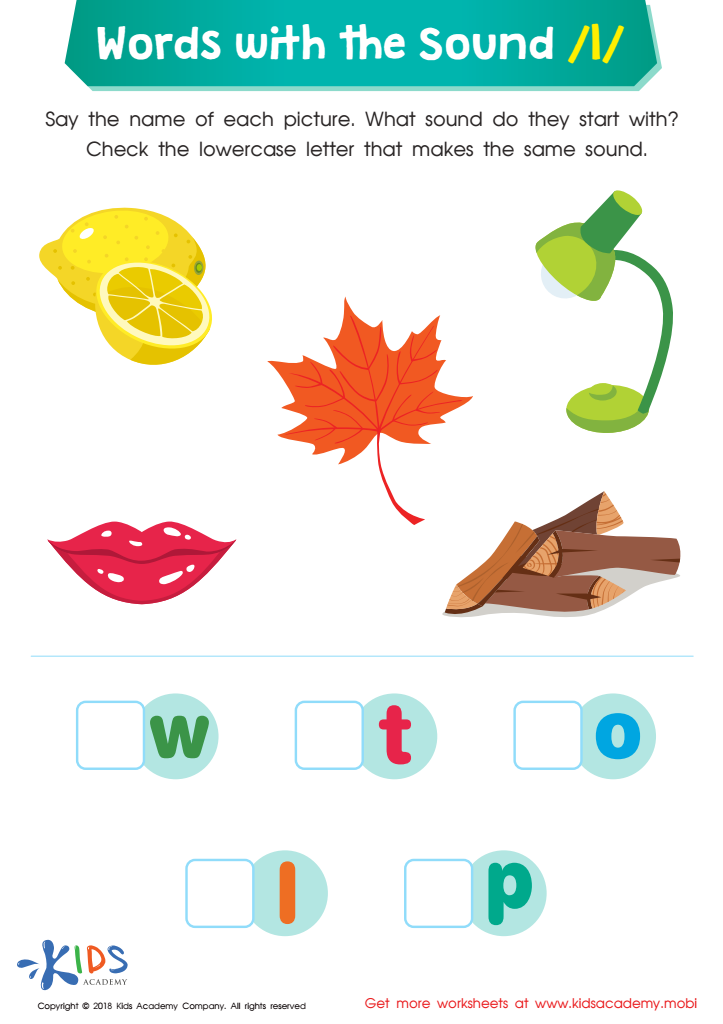
Words with Sound L Reading Worksheet
This PDF worksheet is great for helping emerging readers isolate initial sounds. Kids name familiar pictures, then identify the correct letter for the "l" sound. This worksheet strengthens fine motor skills, plus builds visual discernment. It's fun and colorful too!
Words with Sound L Reading Worksheet
Worksheet
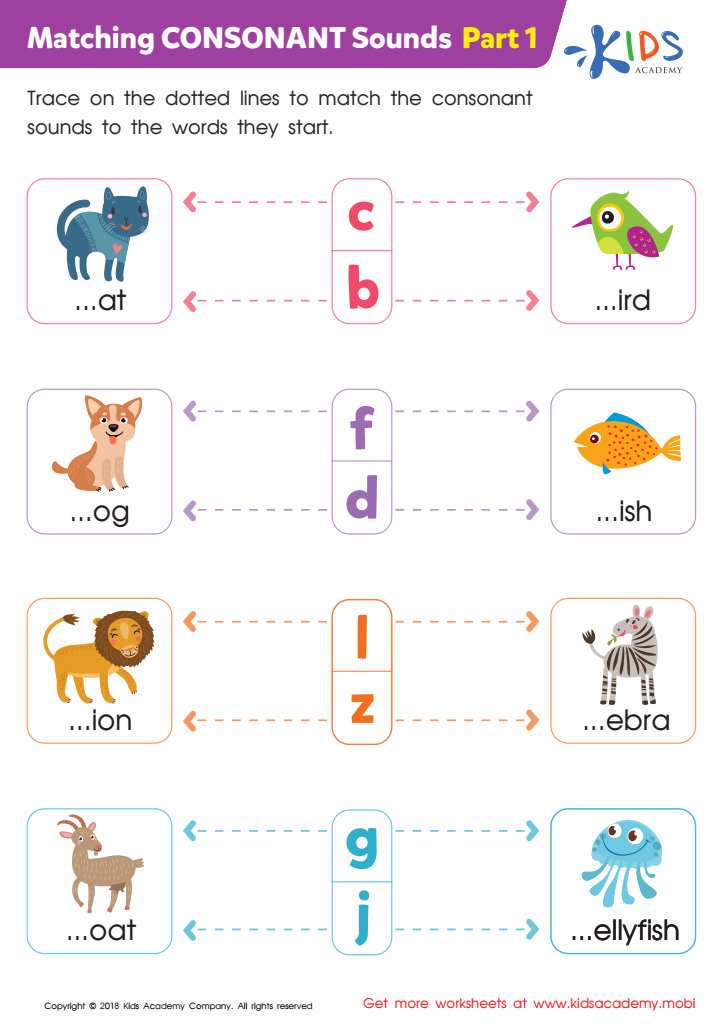
Matching Consonant Sounds: Part 1 Worksheet
Decide which letter matches each word and picture in this fun phonics worksheet. Slide your finger over each word, trying out each letter to check for matches. Once each pair is solved, trace the dotted lines with pencil to complete the printable. Who knew learning could be so enjoyable?
Matching Consonant Sounds: Part 1 Worksheet
Worksheet
Join Kids Academy for Free
Who is primarily going to use this learning content?


Parents and teachers hold a pivotal role in a child's early literacy journey, and one crucial aspect they should focus on is phonics, particularly beginning consonants. Phonics skills provide children with the foundational tools necessary to decode and understand words. Beginning consonants, the initial sounds in words, are often easier for children to hear and articulate, making them an excellent starting point.
When a child grasps beginning consonants, they gain a sense of confidence and self-efficacy. Recognizing that "cat" begins with a "c" sound or "dog" with a "d" sound, lays the groundwork for more complex reading tasks. This early success in phonics encourages a positive attitude towards reading, which is crucial for lifelong learning.
Moreover, strong phonics skills facilitate better spelling, writing, and comprehension abilities. They empower children to decode unfamiliar words independently, fostering improved reading fluency and comprehension. This instructional focus also addresses diverse learning styles, providing tactile, auditory, and visual learning experiences.
Ultimately, investing in phonics and beginning consonants equips children with the skills they need for academic success and the broader joy of reading. For these reasons, parents and teachers should prioritize phonics skills, ensuring children have a solid framework for literacy as they progress through their education.