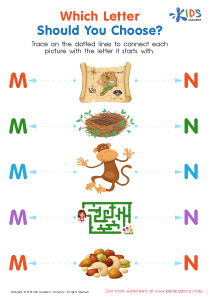
Lowercase letter writing Lowercase/Small Letters Worksheets
3 filtered results
-
From - To
Unlock your child's potential with our engaging Lowercase Letter Writing Worksheets! Designed specifically for young learners, these worksheets provide a fun and effective way to practice writing lowercase letters. Each worksheet features a variety of activities, including tracing and independent writing, to help children improve their handwriting skills while enhancing their letter recognition. Our resources foster creativity and build a solid foundation in literacy, making it easier for kids to transition to reading and writing. Perfect for teachers and parents alike, these worksheets support early education and ensure your child develops essential writing skills in a charming, interactive way!
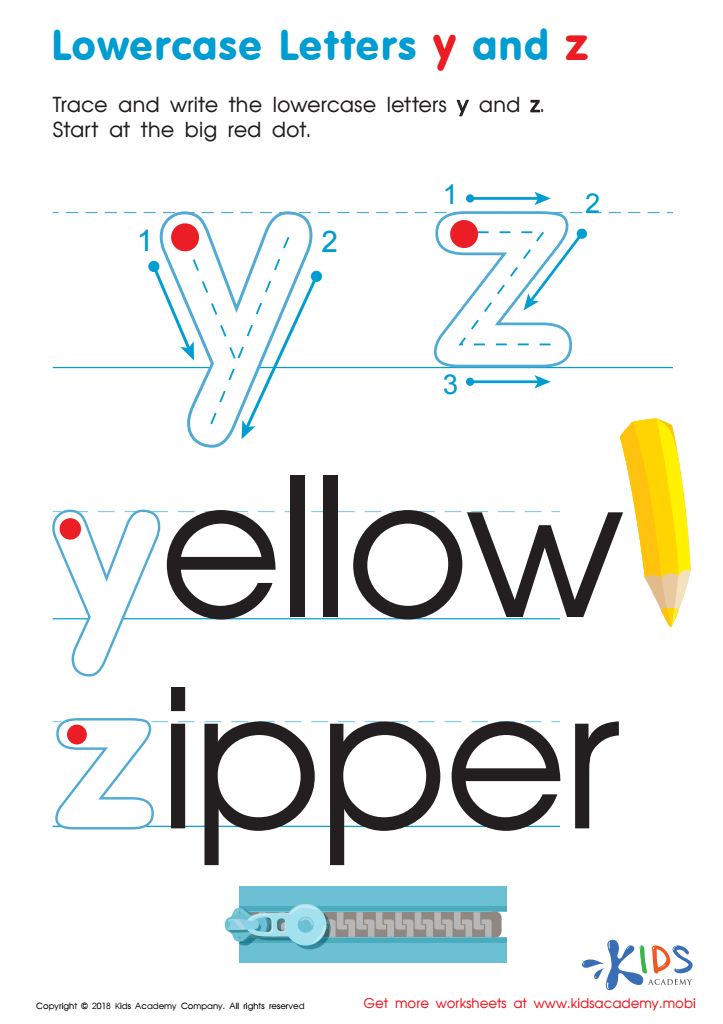
Lowercase Letters y z Worksheet
 Assign to My Students
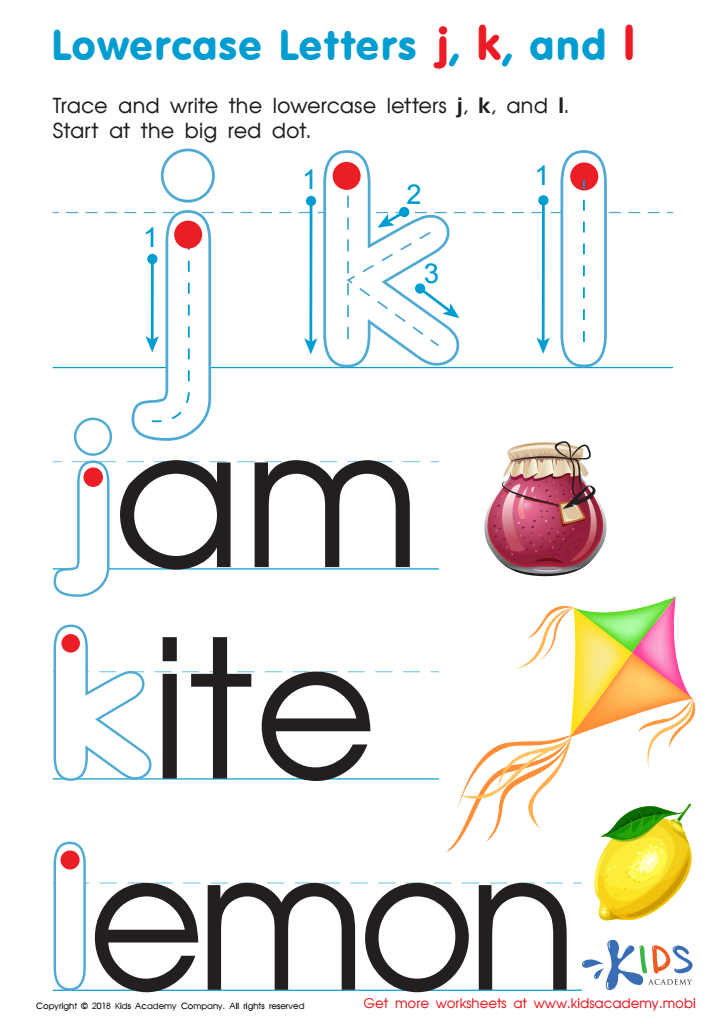
Lowercase Letters j k l Worksheet
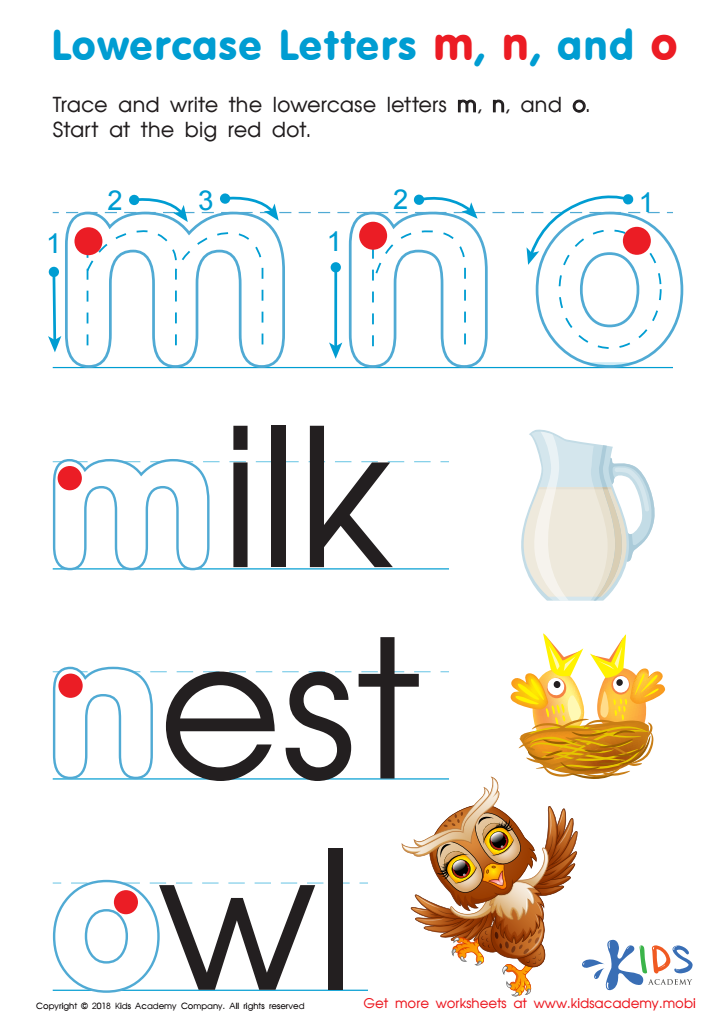
Lowercase Letters m n o Worksheet


Lowercase letter writing is crucial for early literacy development, and both parents and teachers should prioritize this skill. Learning to recognize, write, and differentiate lowercase letters forms a solid foundation for reading and writing. These letters constitute the majority of text in books, signage, and everyday communication, making familiarity imperative for children's comprehension and literacy skills.
Lowercase writing also enhances fine motor skills. Children refine their hand-eye coordination and develop their dexterity through tracing and writing these letters, forming an essential part of their overall physical development. Moreover, mastering lowercase letters boosts children's confidence in their writing abilities, encouraging them to express ideas and communicate effectively.
In addition to literacy and fine motor development, lowercase letter writing helps in understanding language structures. Children learn phonetic patterns, aiding their spelling and reading comprehension. Early exposure to lowercase letters minimizes confusion when children encounter block letters later.
Lastly, the ability to write clearly and effortlessly can foster a love for writing and learning, impacting children's academic success and self-esteem positively. Therefore, emphasizing lowercase letter writing is vital for parents and educators aiming to support children’s overall language development and educational journeys.