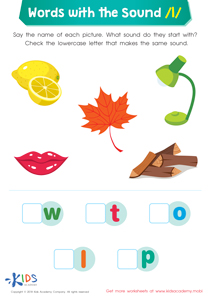
Uppercase identification Uppercase Letters Worksheets
5 filtered results
-
From - To
Discover our engaging Uppercase Letters Identification Worksheets designed to help young learners master the recognition of uppercase letters. These printable activities provide a fun and interactive way for children to familiarize themselves with the alphabet. Each worksheet features colorful illustrations and diverse exercises, ensuring children stay motivated while building their literacy skills. Whether used in the classroom or at home, these worksheets foster essential reading readiness skills. Perfect for preschool and kindergarten students, the Uppercase Letters Identification Worksheets cater to varying skill levels, making learning enjoyable and effective. Start your child's journey to confident reading today!
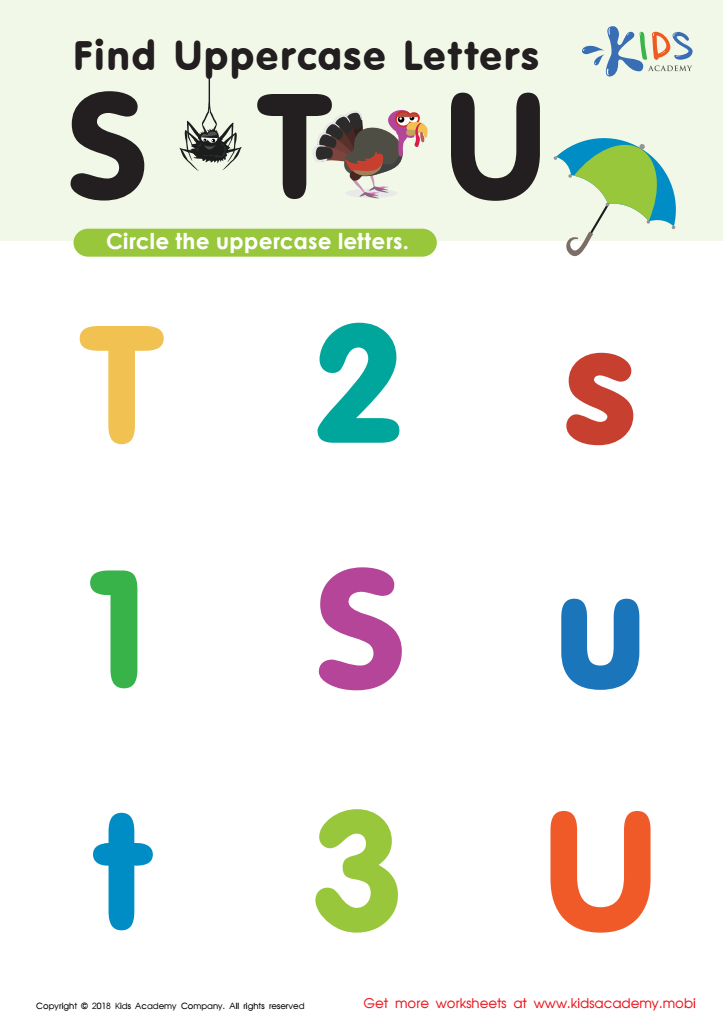
Find Uppercase Letters Worksheet
 Assign to My Students
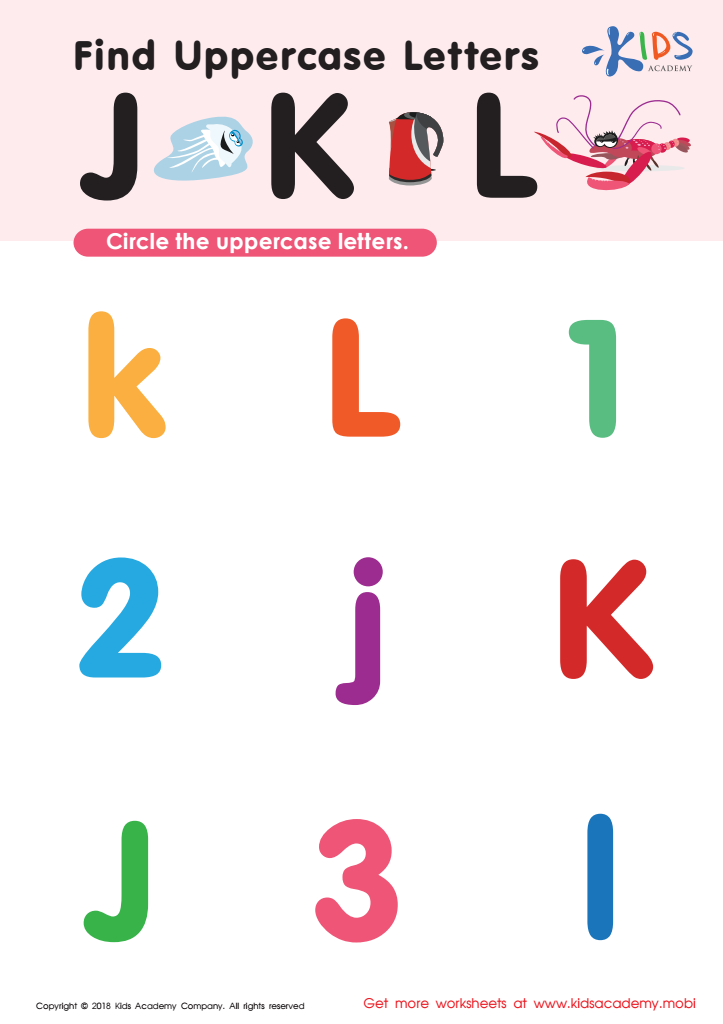
Find Uppercase Letters J, K, and L Worksheet

Find Uppercase Letters A, B, and C Worksheet
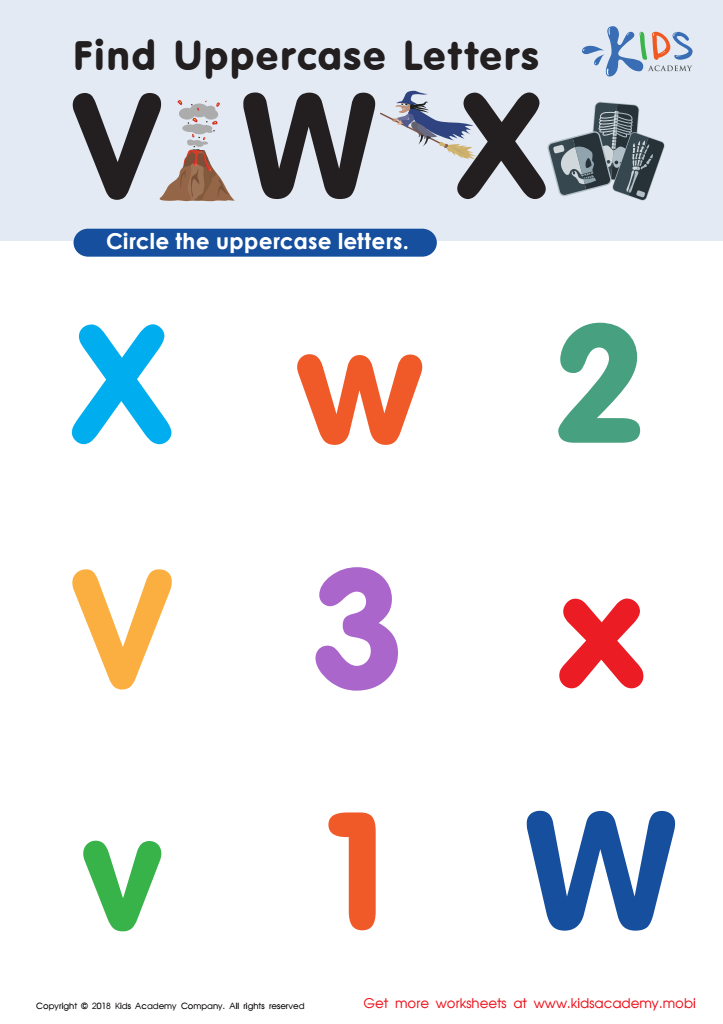
Find Uppercase Letters V, W, X Worksheet
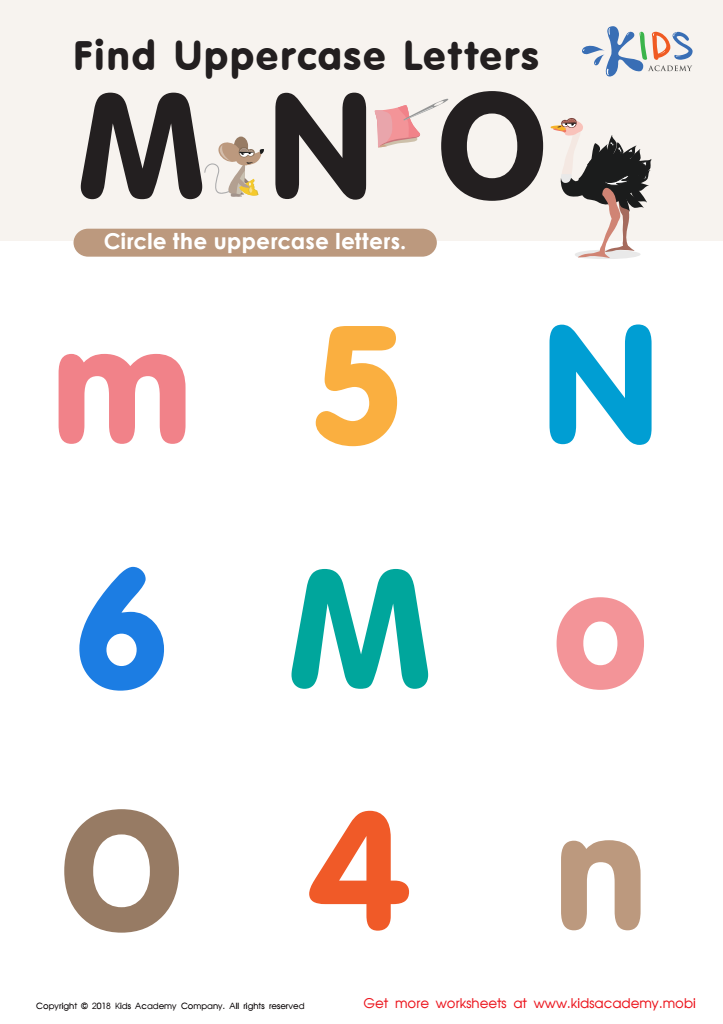
Find Uppercase Letters M, N, and O Worksheet








Understanding uppercase letter identification is essential for both parents and teachers as it lays the foundation for literacy development. Uppercase letters, often the first letters a child encounters in print, are crucial for recognizing the beginnings of sentences, proper nouns, and titles. Familiarity with these letters enhances reading comprehension and fluency, enabling children to decode text more effectively.
Parents and teachers play a pivotal role in nurturing this skill. Early recognition of uppercase letters boosts a child's confidence, reinforcing positive associations with reading and writing. Engaging activities, such as interactive games or themed worksheets, can make learning these letters enjoyable, fostering a love for literacy.
Moreover, uppercase letters carry significant functional importance in everyday life—such as in names, addresses, and signs—making their identification essential beyond the classroom. Understanding and recognizing uppercase letters simplifies the transition to lower-case letters and helps in spelling and handwriting tasks, which are vital for academic success.
Ultimately, teaching uppercase letter identification is not just an academic skill; it’s a vital part of nurturing a lifelong love for reading that can open up countless opportunities for children in their future. Parents and educators' involvement in this area truly makes a significant impact.