Phonics Worksheets Activities With Answers for Ages 4-9 - Page 2
25 filtered results
-
From - To
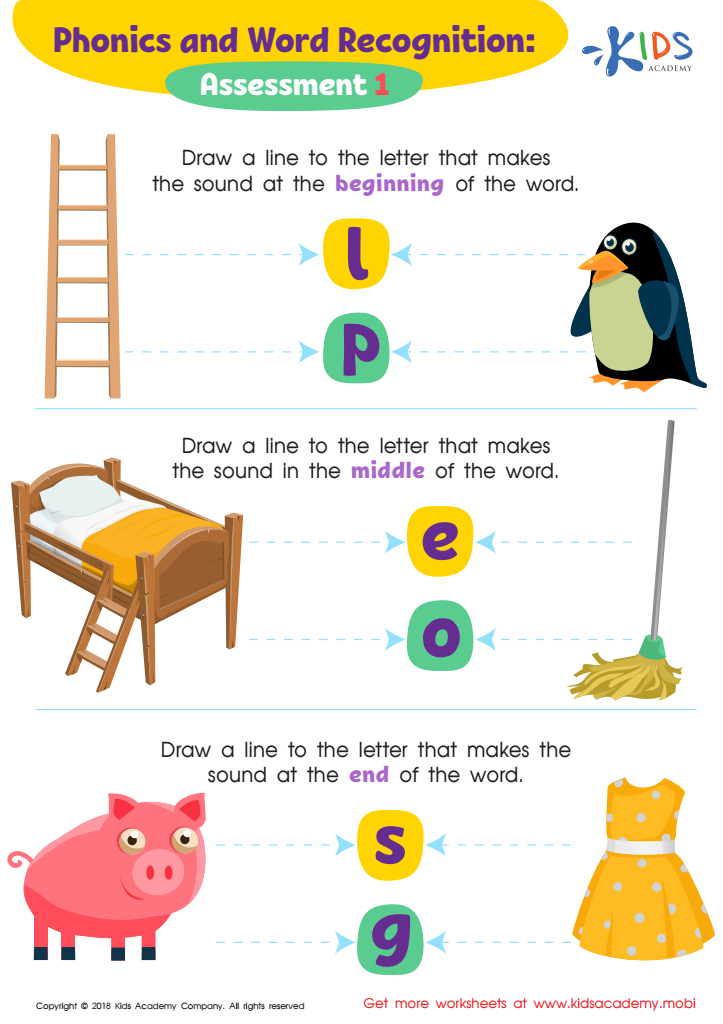
Phonics and Word Recognition: Assessment 1 ELA Worksheet
 Assign to My Students








Phonics activities are crucial for children ages 4-9 as they form the foundation for reading and writing skills. Understanding phonics enables children to decode words, improving their reading fluency as they associate sounds with letters and combinations. Parents and teachers should pay special attention to phonics activities because they enhance literacy and boost confidence in young learners.
Engaging phonics activities, especially those with answers, provide immediate feedback, reinforcing learning. Children can independently check their work, promoting a sense of accomplishment and ownership over their educational journey. These activities cater to different learning styles, making them accessible and effective for diverse learners in this age group.
Moreover, strong phonics skills reduce frustration and hesitation in reading, paving the way for a positive attitude towards literacy. This early foundation can lead to better academic outcomes in later grades, as proficient readers are more likely to excel in all subjects.
Ultimately, investing time in phonics activities benefits children well beyond the classroom, fostering lifelong reading habits and a love for learning. By prioritizing phonics, parents and teachers can transform reading from a daunting task into an enjoyable and enriching experience.








