Reading Non-Fiction Worksheets Activities With Answers for Ages 6-8
4 filtered results
-
From - To
Explore our engaging "Reading Non-Fiction Worksheets Activities With Answers" designed specifically for ages 6-8! These worksheets foster critical thinking skills while introducing young readers to the fascinating world of non-fiction. Each activity is tailored to reinforce comprehension and promote curiosity about real-world topics. With answer keys provided, teachers and parents can easily support learning at home or in the classroom. From exciting facts about animals to the wonders of space, our interactive activities ensure children enjoy their journey through non-fiction texts. Enhance your child’s reading skills today and watch their confidence soar with these fun, educational tools!
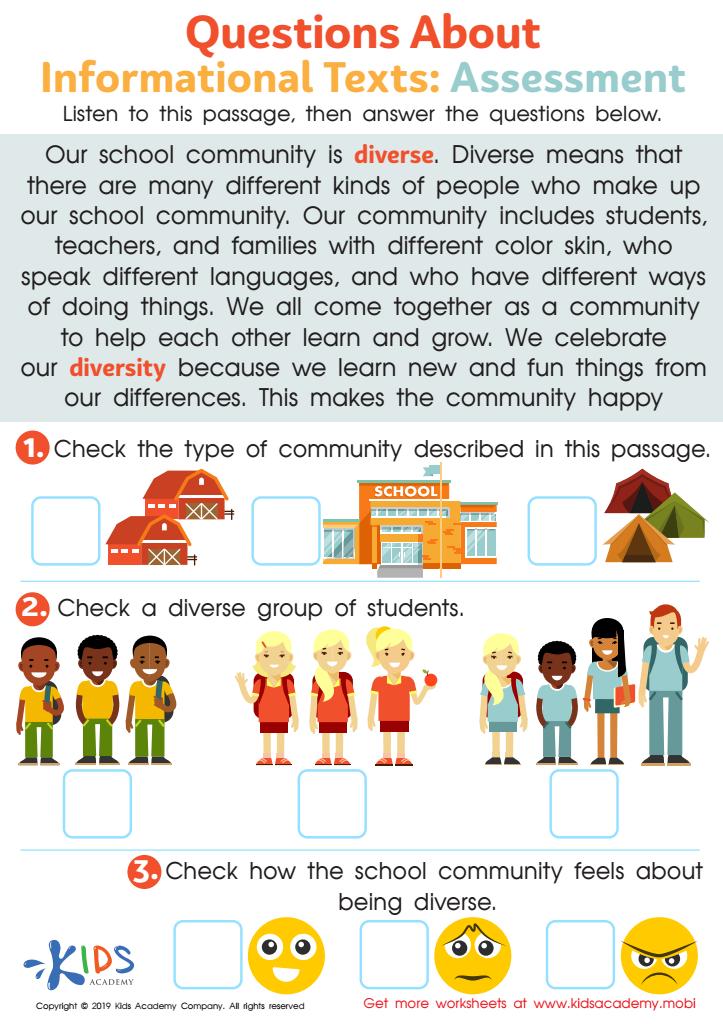
Questions About Informational Texts: Assessment 1 Worksheet
 Assign to My Students
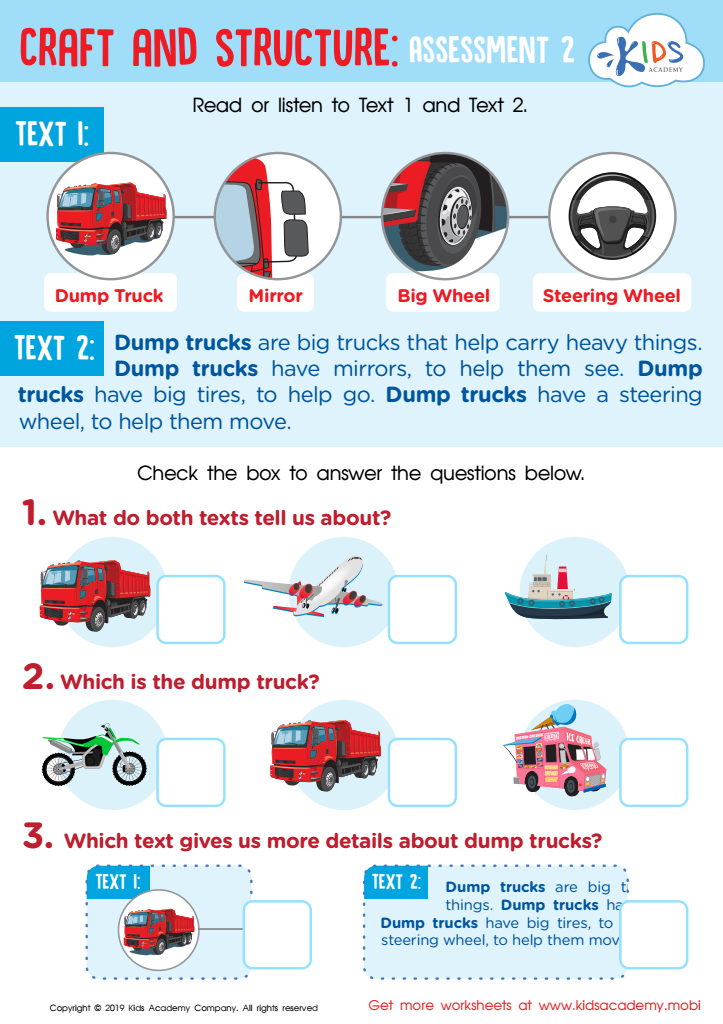
Craft and Structure: Assessment 2 Worksheet
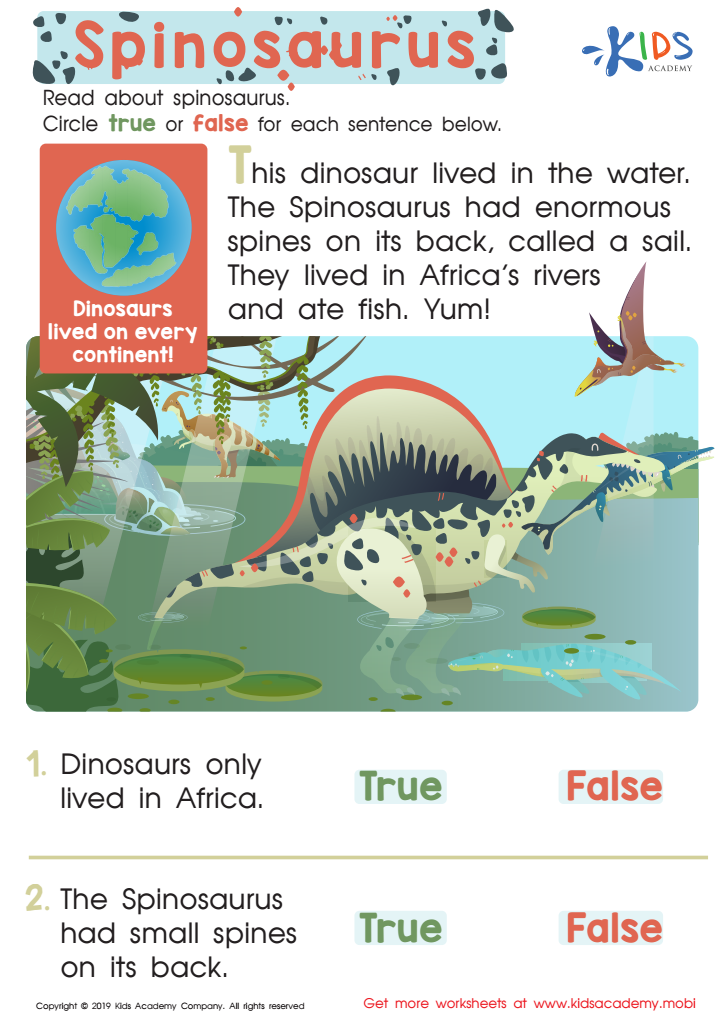
Spinosaurus Assessment Worksheet
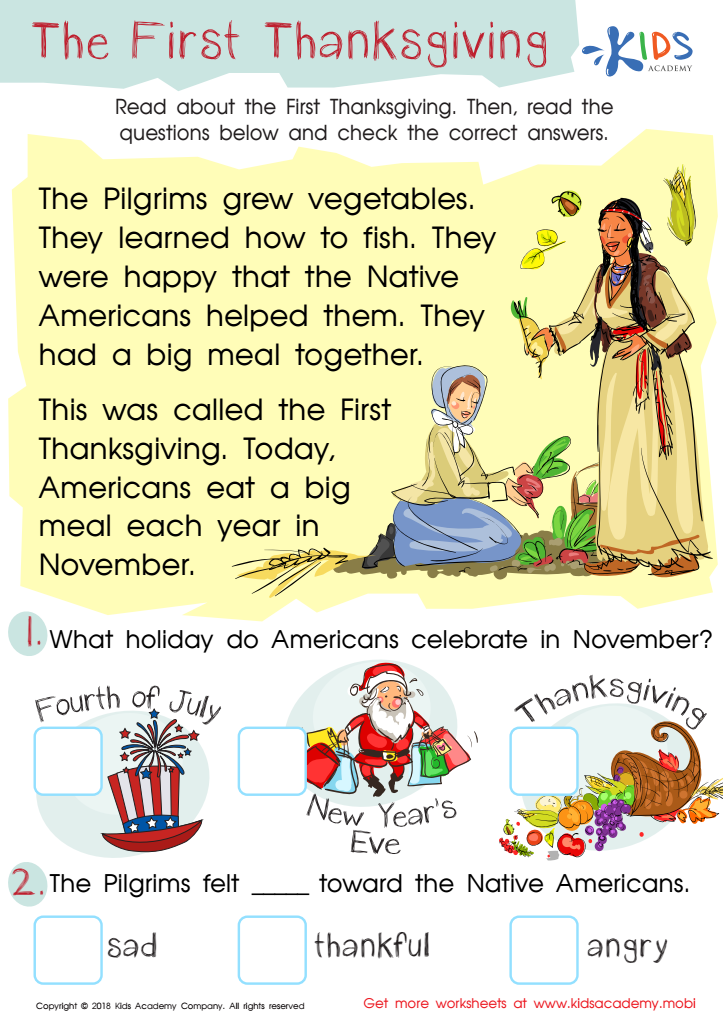
Assessment: First Thanksgiving Worksheet






Parents and teachers should prioritize reading non-fiction activities for ages 6-8 because these practices support vital skills that are essential for lifelong learning. At this developmental stage, children are naturally curious and eager to explore the world. Engaging with non-fiction materials satisfies this curiosity, helping them understand real-world concepts while enriching their vocabulary and comprehension skills.
Non-fiction reading enhances critical thinking as children learn to analyze facts, compare information, and draw conclusions. It fosters an understanding of various subjects, from science and history to geography, making learning relatable and interesting. Involving activities with answers promotes active learning; children engage more deeply with the text, developing skills such as inferencing and deduction.
Moreover, parents and teachers can use these activities to encourage discussions, allowing kids to articulate their ideas and questions, which enhances their communication skills. This engagement can also nurture a love for reading by showcasing the richness of non-fiction topics beyond stories, making it clear that reading can provide knowledge and enjoyment.
In sum, reading non-fiction activities cultivates informed, inquisitive learners, providing them with tools they need to succeed academically and fostering a broader understanding of the world around them.








