Reading Non-Fiction Worksheets for Ages 3-8 - Page 5
97 filtered results
-
From - To
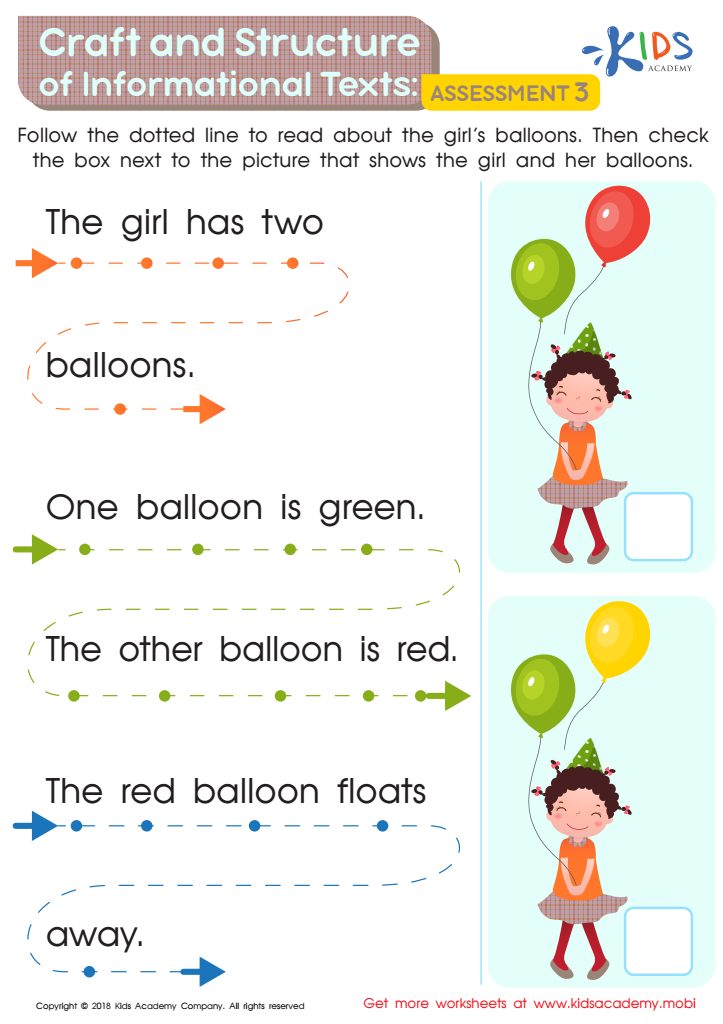
Craft and Structure of Informational Texts: Assessment 3 Worksheet
 Assign to My Students







Reading non-fiction books to children ages 3-8 is of immense importance for both parents and teachers. Non-fiction reading fosters curiosity and a sense of exploration by introducing young minds to the real world around them. These books provide factual information on a wide range of topics such as animals, plants, space, cultures, and daily life activities, enriching a child's knowledge base from an early age.
Introducing non-fiction helps children develop critical thinking and analytical skills. They learn to differentiate between facts and opinions, enhancing their ability to comprehend and engage with informational texts. These skills are vital for academic success across various subjects as they progress through school.
Early exposure to non-fiction also supports vocabulary development. Different from fictional stories, non-fiction texts are rich with specific terminologies and concepts that broaden a child's language and understanding. Additionally, these books often contain visual aids like photographs and diagrams, which can help visual learners grasp complex information more easily.
Moreover, reading non-fiction nurtures a lifelong love for learning and inquiry. Children become more likely to ask questions and seek out knowledge independently. By prioritizing non-fiction, parents and teachers provide a well-rounded literary foundation that prepares children for future educational endeavors and instills a love for the endless possibilities of learning.








