Reading Non-Fiction Worksheets for Ages 4-7 - Page 4
74 filtered results
-
From - To
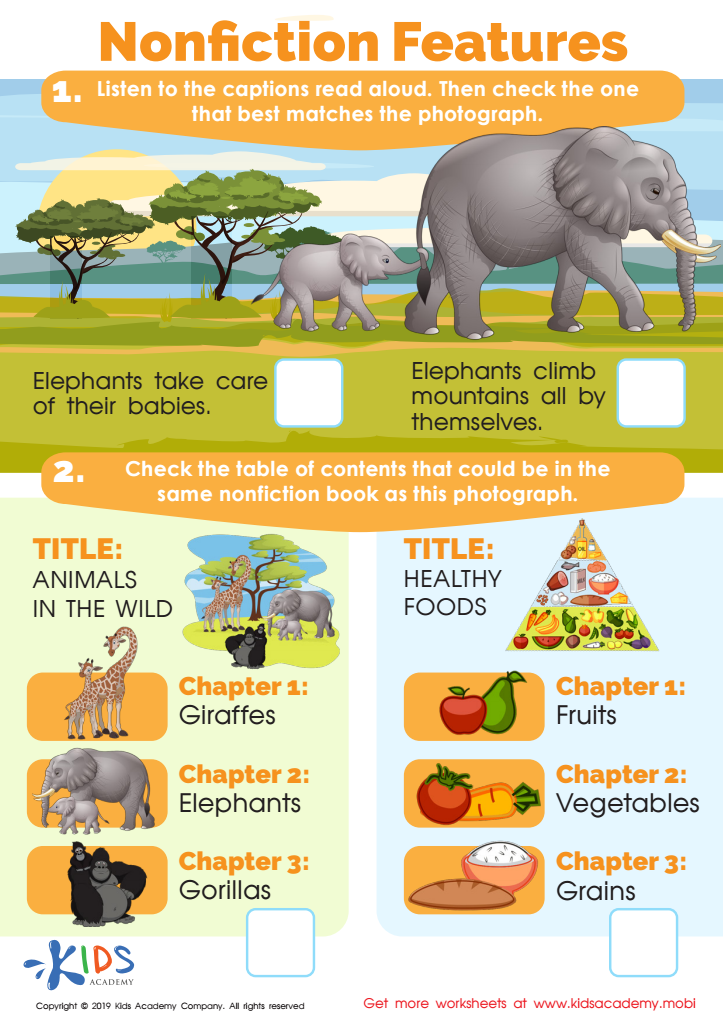
Nonfiction Features Worksheet
 Assign to My Students
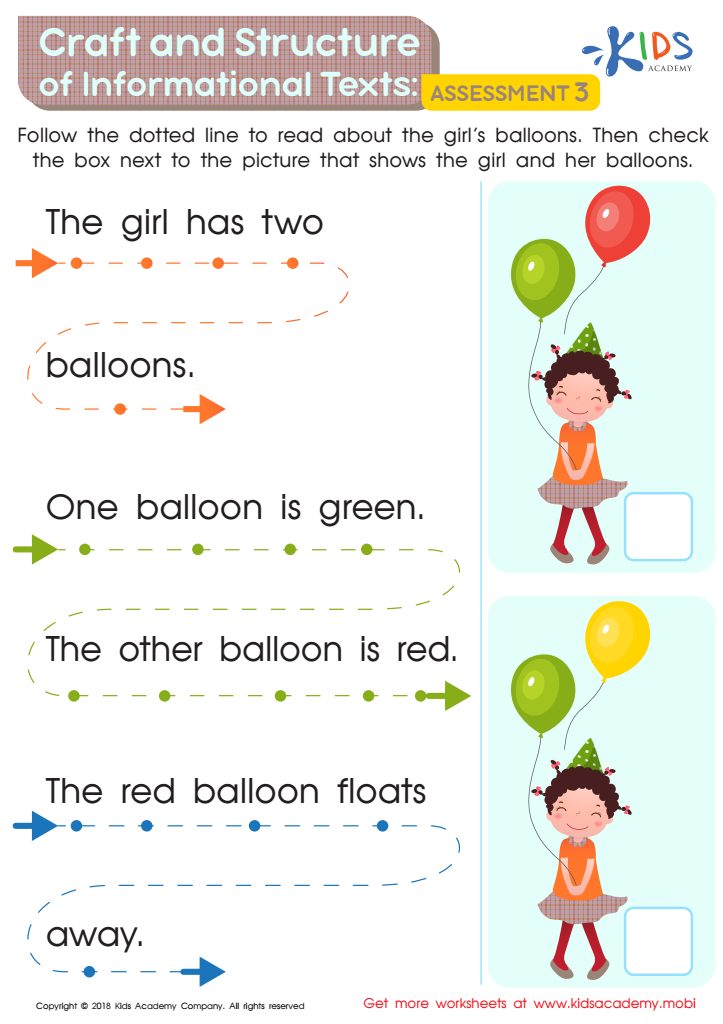
Craft and Structure of Informational Texts: Assessment 3 Worksheet








Encouraging children aged 4-7 to read non-fiction books provides several significant benefits for both their educational journey and overall development. At this formative stage, children are naturally curious about the world around them. Non-fiction books cater to this curiosity by providing factual and informative content that broadens their understanding of diverse subjects such as animals, plants, space, and everyday phenomena.
Exposing young readers to non-fiction enhances vocabulary by introducing them to specific terms and concepts not typically found in fictional stories. This specialized vocabulary supports the development of language and comprehension skills, aiding children in expressing themselves more clearly and accurately.
Non-fiction also fosters critical thinking and enhances inquiry-based learning. When children read factual texts, they learn to ask questions, seek out information, and understand the importance of evidence-based conclusions. These skills are crucial for problem-solving and lifelong learning.
Moreover, reading non-fiction supports educational foundations in science, technology, engineering, and mathematics (STEM). By cultivating an early interest in these areas, children build a base for future academic success.
Parental and teacher involvement in guiding non-fiction reading can spark meaningful discussions, reinforcing learning, and strengthening the bond around shared knowledge. Therefore, incorporating non-fiction into early reading routines encourages a well-rounded, informed perspective on the world.








