Reading skills development Letter Sounds Worksheets for Ages 4-8
3 filtered results
-
From - To
Unlock the power of reading with our "Reading Skills Development Letter Sounds Worksheets" designed specifically for ages 4-8. These engaging worksheets provide a fun, interactive way for young learners to master letter sounds, a fundamental step in their reading journey. Our expertly crafted printable activities offer a variety of exercises to help children recognize, pronounce, and connect letters with their corresponding sounds, boosting their phonemic awareness. Perfect for classroom use or at-home practice, these worksheets lay a strong foundation for reading success, ensuring your child progresses with confidence and enthusiasm. Give your young reader the skills they need to thrive!
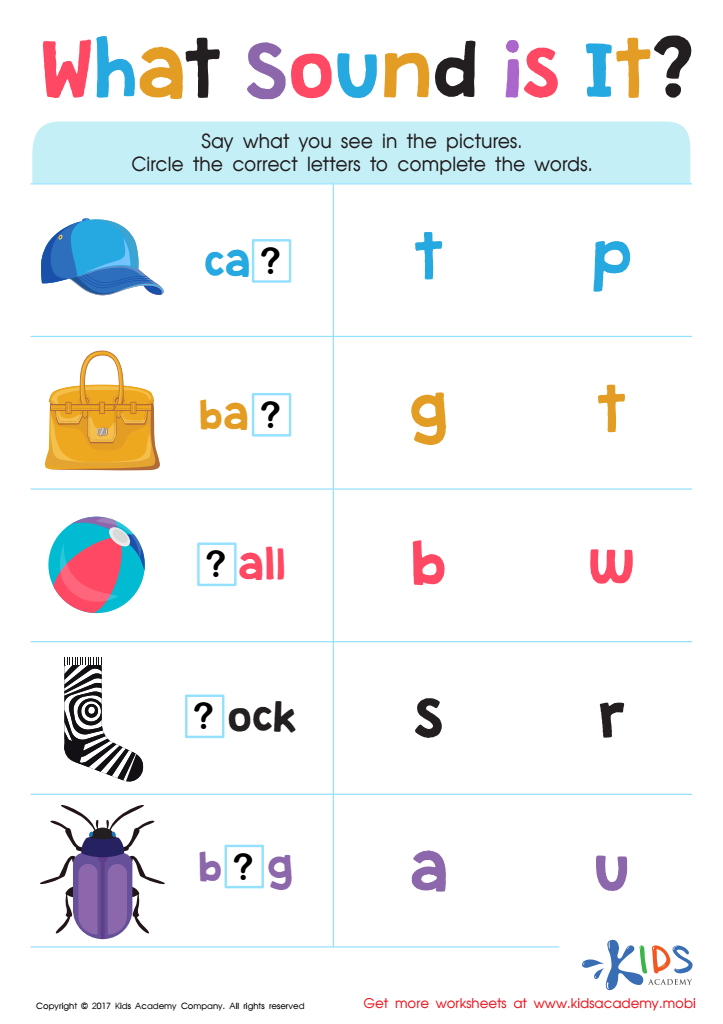
What Sound Is it? Worksheet
 Assign to My Students
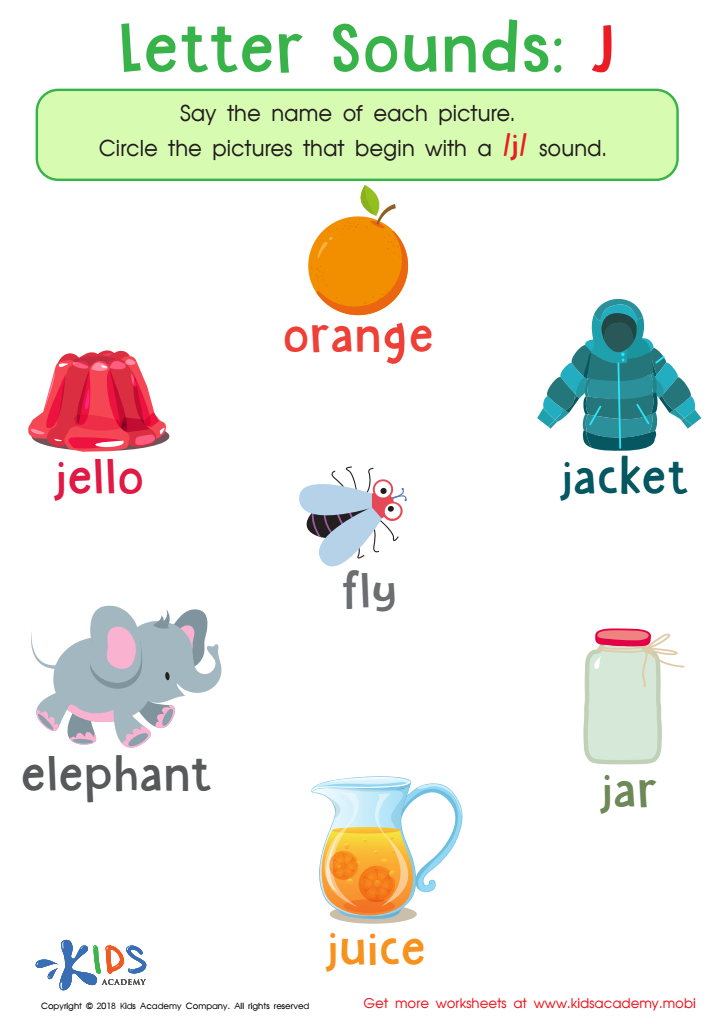
Letter Sounds: J Printable Worksheet
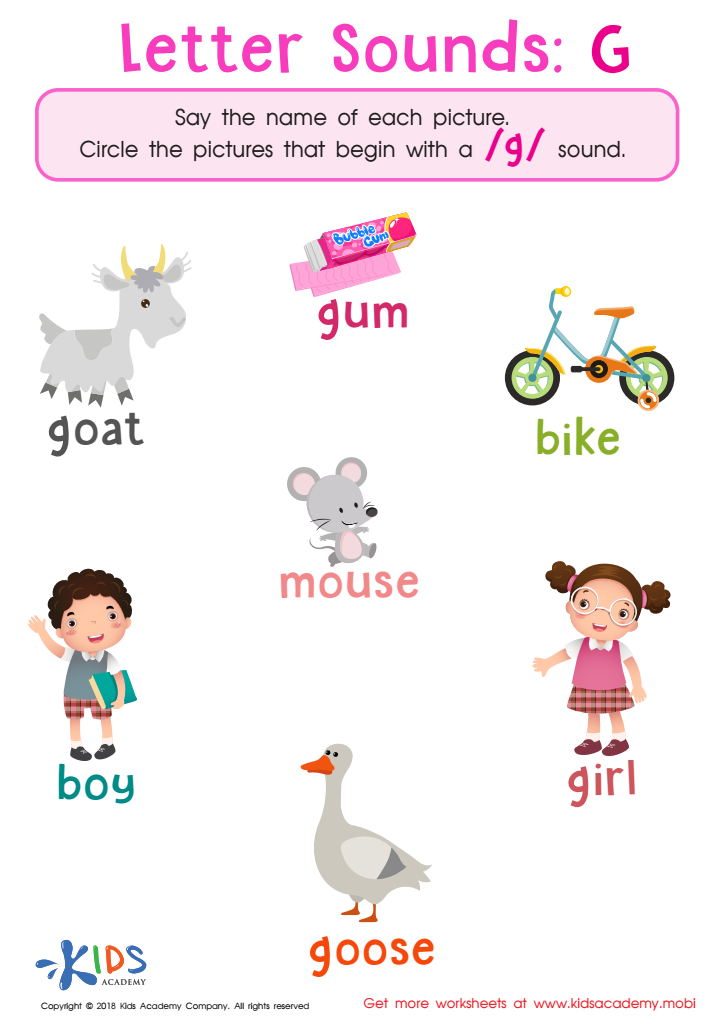
Letter G Sounds Worksheet








Reading skills development, specifically understanding letter sounds, is fundamental for children aged 4-8 as it forms the basis of literacy. During these formative years, children's brains are exceptionally receptive to language acquisition. By recognizing the sounds that letters make (phonemic awareness), children can begin to decode words, which is a crucial step towards fluent reading.
Parents and teachers play a vital role in nurturing these skills. Teaching letter sounds helps kids understand how letters combine to form words. This process not only supports reading but also enhances spelling and writing abilities. Strong reading skills are linked to academic performance across all subjects, underpinning competencies in areas like mathematics and science which often require reading comprehension for problem-solving and instructions.
Moreover, fostering reading skills early instills a lifelong love of reading, which opens doors to continuous learning and personal growth. Literacy is also key to effective communication, both written and verbal, which is crucial in everyday social interactions and future professional settings.
Parents and teachers are essential in providing a supportive and stimulating environment for young learners. Engaging activities like reading aloud, phonics games, and interactive story sessions act as building blocks for these skills. Prioritizing reading skills development ensures children have the foundational tools for future success both in and out of the classroom.







