Letter X Worksheets for Ages 4-9
5 filtered results
-
From - To
Introducing our "Letter X Worksheets for Ages 4-9"! Dive into a world of learning with this fun and educational resource designed to enhance your child's alphabet skills. Perfect for ages 4 to 9, these engaging worksheets offer a variety of activities such as tracing, matching, and coloring, all centered around the letter "X". Created by experts in early childhood education, these worksheets not only teach letter recognition and phonetics but also develop fine motor skills and cognitive abilities. Perfect for both classroom and home use, our worksheets provide a captivating learning experience that makes mastering the letter "X" exciting and enjoyable.
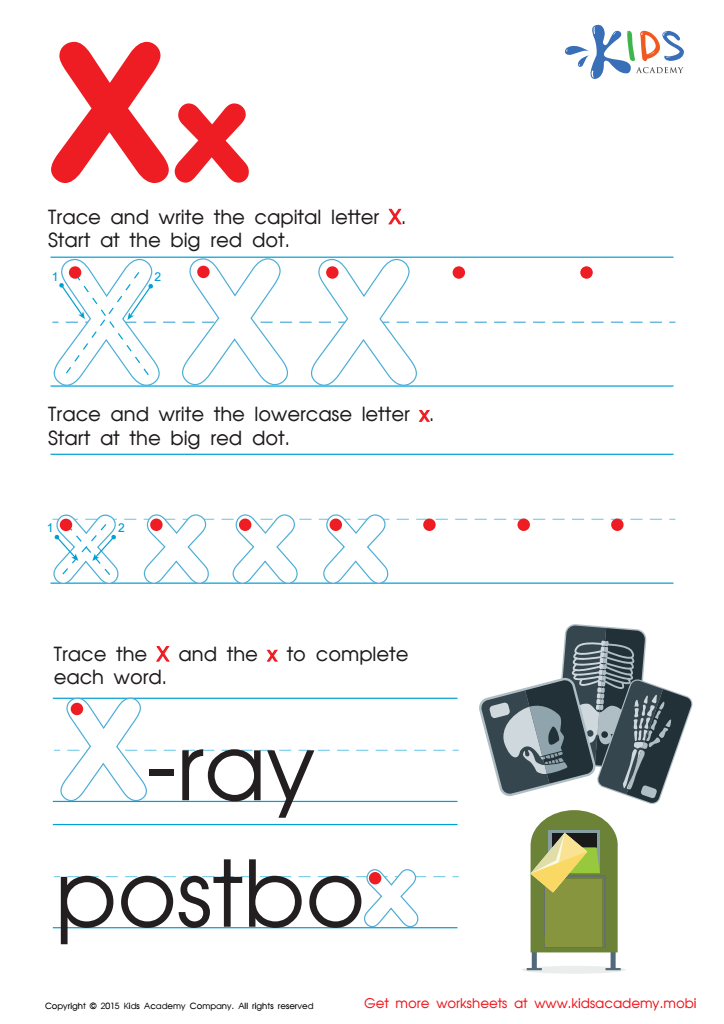
Letter X Tracing Page
 Assign to My Students
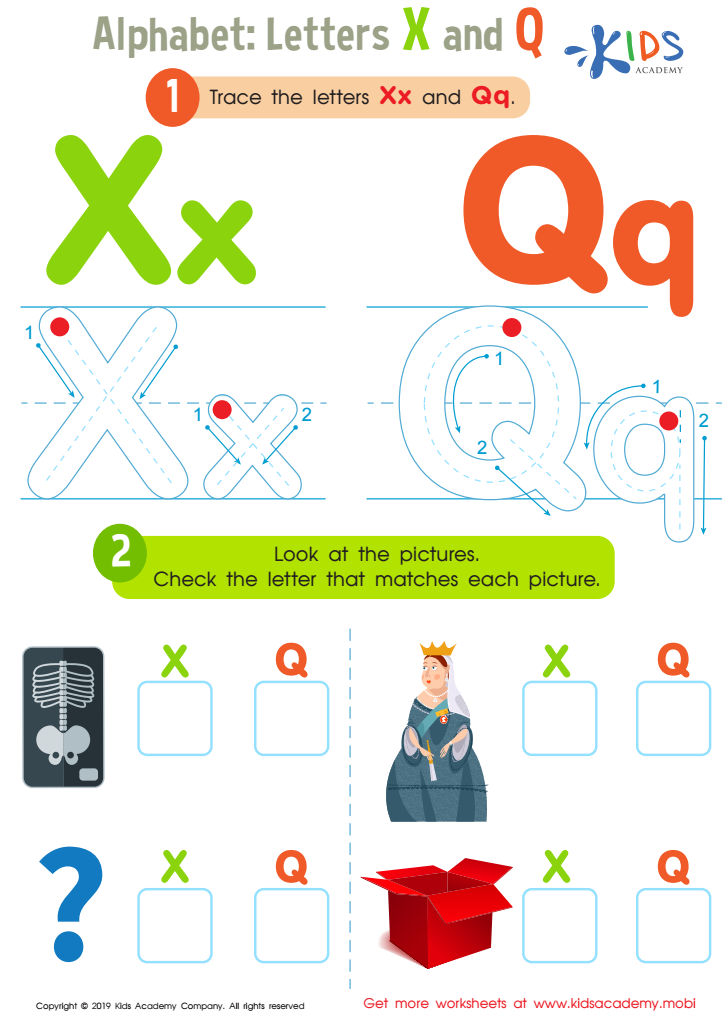
Letters X and Q Tracing Worksheet
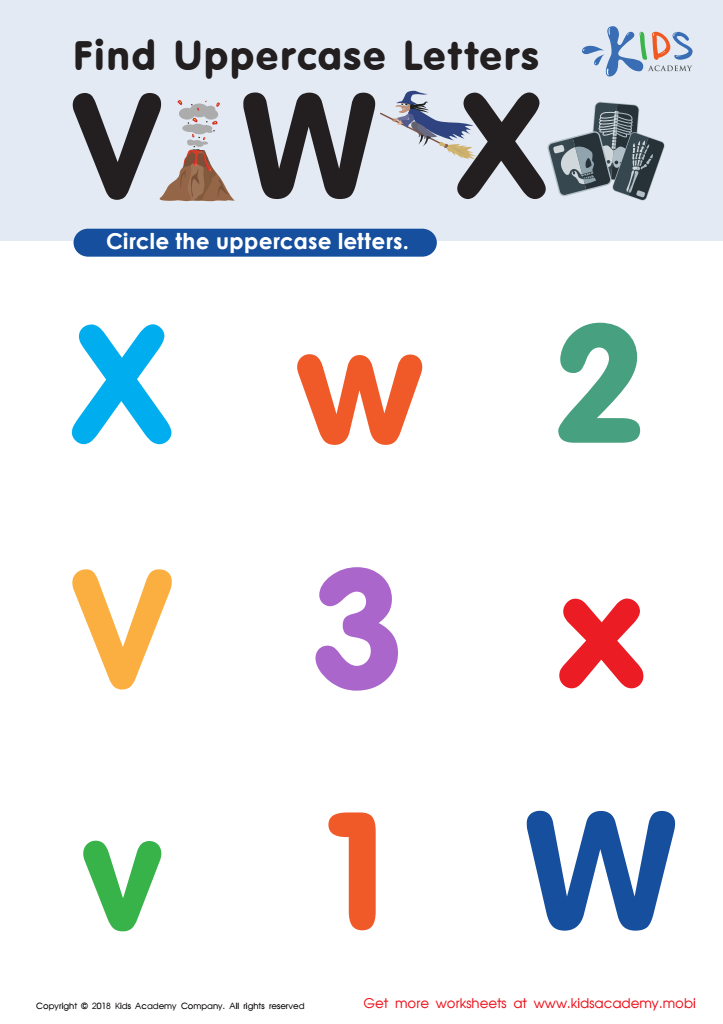
Find Uppercase Letters V, W, X Worksheet
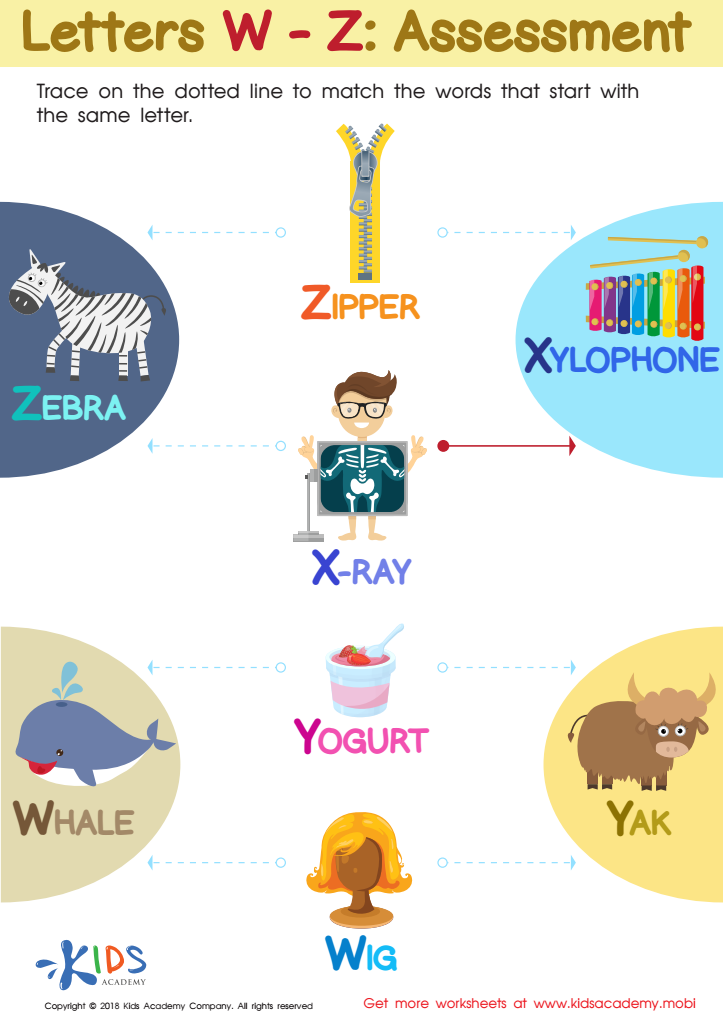
Letters W–Z Tracing Worksheet

Uppercase Letters V, W, and X Worksheet




The letter "X" holds considerable significance in the early stages of a child’s education, particularly for those aged 4 to 9. While it might seem less commonly used compared to other letters, it plays a crucial role in the development of phonetic and spelling skills. Understanding the sound of "X," which often mimics a "ks" sound, is essential for decoding words correctly. For example, in words like "box" or "fox," the letter "X" helps children recognize patterns that aid in reading fluency.
Moreover, early familiarity with "X" supports the learning of more complex vocabulary and enhances spelling skills. It challenges young learners, encouraging them to recognize and adapt to exceptions in word construction, thus improving cognitive flexibility.
Parents and teachers should also prioritize the letter "X" because it appears frequently in math (expressions like "x-axis") and science (e.g., x-ray). By introducing "X" early, children can grasp these foundational concepts more intuitively, encouraging interdisciplinary learning and curiosity.
Finally, learning "X" fosters a sense of achievement and confidence as it represents the crux of challenges in spelling and reading development. When children master it, they feel capable of tackling more intricate linguistic and academic tasks. Thus, emphasising the letter "X" stimulates well-rounded educational growth.