The 5 Senses Worksheets for Ages 4-9
3 filtered results
-
From - To
Explore our engaging "5 Senses Worksheets for Ages 4-9," designed to enhance young learners' understanding of the world around them. These fun, interactive worksheets help children identify and differentiate their sensory experiences—sight, hearing, touch, taste, and smell—through colorful activities and illustrations. They promote critical thinking and help develop vocabulary as kids learn to describe what they see, hear, and feel. Perfect for preschoolers and early elementary students, these worksheets foster curiosity and observation skills. Whether at home or in the classroom, our resources provide an enjoyable way to stimulate sensory exploration and learning in early childhood education.
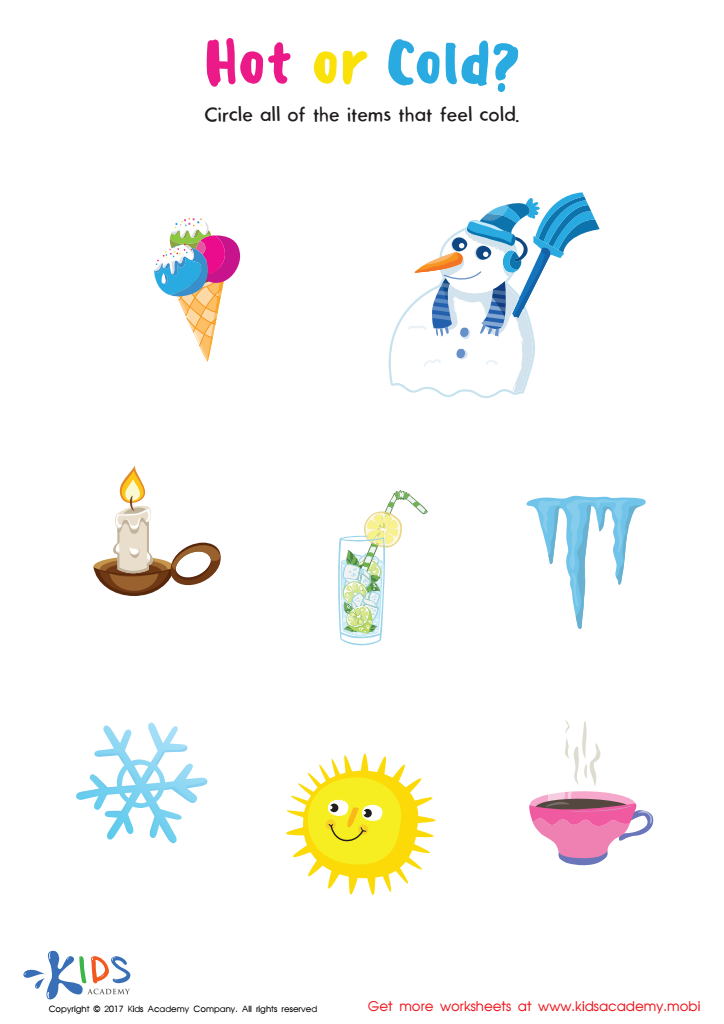
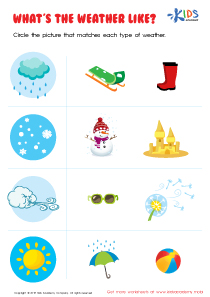
Hot or Cold Printable
 Assign to My Students
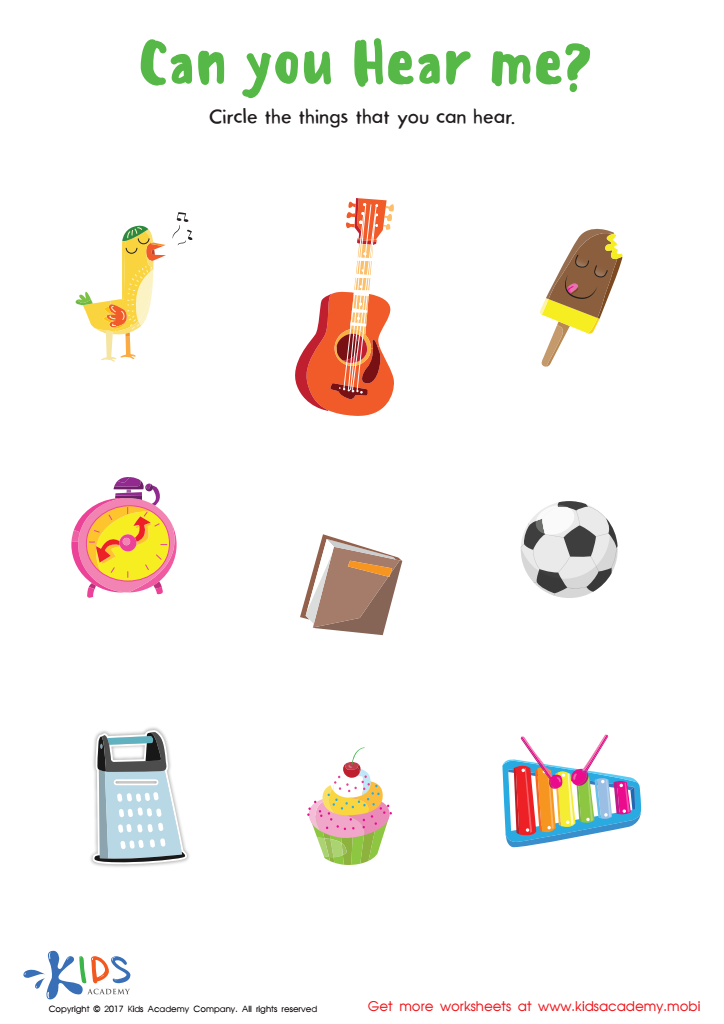
Can You Hear Me Worksheet
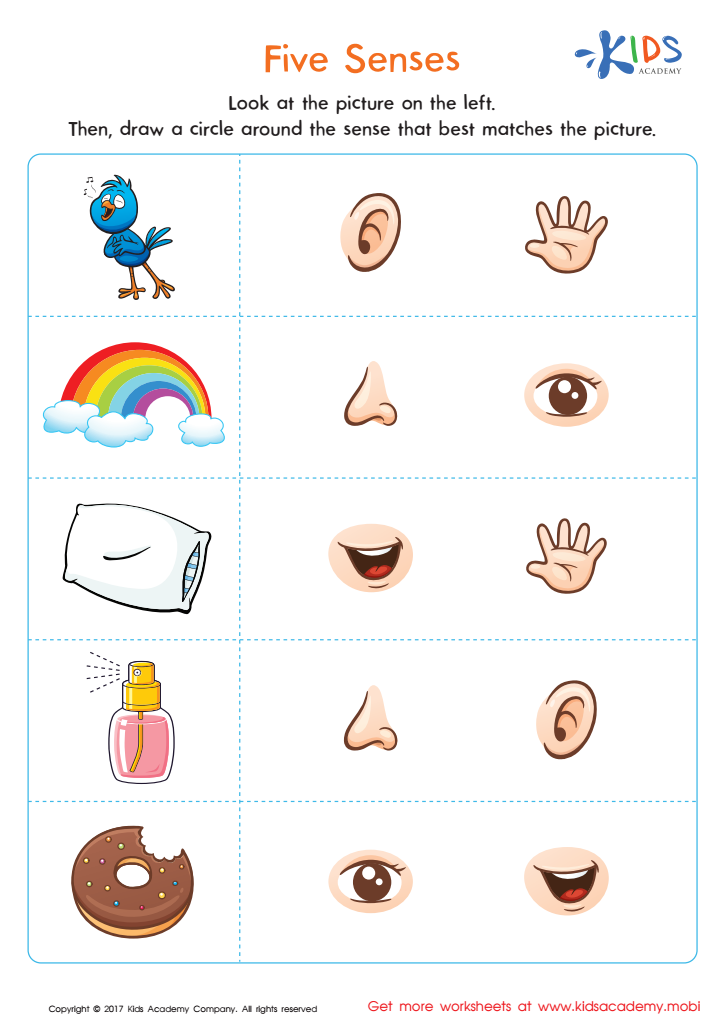
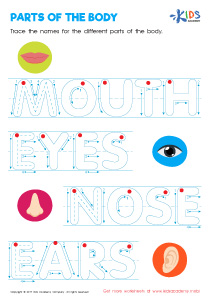
Five Senses Printable




Understanding the five senses—sight, hearing, touch, taste, and smell—is fundamental for children aged 4-9 as it closely relates to their cognitive and emotional development. At this young age, children are naturally curious about the world around them. Lessons about the five senses can facilitate engaging explorations that encourage critical thinking and scientific inquiry.
Parents and teachers should prioritize the five senses because they are essential tools for learning and discovery. Sensory experiences lay the groundwork for language development, as children learn to articulate their observations and feelings. Activities that involve the senses can enhance fine motor skills and promote social interactions, as children often share their discoveries with peers.
Moreover, knowledge of the five senses helps children to navigate their environments safely. Understanding what smells or sounds may indicate danger sets the stage for proper situational awareness. Emphasizing sensory learning can also bolster emotional intelligence; children learn to identify and communicate their preferences and dislikes.
Incorporating multi-sensory activities—like art, storytelling, cooking, or nature walks—enriches their educational experience, promoting lasting memories and a love for learning. By focusing on the five senses, parents and teachers provide not just knowledge, but also lifelong skills essential for future development.