Middle Sounds Worksheets for Ages 5-7
4 filtered results
-
From - To
Discover engaging Middle Sounds Worksheets tailored for ages 5-7 at Kids Academy! Our expertly crafted worksheets use vibrant visuals and fun activities to help young learners master identifying middle vowel sounds in words. These educational worksheets foster phonemic awareness crucial for developing strong reading skills. Ideal for both classroom and at-home practice, they make learning enjoyable with matching, coloring, and writing exercises. Perfect for teachers and parents alike, our resource supports early literacy growth, ensuring children build a solid foundation in recognizing vowel sounds. Explore our collection today and give your child a head start in reading fluency!
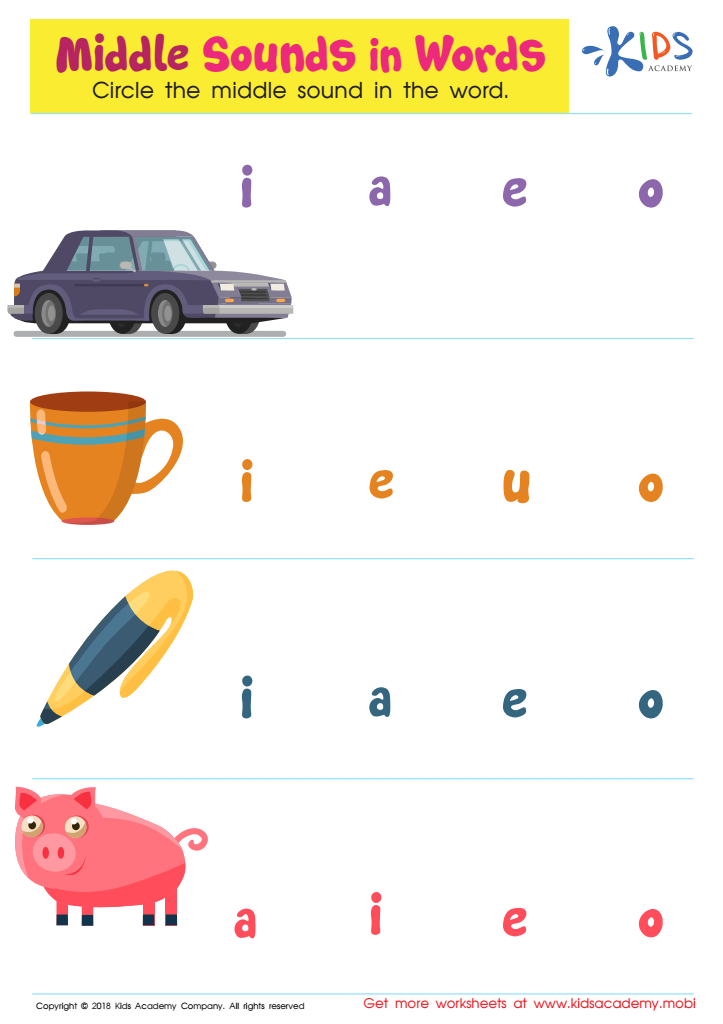
Middle Sounds in Words Worksheet
 Assign to My Students
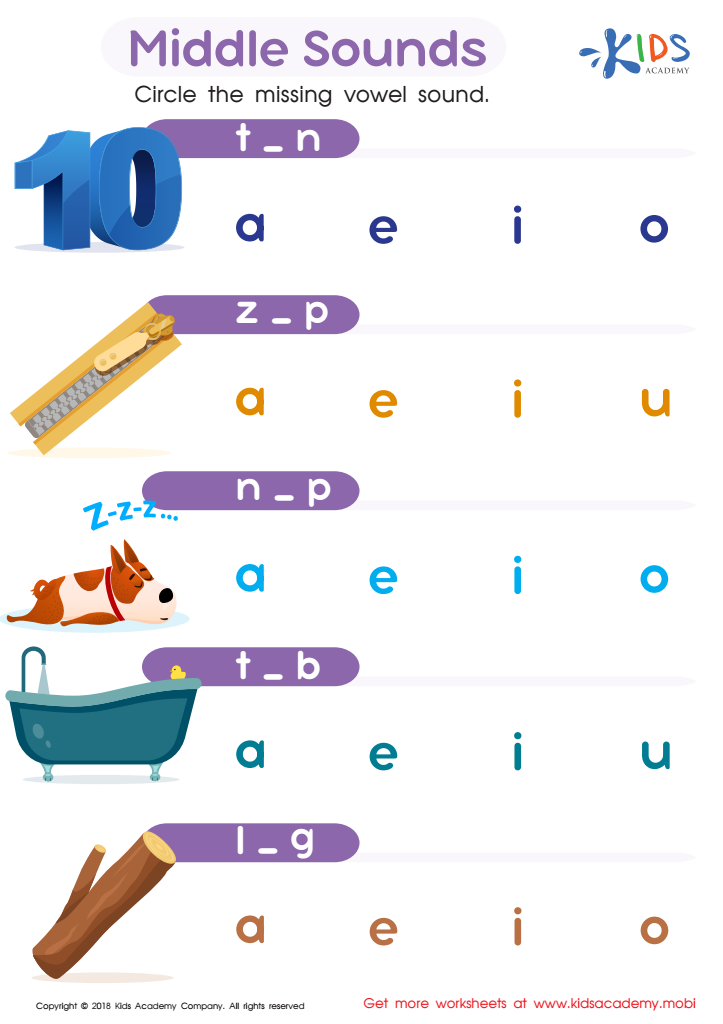
Middle Sounds Worksheet
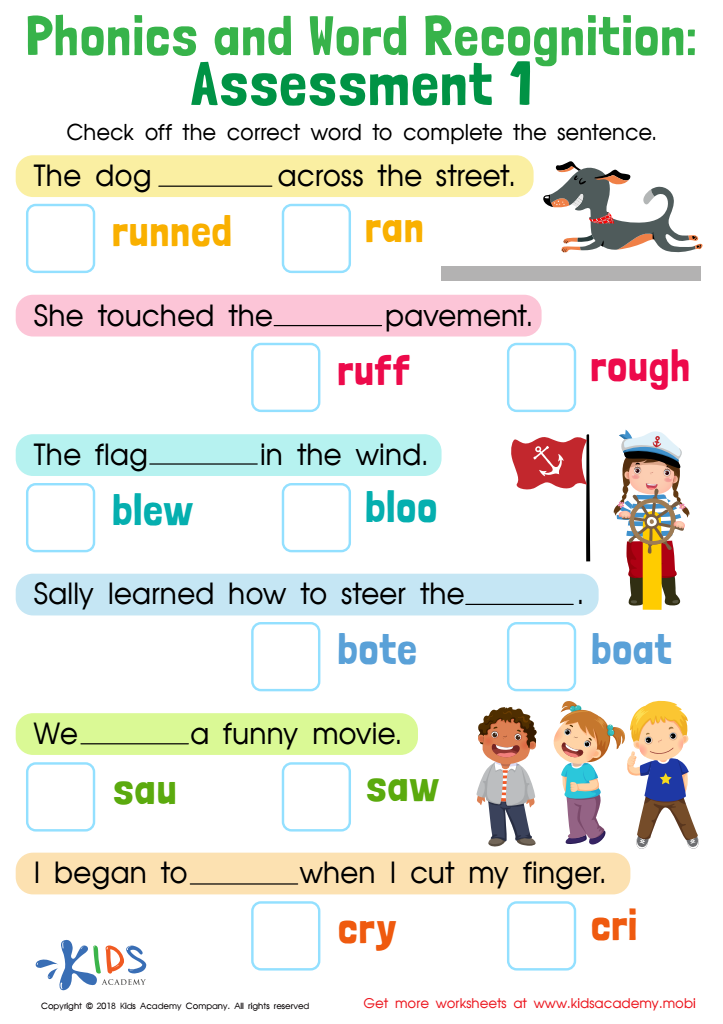
Phonics and Word Recognition: Assessment 1 Worksheet
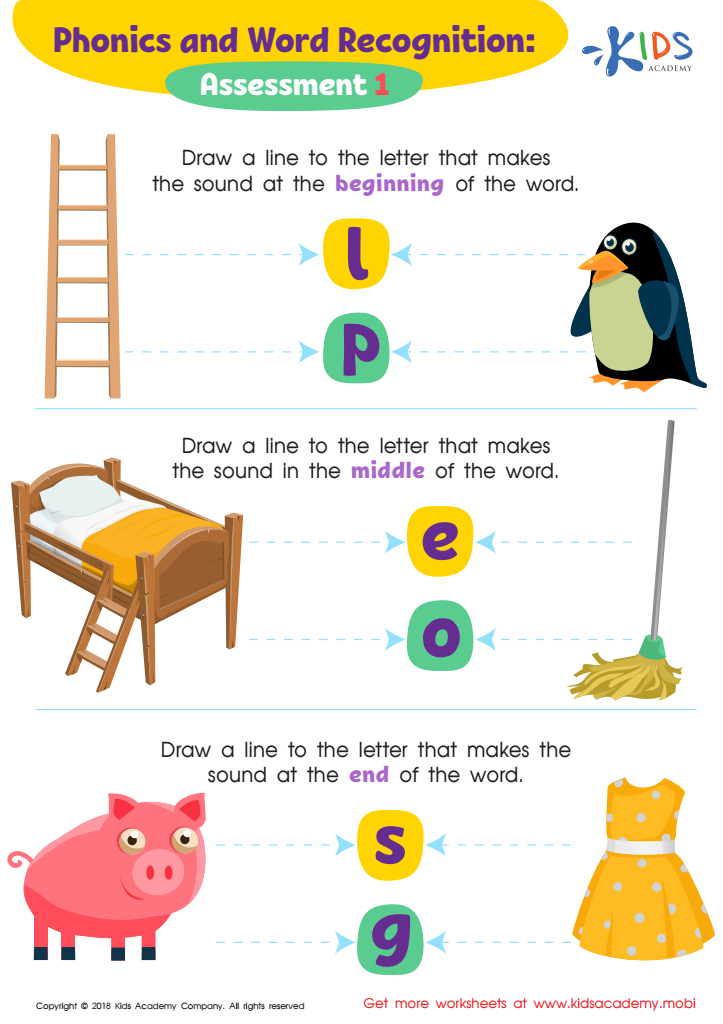
Phonics and Word Recognition: Assessment 1 ELA Worksheet





Parents and teachers should care about middle sounds, or medial vowel sounds, when working with children aged 5-7 because mastery of these sounds is a crucial step in early literacy development. Understanding middle sounds helps children develop accurate spelling and reading skills. When children recognize and correctly articulate the vowel sounds within words, they can decode and blend words more effectively, laying a strong foundation for fluent reading.
For instance, distinguishing between the middle sounds in "cat" versus "cot" or "bit" versus "bet" is essential for comprehension and communication. Misinterpreting these sounds can lead to misunderstandings and hinder a child's ability to learn new words. Improving middle sound recognition also supports phonemic awareness, which is the ability to hear, identify, and manipulate individual sounds in spoken words—a critical skill for successful reading and writing.
Additionally, honing this skill early on boosts a child's confidence and motivates them to engage with literacy activities more eagerly, thereby fostering a positive attitude toward learning. By prioritizing middle sound comprehension, parents and teachers can provide targeted support that addresses individual learning needs, ensuring that children develop the solid language and literacy skills they need for future academic success.








