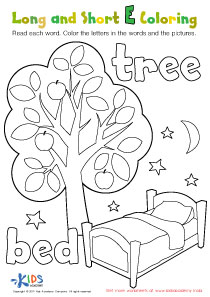
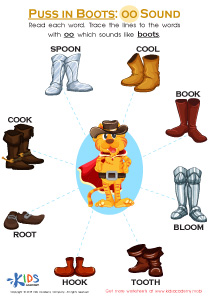
Middle Vowel Worksheets for Ages 5-7
4 filtered results
-
From - To
Boost your child's reading skills with our Middle Vowel Worksheets designed for ages 5-7! These engaging worksheets help young learners recognize and practice middle vowel sounds, a crucial step in phonics and early reading development. Perfect for kindergarten and first graders, our printable worksheets feature fun, vibrant images and activities that make learning enjoyable and effective. By focusing on middle vowel sounds, children can significantly improve their pronunciation, reading fluency, and spelling. Don’t let your child miss out on this vital educational resource—make learning vowels an exciting adventure today with our expertly crafted worksheets!
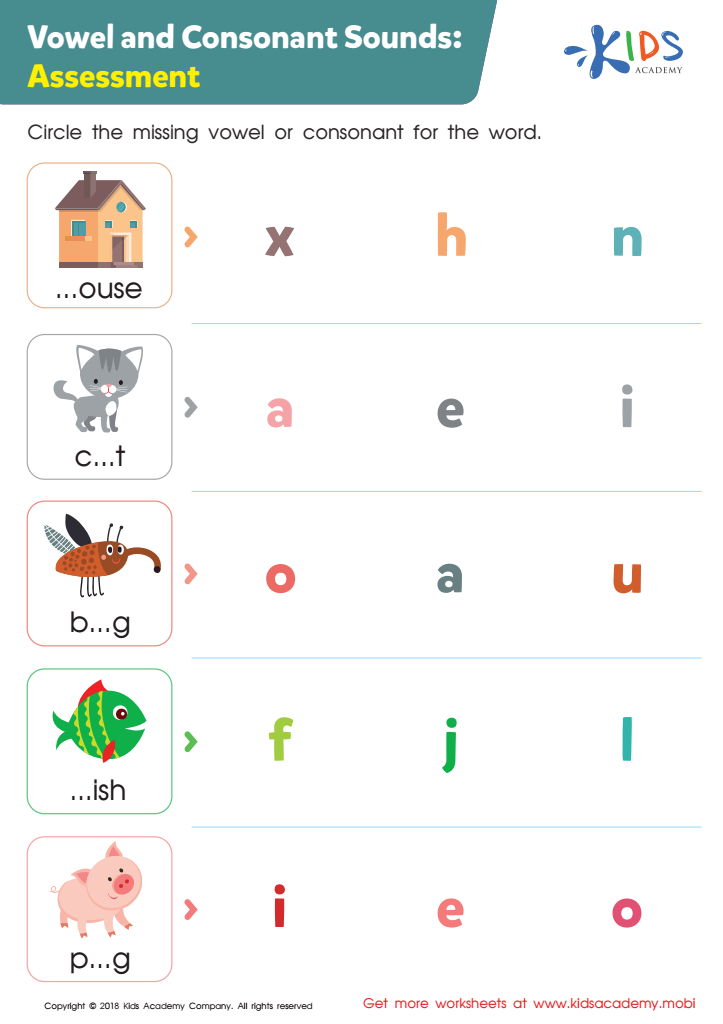
Vowel and Consonant Sounds: Assessment Worksheet
 Assign to My Students
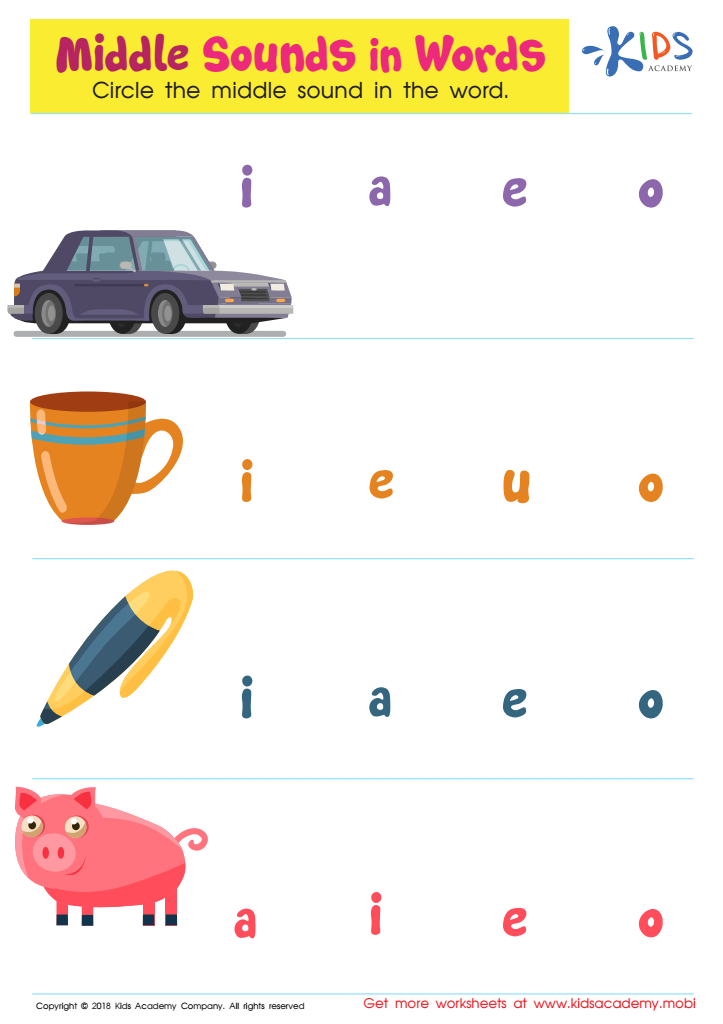
Middle Sounds in Words Worksheet
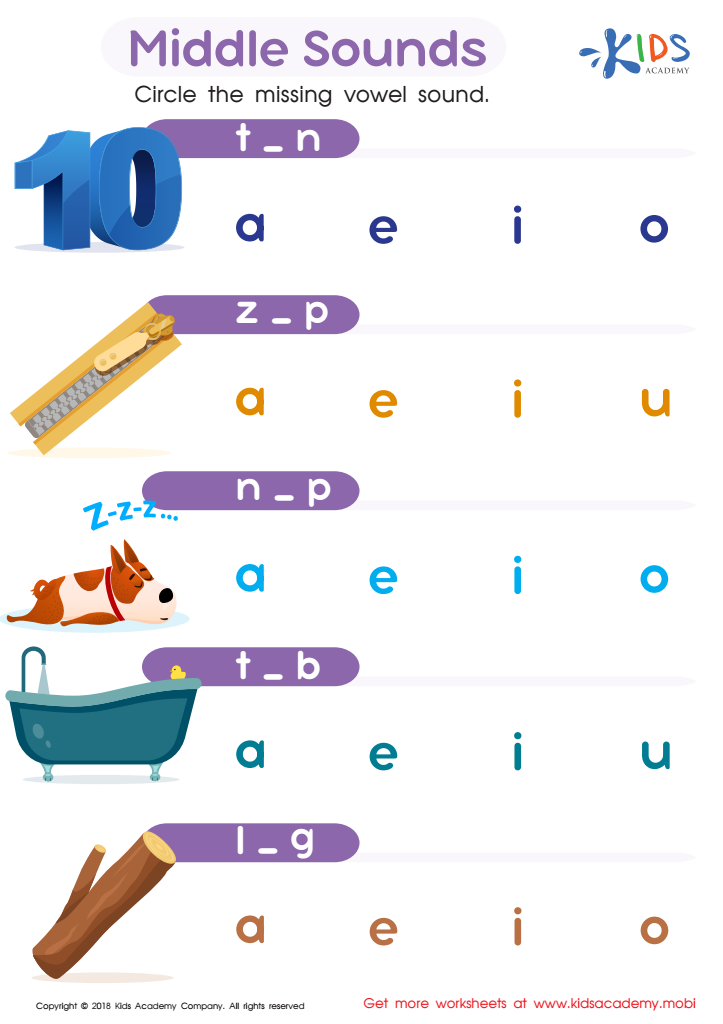
Middle Sounds Worksheet
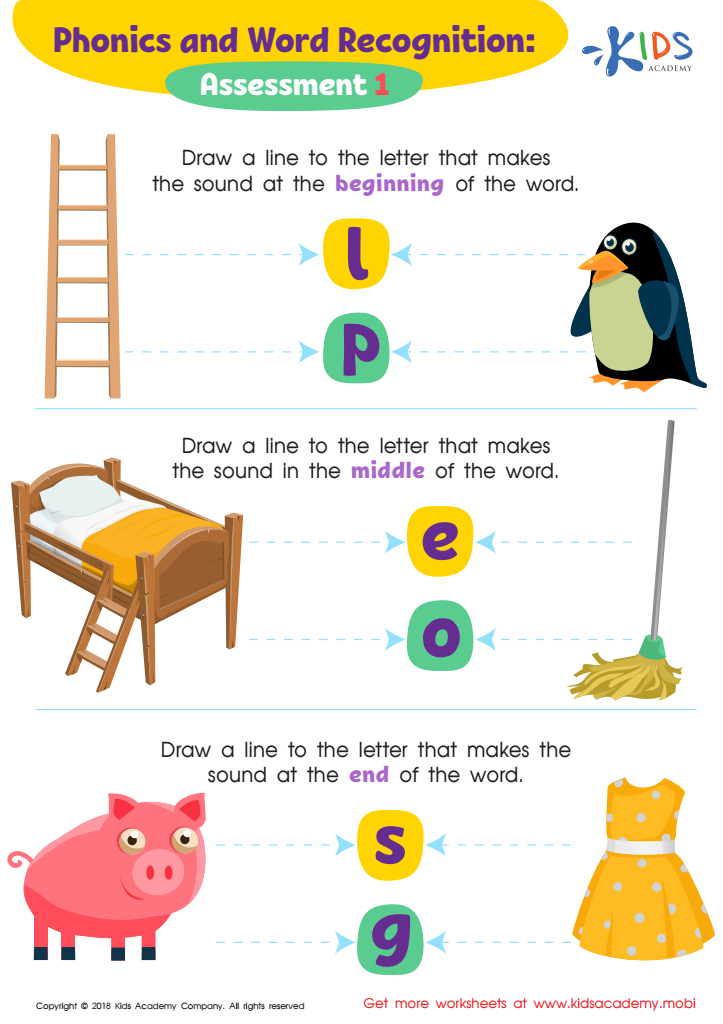
Phonics and Word Recognition: Assessment 1 ELA Worksheet



Middle vowels are a crucial aspect of early literacy development for children aged 5-7. At this developmental stage, kids are beginning to decode words and understand language structures. Middle vowels, often located in the middle of short, simple words (like cat, bed, pig, dog, and bug), play a significant role in word formation and pronunciation. Mastery of these vowels is essential for several reasons.
First, recognizing middle vowels helps improve phonemic awareness, which is the ability to hear, identify, and manipulate individual sounds in words. This skill is foundational for later reading proficiency. When children can confidently identify and use middle vowels, they can more accurately decode new words, enhancing their reading fluency and comprehension.
Second, early proficiency with middle vowels aids in spelling. Knowing the correct vowel sounds within words allows children to spell more accurately, contributing to their overall writing skills. This understanding extends beyond individual words, aiding in the recognition of word patterns and phonics rules.
Finally, nurturing this aspect of language development builds confidence. When children can read and spell simple words correctly, it boosts their self-esteem, encouraging a positive attitude toward reading and learning in general. Thus, focusing on middle vowel sounds helps lay a critical foundation for continued academic success.