Middle Sounds Worksheets for Ages 5-8
4 filtered results
-
From - To
Unlock your child's phonemic potential with our Middle Sounds Worksheets designed for ages 5-8. Tailored for early learners, these engaging worksheets help kids recognize, identify, and practice vowel sounds in the middle of words. By combining fun activities with effective teaching strategies, our resources enhance reading and spelling skills, setting a strong foundation for future literacy. Perfect for both classroom use and at-home practice, our Middle Sounds Worksheets make learning interactive and enjoyable. Empower your budding reader today by providing the tools they need to succeed with confidence! Explore now and watch them grow!
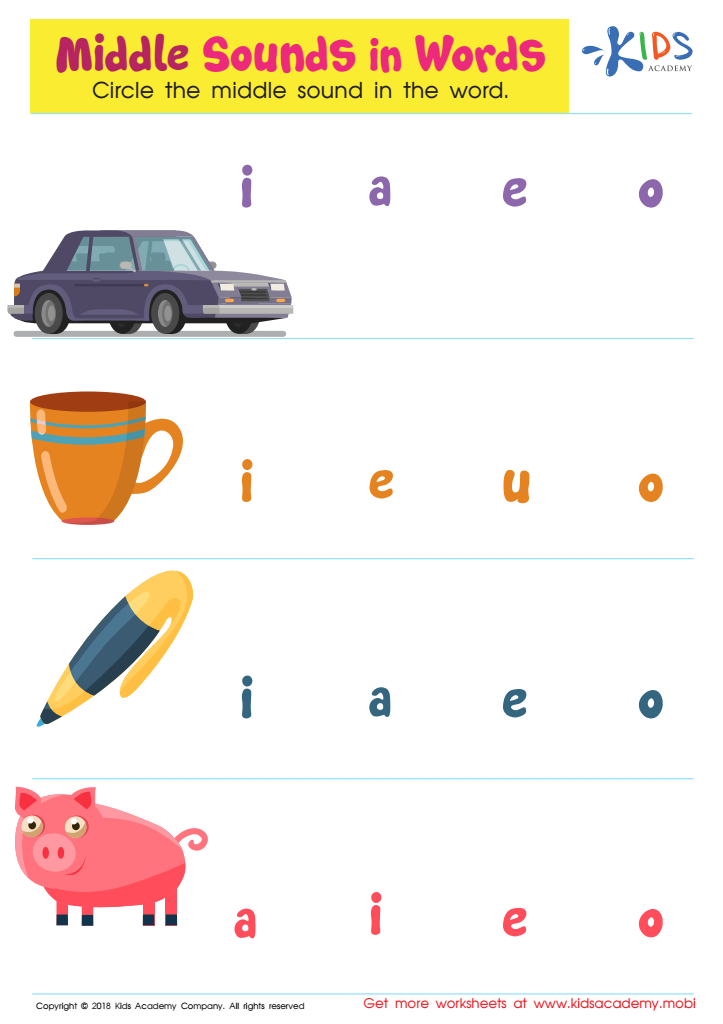
Middle Sounds in Words Worksheet
 Assign to My Students
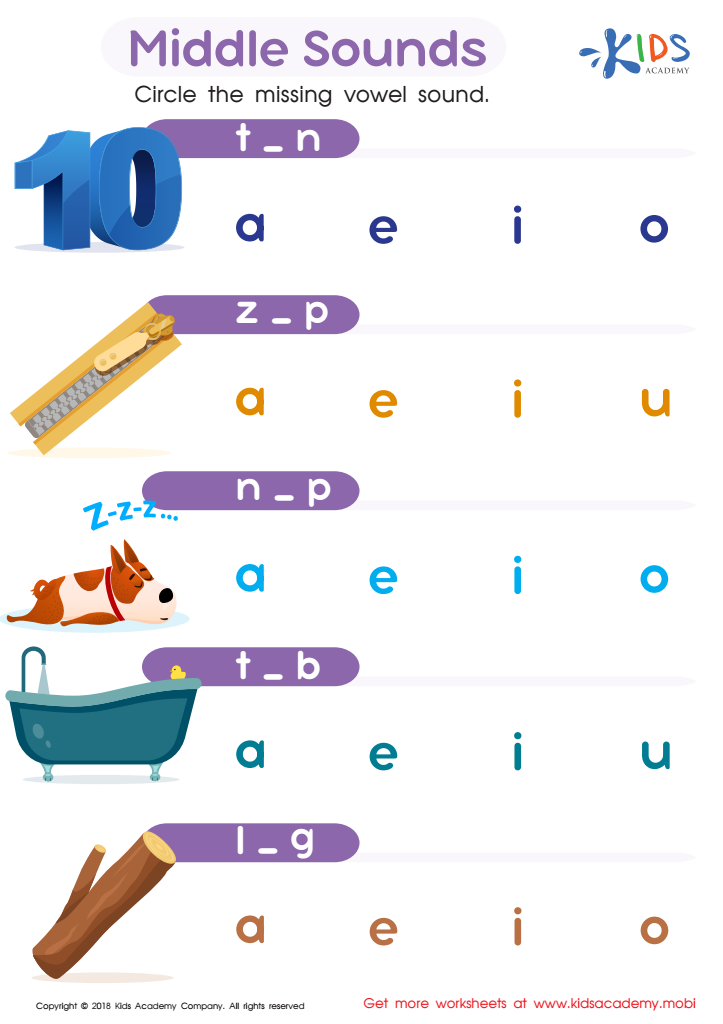
Middle Sounds Worksheet
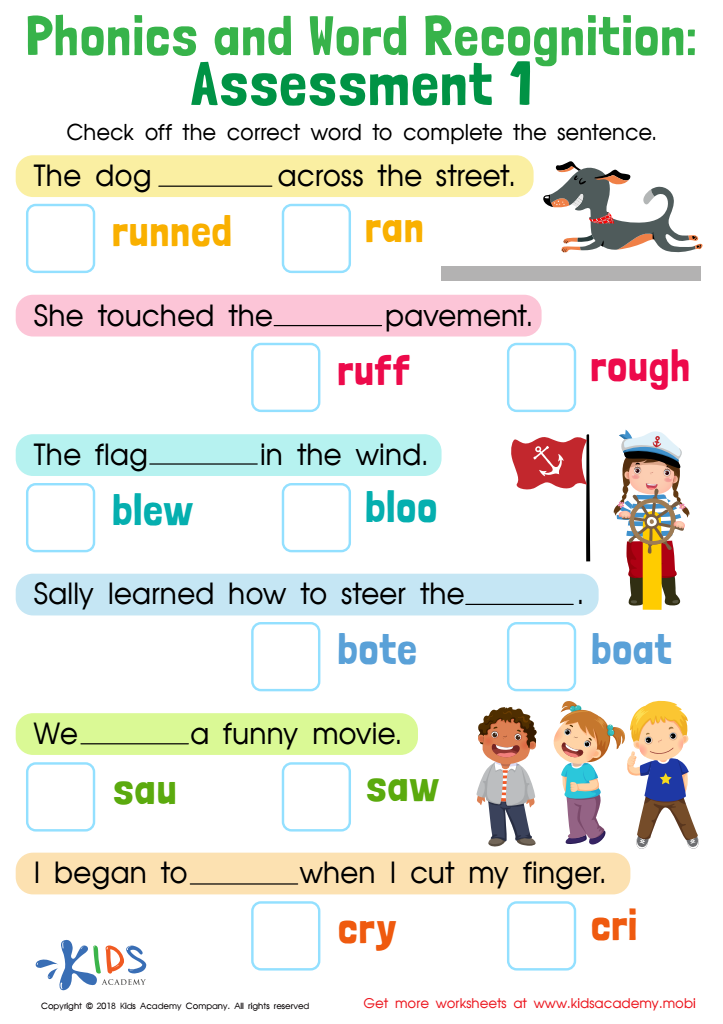
Phonics and Word Recognition: Assessment 1 Worksheet
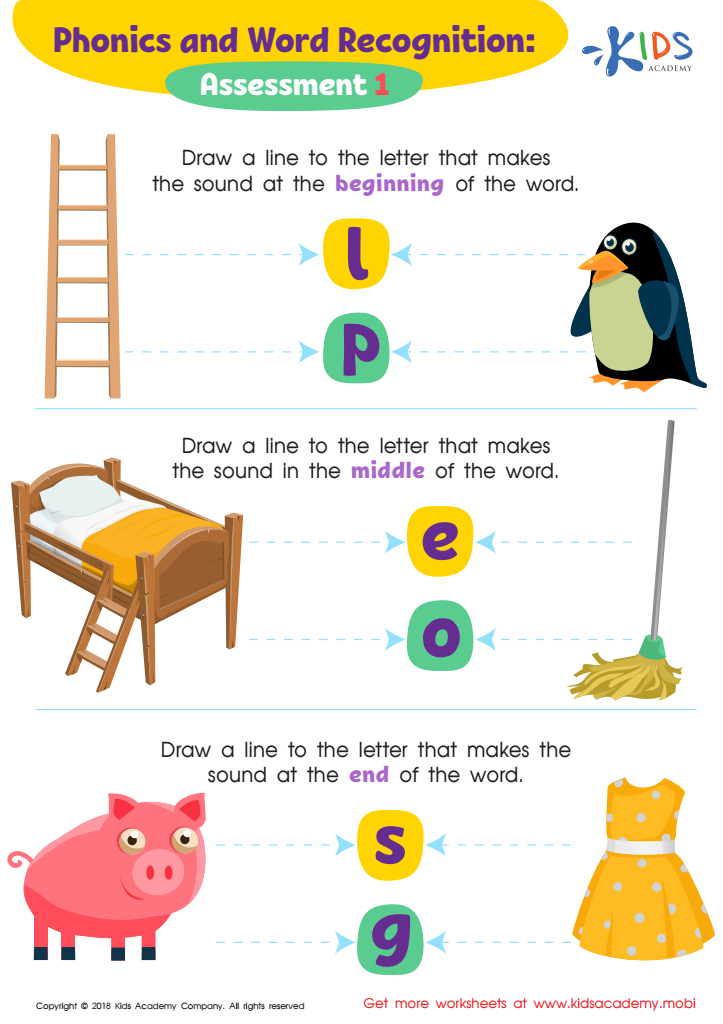
Phonics and Word Recognition: Assessment 1 ELA Worksheet





Middle sounds, or medial phonemes, play a crucial role in early literacy development for children aged 5-8. These are the sounds found in the middle of a word, such as the "a" in "cat" or the "o" in "dog." Understanding and recognizing middle sounds is fundamental for several reasons:
Firstly, mastering middle sounds aids in phonemic awareness, an essential building block of reading. Phonemic awareness involves recognizing and manipulating sounds in spoken words, which lays the groundwork for decoding words during reading. When children can identify middle sounds, they become better at chunking words into manageable parts, making reading less daunting.
Secondly, being attuned to middle sounds enhances spelling skills. English spelling often maps onto its phonemic structure. If children can hear and identify individual sounds in words, particularly those in the middle, they can make more educated guesses about how to spell new words.
Moreover, middle sounds are less obvious than beginning or ending sounds, making them a critical step in advancing a child's overall phonological awareness. Cultivating this skill helps children excel in both literacy and language arts.
Involving parents and teachers in emphasizing the importance of middle sounds fosters a supportive learning environment, ultimately empowering children with the confidence and competence they need to become proficient readers and spellers.








