Upper & Lowercase Letters Worksheets for Ages 6-7 - Page 3
49 filtered results
-
From - To
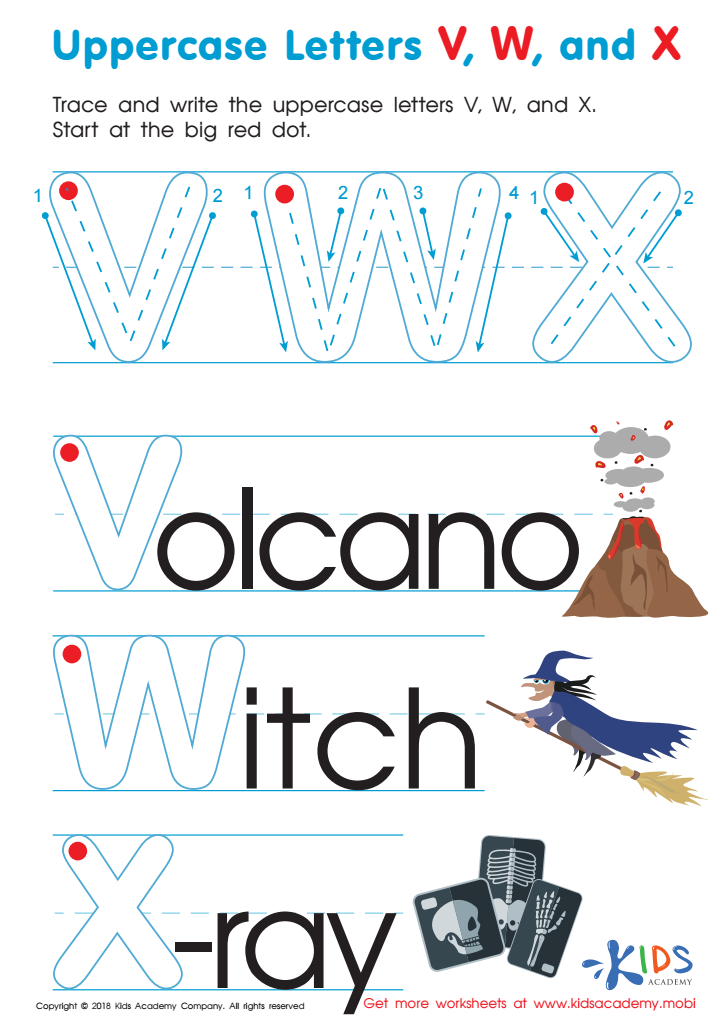
Uppercase Letters V, W, and X Worksheet
 Assign to My Students







Parents and teachers should care about teaching upper and lowercase letters to children ages 6-7 because this age is critical for foundational literacy development. Understanding the difference between uppercase and lowercase letters is essential in helping children become proficient readers and writers.
Firstly, recognizing both forms of each letter supports reading fluency. English, like many languages, uses mixed-case text, so children must be comfortable with both versions to read smoothly. Identifying lowercase letters, in particular, is crucial since they appear more frequently in text. Additionally, being able to switch between cases aids in decoding new words, contributing to better comprehension and literacy skills.
Writing also benefits significantly from this knowledge. Learning to use uppercase letters to begin sentences and in proper nouns are essential aspects of grammar and punctuation. This early focus on proper letter usage helps instill good writing habits, which are vital for clear and effective communication.
Moreover, fostering a strong grasp of letter types can boost a child's confidence and enjoyment in their learning journey. Mastery of these basics reduces frustration and supports their progression into more challenging aspects of reading and writing.
In sum, prioritizing the understanding of uppercase and lowercase letters at this developmental stage equips children with essential tools for educational success and effective communication.







