Upper & Lowercase Letters Worksheets for Ages 6-8 - Page 3
49 filtered results
-
From - To
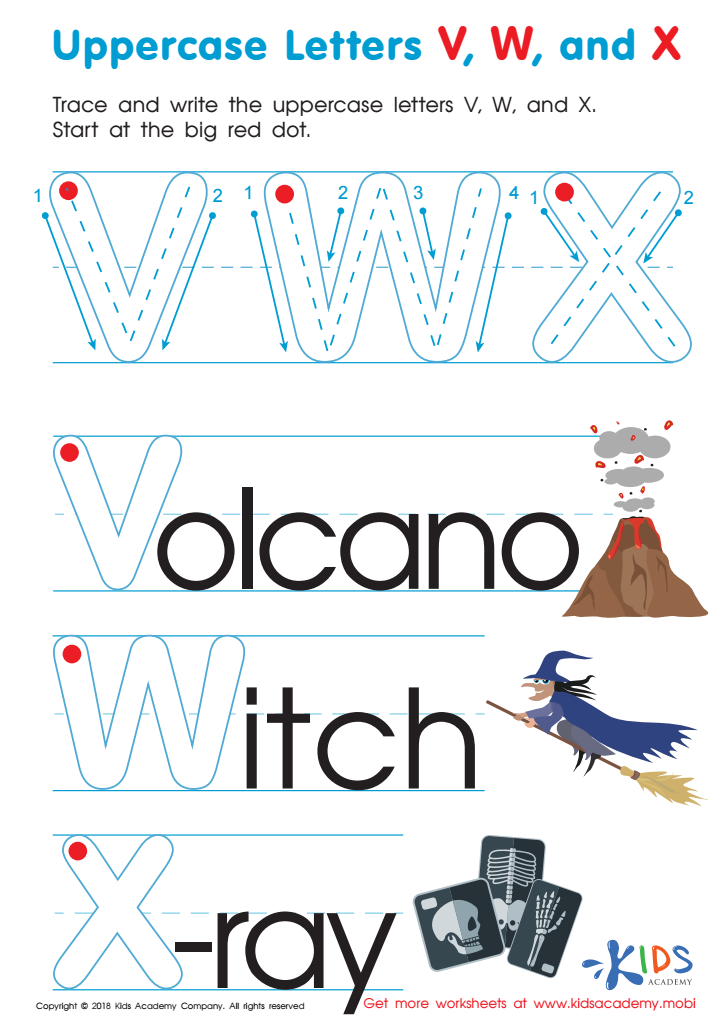
Uppercase Letters V, W, and X Worksheet
 Assign to My Students







Understanding uppercase and lowercase letters is essential for children aged 6 to 8, as it forms the foundation of their literacy skills. During this developmental stage, children are learning to read and write more proficiently. Recognizing and distinguishing between upper and lowercase letters is crucial for reading fluency and comprehension.
Uppercase letters typically signal the beginning of sentences and proper nouns, helping children understand text structure and context. Conversely, lowercase letters are used more frequently in written communication, which means children must be adept at reading them to grasp everyday texts.
Moreover, designing and recognizing letters are core skills for writing. Mastery of letter forms enables children to write confidently and Legibly, developing skills such as spelling, grammar, and phonics. Engaging them in activities that incorporate both letter types makes learning interactive and fun, reinforcing their grasp of language mechanics.
Lastly, caring about this aspect of literacy sets the stage for future academic success. Clear communication and comprehension ability are fundamental not just for school learning but for social interactions and lifelong learning. As such, parents and teachers play a pivotal role in fostering these skills in early readers and writers.







