The 5 Senses Worksheets for Ages 6-9
3 filtered results
-
From - To
Discover an engaging way to teach young learners about their five senses with our "5 Senses Worksheets for Ages 6-9." Tailored for children, these worksheets blend educational content with delightful activities. Kids will explore sight, hearing, taste, touch, and smell through fun exercises that develop critical thinking and observational skills. Each worksheet is designed to be both informative and entertaining, ensuring that learning about the world around them is an enjoyable experience. Perfect for classroom use or homeschooling, these resources make science interactive and accessible for young minds. Foster curiosity and a deeper understanding of their senses today!
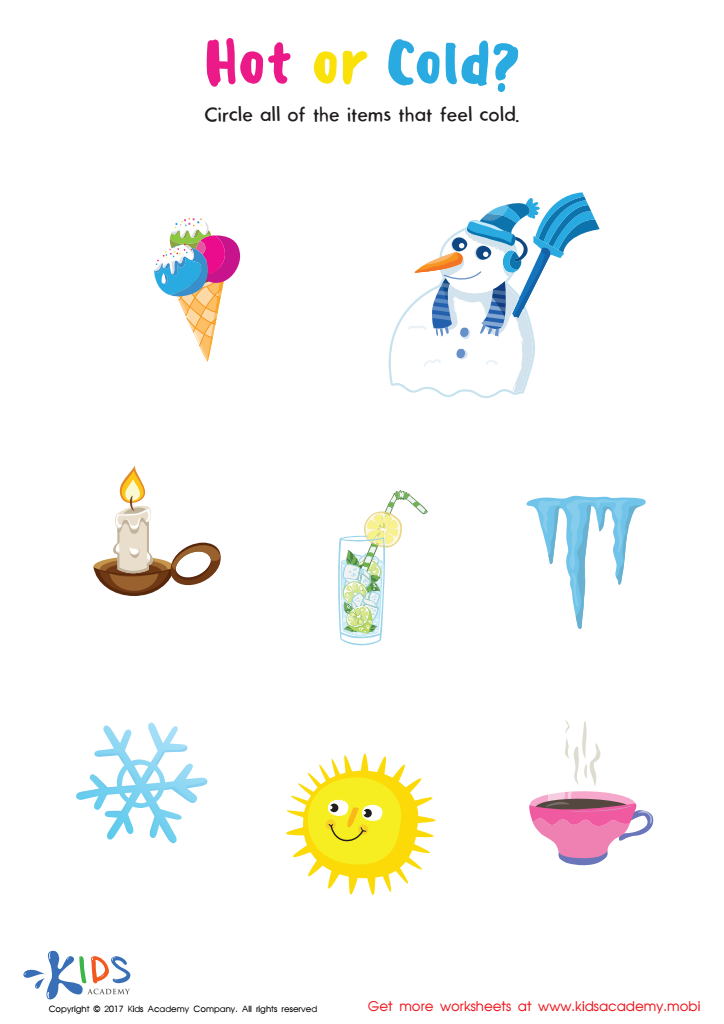
Hot or Cold Printable
 Assign to My Students
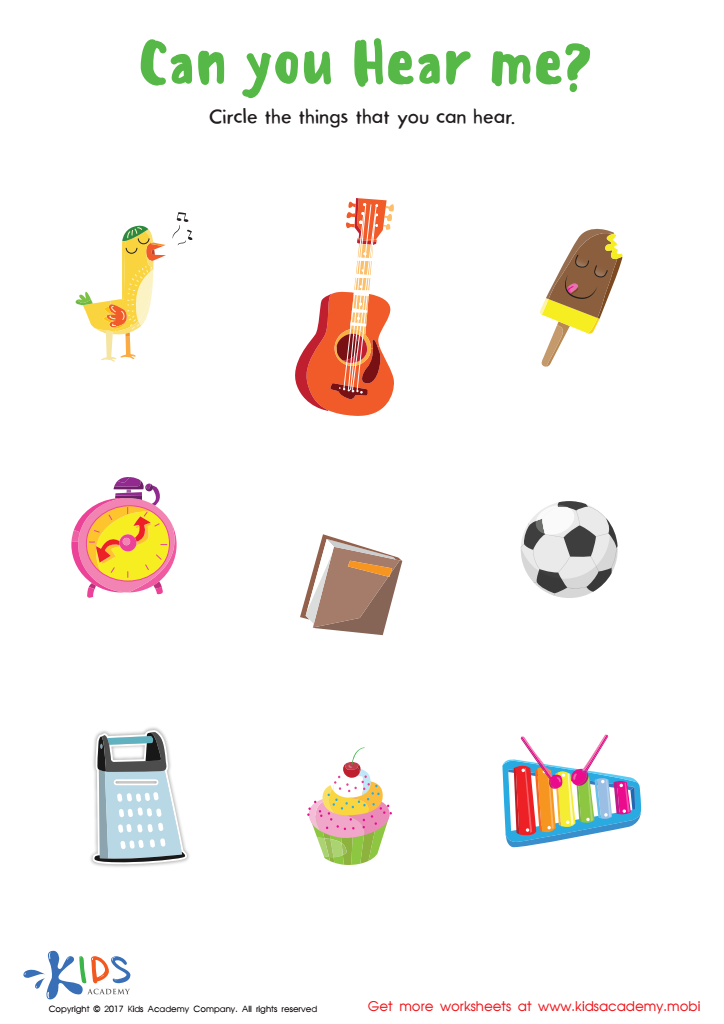
Can You Hear Me Worksheet
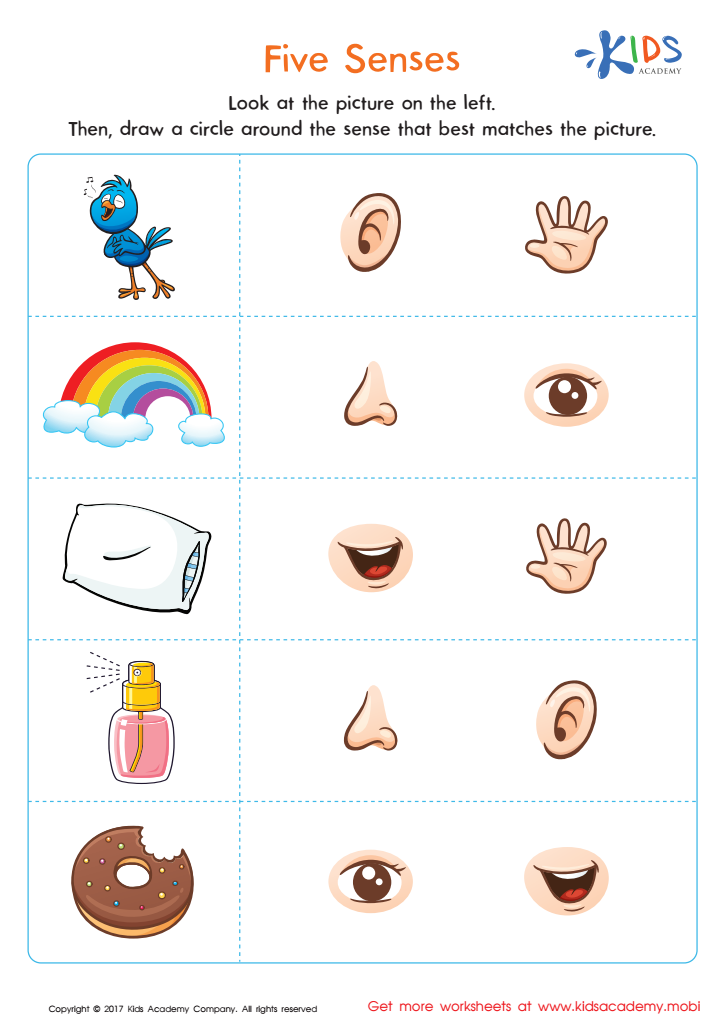
Five Senses Printable




The five senses—sight, hearing, touch, taste, and smell—are crucial for children's development, particularly between the ages of 6 and 9. These senses serve as fundamental gateways to learning, enabling kids to explore and understand the world around them.
Firstly, engaging multiple senses aids cognitive development and enhances memory retention. For example, seeing and touching science artifacts helps students grasp fundamental concepts more securely than a simple lecture could. Likewise, listening to different sounds or tasting various foods can expand their understanding and vocabulary.
Secondly, sensory activities foster better communication skills. Children learn to describe what they are experiencing, translating sensations into words. This strengthens their language development, essential for literacy.
Thirdly, these experiences support social and emotional growth. Sensory play encourages teamwork and sharing, allowing children to navigate social norms and build relationships. Confidents pencils like identifying scents encourage mindfulness and empathy, helping children appreciate diversity and differences in sensations.
Lastly, activities involving the five senses lay the foundation for lifelong curiosity and love for learning. They'll desire to explore categorically—be it in science, arts, or real-world problem-solving scenarios—which nurtures their intellectual curiosity and creativity.
Understanding and prioritizing sensory experiences thus provides a strong, well-rounded foundation for children's holistic growth, making it essential for parents and teachers to incorporate these principles in daily learning.