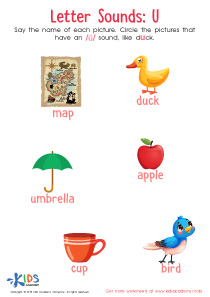
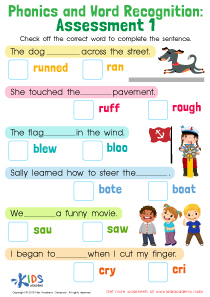
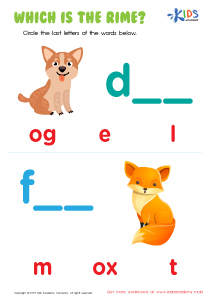
Easy Consonants Worksheets for Ages 3-5
3 filtered results
-
From - To
Explore our engaging "Easy Consonants Worksheets for Ages 3-5" designed to introduce young learners to the world of consonants in a fun and interactive way. These worksheets are perfect for preschool and kindergarten students, helping them recognize and practice consonant sounds through various activities like tracing, coloring, and matching. Our resources cater to different learning styles, allowing children to develop their phonemic awareness and fine motor skills seamlessly. With vibrant visuals and kid-friendly designs, these worksheets make learning enjoyable and effective. Get started today and watch your little ones thrive as they build a strong foundation in reading and language arts!
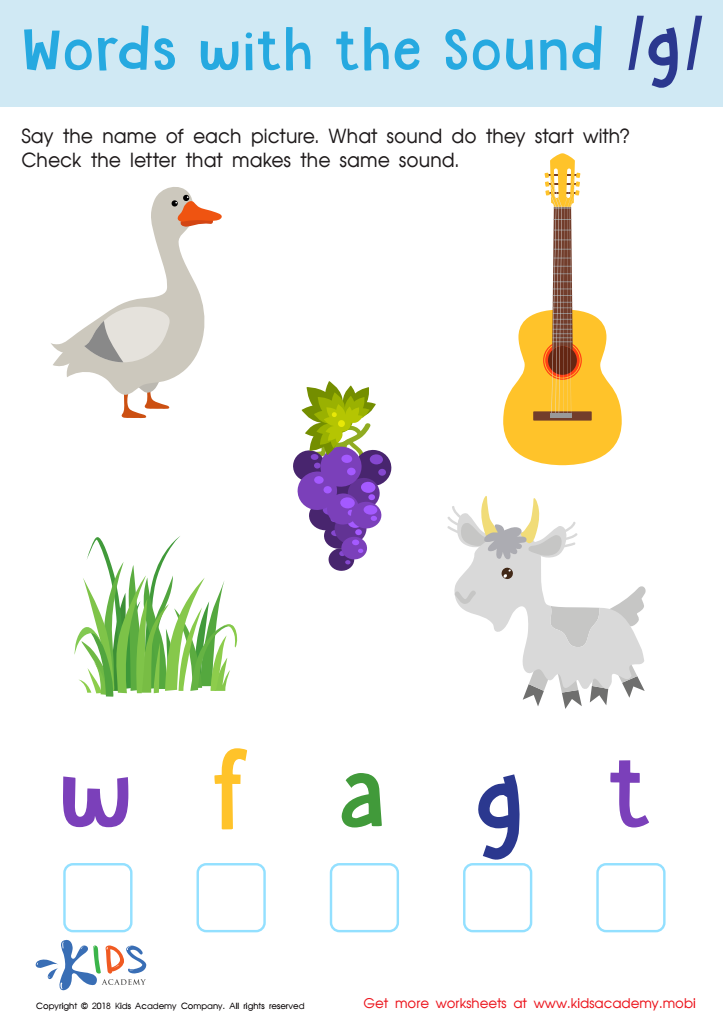
Words with sound g Reading Worksheet
 Assign to My Students
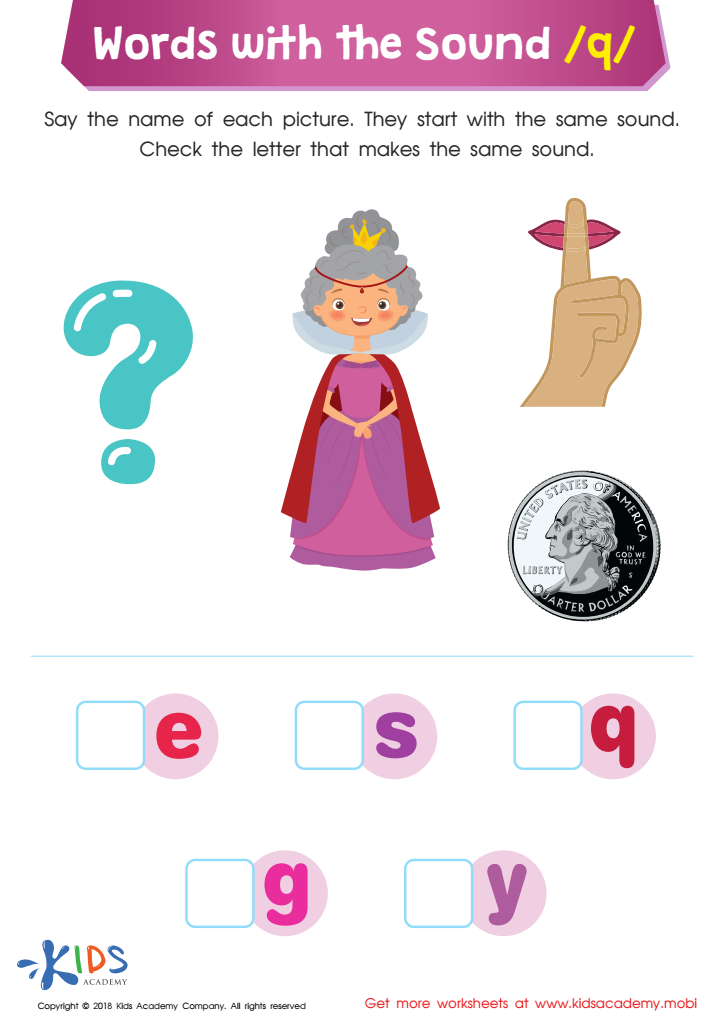
Words with Sound Q Reading Worksheet
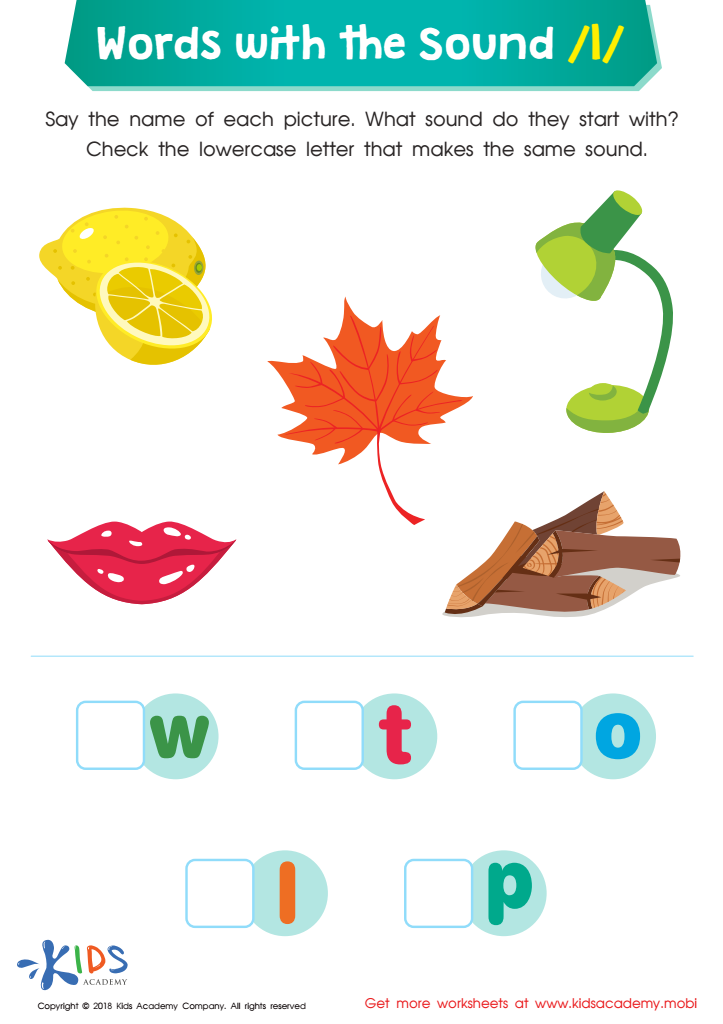
Words with Sound L Reading Worksheet



Easy Consonants for Ages 3-5 is crucial for early language development. At this age, children are establishing foundational skills that will influence their future reading and writing abilities. Introducing them to simple consonants helps build phonemic awareness, which is the ability to hear, identify, and manipulate sounds in spoken words.
By engaging with easy consonants, children enhance their vocabulary, leading to improved communication skills. This stage is significant for developing literacy, as phonics—the relationship between sounds and their written expression—is directly tied to their ability to decode words later on. With emphasis placed on consonants, children can confidently form simple words, contributing to smoother learning transitions to more complex sounds and words.
Additionally, incorporating easy consonants into play and educational activities fosters a joyful learning environment. It allows parents and teachers to bond with children, making learning interactive and fun. Early exposure to consonant sounds can also support cognitive development, as they begin to associate these sounds with letters and the meaning behind words.
Ultimately, a strong grasp of easy consonants sets the stage for academic success and lays a lifelong appreciation for language, making it essential for parents and teachers to prioritize this foundational skill in early childhood education.