Filters

6 filtered results

Clear all filters
Favorites
With answer key
Interactive

6 filtered results

Difficulty Level

Grade


Discover our engaging collection of "Easy Letter Sounds Worksheets" designed for children ages 3-8! These worksheets are perfect for helping young learners master the fundamental sounds of the alphabet in a fun and interactive way. Each worksheet features colorful illustrations and simple activities that encourage phonemic awareness, laying the groundwork for reading success. Tailored to diverse learning styles, our resources cater to different skill levels, ensuring every child can thrive. Whether at home or in the classroom, these worksheets make learning letter sounds enjoyable and effective. Start your child’s literacy journey today with our easy-to-use, enjoyable worksheets!

Check out this FREE Trial Lesson on Letter Sounds for age 3-8!

One-to-one Letter-sound Correspondence

Favorites
With answer key
Interactive
  • 3-8
  • With answer key
  • Letter Sounds
  • Easy
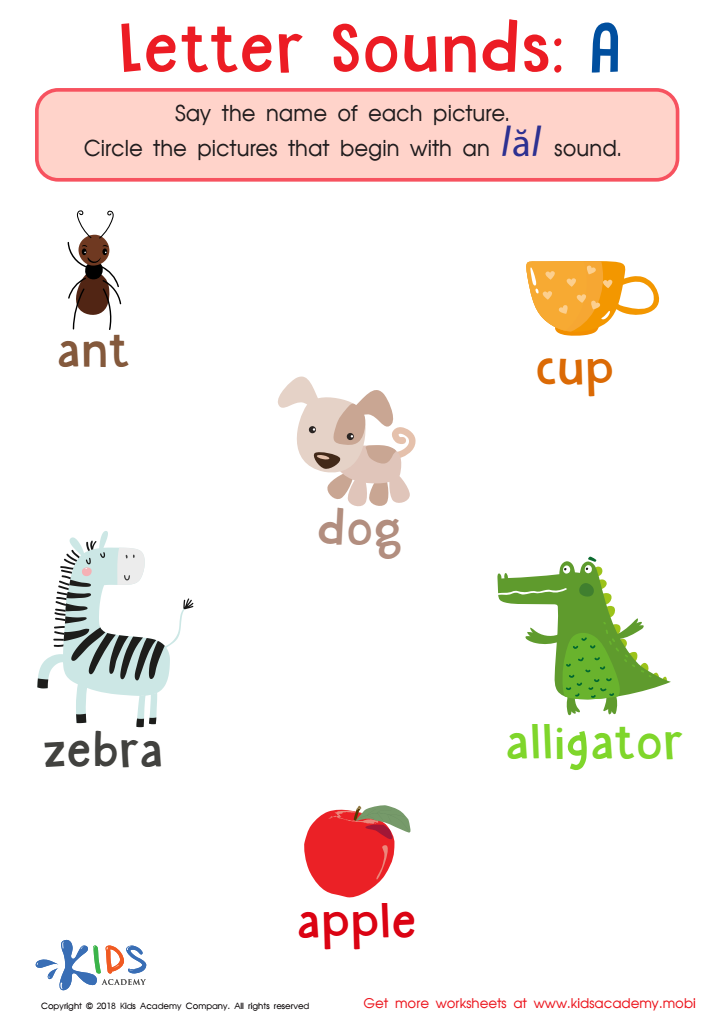
Letter A Sounds Worksheet

Letter A Sounds Worksheet

Encourage your new reader to practice the «ă» sound with this fun, free PDF worksheet. With the help of picture clues, they'll say the name of each word and trace circles around the items that start with «ă». This worksheet is an effective way to boost beginning sound skills while having fun!
Letter A Sounds Worksheet
Worksheet
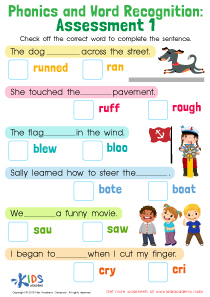
What Sound Is it? Worksheet

What Sound Is it? Worksheet

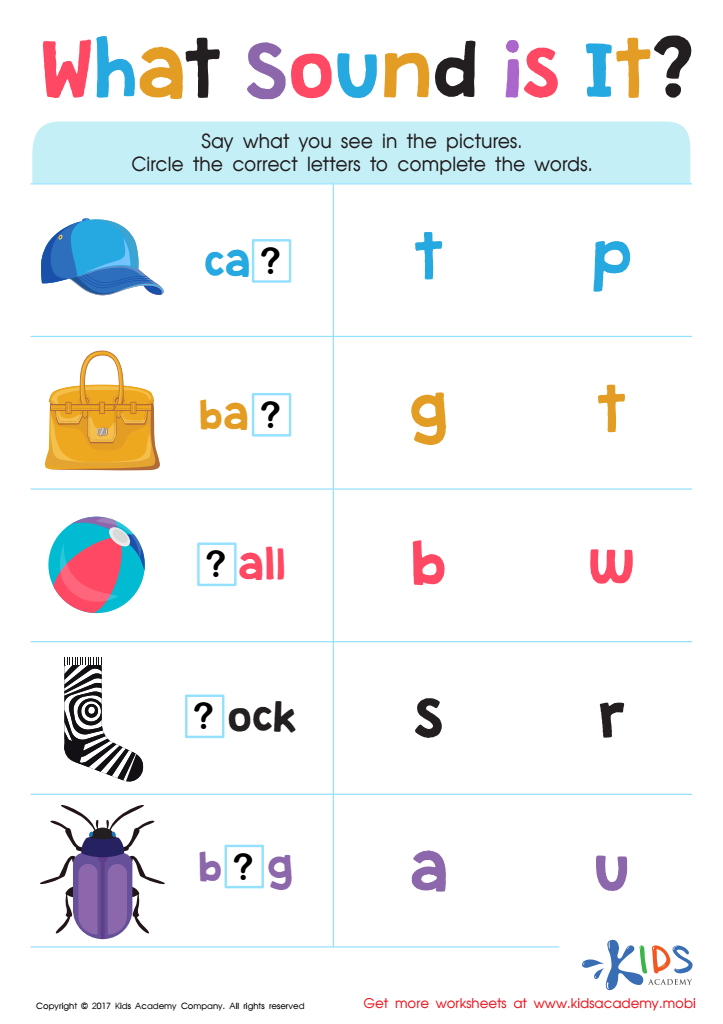
Have your child say the words for the pictures on this fun worksheet. As he or she sounds out the word, your child will use the provided letter choices to complete it, building reading and phonics skills. Visual cues make it easier to identify the correct beginning, middle, or end sound.
What Sound Is it? Worksheet
Worksheet
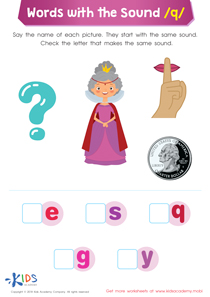
Letter U Sounds Worksheet

Letter U Sounds Worksheet

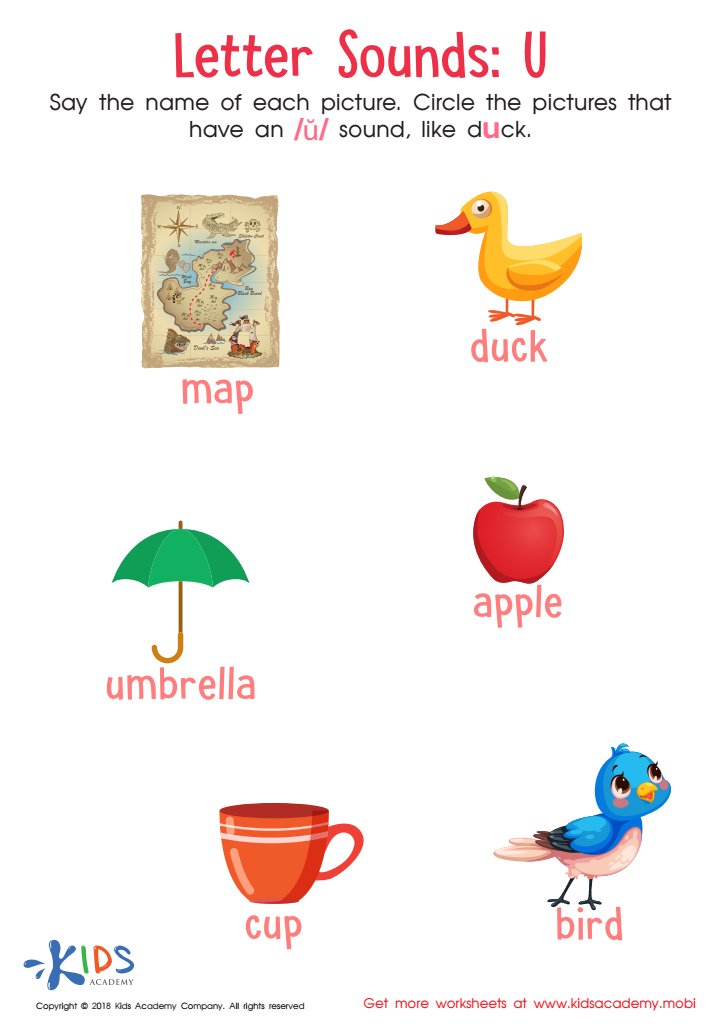
The letter U is special with multiple pronunciations. This worksheet helps kids identify the short «u» in words like duck and cup. Read the words aloud and listen closely to the sounds. Circle only words with the correct sound to complete the sheet. Kids will quickly know that words like "map" don't contain a U.
Letter U Sounds Worksheet
Worksheet
Letter f sounds worksheet

Letter F Sounds Worksheet

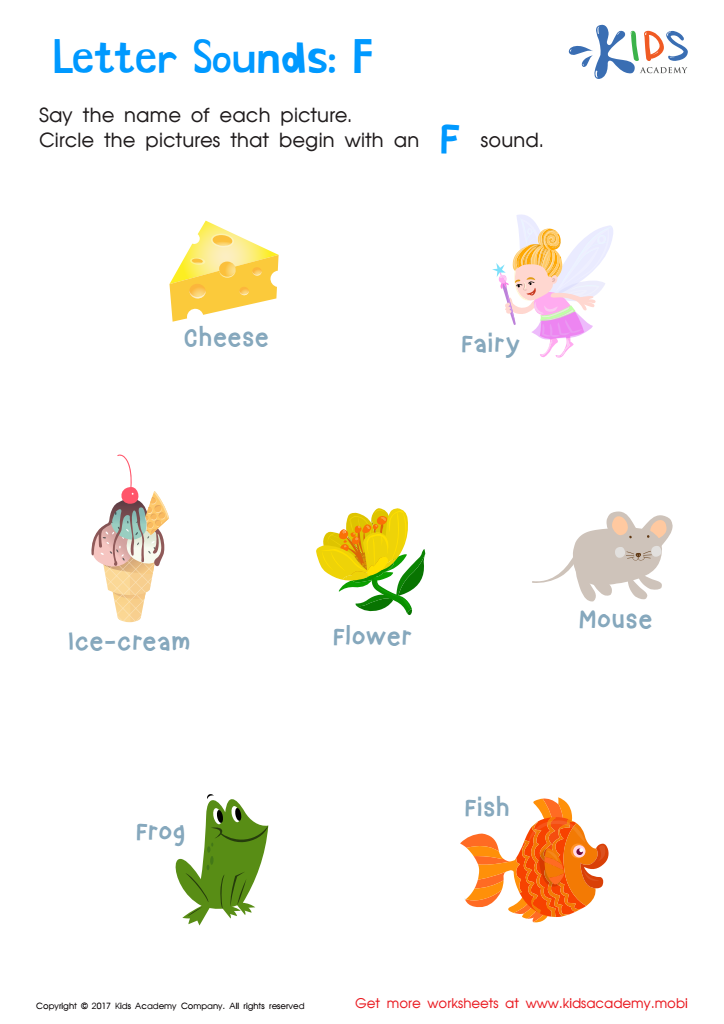
Kids will practice identifying 'f' words, tracing, and coloring the letter F for a great way to learn phonics. Help your child discover the wonders of the letter 'F' with this fun worksheet! Kids will practice identifying 'F' words, tracing and coloring the letter, and building early reading skills. Stimulate their learning and let them connect letter sounds to words they know. An enjoyable way to practice phonics!
Letter F Sounds Worksheet
Worksheet
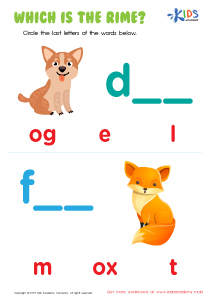
Choose a Sound Worksheet

Choose a Sound Worksheet

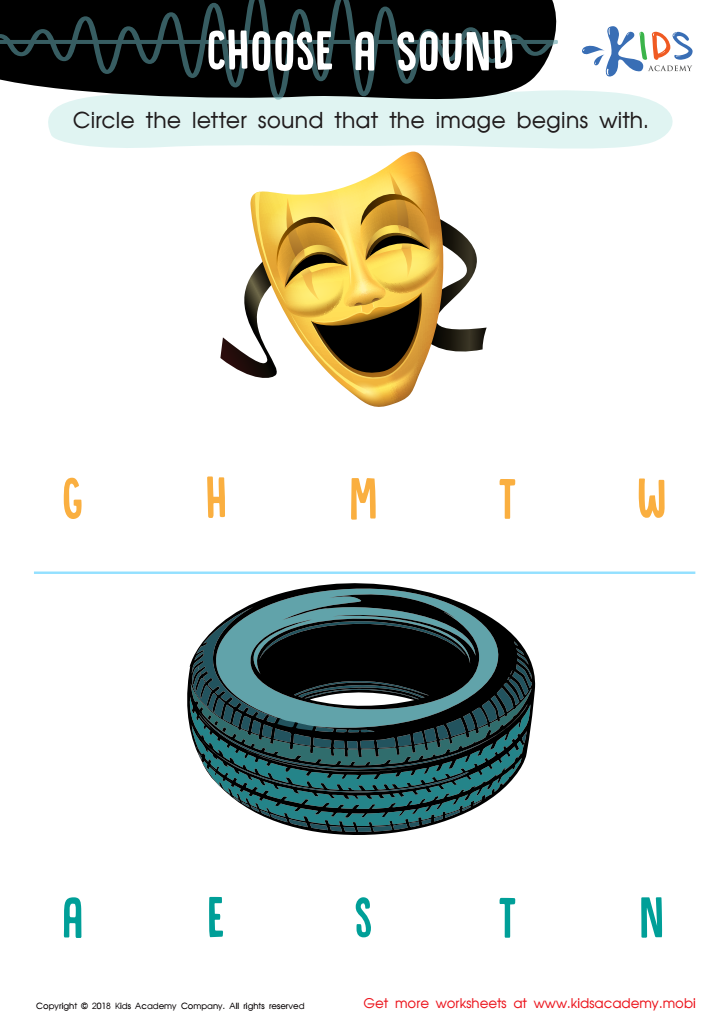
Help your child hone pre-reading skills with this colorful worksheet! They'll practice tracing letter sounds, develop phoneme awareness, and gain confidence. Plus, it's a fun way to work on their fine motor skills.
Choose a Sound Worksheet
Worksheet
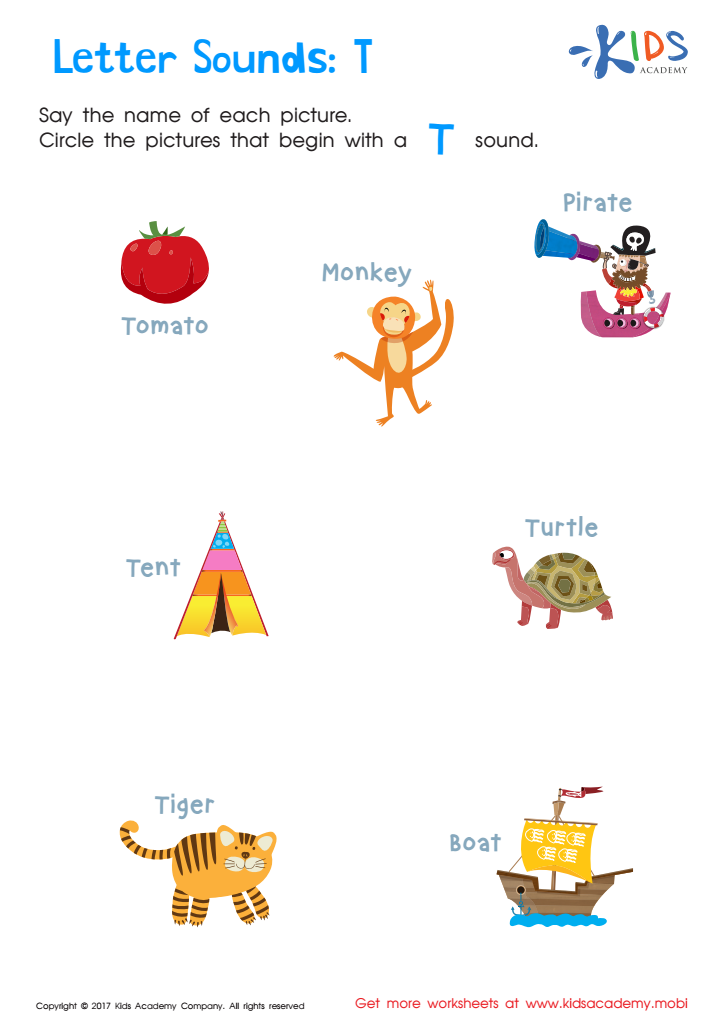
Letter t sounds worksheet

Letter T Sounds Worksheet

This worksheet is a fun way to help kids learn the t sound. It has familiar pictures and an easy-to-follow format, so kids can quickly recognize and learn the letter t.
Letter T Sounds Worksheet
Worksheet


Easy Letter Sounds for Ages 3-8 is an essential resource for parents and teachers invested in fostering early literacy skills. At this developmental stage, children are naturally curious and eager to learn the sounds associated with letters, which lays the groundwork for their reading and writing abilities. Teaching letter sounds systematically helps children decode words, making the reading process less daunting and more enjoyable.

Moreover, understanding letter sounds enhances phonemic awareness, which is crucial for developing spelling skills and overall language proficiency. Engaging children with interactive methods—such as songs, games, and hands-on activities—can keep their interest piqued and promote retention. These letter sounds serve as building blocks for more complex reading skills as they progress.

Furthermore, early exposure to letter sounds benefits children with diverse learning styles. It provides a strong foundational literacy skill that ensures they can engage in higher-level reading tasks later on. By investing time in Easy Letter Sounds, parents and teachers support children's linguistic development and build their confidence as learners, making them more likely to develop a lifelong love for reading. Ultimately, fostering strong early literacy skills creates a more promising academic future for children.