Easy Two-step Word Problems Worksheets for Ages 3-9
5 filtered results
-
From - To
Unlock your child’s problem-solving skills with our "Easy Two-Step Word Problems Worksheets" designed for ages 3-9! These engaging worksheets are perfect for young learners, gradually introducing them to essential math concepts through relatable scenarios. Each problem encourages critical thinking and builds confidence in math by combining basic arithmetic with fun storytelling. Tailored for early grade children, our worksheets help reinforce comprehension and reasoning in a playful manner. Whether at home or in the classroom, these resources offer a fun and interactive approach to mastering two-step word problems. Spark your child’s love for math today with our easy-to-use worksheets!
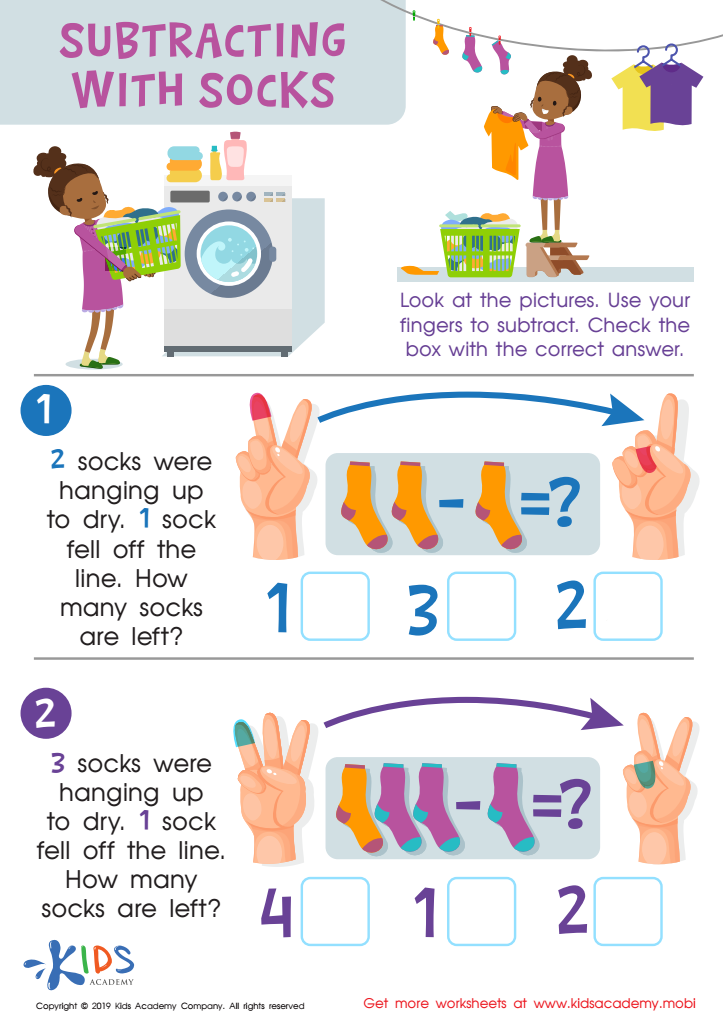
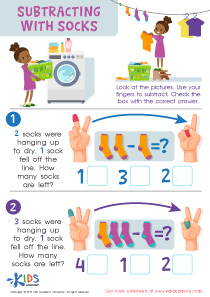
Subtracting Socks Worksheet
 Assign to My Students
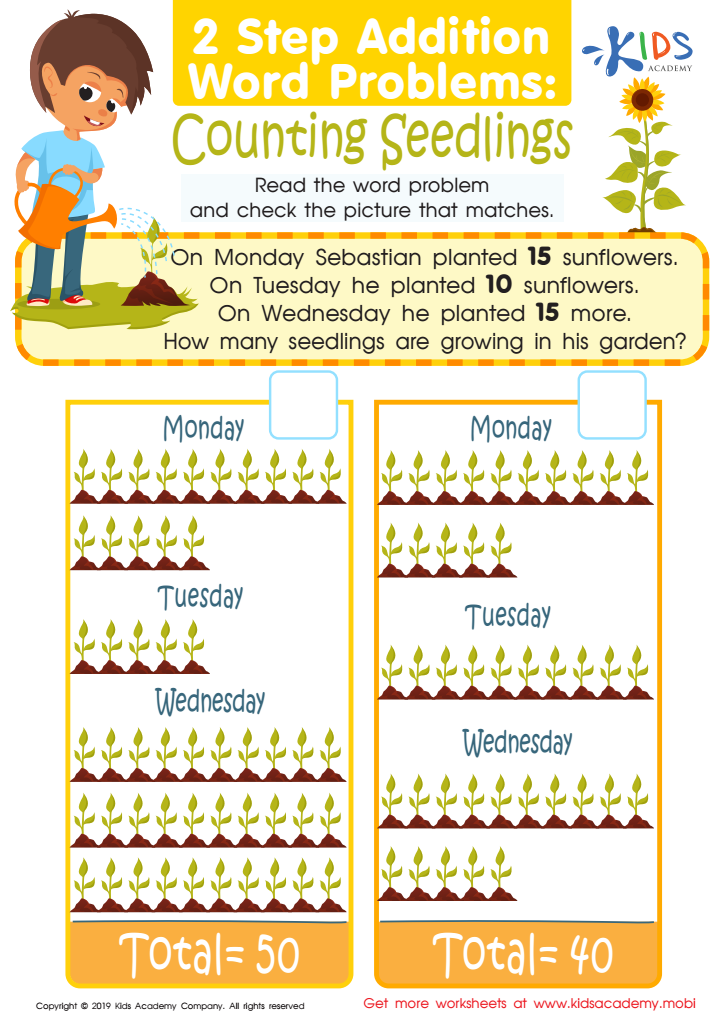
Counting Seedlings Worksheet
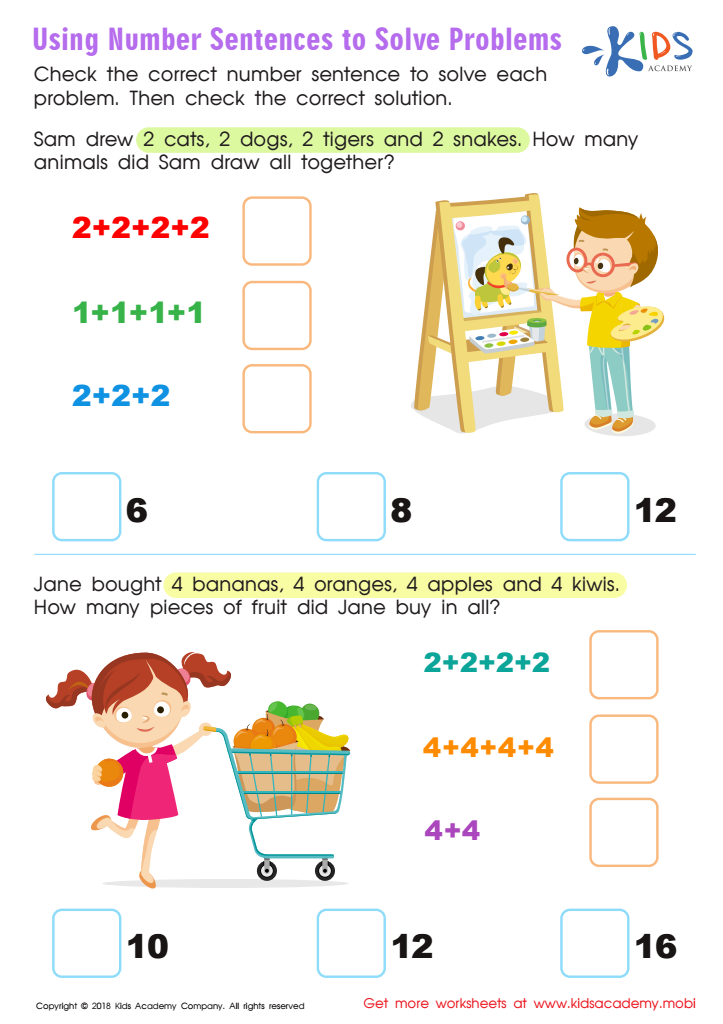
Using Number Sentences to Solve Problems Worksheet
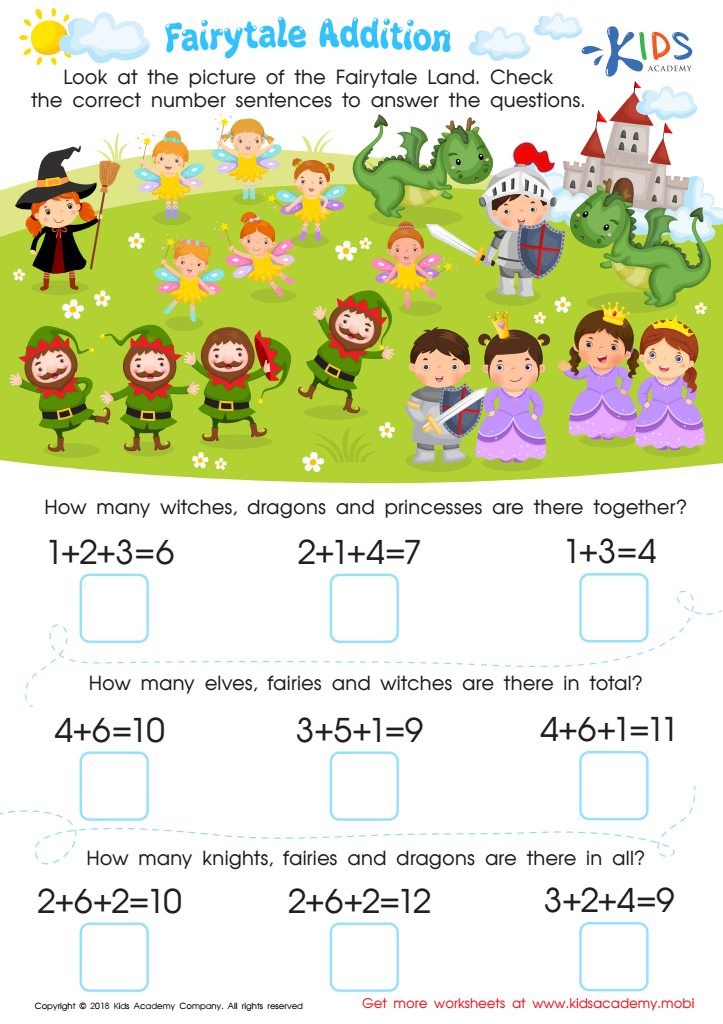
Fairytale Addition Worksheet
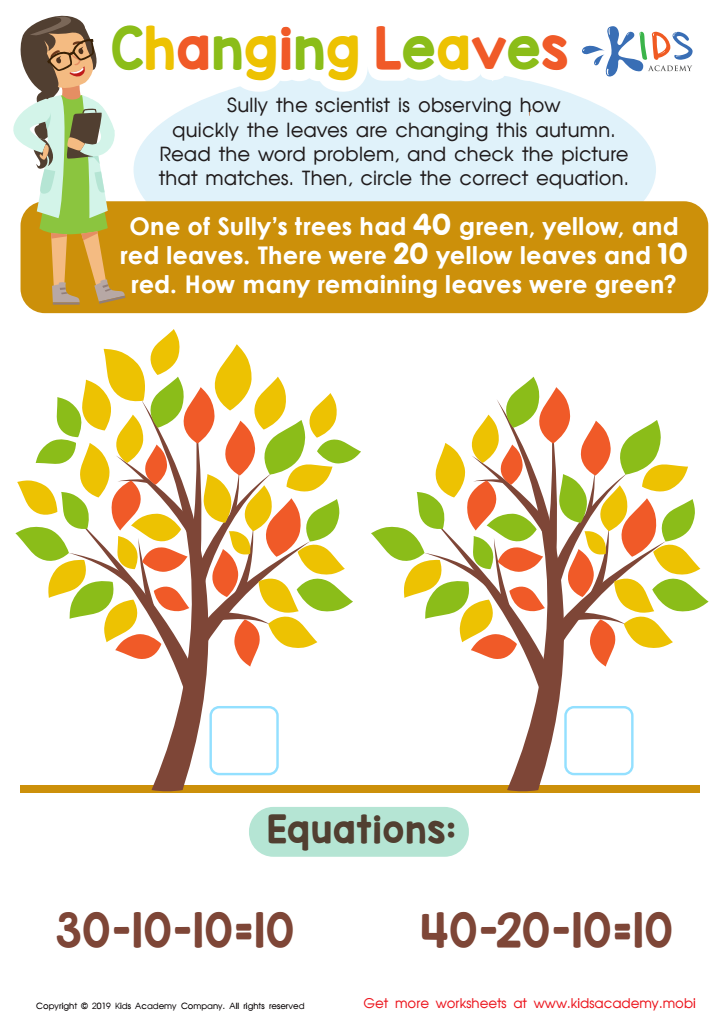
Changing Leaves Worksheet



Easy two-step word problems are crucial for children aged 3 to 9 as they lay a strong foundation for critical thinking and problem-solving skills. At this age, children are developing their ability to comprehend language and apply it to real-life situations. Engaging with two-step word problems encourages them to read carefully, identify key information, and organize their thoughts logically—all essential skills for future learning.
For parents and teachers, emphasizing these problems can foster a love for math and improve cognitive abilities. These activities help children understand not just numbers, but also the relationships between them, enhancing their numerical fluency. Moreover, tackling word problems boosts their confidence as they learn to navigate challenges independently.
Additionally, these problems promote effective communication, as children must articulate their reasoning and methods. In a world where analytical thinking is increasingly valued, introducing children to two-step word problems prepares them for complex problem-solving later in their academic journey.
Ultimately, investing time in these exercises enriches children’s understanding of math while developing foundational skills that support overall intellectual growth. It nurtures a generation capable of thinking critically and adapting to evolving challenges in education and life.