Easy Letter Sounds Worksheets for Ages 4-8
6 filtered results
-
From - To
Discover our "Easy Letter Sounds Worksheets for Ages 4-8" designed to make early reading skills a fun and engaging experience! Our expertly crafted worksheets help young learners connect letters with their corresponding sounds, enhancing phonemic awareness and early literacy skills. These vibrant, interactive, and age-appropriate activities are perfect for children aged 4-8, embedding essential phonics concepts through games, tracing exercises, and colorful illustrations. Whether you’re a parent or an educator, our worksheets provide an enjoyable path to letter sound mastery, setting a strong foundation for reading success. Start your child’s learning journey today with our hands-on, effective alphabet resources!
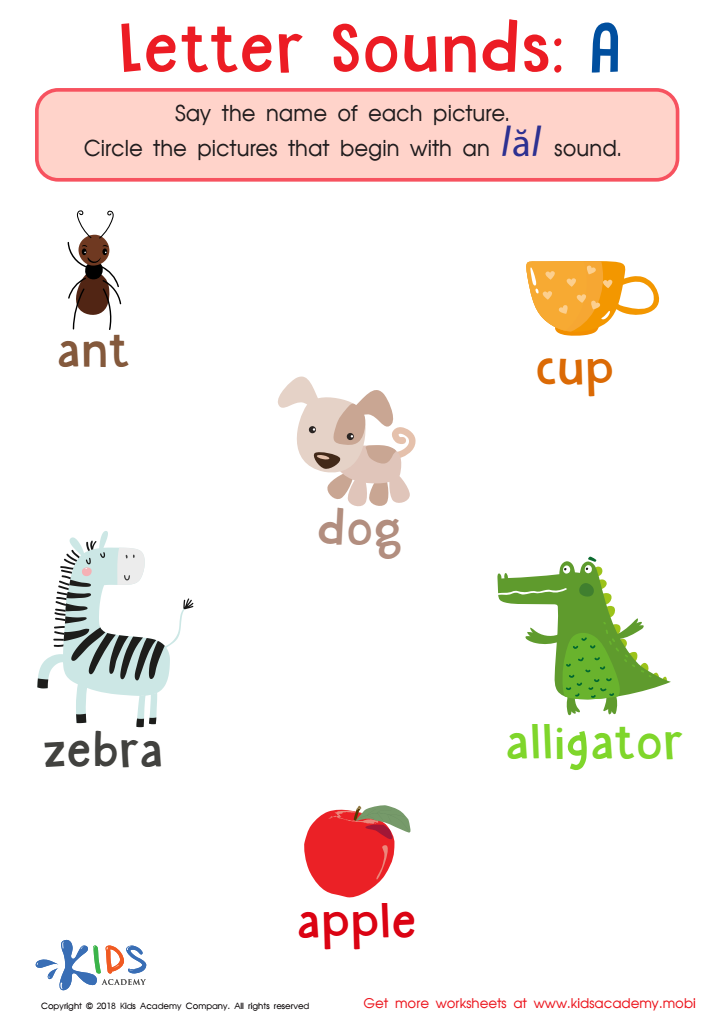
Letter A Sounds Worksheet
 Assign to My Students
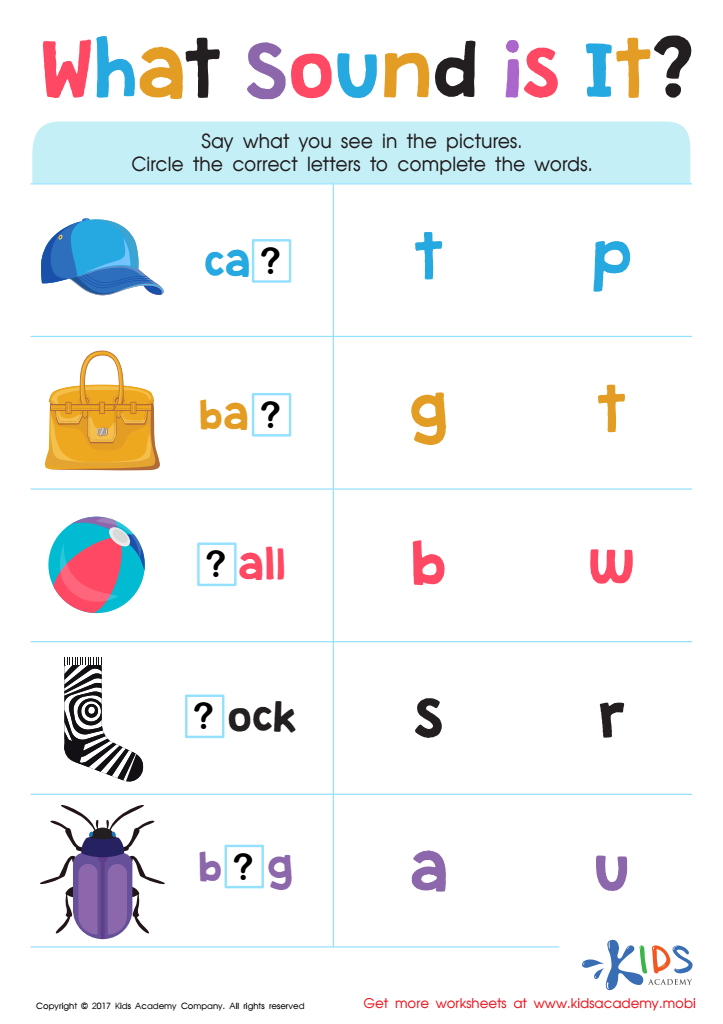
What Sound Is it? Worksheet
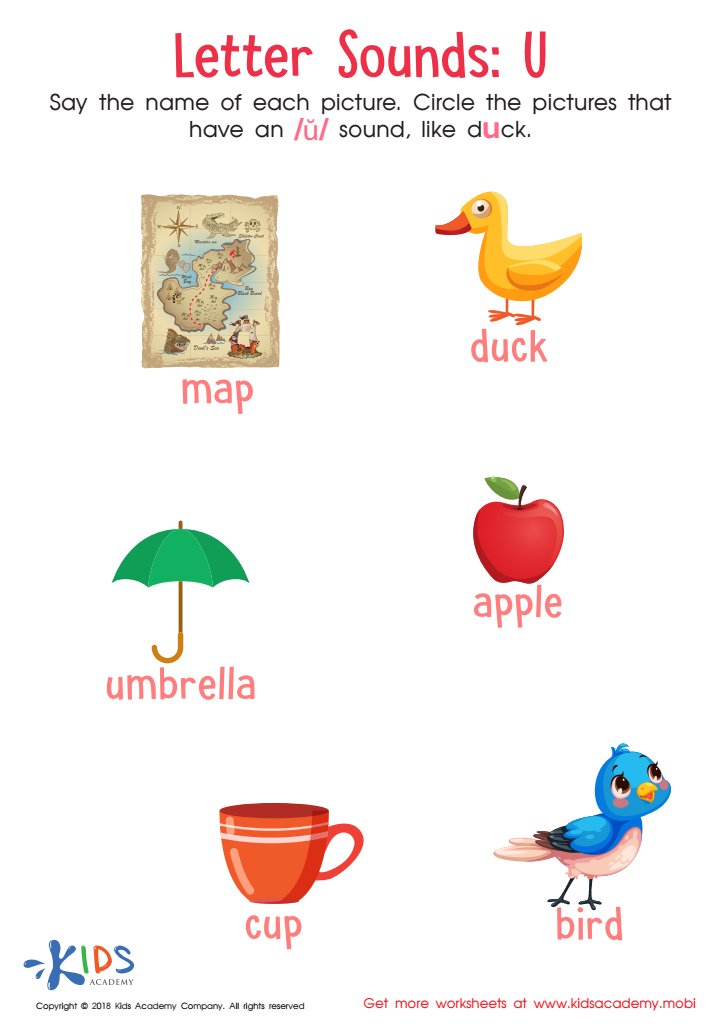
Letter U Sounds Worksheet
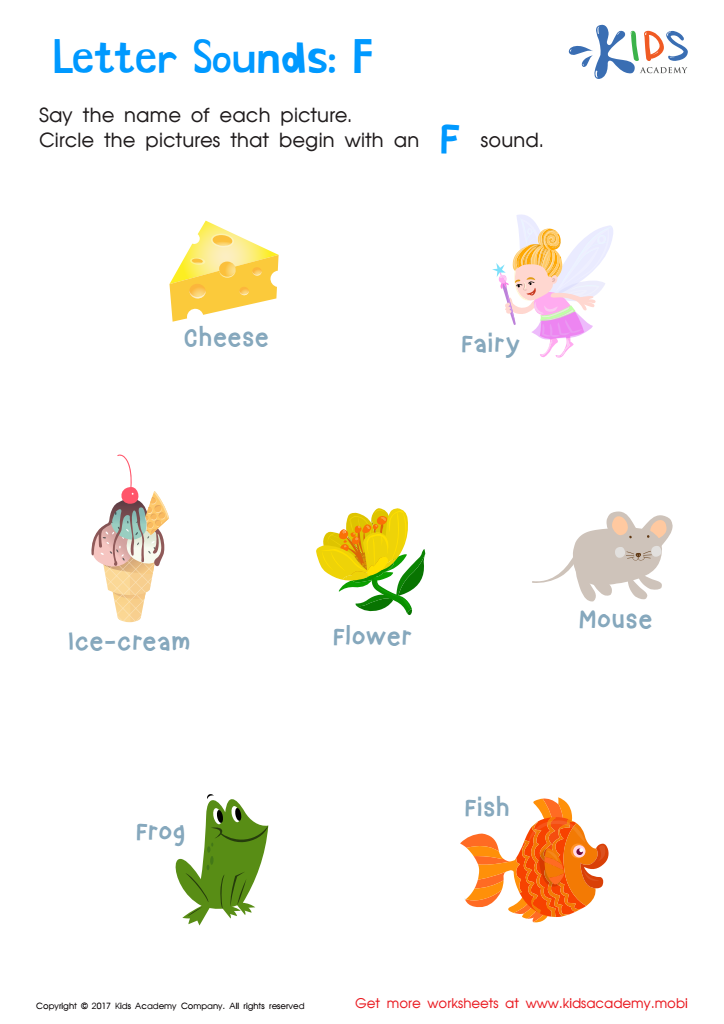
Letter F Sounds Worksheet
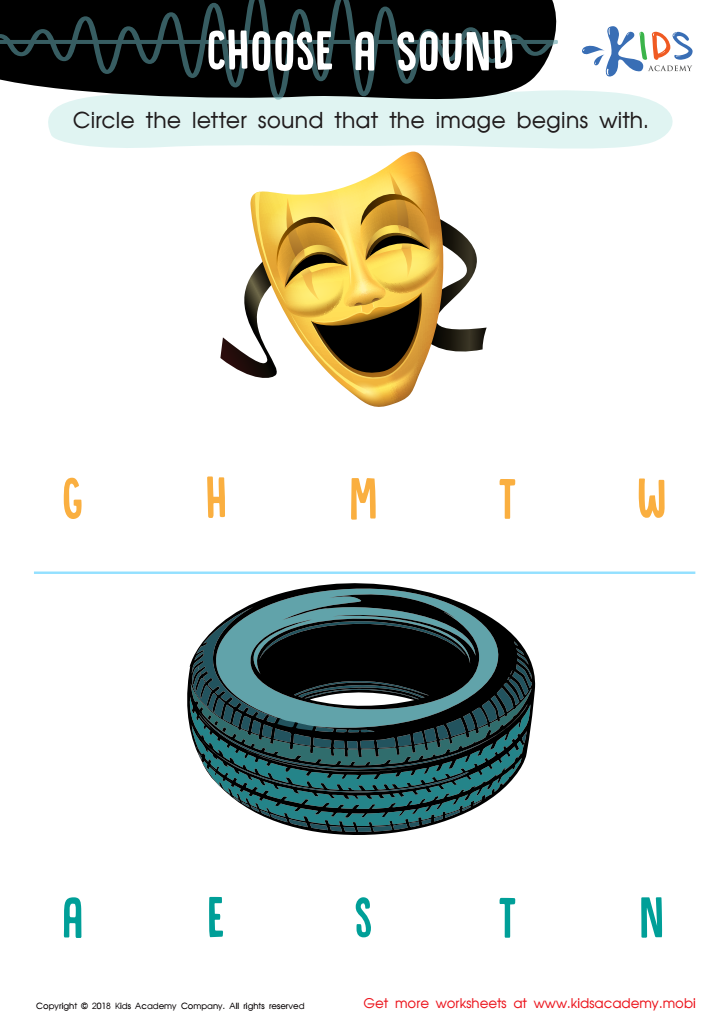
Choose a Sound Worksheet
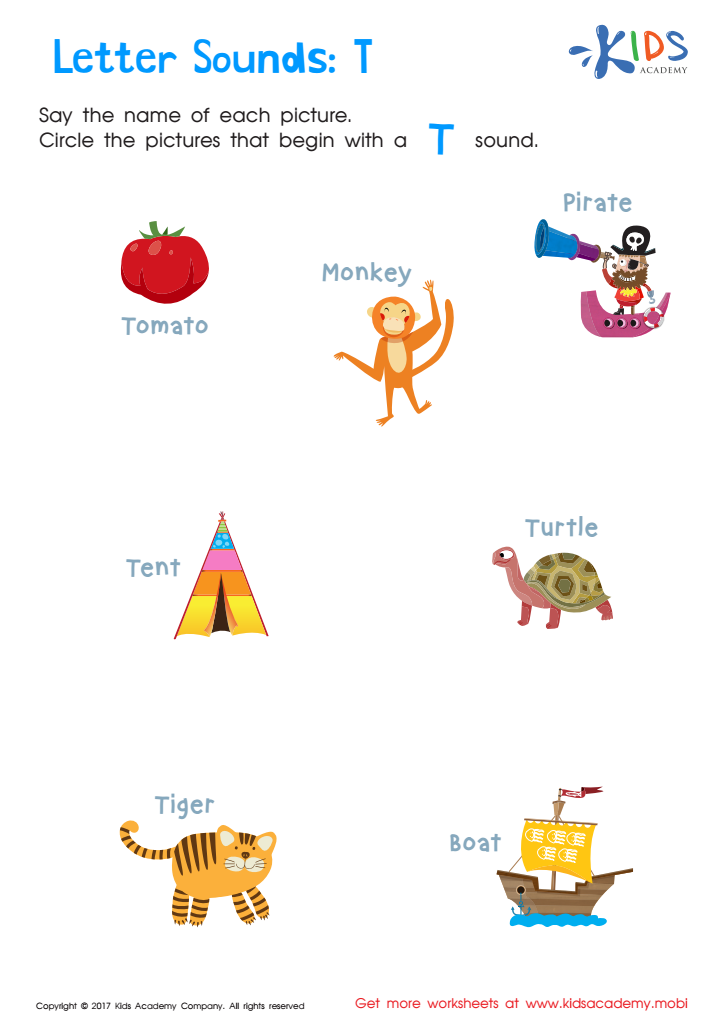
Letter T Sounds Worksheet








Fostering easy letter sounds in children aged 4-8 is crucial for building strong literacy skills. During these formative years, children's brains are highly receptive to learning foundational language components such as phonics. Phonics, which includes letter-sound relationships, is a core component in acquiring reading and writing skills. When children easily identify and pronounce letter sounds, it helps them decode words more efficiently, leading to better reading fluency.
For parents and teachers, investing time in teaching letter sounds can prevent future reading difficulties. Early mastery of phonics correlates with later academic success and can bolster a child's confidence and enthusiasm for learning. Hearing and practicing sounds helps children become aware of phonemic structures, which is essential for spelling and sounding out new words.
Moreover, this early exposure nurtures a love for books and can make learning more interactive and enjoyable. Engaging activities such as singing alphabet songs, reading aloud, and playful phonics games can be incorporated into daily routines to reinforce these skills. The success in acquiring easy letter sounds serves as a foundation for more complex language abilities, thereby setting children on a path toward lifelong literacy and academic achievement. Therefore, parents and teachers should prioritize and enthusiastically support this aspect of early education.