Easy Upper & Lowercase Letters Worksheets for Ages 4-8
6 filtered results
-
From - To
Introduce young learners to the fundamentals of writing with our Easy Upper & Lowercase Letters Worksheets for Ages 4-8. Designed specifically to capture kids' interest, these engaging worksheets offer a mix of fun and learning, helping children to recognize, trace, and write alphabet letters confidently. Each sheet provides ample practice for mastering both the upper and lowercase versions of every letter, enhancing both motor skills and letter familiarity. Perfect for preschool, kindergarten, and early elementary grades, our worksheets make learning letters an exciting adventure. Equip your child with essential literacy skills through our easy and effective training resources.
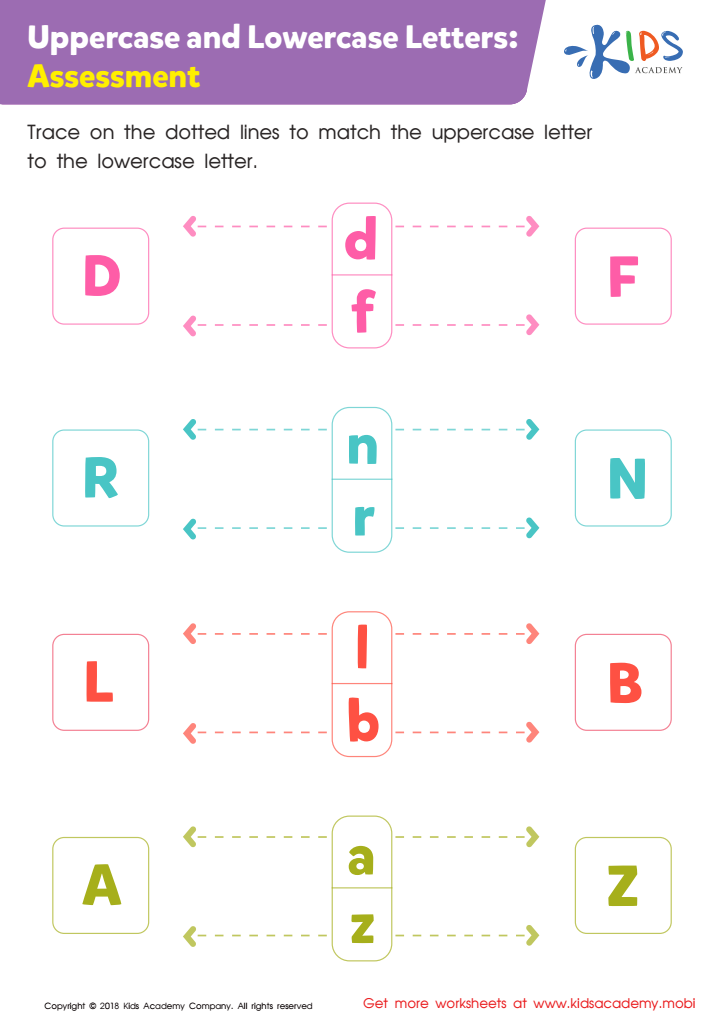
Uppercase and Lowercase Letters: Assessment Worksheet
 Assign to My Students

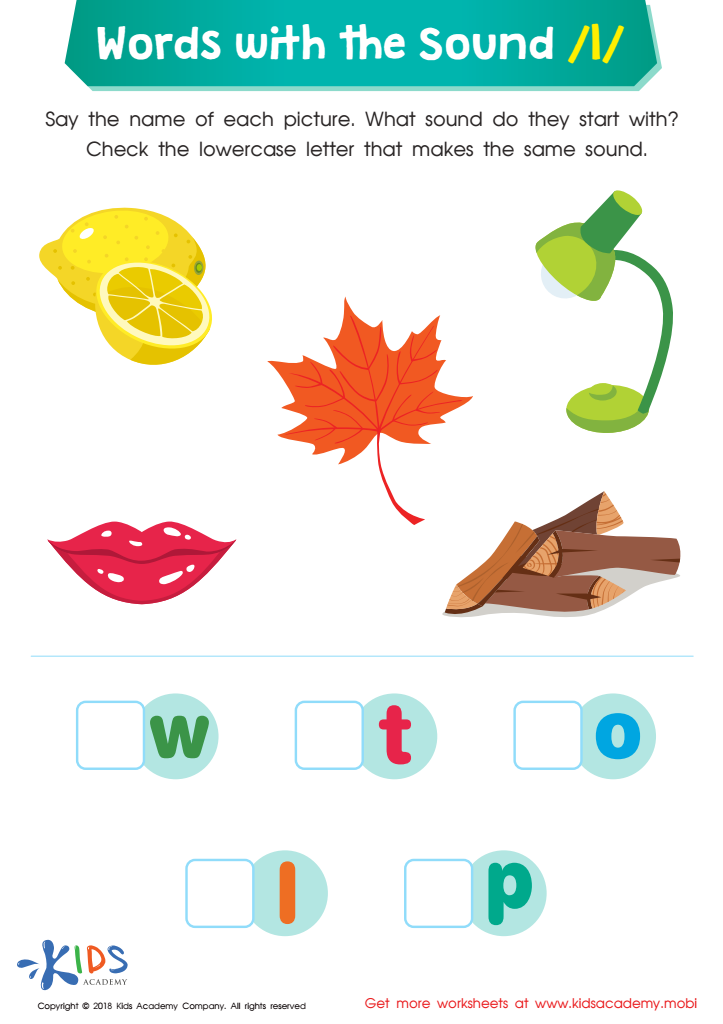
Words with Sound L Reading Worksheet
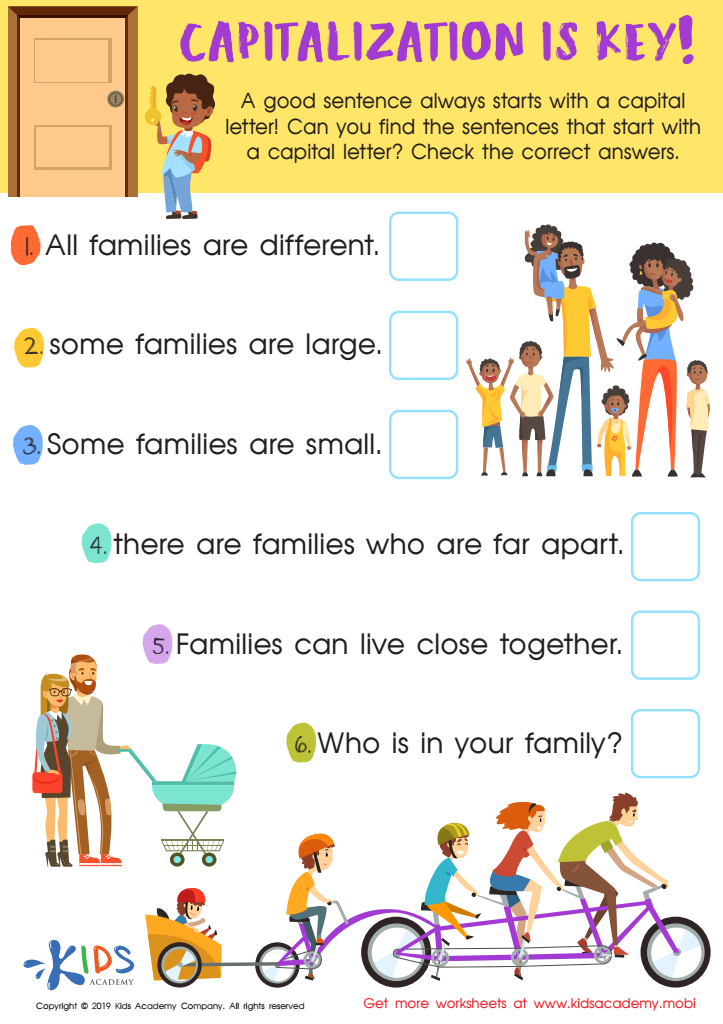
Capitalization Key Worksheet
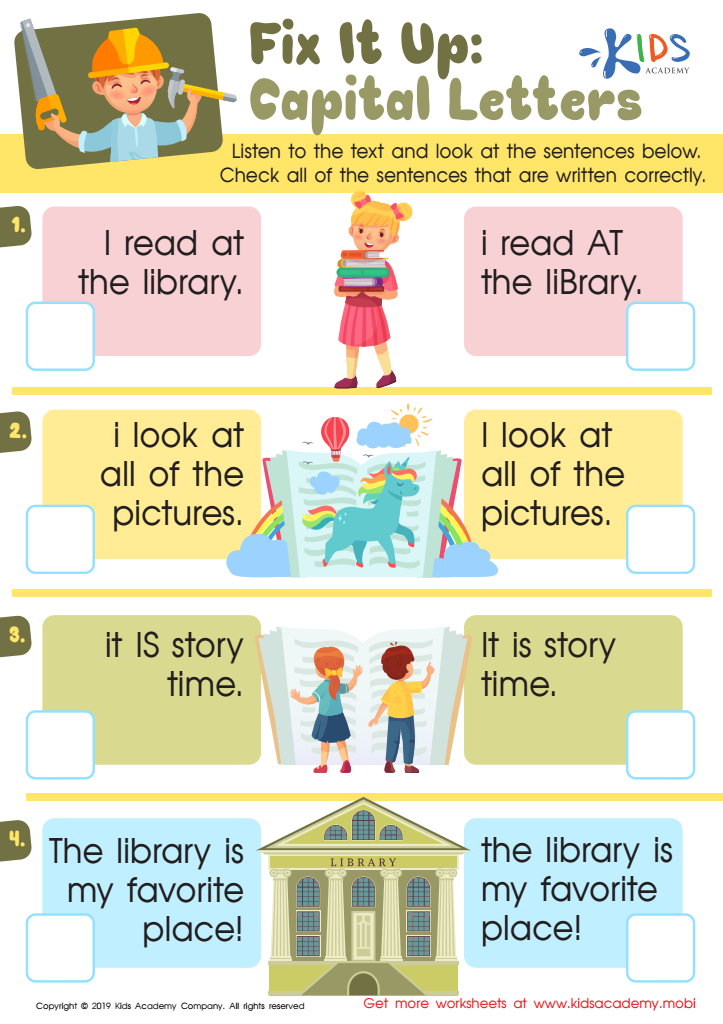
Fix Capital Letters Worksheet
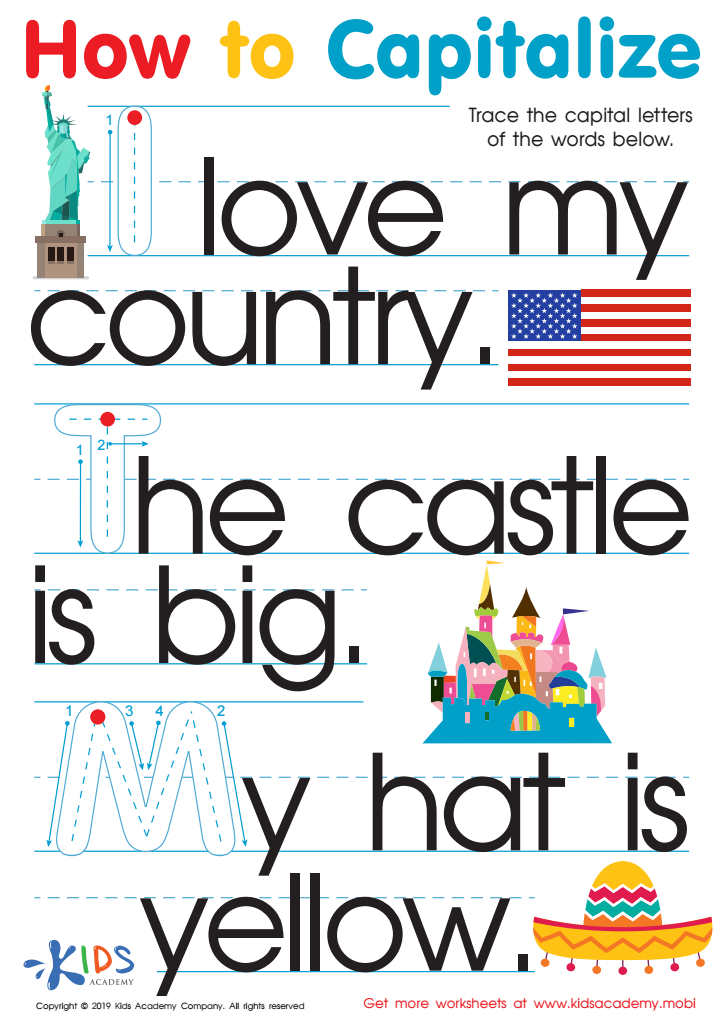
How to Capitalize Worksheet
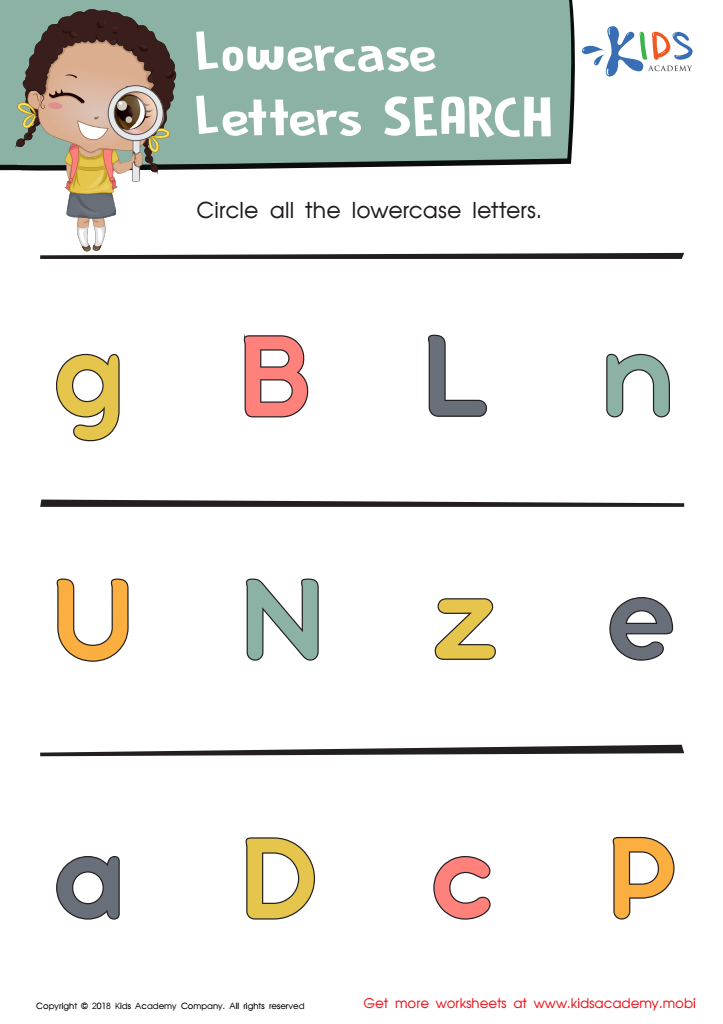
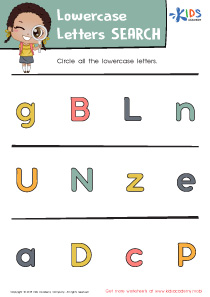
Lowercase Letters Search: Assessment Worksheet






Parents and teachers should prioritize teaching easy upper and lowercase letters to children aged 4-8 because it establishes a crucial foundation for literacy development. At this formative age, children are in a sensitive period for language acquisition. Mastering both uppercase and lowercase letters helps them recognize, differentiate, and write letters more effectively, which is fundamental for reading and writing proficiency.
Uppercase letters are generally easier for young children to learn first, as they are more uniform and distinct. However, lowercase letters are more prevalent in written text, making their recognition equally important for reading. Knowing both cases improves a child's ability to read fluently and enhances their comprehension skills since they become familiar with the structure of words and sentences.
Additionally, this knowledge aids in their writing capabilities, allowing them to communicate their thoughts and stories more accurately and confidently. Activities that involve tracing, drawing, and identifying letters can also improve their fine motor skills and hand-eye coordination.
In sum, teaching easy upper and lowercase letters sets the groundwork for future academic success and instills a sense of accomplishment in young learners, fostering a love for learning that extends beyond the classroom. By prioritizing this foundational skill, parents and teachers give children the tools they need to become proficient readers and writers.