Easy Good Citizenship Worksheets for Ages 6-8
5 filtered results
-
From - To
Discover our "Easy Good Citizenship Worksheets for Ages 6-8" designed to engage young learners in understanding the essential principles of citizenship. These fun and interactive worksheets introduce kids to concepts like community responsibility, respect, and making positive choices. With colorful illustrations and simple instructions, children will enjoy exploring topics such as helping others, following rules, and being kind. Ideal for classrooms and home use, these resources reinforce good citizenship through enjoyable activities, fostering a sense of belonging and responsibility in young minds. Start nurturing your child's civic knowledge and values today with our comprehensive and accessible worksheets!
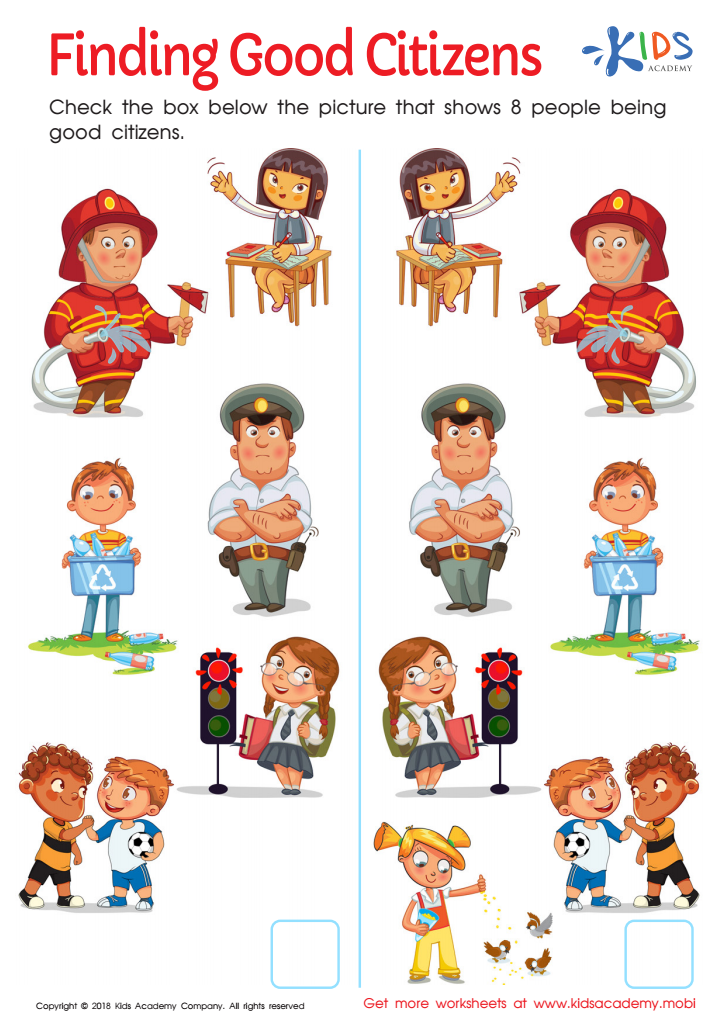
Finding Good Citizens Worksheet
 Assign to My Students
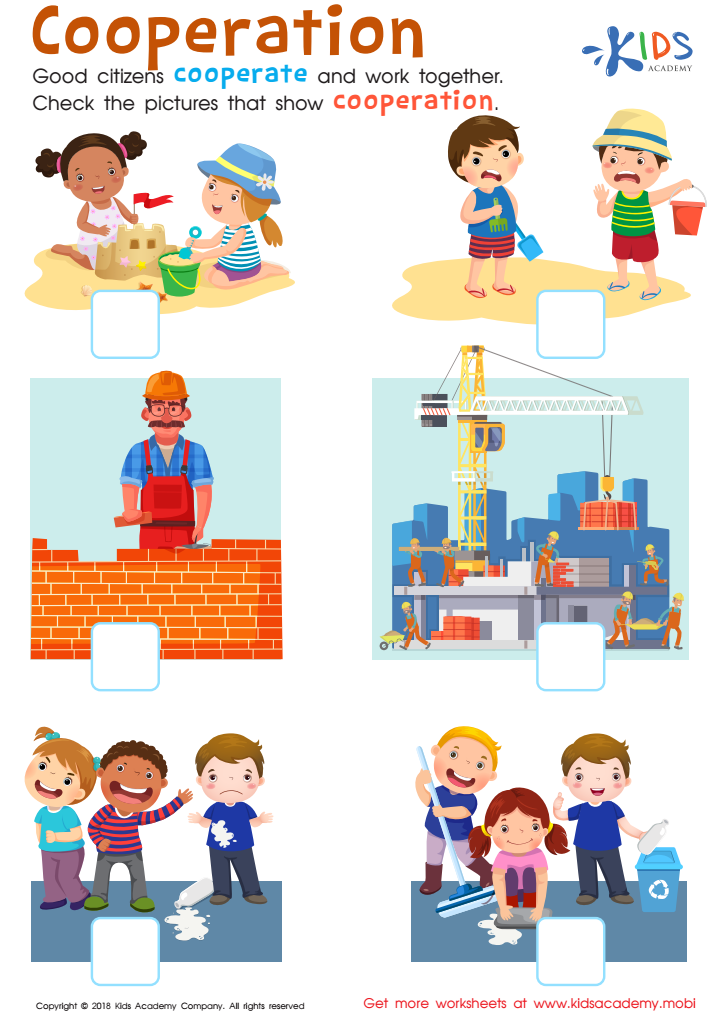
Cooperation Worksheet
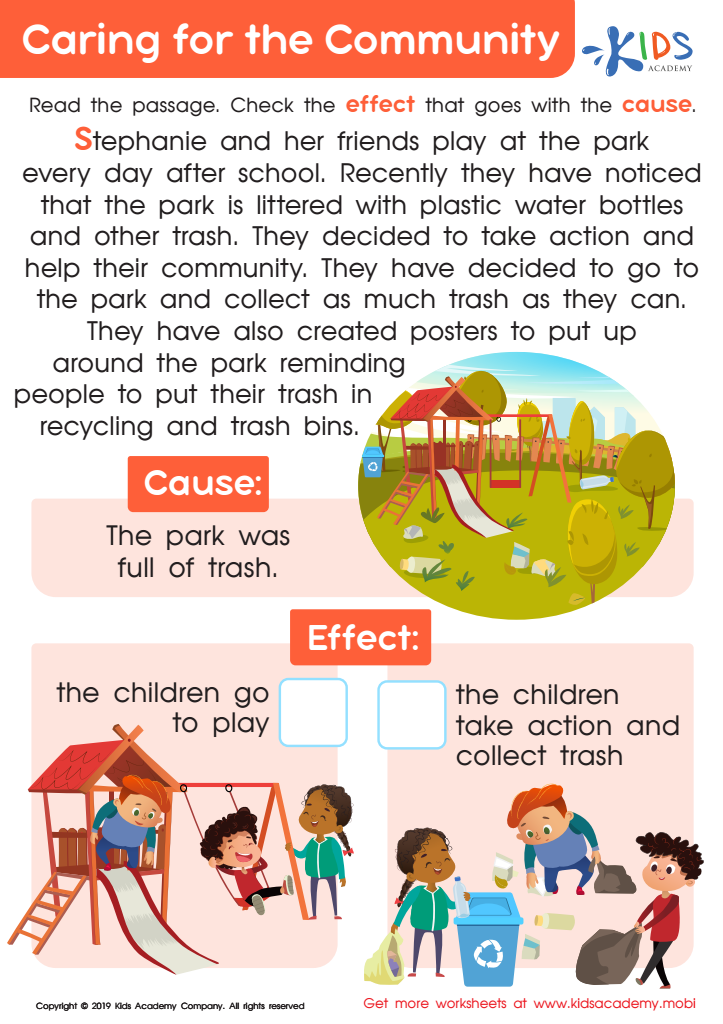
Caring for the Community Worksheet
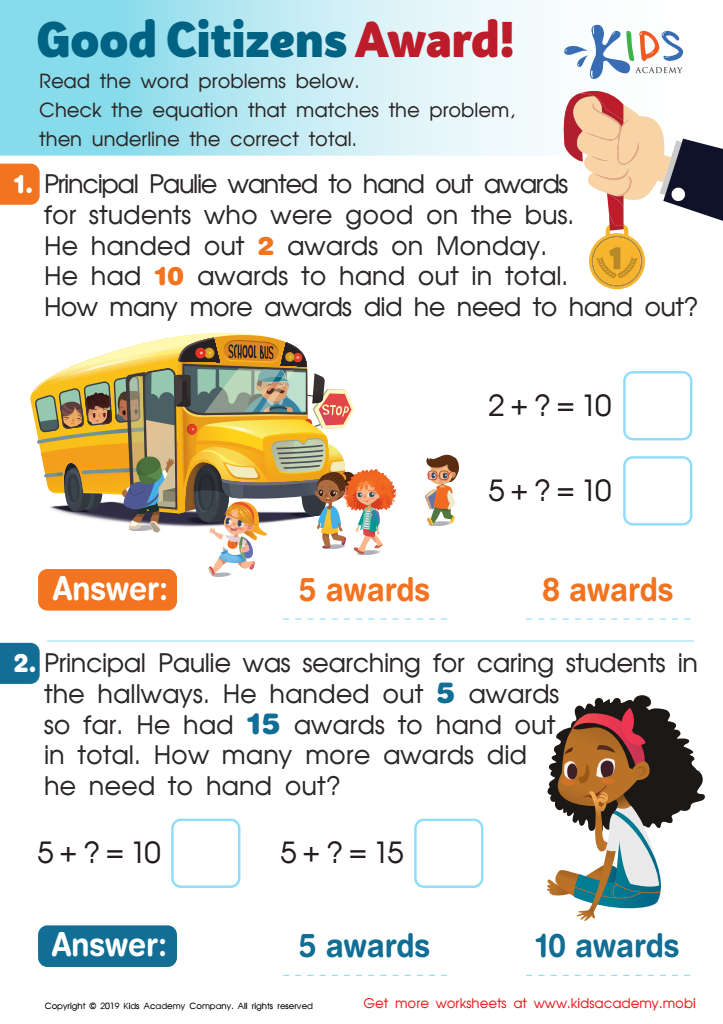
Good Citizens Award! Worksheet
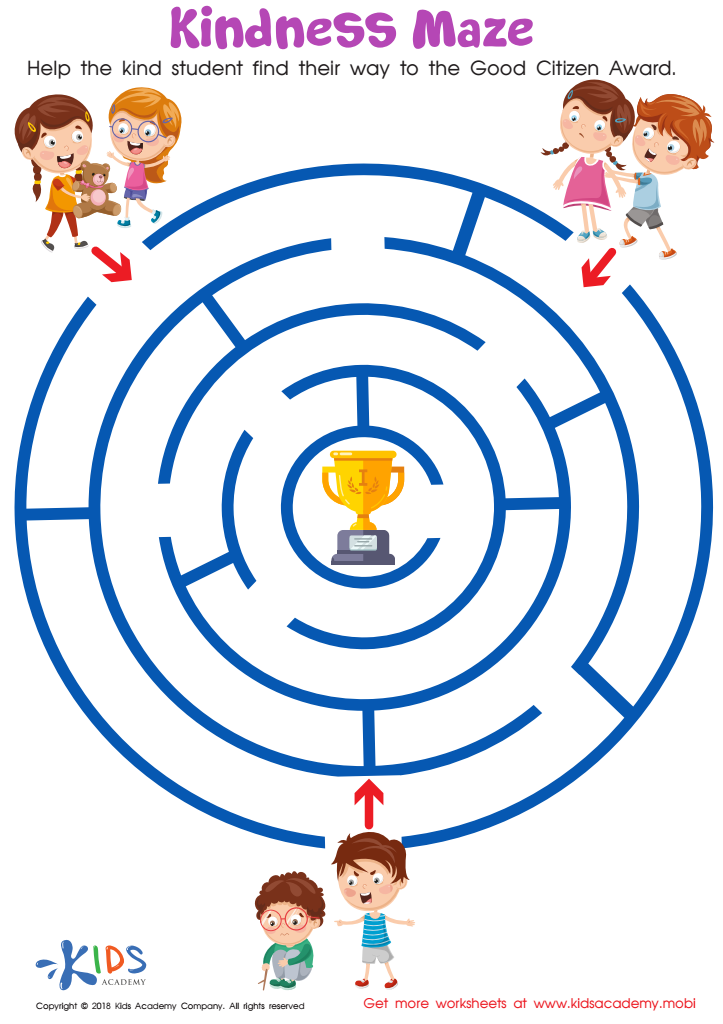
Kindness Maze Worksheet




Easy Good Citizenship for Ages 6-8 is essential for fostering a strong foundation of responsibility, empathy, and community awareness in young children. At this age, children are developing their social skills and learning how to interact with others, making it crucial to introduce the concept of good citizenship early on. By understanding the importance of their actions and how they affect those around them, children learn to express kindness, share resources, and treat others with respect.
Moreover, instilling good citizenship values encourages children to engage in their communities, nurturing a sense of belonging and ownership. Activities like helping others, participating in group projects, or even small gestures of kindness help develop their social and emotional intelligence. These principles pave the way for developing conscientious, engaged citizens in the future who are likely to become responsible adults.
Incorporating lessons on good citizenship into daily life and education promotes critical thinking about one's role in society. Parents and teachers can model these behaviors, enabling children to learn by example. As children strive to be good citizens, they build healthy relationships with peers and learn the value of teamwork, compassion, and civic engagement, ultimately benefiting society as a whole.