Extra Challenge Short Vowels Worksheets for Ages 3-7
4 filtered results
-
From - To
Discover our engaging Extra Challenge Short Vowels Worksheets designed specifically for children aged 3-7! These fun and interactive worksheets are perfect for reinforcing short vowel recognition and pronunciation skills. Each worksheet is thoughtfully crafted to challenge young learners, enabling them to master the fundamentals of phonics through a variety of activities, including fill-in-the-blanks, matching exercises, and word puzzles. Ideal for both the classroom and at-home learning, our worksheets foster a solid foundation in early literacy while making learning an enjoyable experience. Help your child build confidence in their reading abilities with our captivating short vowels worksheets today!
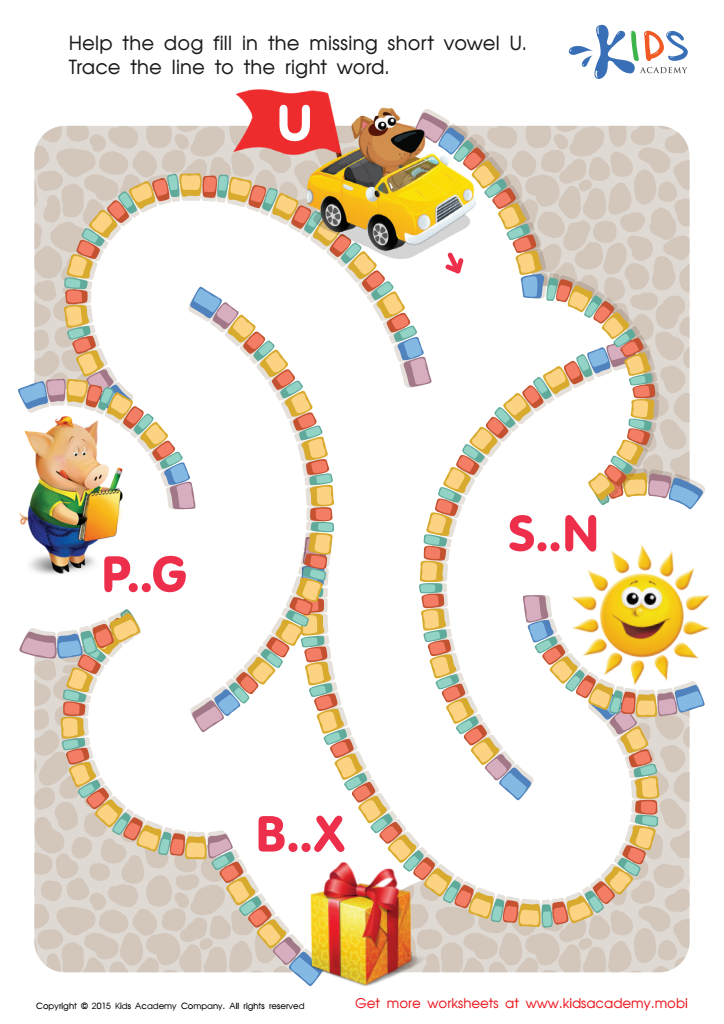
Short Vowel Sound U Worksheet
 Assign to My Students
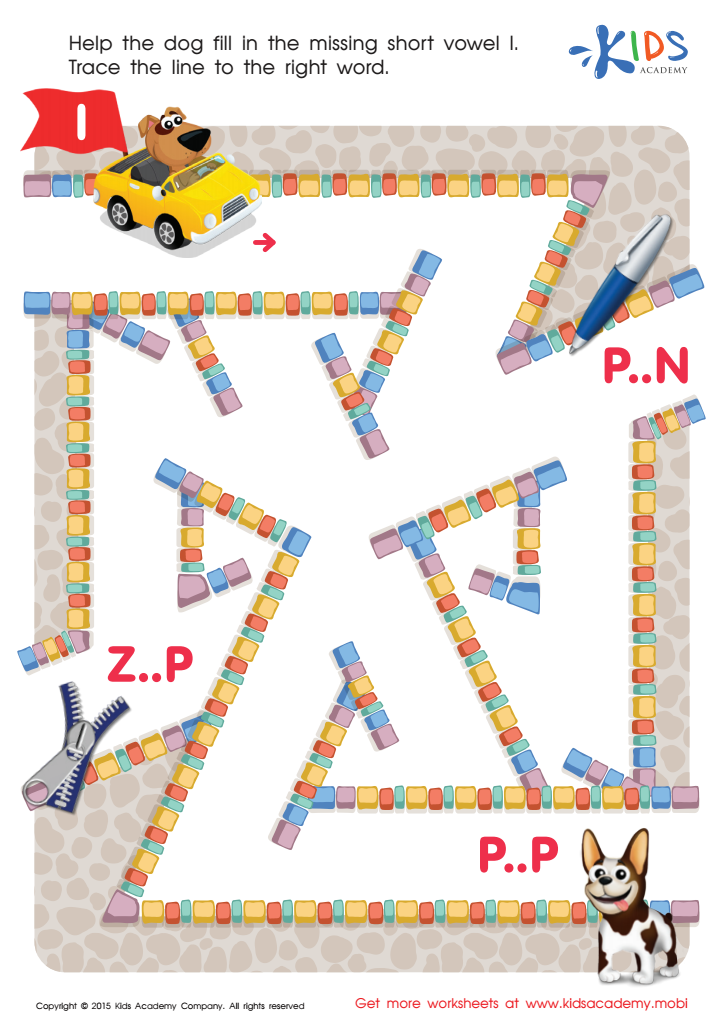
Short Vowel Sound I Worksheet
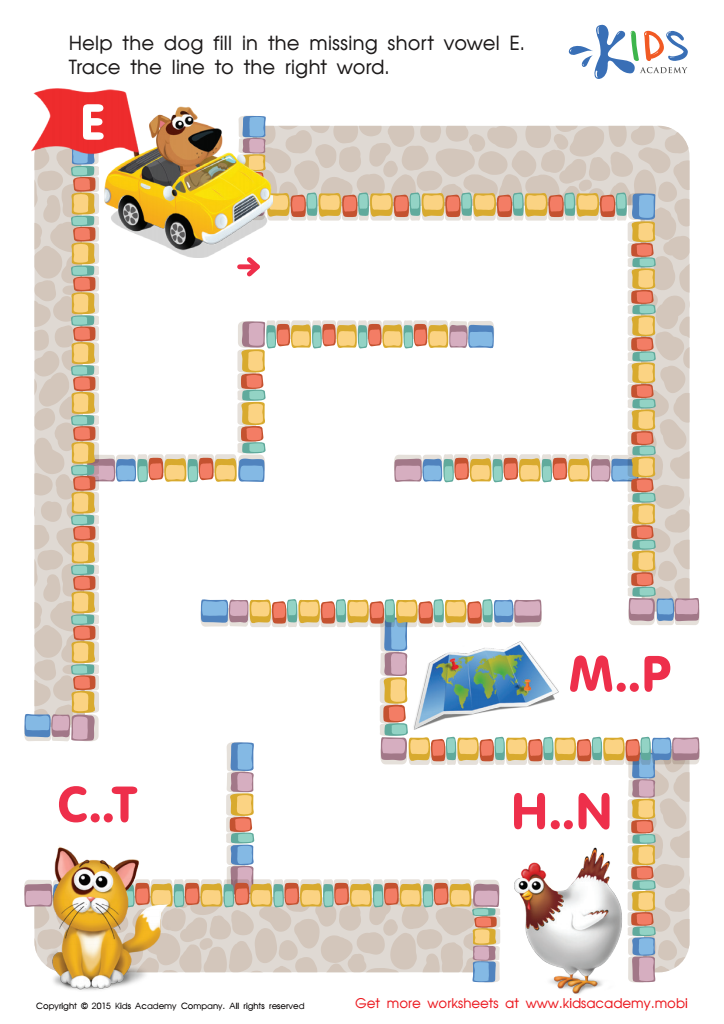
Short Vowel Sound E Worksheet
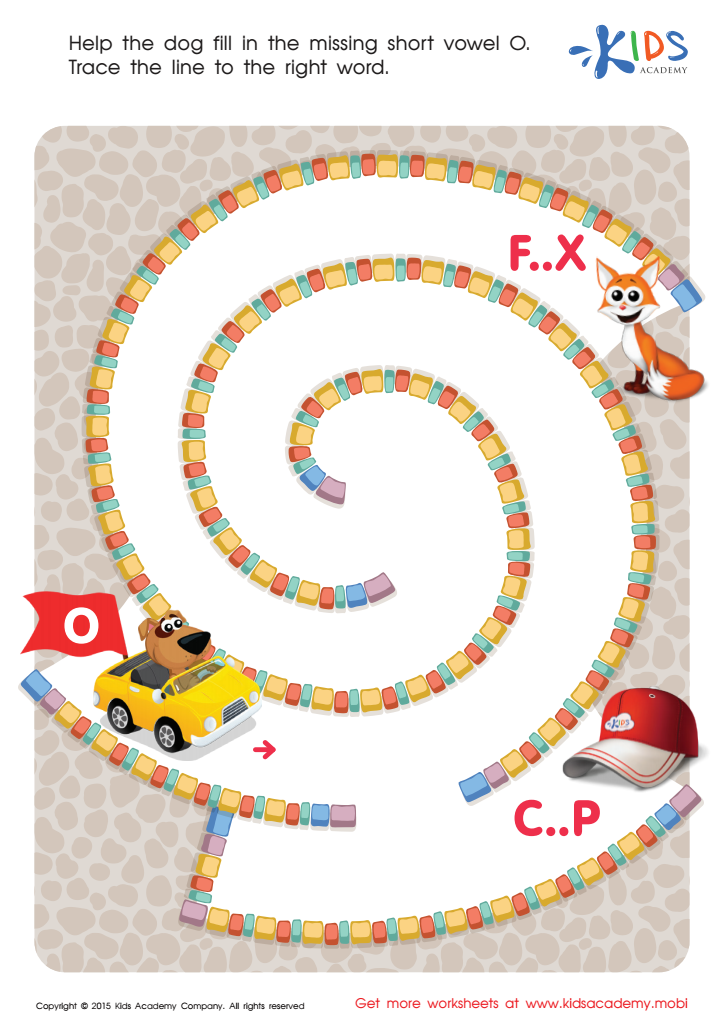
Short Vowel Sound O Worksheet



Parents and teachers should care about Extra Challenge Short Vowels for children ages 3-7 because grasping short vowels is foundational to early literacy skills. Mastering short vowel sounds enhances phonemic awareness, which is crucial for reading and writing development. When children understand these sounds, they can decode words more effectively, setting the stage for fluent reading.
Introducing extra challenges helps to engage young learners and keeps their interest alive. It fosters a love for learning and reading while encouraging critical thinking. Using fun, interactive activities related to short vowels can accommodate diverse learning styles, motivating all children to participate actively.
Moreover, strong short vowel skills contribute to improved spelling and vocabulary acquisition. As children become more confident in their reading abilities, they build self-esteem that influences their academic journey. Consistent practice with these foundational sounds leads to more successful communication skills, paving the way for a lifelong appreciation for literature.
Ultimately, fostering a solid understanding of short vowels equips children with essential tools for future learning, ensuring they are prepared to tackle more complex language concepts in later grades. By prioritizing these skills, parents and teachers can significantly impact children’s educational trajectory.