Normal Numbers 11–20 Worksheets for Ages 3-4
4 filtered results
-
From - To
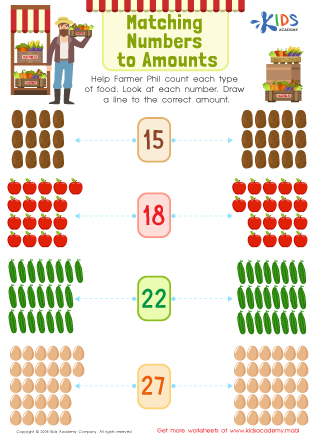
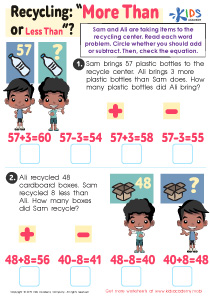
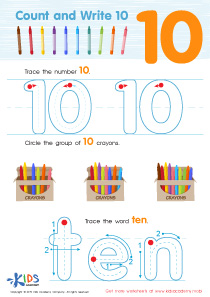
Introduce your child to the exciting world of numbers with our "Normal Numbers 11–20 Worksheets" designed specifically for ages 3-4. These fun and engaging exercises are perfect for developing early math skills. With a variety of activities, such as counting, matching, and number tracing, children will learn to recognize and write numbers 11 through 20. Each worksheet is thoughtfully crafted to blend education with creativity, making learning enjoyable and effective. Foster your child’s confidence and build a solid foundation in mathematics with our expertly designed worksheets. Visit Kids Academy to download and start learning today!
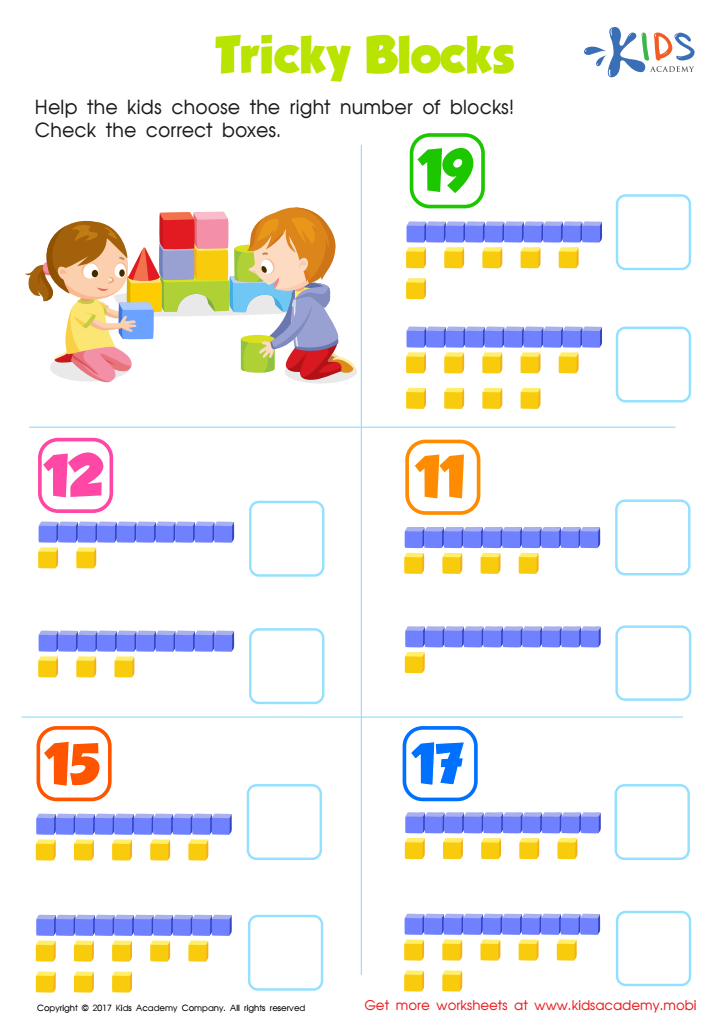
Tricky Blocks Worksheet
 Assign to My Students
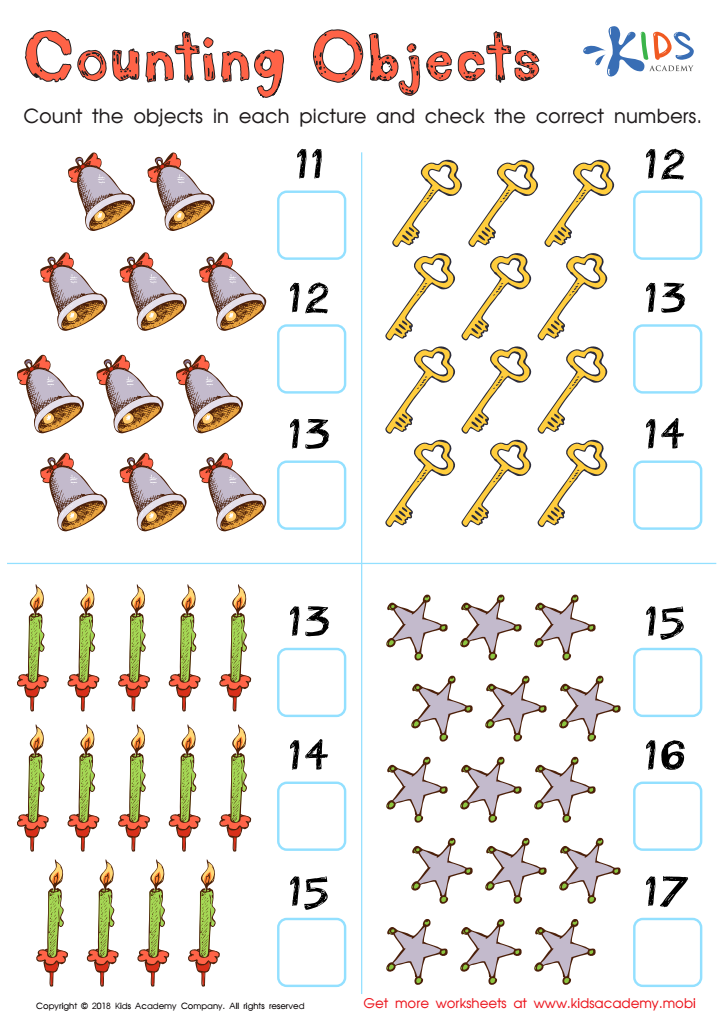
Counting Numbers Worksheet For Kindergarten
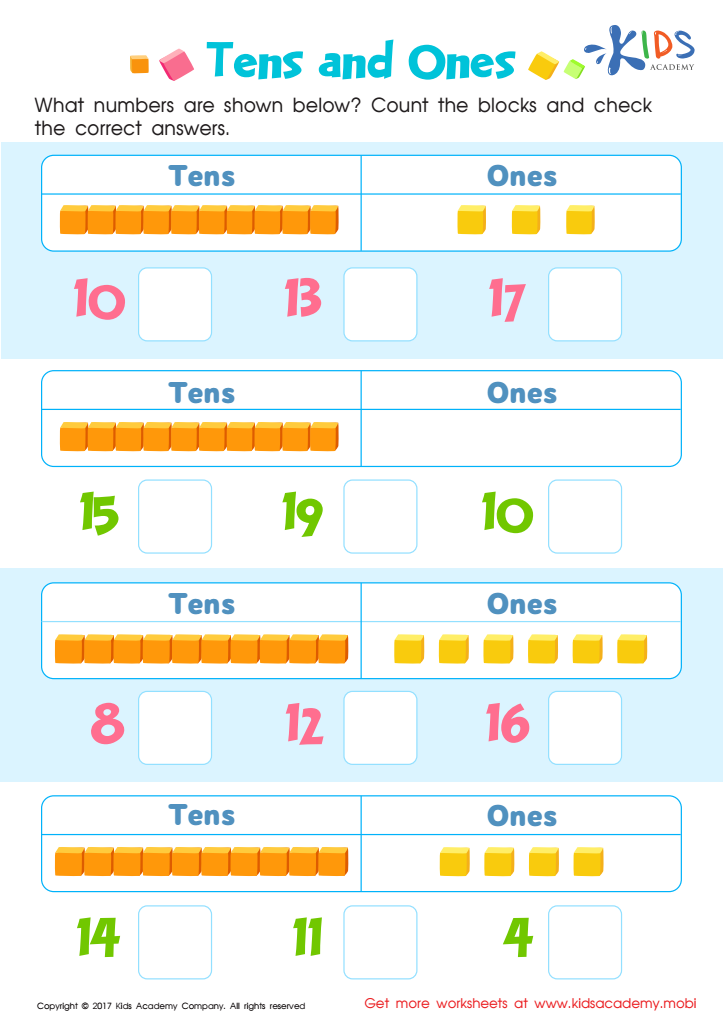
Tens and Ones Worksheet
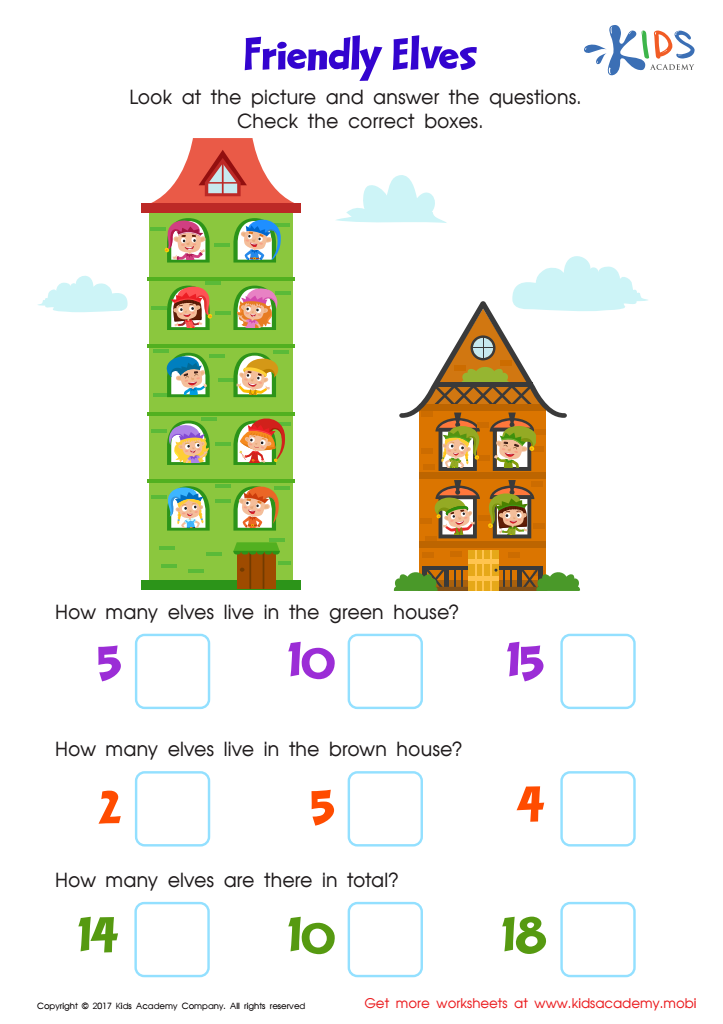
Place Value: Friendly Elves Worksheet



Parents and teachers should care about introducing normal numbers 11–20 to children aged 3-4 because this early exposure to numbers builds a strong mathematical foundation. During these formative years, children’s brains are highly adaptable, making it the ideal time to introduce basic numerical concepts. Understanding numbers 11-20 not only introduces children to the concept of counting beyond 10 but also prepares them for more complex mathematical operations.
Learning these numbers helps children recognize and name them, development both visual and auditory identification. This is crucial for developing number sense, which includes understanding the value of numbers, their order, and their use in everyday life. Additionally, recognizing numbers helps in developing skills such as sequencing, simple addition, and subtraction, which are foundational not just in mathematics but for logical reasoning overall.
Furthermore, strong early numeracy skills are linked to better academic performance in later years. By nurturing these basics at an early stage, parents and teachers are laying the groundwork for future success in more complex mathematical concepts, problem solving, and analytical thinking.
Incorporating numbers 11-20 in playful, engaging contexts—such as counting games, songs, and visual aids—makes the learning process enjoyable and effective, fostering a positive attitude towards mathematics from the start.