Normal Tracing Lines and Curves Worksheets for Ages 3-9
5 filtered results
-
From - To
Discover our Normal Tracing Lines and Curves Worksheets for children ages 3-9. These vibrant, engaging activities are designed to help young learners develop fine motor skills and improve hand-eye coordination. Perfect for early childhood education, our worksheets offer a variety of tracing exercises involving lines, curves, and shapes. They also introduce foundational concepts essential for writing. Fun and easy-to-follow, these printable sheets can be used at home or in the classroom to support your child's pre-writing journey. Help your little ones build confidence and creativity with our expert-crafted tracing worksheets.
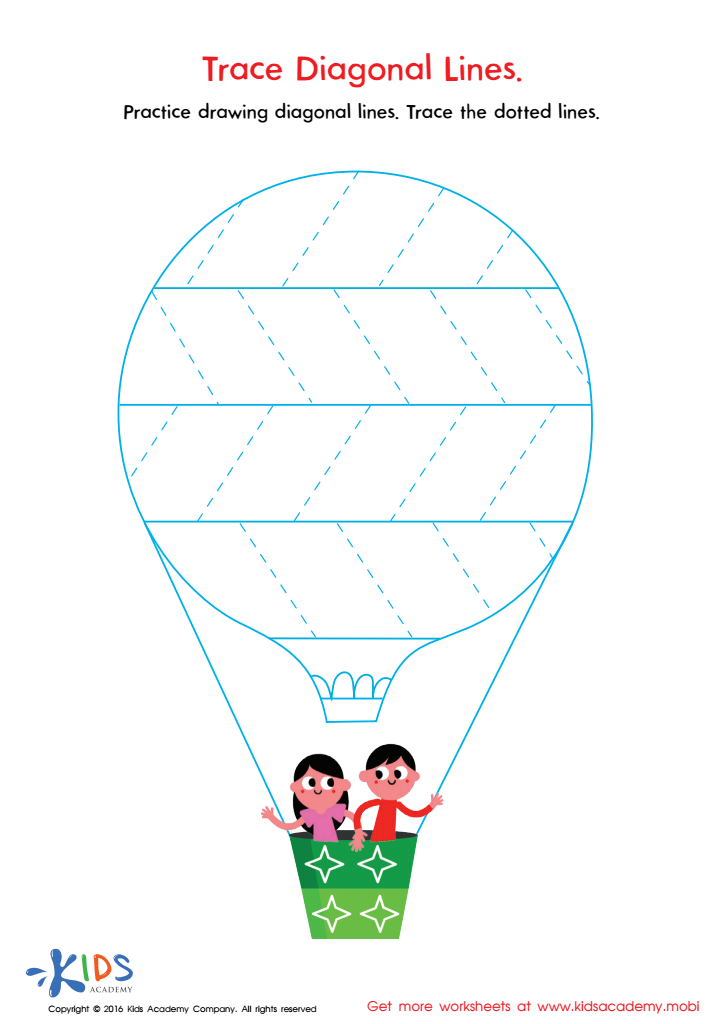
Trace Diagonal Lines Worksheet
 Assign to My Students
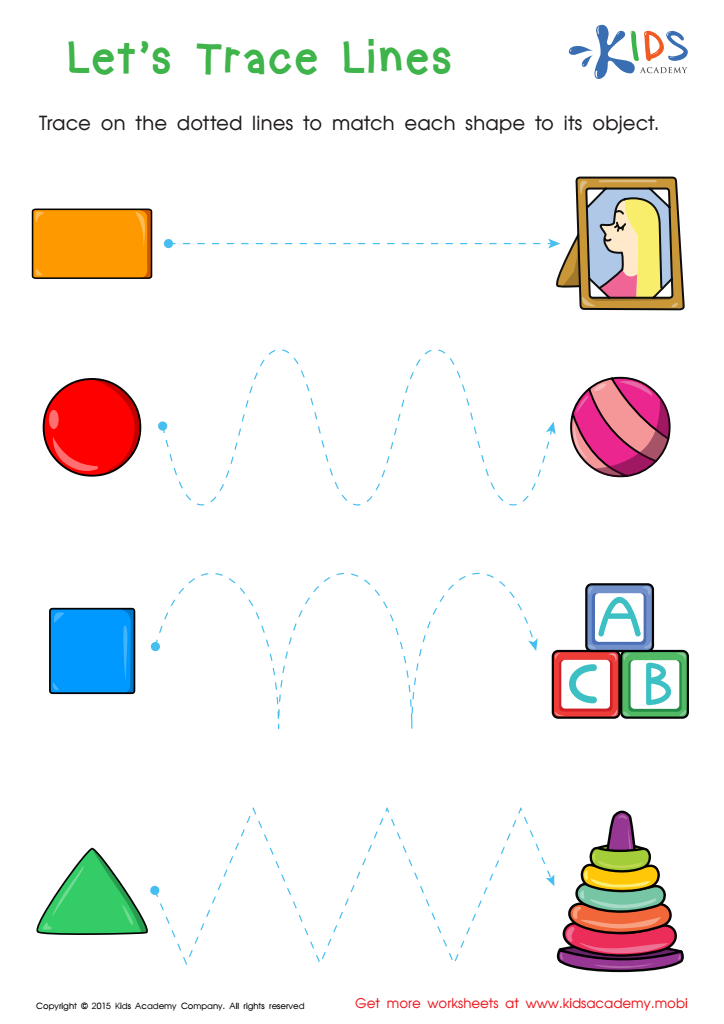
First Words: Let's Trace Lines Worksheet
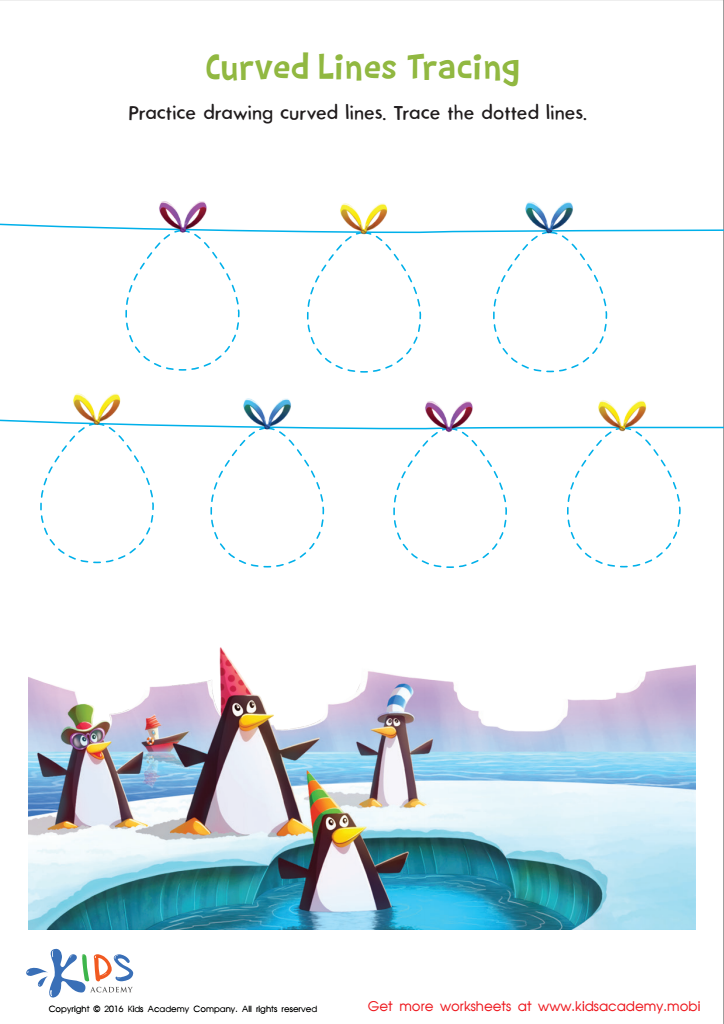
Curved Lines Tracing Worksheet
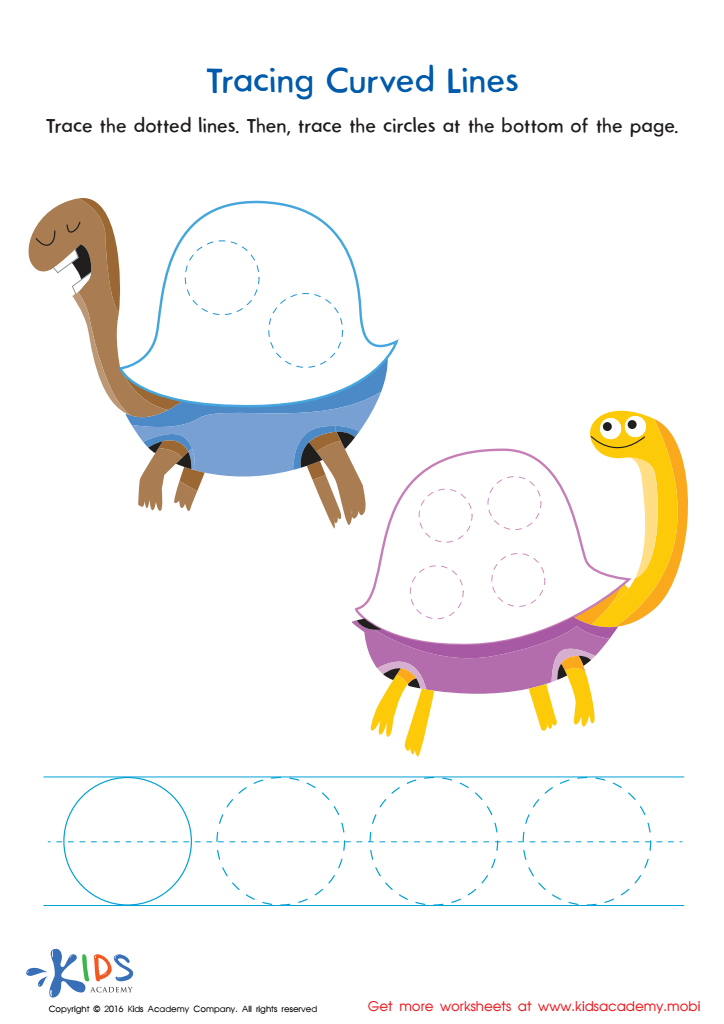
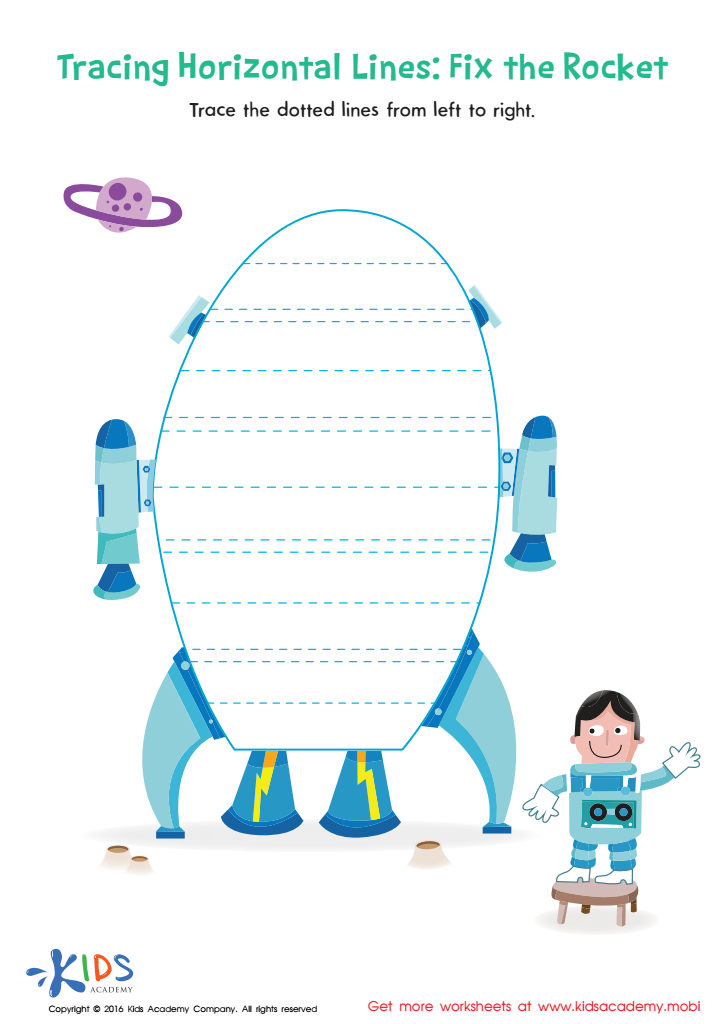
Tracing Horizontal Lines Worksheet




Parents and teachers should care about normal tracing lines and curves for ages 3-9 because these activities are fundamental for developing essential fine motor skills and precision necessary for writing. During these formative years, children’s hand-eye coordination, finger strength, and dexterity are rapidly developing. Engaging in tracing activities allows them to practice controlling the small muscles in their hands and fingers, which is crucial for holding a pencil, forming letters, and achieving legible handwriting.
Moreover, mastering these tracing techniques fosters better visual-perceptual skills, enabling children to discern the relationships between shapes, sizes, and patterns, laying the groundwork for more advanced learning in reading, writing, and mathematics. These activities are not just about academics; they support cognitive development by honing attention to detail and concentration.
Tracing curves and lines also enhances a child’s confidence and self-esteem as they witness their progress and newfound capabilities, encouraging a positive attitude toward learning. For parents and teachers, incorporating tracing into regular activities provides a strategic and engaging way to build foundational skills that support overall academic success and personal growth. Investments in these early developmental stages pave the way for smoother transitions into more complex tasks, which are integral to future educational achievements.







