Normal Numbers 11–20 Worksheets for Ages 4-8
4 filtered results
-
From - To
Welcome to our "Normal Numbers 11-20 Worksheets" designed for children ages 4-8! These engaging worksheets are perfect for reinforcing your child's understanding of numbers 11 through 20. Our carefully crafted activities promote number recognition, counting, and basic math skills through fun exercises that captivate young learners. Kids will enjoy colorful visuals and interactive tasks that make practicing math enjoyable. Ideal for both classroom and homeschooling settings, these worksheets will help children build a strong foundation in numeracy. Encourage your child's mathematical journey with our user-friendly resources and watch them gain confidence in their abilities as they explore the world of numbers!
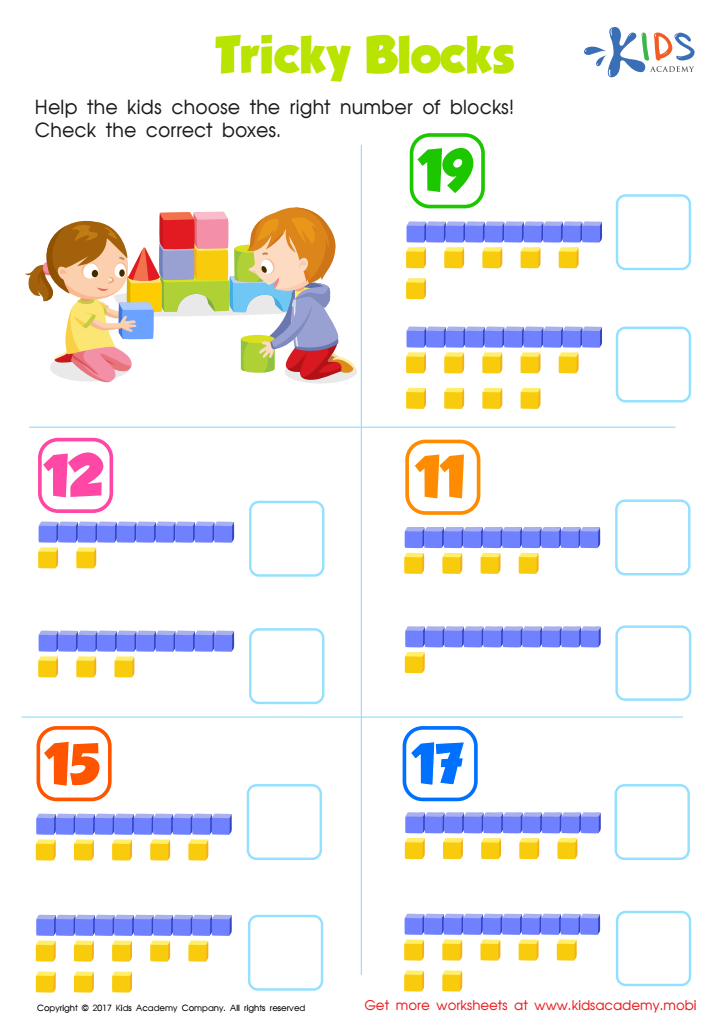
Tricky Blocks Worksheet
 Assign to My Students
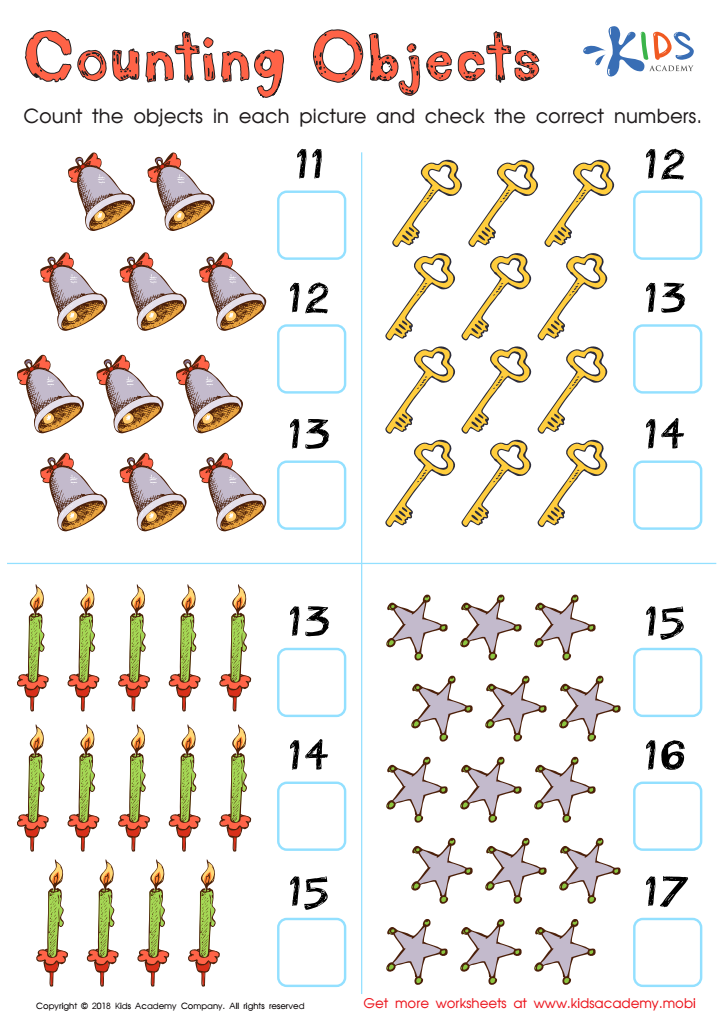
Counting Numbers Worksheet For Kindergarten
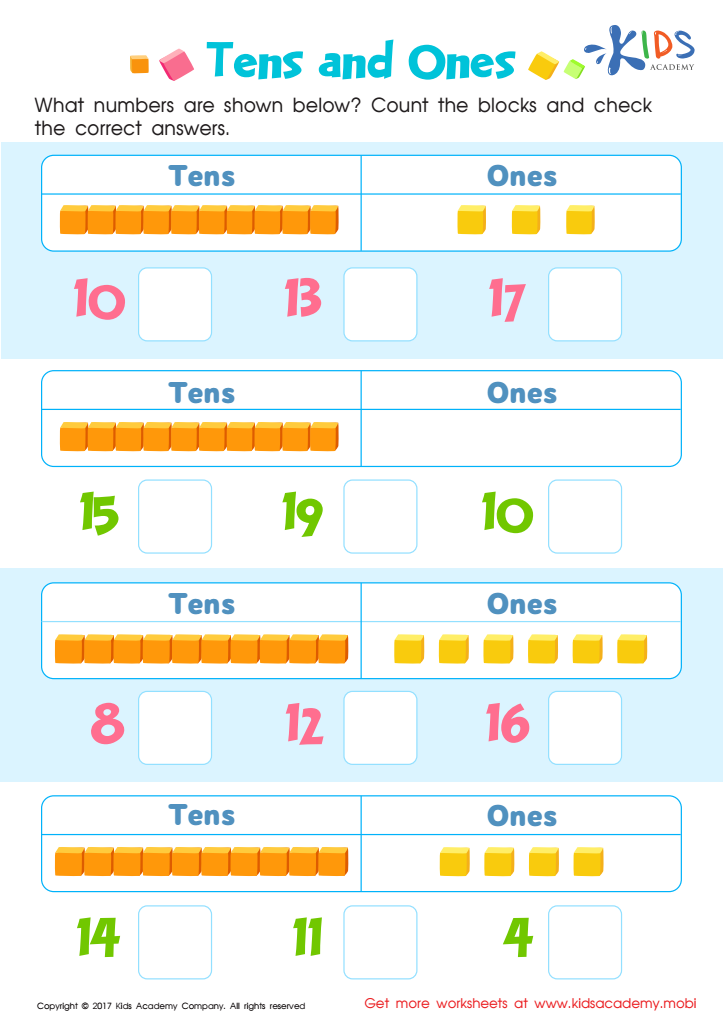
Tens and Ones Worksheet
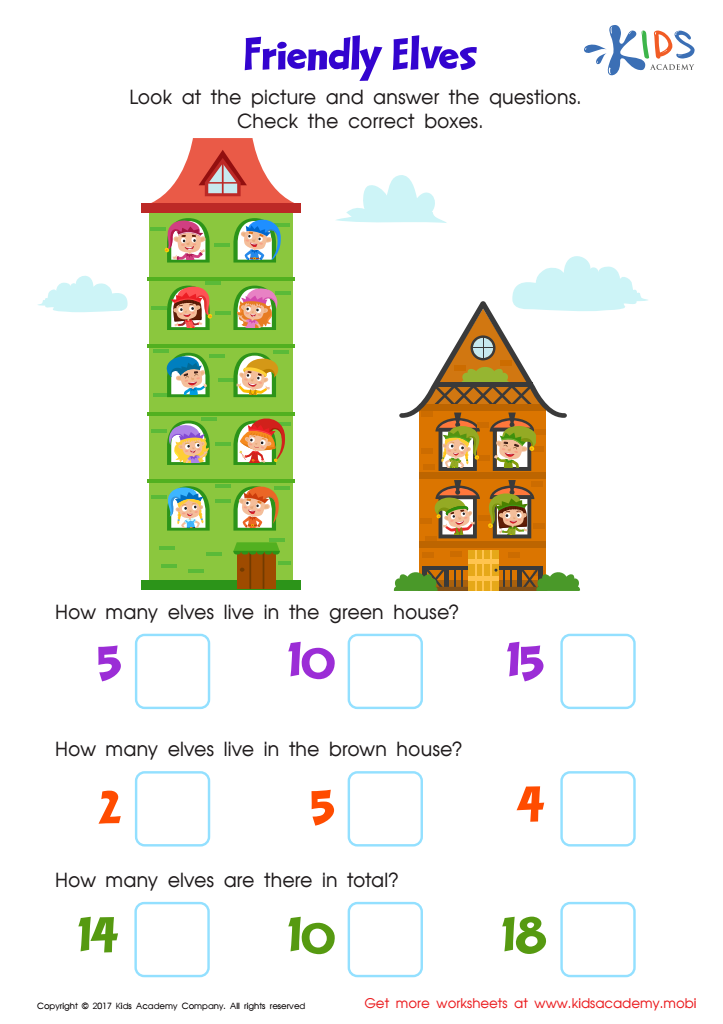
Place Value: Friendly Elves Worksheet



Understanding normal numbers 11-20 is a crucial milestone for children aged 4-8, as it sets the foundation for their math skills and numeracy. These numbers denote the transition from simply counting to grasping quantity, which is vital for everyday life. Parents and teachers should care about this range because it helps children develop their ability to recognize, write, and apply numbers in various contexts, enhancing their problem-solving and critical thinking skills.
Introducing numbers 11-20 fosters confidence in math, encouraging children to explore concepts like addition and subtraction. Activities using these numbers can make learning engaging and interactive, allowing for hands-on experiences through games and challenges. This age is also pivotal for forming positive attitudes towards math; a solid understanding of numbers can alleviate anxiety and foster a lifelong love for learning.
Moreover, as children learn to express quantities verbally and through writing, they improve their communication skills, which is essential across all subjects. Supporting children in mastering these numbers prepares them for more advanced concepts in later grades, ensuring a smoother educational journey. Consequently, fostering expertise in normal numbers 11-20 has significant implications for a child’s overall academic development and self-esteem.