Normal 2D Shapes Worksheets for Ages 6-8 - Page 2
26 filtered results
-
From - To
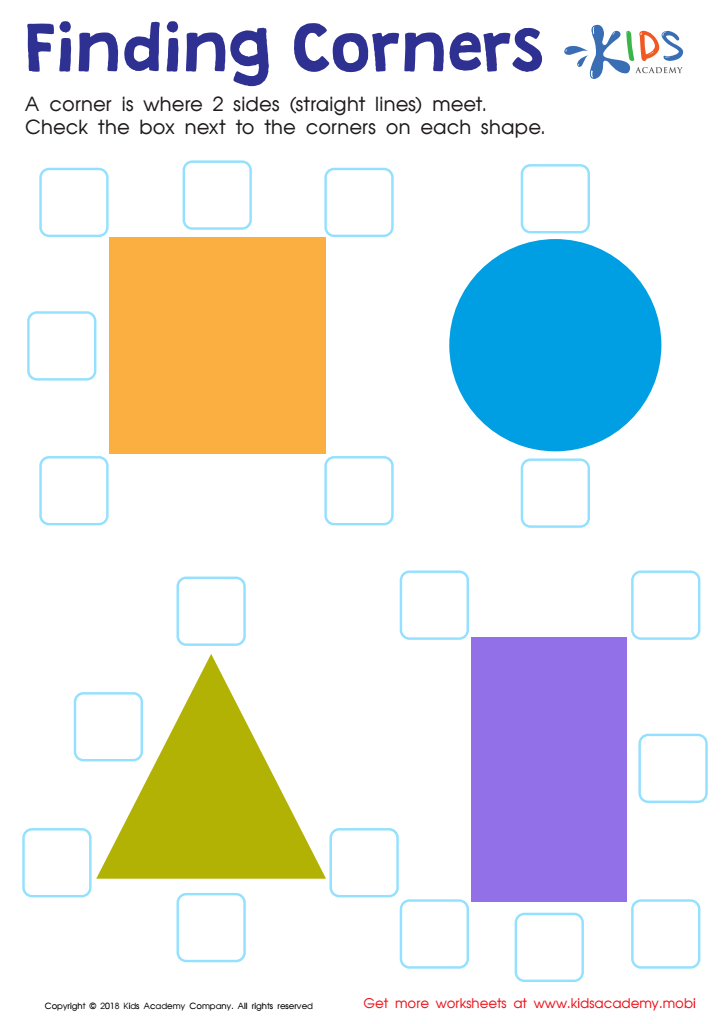
Finding Corners Worksheet
 Assign to My Students











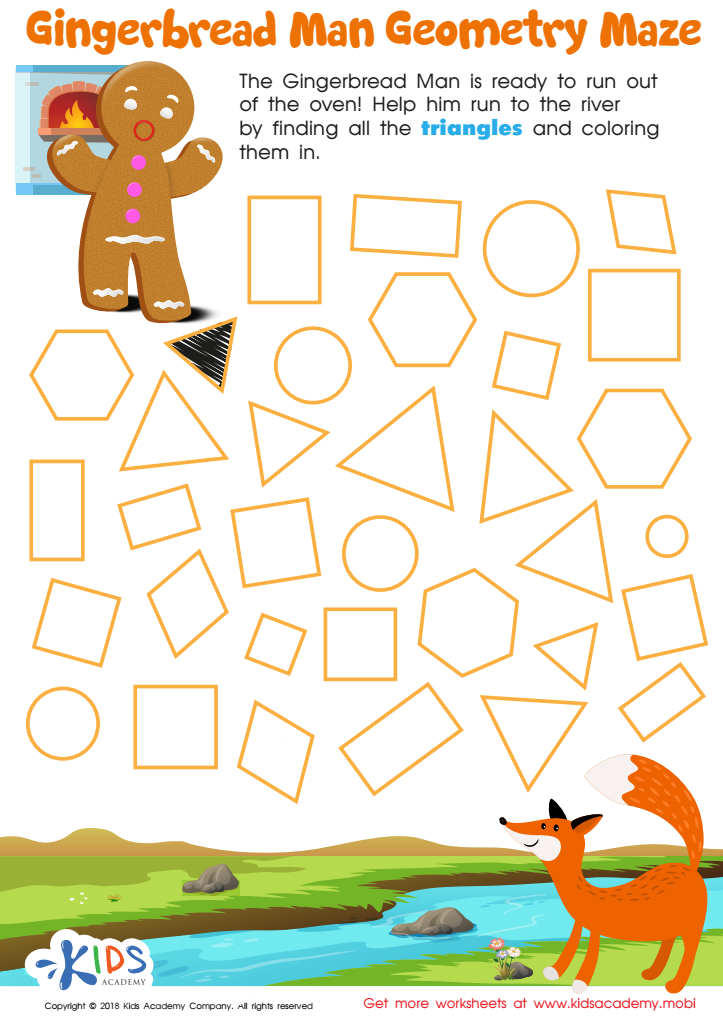
Gingerbread Man Geometry Maze Worksheet








Parents and teachers should care about teaching normal 2D shapes to children ages 6-8 because it lays a foundational understanding of geometry, an essential component of math. At this critical developmental stage, young minds are highly receptive to visual and spatial learning. Learning about shapes such as circles, squares, triangles, and rectangles enhances children's ability to recognize and categorize objects based on their attributes.
Understanding 2D shapes aids in developing crucial cognitive skills such as problem-solving, logical thinking, and spatial awareness. For instance, recognizing that a triangle has three sides and three corners helps children understand the concept of structures and balance, which is directly applicable in everyday life and more complex math problems they will encounter later.
Additionally, familiarity with shapes supports reading and writing. Recognizing shapes is a skill that can help children distinguish between different letters and numbers. For instance, understanding the difference between a circle and an oval can make distinguishing between the letter "O" and zero easier.
Moreover, recognizing and understanding shapes in their environment enhances their observational skills and appreciation for their surroundings. This foundational knowledge establishes a sense of order and pattern that is critical for success in later academic subjects including art, science, and advanced mathematics. Teaching 2D shapes, therefore, is an investment in a child's holistic development.