Normal Seasons Worksheets for Ages 6-9
5 filtered results
-
From - To
Explore our "Normal Seasons Worksheets for Ages 6-9" designed to make learning about the seasons engaging and educational. Each printable worksheet helps young students identify and understand the unique characteristics of spring, summer, fall, and winter. With fun activities aligned to science standards, these resources are perfect for reinforcing classroom lessons and encouraging curiosity about the natural world. Ideal for both teachers and parents, our collection promotes critical thinking and observation skills through interactive exercises. Nurture your child's love for learning with these thoughtfully crafted worksheets that make science fun and accessible.
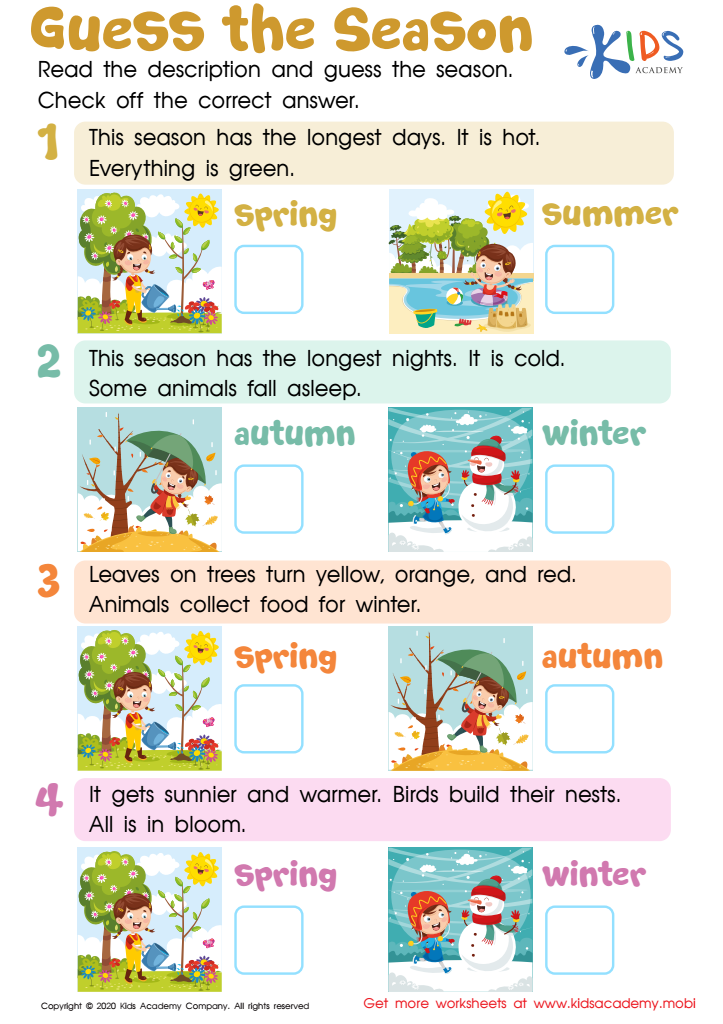
Guess the Season Worksheet
 Assign to My Students
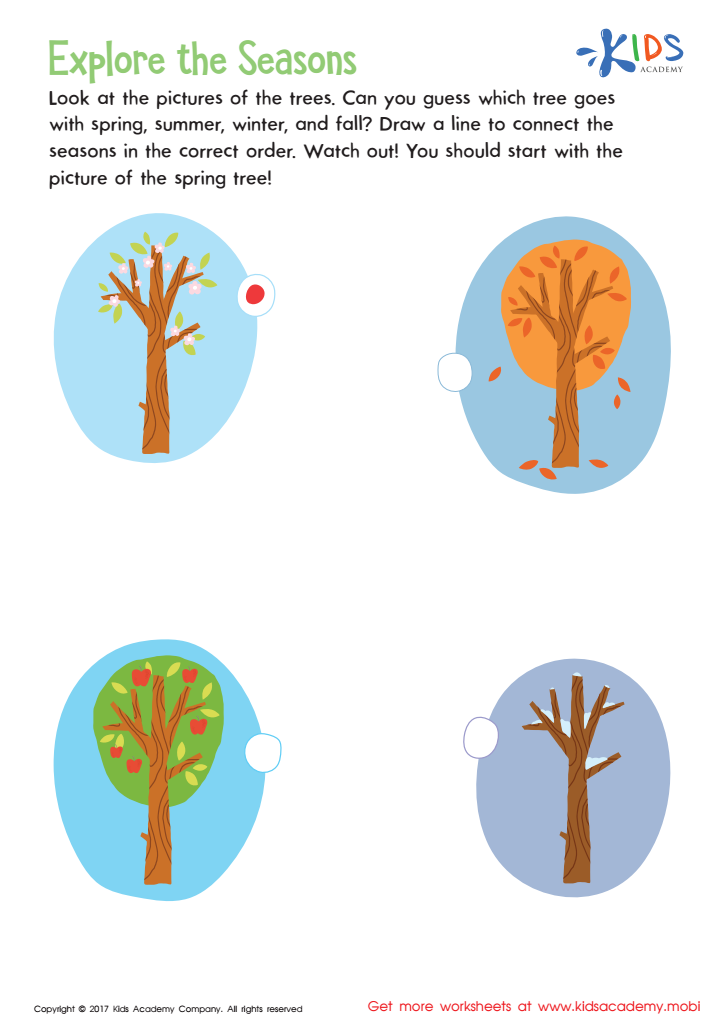
Explore the Seasons Worksheet
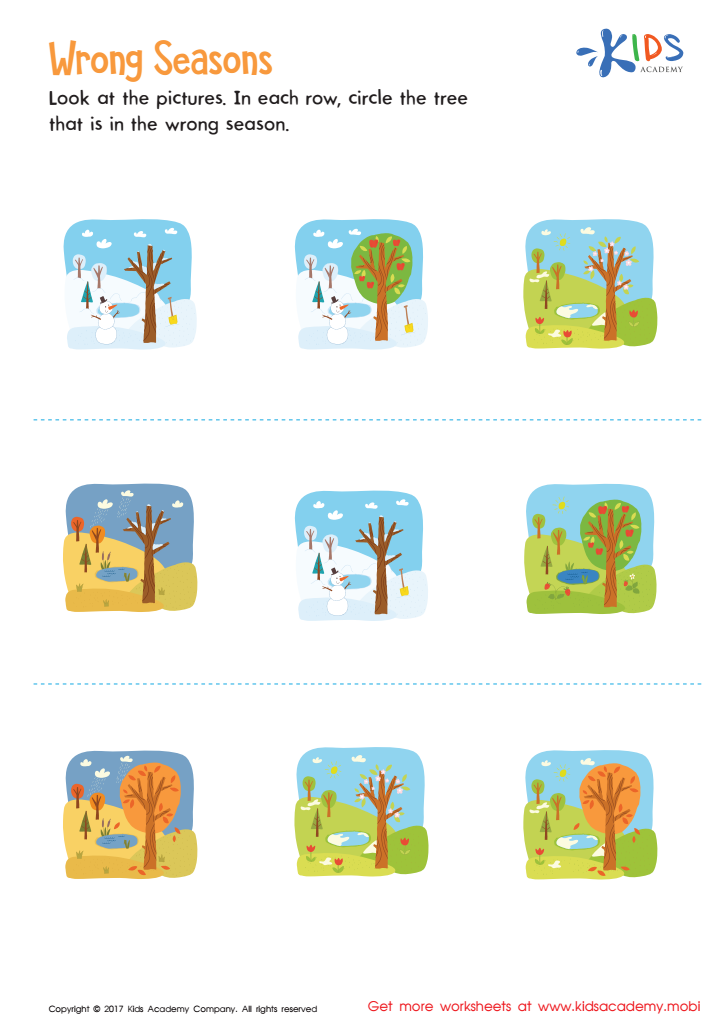
Wrong Seasons Worksheet
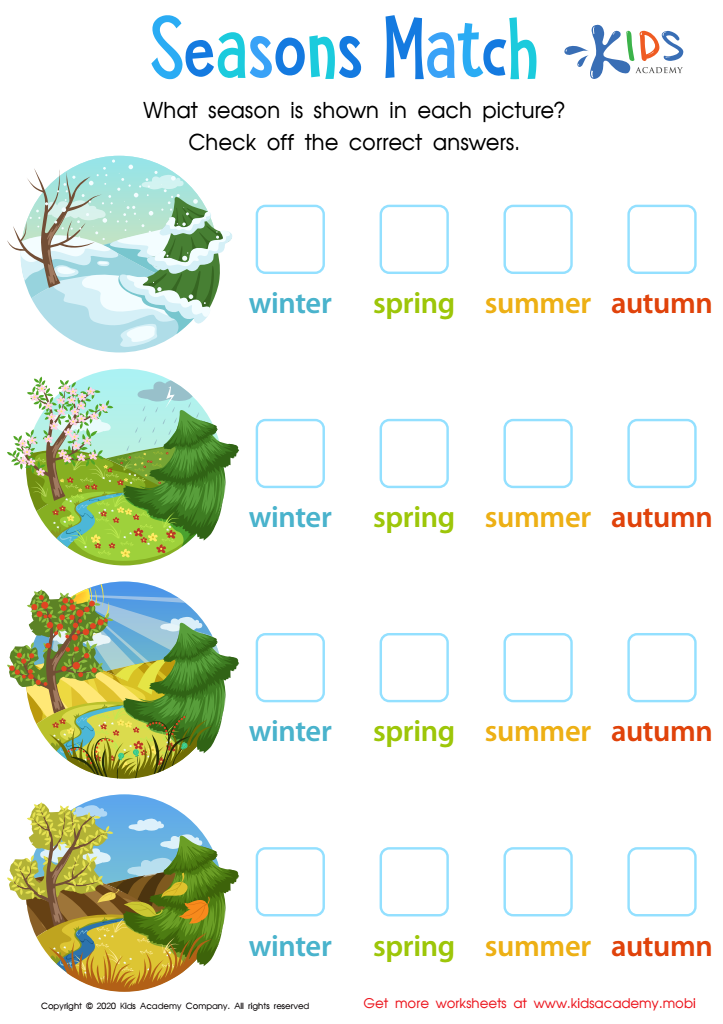
Seasons Match Worksheet
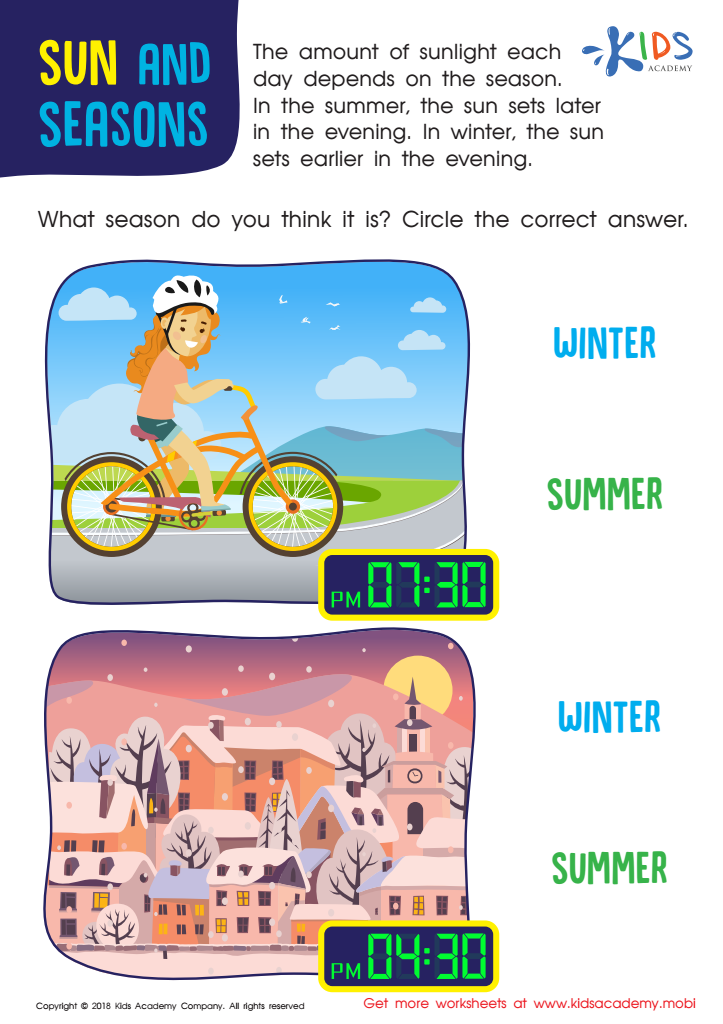
Sun and Seasons Worksheet



%20(1).jpg)

Understanding the changing seasons is vital for young children aged 6-9 because it nurtures awareness of the natural world, builds a connection to the environment, and introduces essential scientific concepts. At this developmental stage, children are naturally curious and tend to absorb information through observation and hands-on activities. Learning about the four seasons—spring, summer, autumn, and winter—helps children grasp the concept of cyclical changes in nature, differentiating temperature variations, daylight hours, and weather patterns.
Incorporating seasonal changes into the curriculum can foster a child's observational and critical thinking skills. For instance, children can engage in activities like tracking temperature changes, observing plant and animal behaviors, and discussing how these changes affect human activities. Such hands-on experiences not only make learning engaging but also lay the groundwork for more complex scientific understanding later on.
Moreover, recognizing seasonal patterns builds a foundation for appreciating sustainability and taking environmental responsibility. Understanding phenomena like plant growth cycles and animal migrations can prompt discussions on broader environmental issues, encouraging children from an early age to think about their role in conserving nature.
For parents and teachers, encouraging this connection with the natural world can foster a healthy curiosity, stimulate interest in science, and promote lifelong learning and stewardship of our planet. This holistic development is invaluable in shaping well-rounded individuals.







