
Letter recognition Easy ABC Coloring Pages Worksheets for Ages 3-4
5 filtered results
Difficulty Level
Grade
Age
-
From - To
Subject
Activity
Standards
Discover the fun of learning with our "Letter Recognition Easy ABC Coloring Pages Worksheets" specially designed for ages 3-4! These engaging and colorful activities help young learners identify and recognize letters in a playful way. Each worksheet features captivating illustrations that encourage creativity while reinforcing essential letter recognition skills. Perfect for at-home learning or classroom activities, these worksheets promote fine motor skills alongside early literacy development. Whether your little one is just beginning to explore the alphabet or looking to strengthen their skills, our easy-to-use coloring pages provide a delightful educational experience. Start your child’s learning journey with us today!
Favorites
With answer key
Interactive
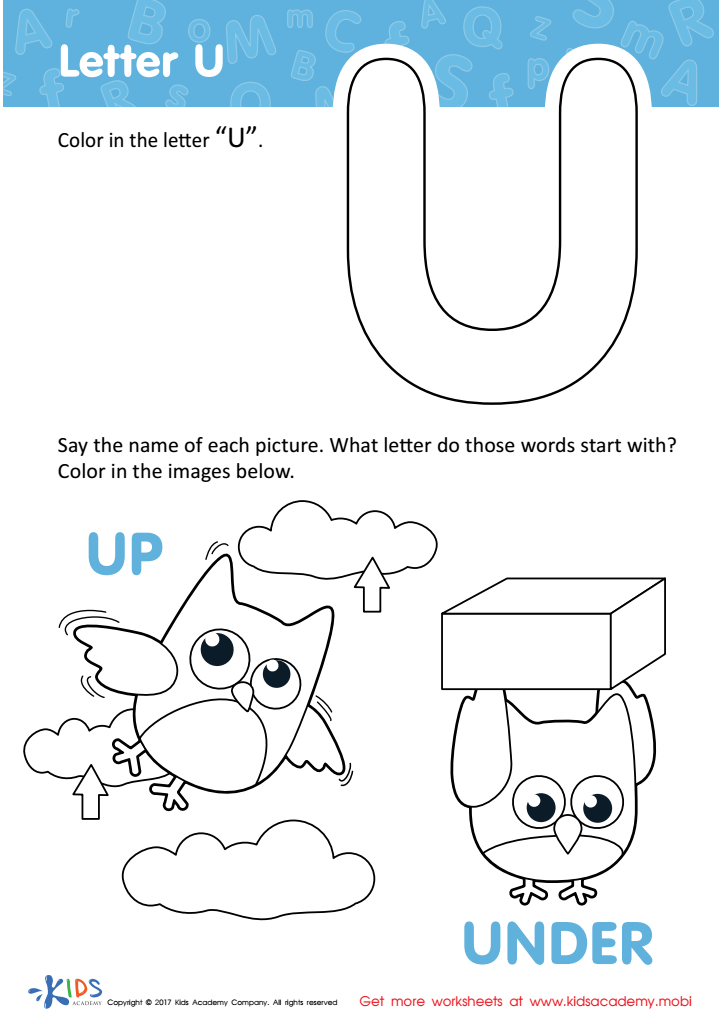
Letter U Coloring Sheet
This letter "U" coloring page helps your child learn two things at once - the letter "U" and positional words! An adorable owl character aids in understanding up and under. In a few strokes of a crayon, your child can master these concepts.
Download (PDF)
 Assign to My Students
Assign to My Students
Letter U Coloring Sheet
Worksheet
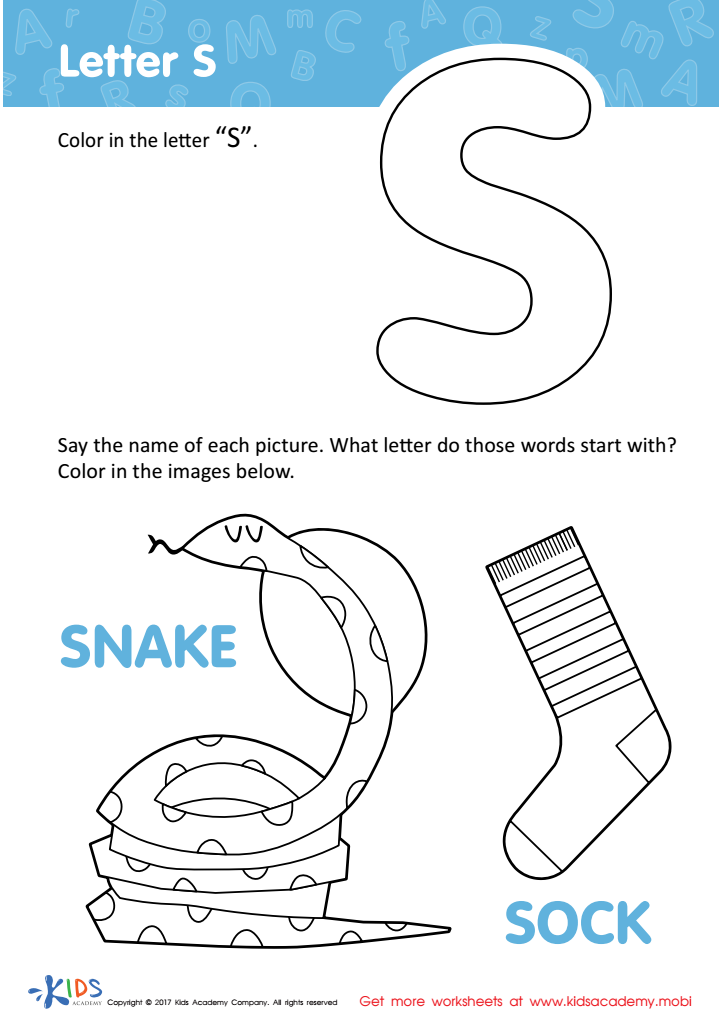
Letter S Coloring Sheet
Help your child practice recognizing the letter "S" and the sound it makes with this fun coloring page. It features a slippery snake, smelly sock and more! Give them extra practice by coming up with more "S" sounds and words.
Download (PDF)
Assign to My Students
Assign to My Students
Letter S Coloring Sheet
Worksheet
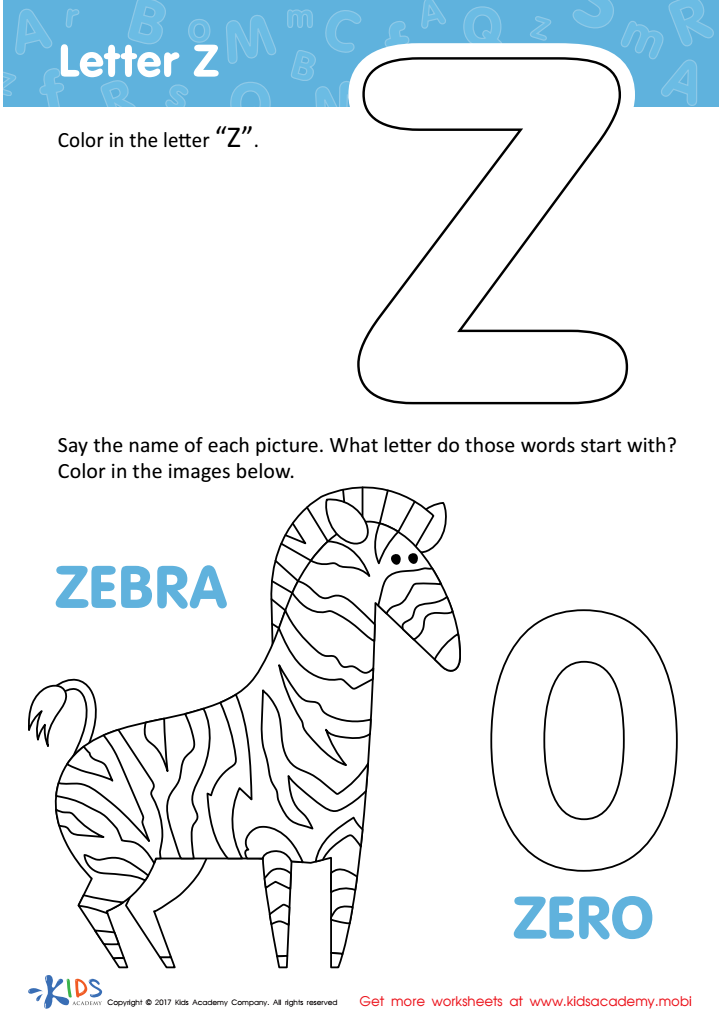
Letter Z Coloring Sheet
This coloring page featuring the letter "Z" is perfect for your child to practice letter recognition! Help them learn the unique sound it makes as they color. It'll be a fun and easy activity they won't have trouble with!
Download (PDF)
Assign to My Students
Assign to My Students
Letter Z Coloring Sheet
Worksheet
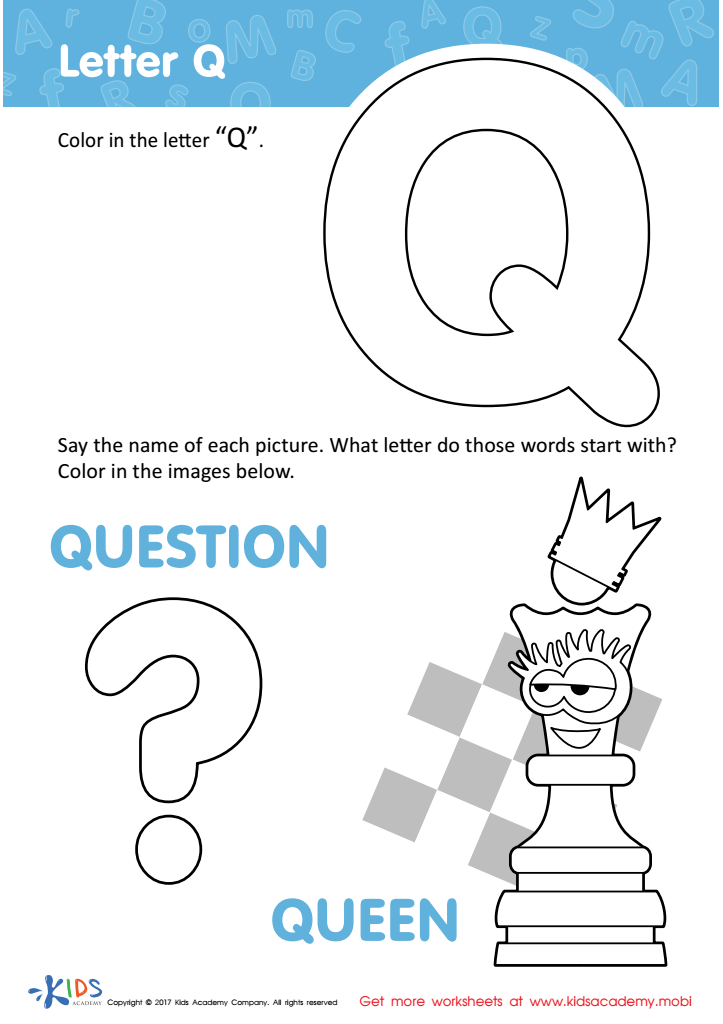
Letter Q Coloring Sheet
Kids need practice with letters not seen often. Give your child a boost with this letter "Q" coloring page! Have them color in the queen and question mark, while learning the sound "Q" makes. Fun and educational!
Download (PDF)
Assign to My Students
Assign to My Students
Letter Q Coloring Sheet
Worksheet
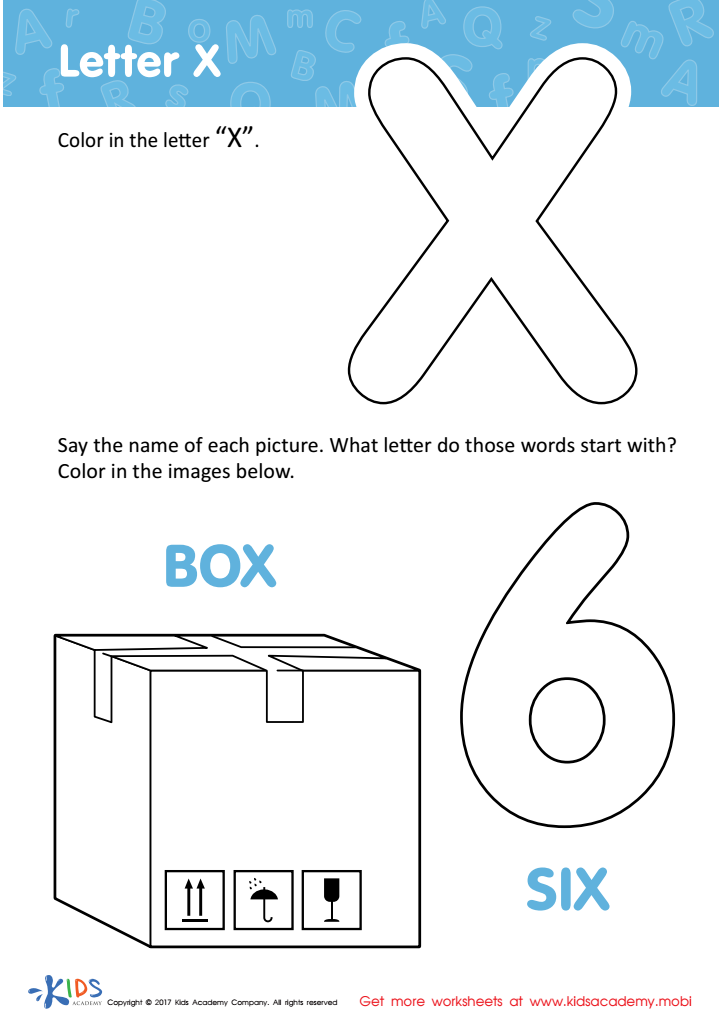
Letter X Coloring Sheet
Help your little learner find the letter "X" with this coloring page. Go over the sounds it makes and how to find it at the end of words. Unlock the mystery of this unique letter - it's one of the most challenging but rewarding letters to learn!
Download (PDF)
Assign to My Students
Assign to My Students
Letter X Coloring Sheet
Worksheet
Join Kids Academy for Free
Who is primarily going to use this learning content?



Letter recognition is a foundational skill in early literacy development, and using tools like Easy ABC Coloring Pages can significantly enhance this learning process for children ages 3-4. First, identifying letters is crucial for recognizing written words, which is essential for reading. When children engage with alphabet coloring pages, they not only learn the shape and name of each letter, but they also develop fine motor skills as they color, trace, and fill in designs.
Furthermore, coloring activities are highly engaging and can make learning fun, fostering a positive attitude towards education. By using colorful and visually appealing materials, children are more likely to remain focused and motivated while practicing letter recognition.
Parents and teachers play a vital role in facilitating early literacy by introducing these interactive resources. Incorporating Easy ABC Coloring Pages into daily activities enables adults to create a learning-rich environment, bridging home and school experiences. Ultimately, supporting letter recognition at this age builds a strong foundation for future reading success, boosts confidence in young learners, and promotes cognitive growth. Hence, it is essential for parents and teachers to prioritize these activities in early childhood education.








