Letter recognition Easy ABC Letters Worksheets for Ages 3-4
5 filtered results
Difficulty Level
Grade
Age
-
From - To
Subject
Activity
Standards
Unlock the world of reading with our "Easy ABC Letters Worksheets" designed for children ages 3-4! These fun and engaging worksheets encourage letter recognition through colorful activities that capture young learners' attention. Your child will practice identifying letters through tracing, coloring, and interactive games, building a strong foundation for their literacy skills. Each worksheet is crafted to promote learning in an enjoyable and stimulating way, ensuring kids learn at their own pace. Help your little one embark on their reading journey with these essential tools that make learning the alphabet easy and exciting! Explore the joy of letters today!
Favorites
With answer key
Interactive
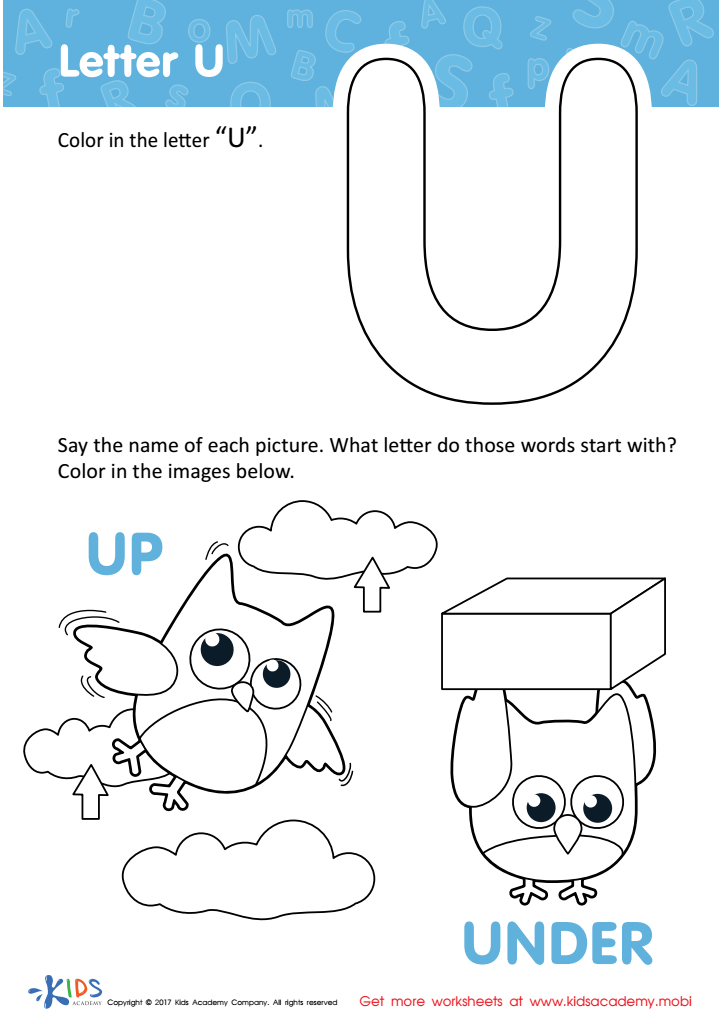
Letter U Coloring Sheet
This letter "U" coloring page helps your child learn two things at once - the letter "U" and positional words! An adorable owl character aids in understanding up and under. In a few strokes of a crayon, your child can master these concepts.
Download (PDF)
 Assign to My Students
Assign to My Students
Letter U Coloring Sheet
Worksheet


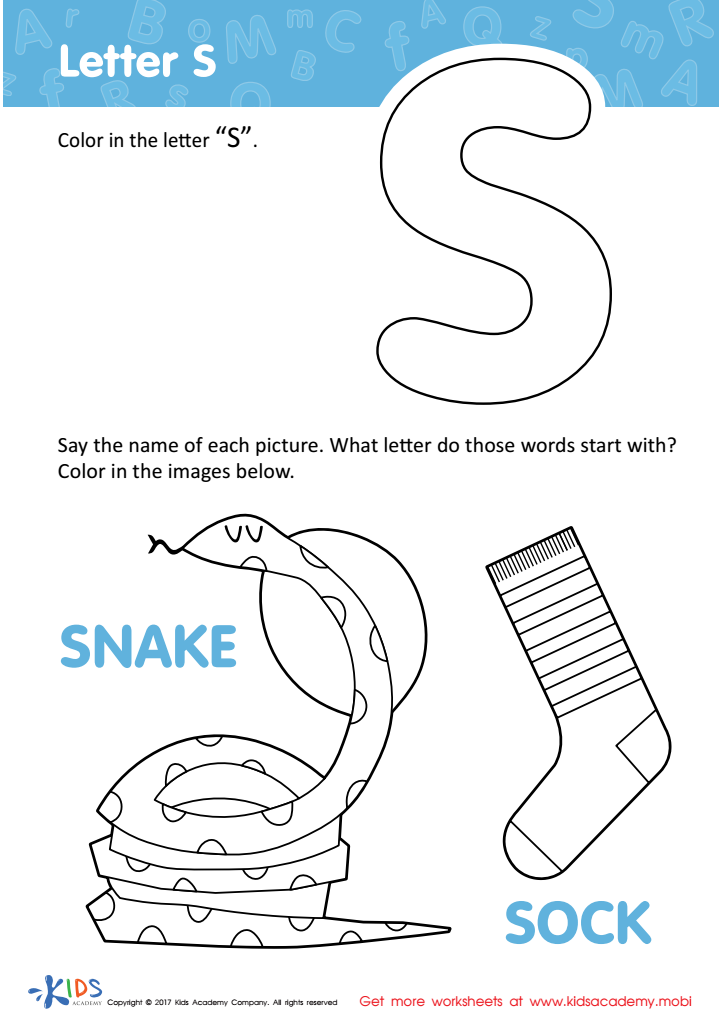
Letter S Coloring Sheet
Help your child practice recognizing the letter "S" and the sound it makes with this fun coloring page. It features a slippery snake, smelly sock and more! Give them extra practice by coming up with more "S" sounds and words.
Download (PDF)
Assign to My Students
Assign to My Students
Letter S Coloring Sheet
Worksheet
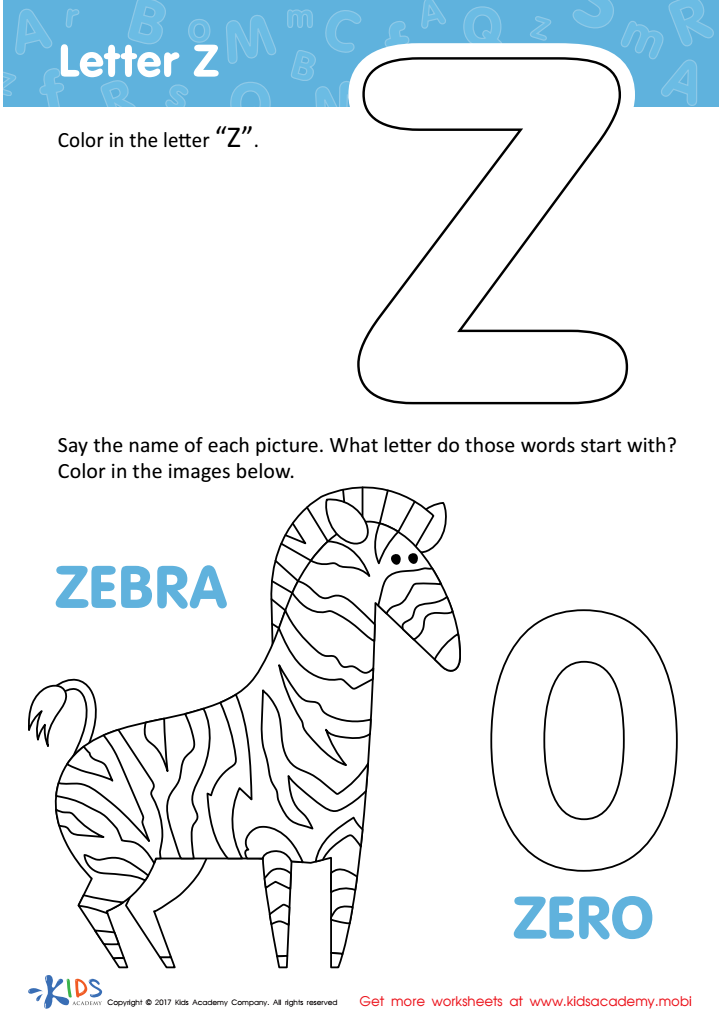
Letter Z Coloring Sheet
This coloring page featuring the letter "Z" is perfect for your child to practice letter recognition! Help them learn the unique sound it makes as they color. It'll be a fun and easy activity they won't have trouble with!
Download (PDF)
Assign to My Students
Assign to My Students
Letter Z Coloring Sheet
Worksheet
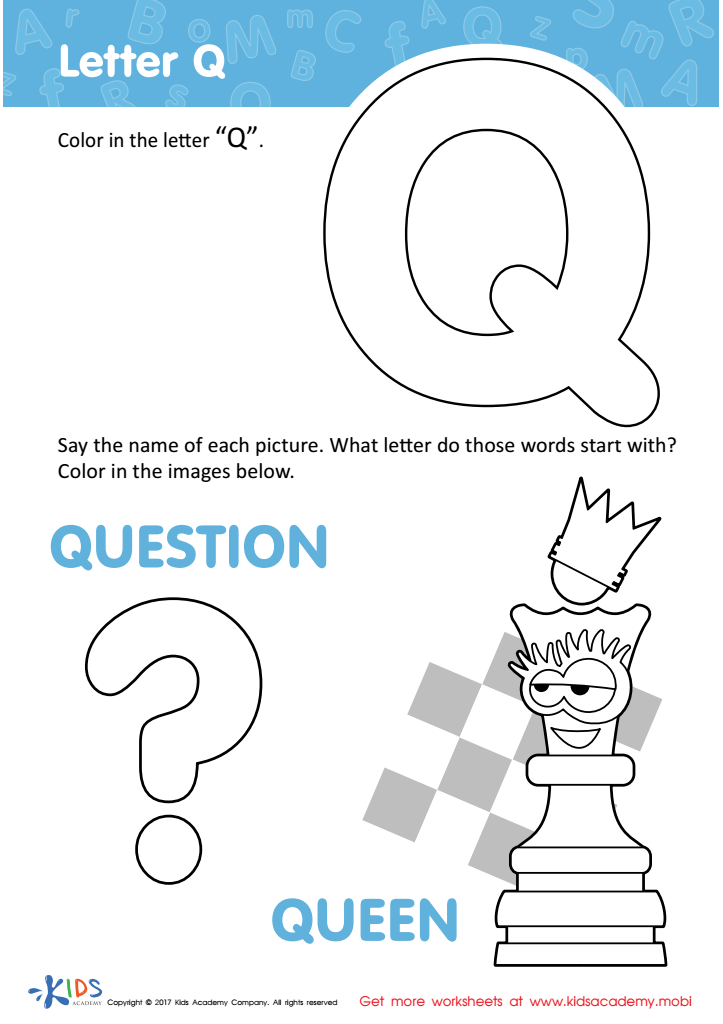
Letter Q Coloring Sheet
Kids need practice with letters not seen often. Give your child a boost with this letter "Q" coloring page! Have them color in the queen and question mark, while learning the sound "Q" makes. Fun and educational!
Download (PDF)
Assign to My Students
Assign to My Students
Letter Q Coloring Sheet
Worksheet
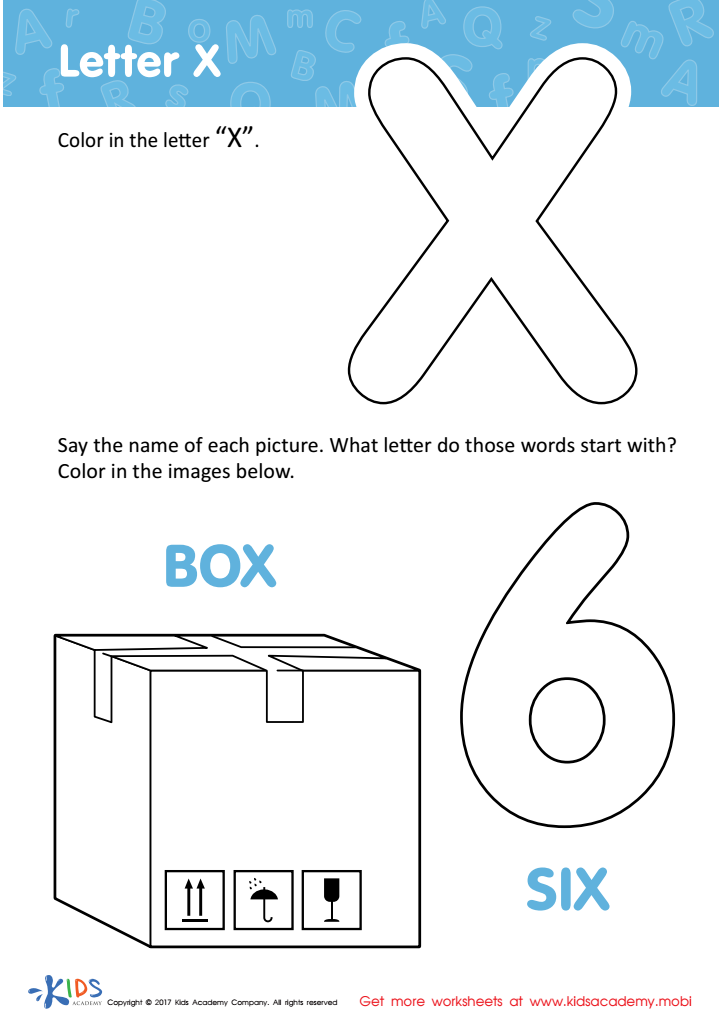
Letter X Coloring Sheet
Help your little learner find the letter "X" with this coloring page. Go over the sounds it makes and how to find it at the end of words. Unlock the mystery of this unique letter - it's one of the most challenging but rewarding letters to learn!
Download (PDF)
Assign to My Students
Assign to My Students
Letter X Coloring Sheet
Worksheet
Join Kids Academy for Free
Who is primarily going to use this learning content?








Letter recognition is a critical foundational skill for young learners aged 3 to 4 that parents and teachers should prioritize. At this developmental stage, children are naturally curious and eager to explore language, making it an ideal time to introduce them to the alphabet. Recognizing letters enhances their cognitive development and lays a strong groundwork for pre-reading skills, which are essential for future academic success.
Understanding the shapes and sounds of letters helps children begin to decode words, boosting their confidence as they progress in literacy. Moreover, when children can recognize letters, they feel more empowered to engage with books, fostering a love for reading from an early age. It also contributes to vocabulary expansion as they can identify and relate letters to names, objects, and concepts in their environment.
In addition, early letter recognition is linked to better language skills, improved memory, and increased attention abilities. For parents and teachers, nurturing this skill creates more enriching learning experiences, reinforcing the joy of discovery and learning. Encouraging interactive activities, such as songs, games, and crafts centered around the alphabet, makes the learning process enjoyable and effective while helping children develop social, emotional, and motor skills simultaneously.