Capitalization rules Easy Alphabet Worksheets for Ages 3-4
4 filtered results
Difficulty Level
Grade
Age
-
From - To
Subject
Activity
Standards
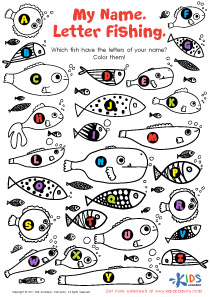
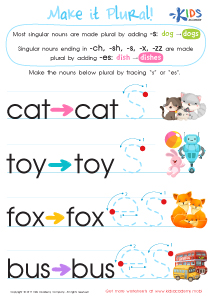
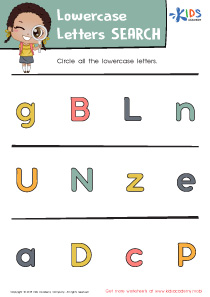
Introducing "Capitalization Rules Easy Alphabet Worksheets for Ages 3-4"! Our engaging and educational worksheets are specifically designed to help young learners grasp the basics of capitalization. Featuring fun, age-appropriate activities, these worksheets make it easy for preschoolers to understand when to use uppercase letters. Through tracing, matching, and creative exercises, children will develop early literacy skills and build a solid foundation for their writing journey. Spark your child’s interest in learning with our expertly crafted resources. Perfect for parents and educators, these worksheets make mastering capitalization enjoyable and rewarding! Download now from Kids Academy.
Favorites
With answer key
Interactive
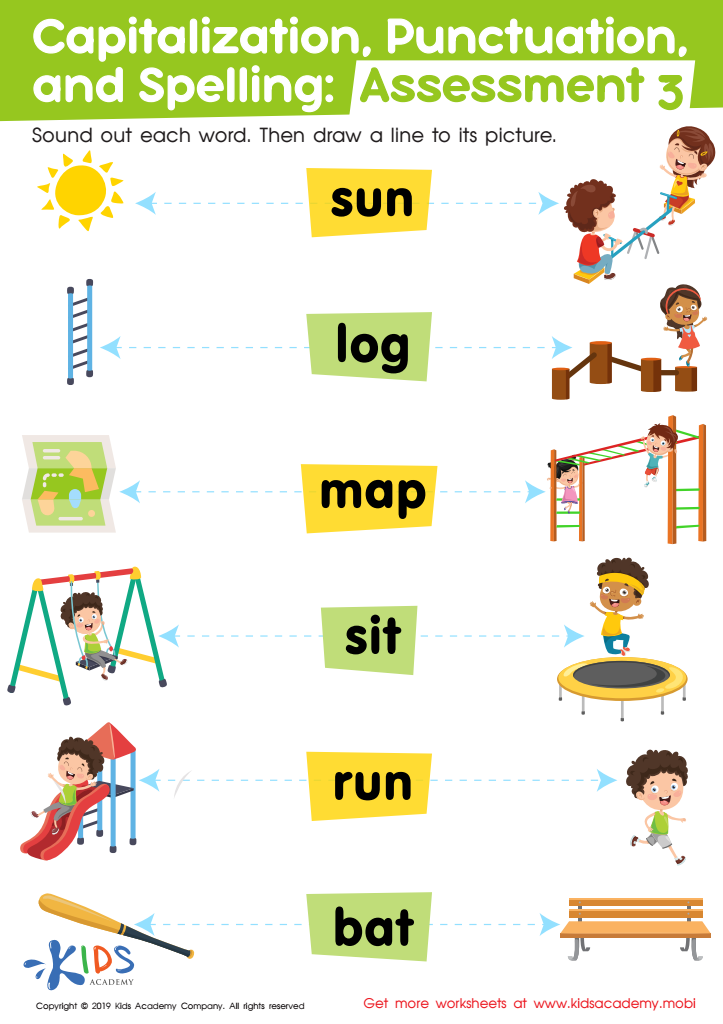
Capitalization. Punctuation. Spelling. Assessment 3 Worksheet
Before starting this worksheet, have your kids spell some simple words. Correct if wrong and show the right spellings. Then, ask them to link the pictures to the words you read out. Spelling is key for a good writer, and kids need to know how to spell to read texts easily.
 Assign to My Students
Capitalization. Punctuation. Spelling. Assessment 3 Worksheet
Worksheet
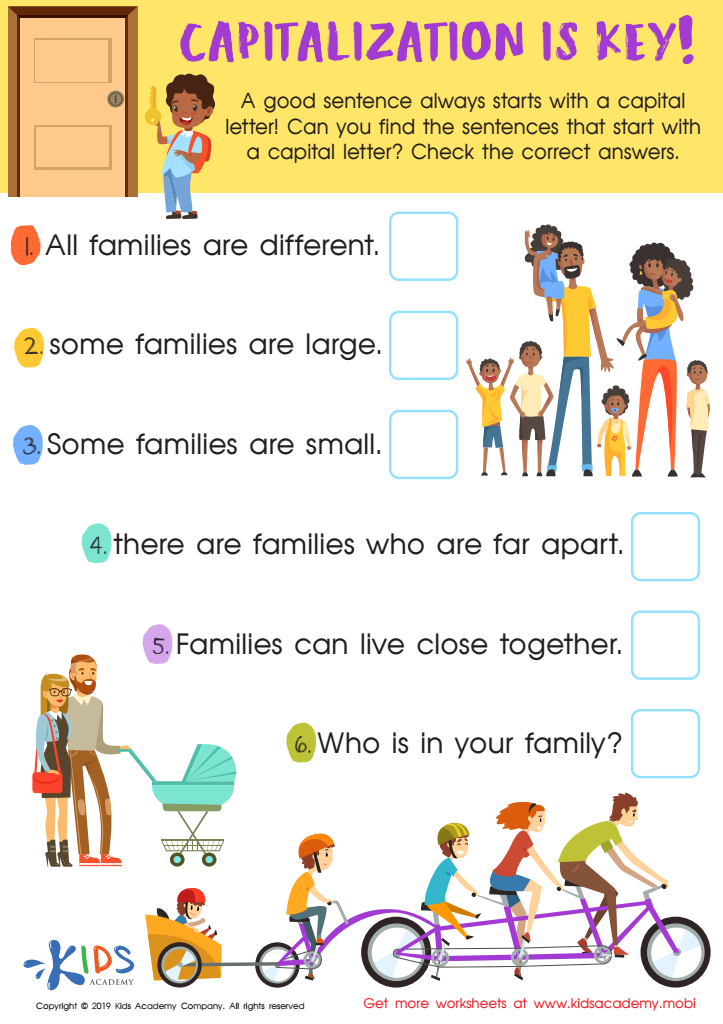
Capitalization Key Worksheet
Help your kids learn the importance of capitalizing at the start of sentences with this fun PDF! It features 6 family-themed sentences, with pictures, that your students have to find the correctly capitalized versions of. Perfect for young learners, this worksheet adds a fun twist to learning.
Capitalization Key Worksheet
Worksheet
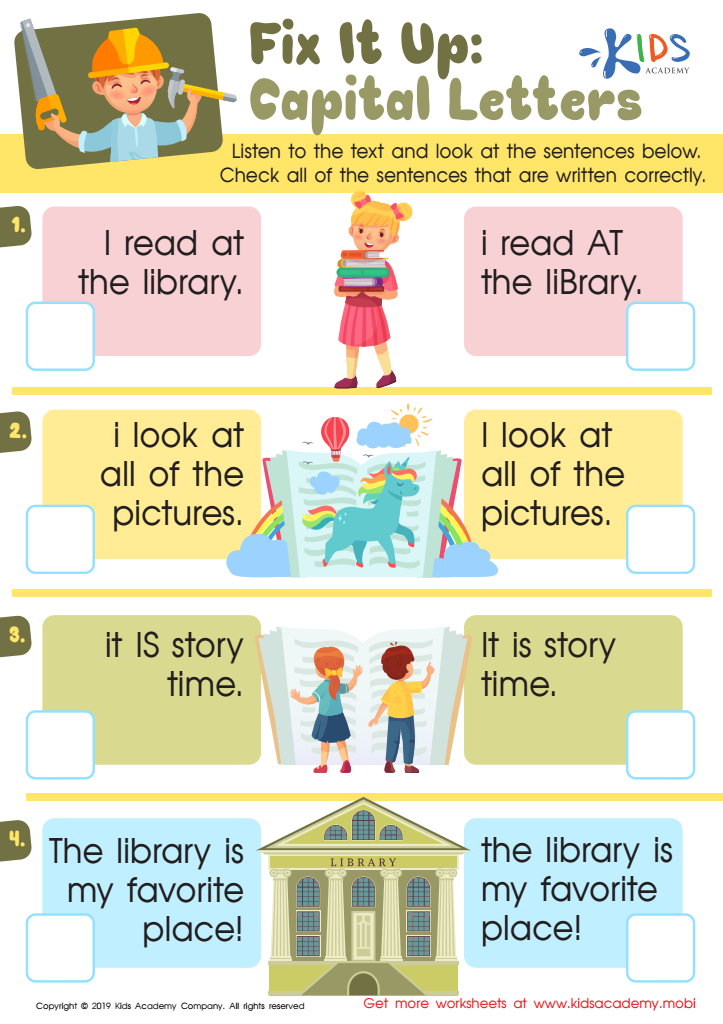
Fix Capital Letters Worksheet
Put on your hardhats and get out the tools - it's time to do some repair work! Have your child identify sentences written with proper capitalization on this fun and colorful worksheet. Ask more advanced students to rewrite incorrect sentences correctly - it'll help them understand letter case better.
Fix Capital Letters Worksheet
Worksheet
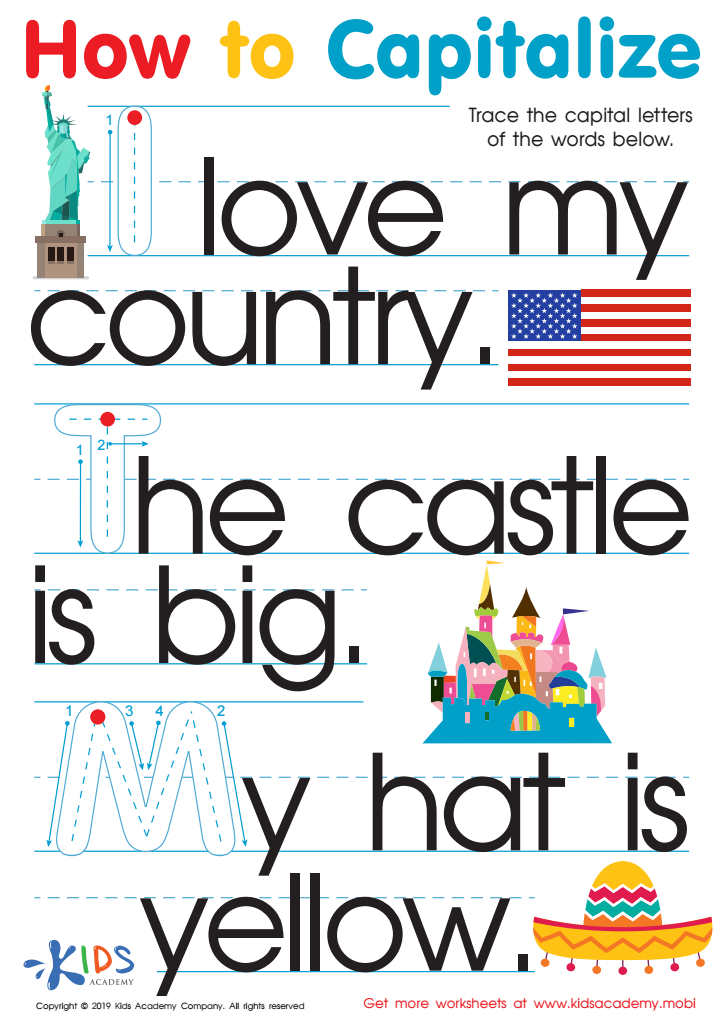
How to Capitalize Worksheet
Capitalizing letters is important in English. This worksheet will help your child learn how to write them. Words such as "the" and "I" will be covered, with visuals such as the Statue of Liberty, the American Flag, a castle, and a sombrero. The "How to Capitalize" PDF is a great way to sharpen your child's writing and aid their success!
How to Capitalize Worksheet
Worksheet
Join Kids Academy for Free
Who is primarily going to use this learning content?








Understanding capitalization rules is important for young learners because it lays the foundation for strong language and literacy skills. At ages 3-4, children experience rapid brain development, making this the perfect time to introduce fundamental concepts. Knowing when and where to use capital letters helps kids recognize proper nouns, the beginning of sentences, and other important text features, which is crucial as they start to learn to read and write.
Parents and teachers should care about teaching capitalization because it promotes clarity and precision in communication. Proper use of capital letters can make written language easier to understand, reducing confusion as children progress in their literacy journey. Early familiarity with these rules also builds their confidence, making them feel more capable and successful in their writing efforts.
Moreover, learning capitalization reinforces multitasking skills like attention to detail, memory, and following specific rules—all valuable abilities beyond just writing. Employing tools like the "Easy Alphabet" methods can make the learning process fun and engaging, utilizing stories, songs, and games to cement these concepts. By investing time in teaching proper capitalization, parents and teachers contribute significantly to a child's overall cognitive and educational development, setting them on the path for future academic success.