Hand-eye Coordination Easy Alphabet Worksheets for Ages 3-4
3 filtered results
Difficulty Level
Grade
Age
-
From - To
Subject
Activity
Standards
Discover our engaging "Hand-eye Coordination Easy Alphabet Worksheets" designed specifically for children aged 3-4! These worksheets provide a fun and interactive way for young learners to develop essential hand-eye coordination skills while exploring the alphabet. Each worksheet features playful activities that encourage kids to trace letters, match objects, and complete simple exercises designed to enhance their fine motor skills. Perfect for parents and educators, these printable resources make learning enjoyable and effective, laying a strong foundation for future literacy success. Download your free worksheets today and watch your little ones flourish as they familiarize themselves with letters while boosting their coordination!
Favorites
With answer key
Interactive
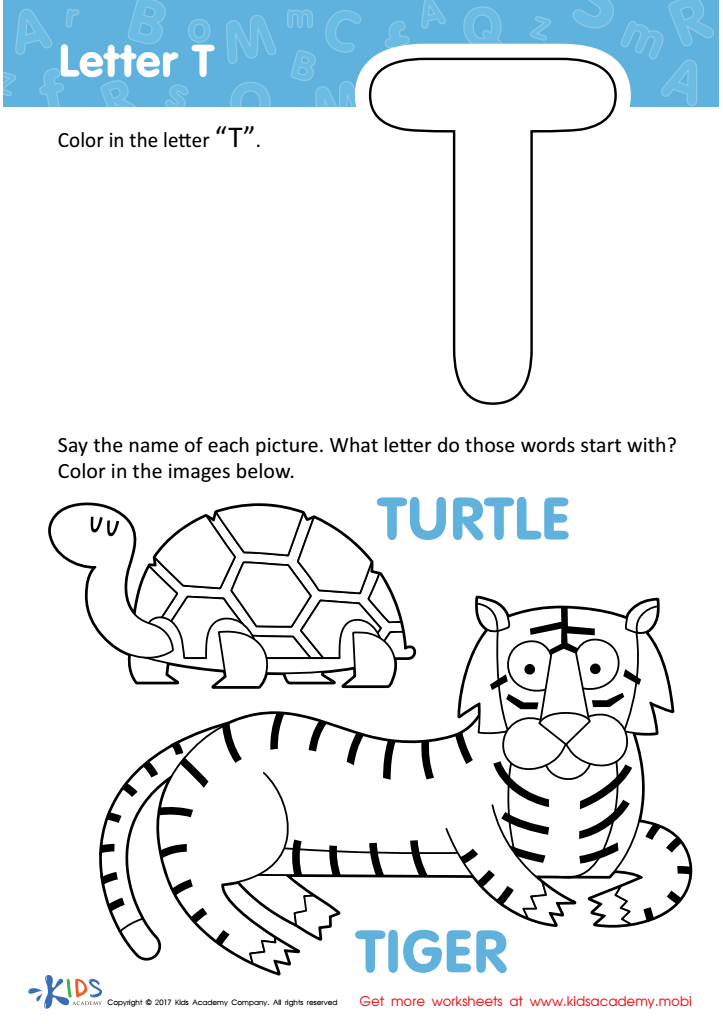
Letter T Coloring Sheet
Introduce your child to the letter "T" and its animals – turtles and tigers! With this coloring page, you can stimulate your child's imagination and creativity, while helping them recognize the letter "T". Have fun with your child and get coloring!
Download (PDF)
 Assign to My Students
Assign to My Students
Letter T Coloring Sheet
Worksheet
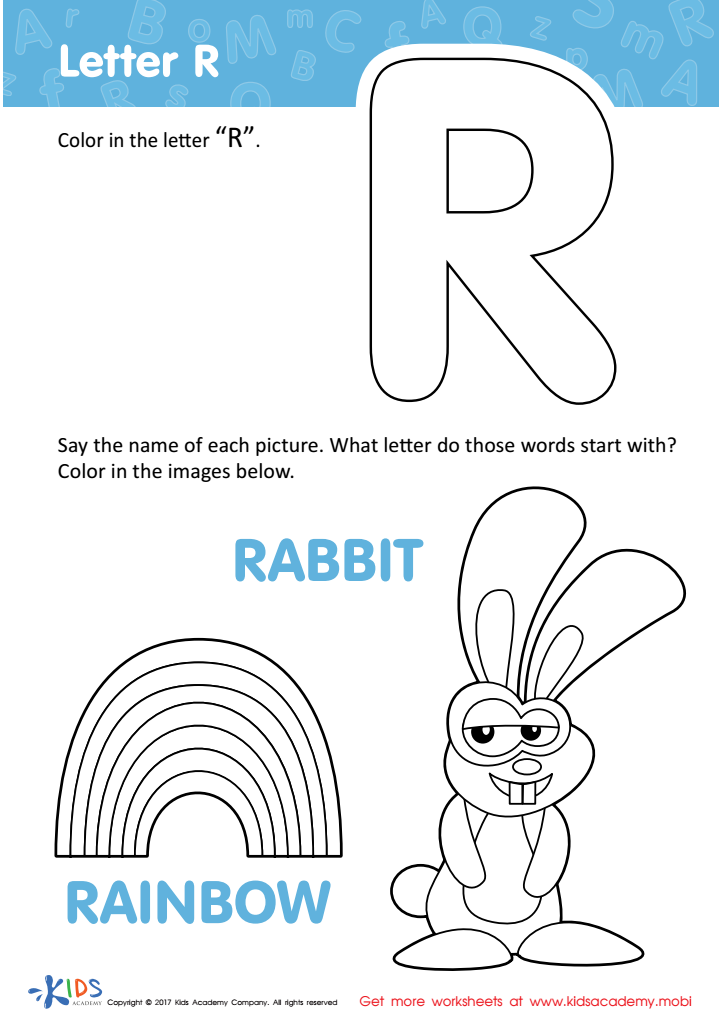
Letter R Coloring Sheet
Let your child explore the rainbow with this fun letter "R" coloring page! They can learn to recognize the letter and make connections to words, all while having fun! Make alphabet learning enjoyable with joyful coloring pages.
Download (PDF)
Assign to My Students
Assign to My Students
Letter R Coloring Sheet
Worksheet
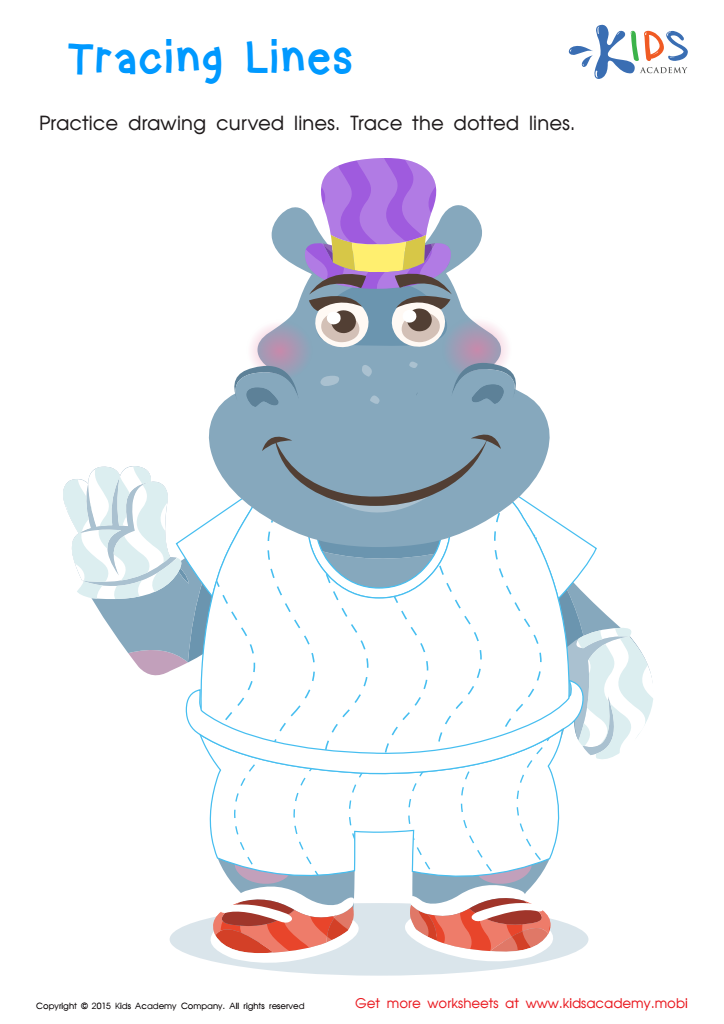
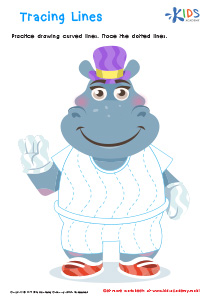
Tracing Lines Worksheet
Help your child nurture their writing and drawing skills with this cute tracing lines PDF worksheet. It improves pencil grip and hand-to-eye coordination, a key step in learning to write. Have fun and watch your child's confidence grow!
Tracing Lines Worksheet
Worksheet
Join Kids Academy for Free
Who is primarily going to use this learning content?







Hand-eye coordination is a crucial developmental skill that lays the foundation for various physical and cognitive abilities in young children. For parents and teachers of children aged 3-4, understanding its significance can lead to more engaging and beneficial activities, such as "Hand-eye Coordination Easy Alphabet."
In early childhood, hand-eye coordination enhances a child's ability to perform tasks that require multiple skills, including writing, drawing, and playing. Activities that promote coordination also cultivate fine motor skills, essential for future academic success. Engaging with "Easy Alphabet" activities introduces children to letters while simultaneously boosting their hand-eye coordination, making the learning experience enjoyable and effective.
Furthermore, fostering this skill helps build confidence in children. When they successfully link movement with visual cues, it encourages them to take on new challenges, both academically and socially. Additionally, these activities often promote spatial awareness and critical thinking, as children learn to manipulate objects or respond to visual stimuli.
Incorporating hand-eye coordination activities into educational experiences doesn’t just prepare children for school tasks; it nurtures their overall development, setting them up for a lifetime of learning, exploration, and skill acquisition. Thus, prioritizing these activities is vital for holistic child development.