Filters

7 filtered results

Clear all filters
Favorites
With answer key
Interactive

7 filtered results

Difficulty Level

Grade


Introduce your little learners to the magical world of reading with our "Reading Comprehension Easy Alphabet Worksheets for Ages 3-4"! Specifically designed for preschoolers, these engaging worksheets help young children master the alphabet while enhancing their reading comprehension skills. Each worksheet offers a delightful mix of colorful illustrations and simple exercises, keeping your child's attention and making learning a fun adventure. Ideal for both classroom and home use, this resource prepares children for future reading success. Equip your child with a strong foundation in literacy with our expertly crafted, age-appropriate alphabet worksheets. Start the journey today!

Check out this FREE Trial Lesson on Alphabet for age 3-4!

Review

Favorites
With answer key
Interactive
  • 3-4
  • Reading comprehension
  • Alphabet
  • Easy
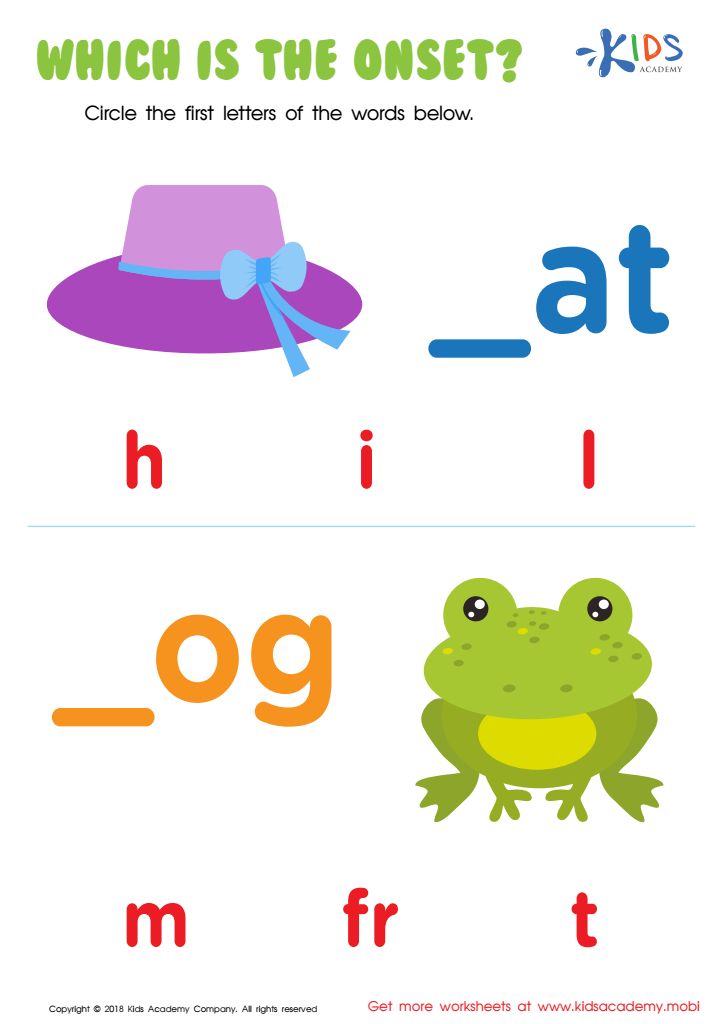
Which Is the Onset? Worksheet

Which Is the Onset? Worksheet

Help your children learn to spell with this bright, fun worksheet. Struggling with spelling small words can make reading and writing sentences difficult. Encourage them to look at the pictures, say the names aloud and circle the correct first letter from the options. They will soon overcome any reluctance to spell.
Which Is the Onset? Worksheet
Worksheet
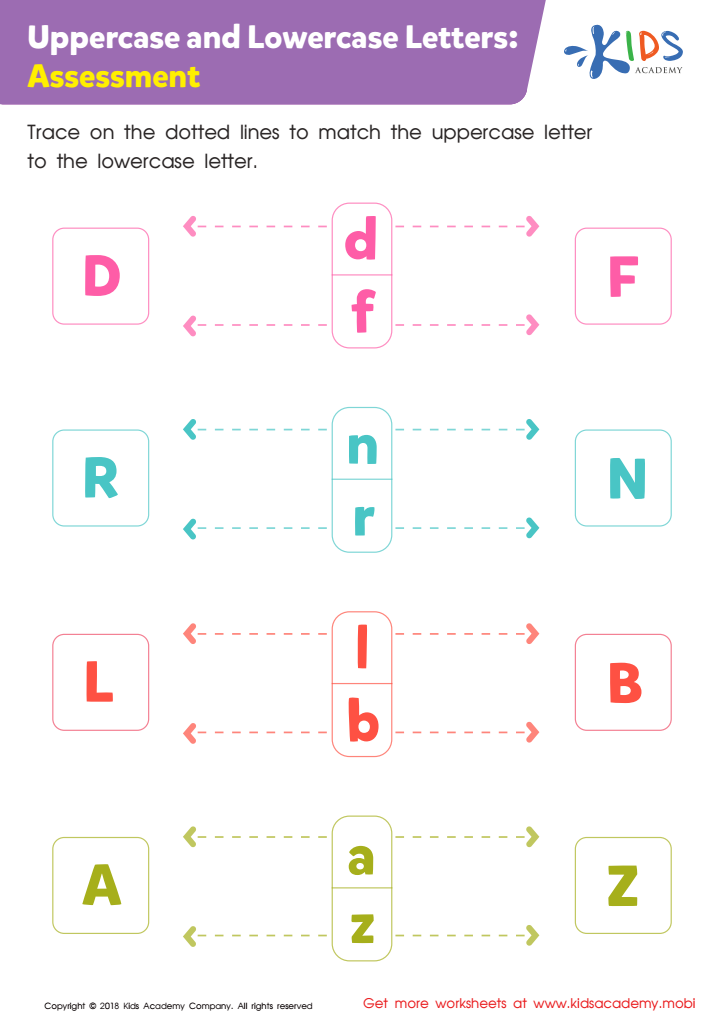
Uppercase and Lowercase Letters: Assessment Worksheet

Uppercase and Lowercase Letters: Assessment Worksheet

Assess your child's knowledge of upper- and lowercase letters with this worksheet. Have them trace the dotted lines to match the lowercase letters with their uppercase counterparts. This is a great way to gauge their progress and identify any areas of difficulty. Get a better understanding of your child's capabilities and encourage their development!
Uppercase and Lowercase Letters: Assessment Worksheet
Worksheet
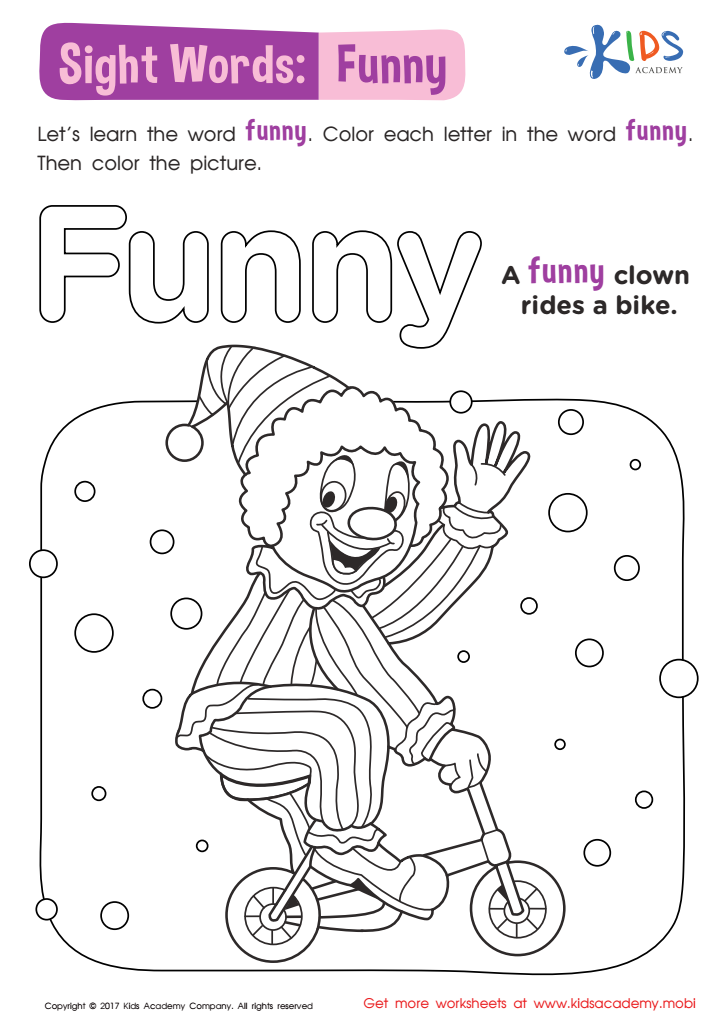
Funny Worksheet Sight Words Worksheet

Funny Worksheet Sight Words Worksheet

Love humor? Introduce "funny" as a sight word with this fun worksheet! Have your child read the sentence then color the word in the center. Let them use their imagination to color the silly clown in any way they like!
Download (PDF)
Assign to My Students
Funny Worksheet Sight Words Worksheet
Worksheet
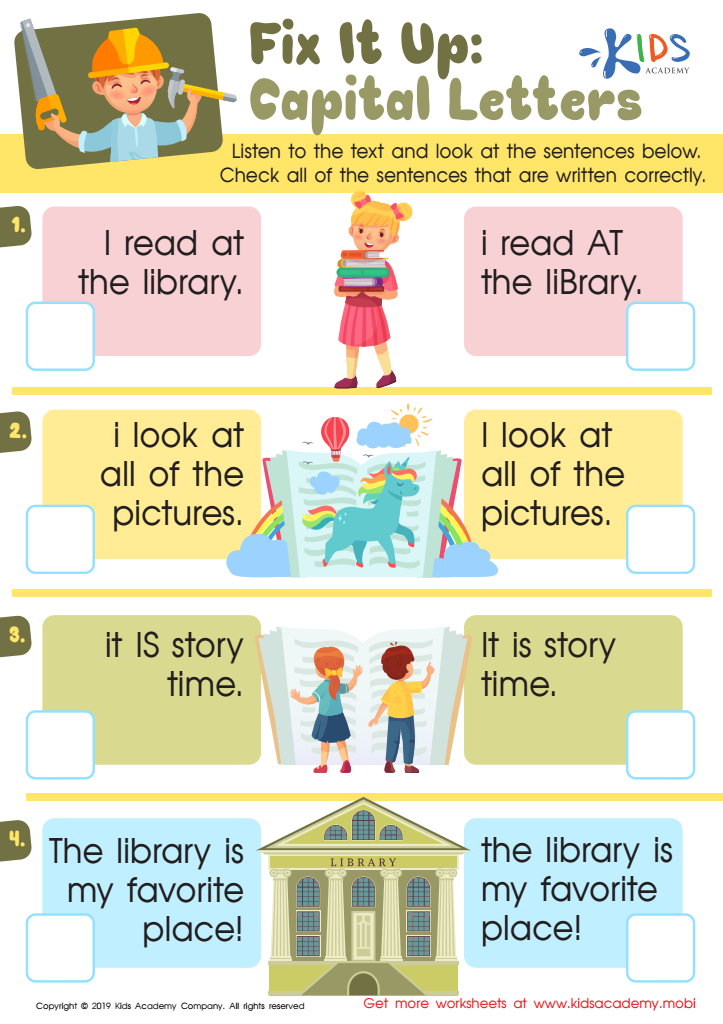
Fix Capital Letters Worksheet

Fix Capital Letters Worksheet

Put on your hardhats and get out the tools - it's time to do some repair work! Have your child identify sentences written with proper capitalization on this fun and colorful worksheet. Ask more advanced students to rewrite incorrect sentences correctly - it'll help them understand letter case better.
Fix Capital Letters Worksheet
Worksheet
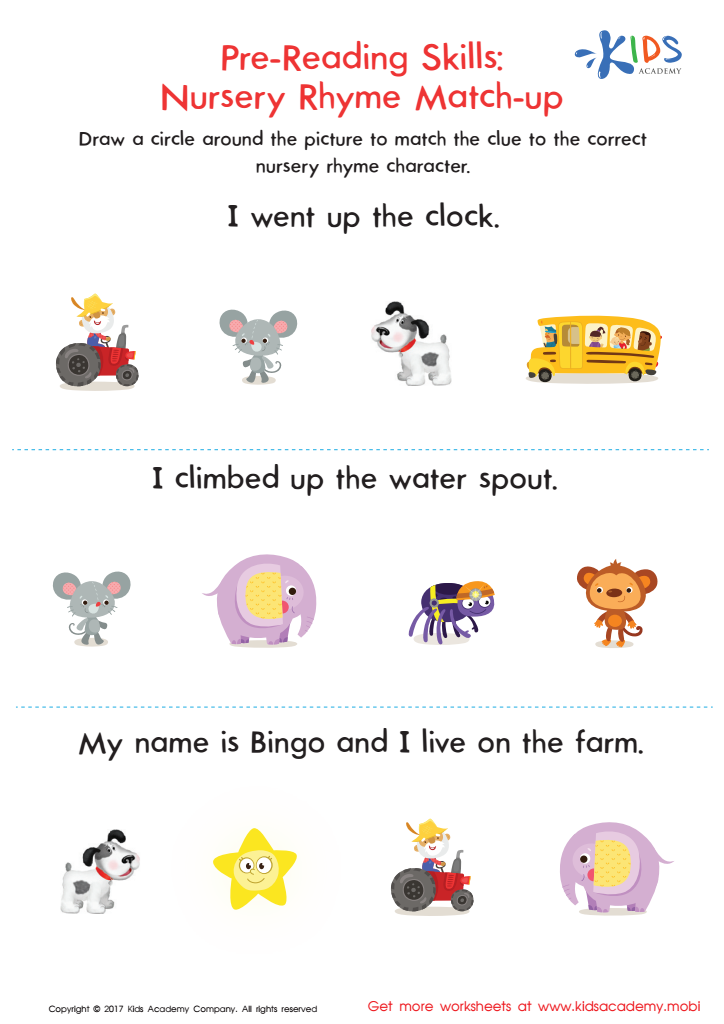
Nursery rhyme match-up worksheet

Nursery Rhyme Match–Up Worksheet
This worksheet helps kids build pre-reading skills using stories they know and love! By connecting with prior knowledge, kids can develop ideas about characters and set the stage for reading strategies.
Nursery Rhyme Match–Up Worksheet
Worksheet
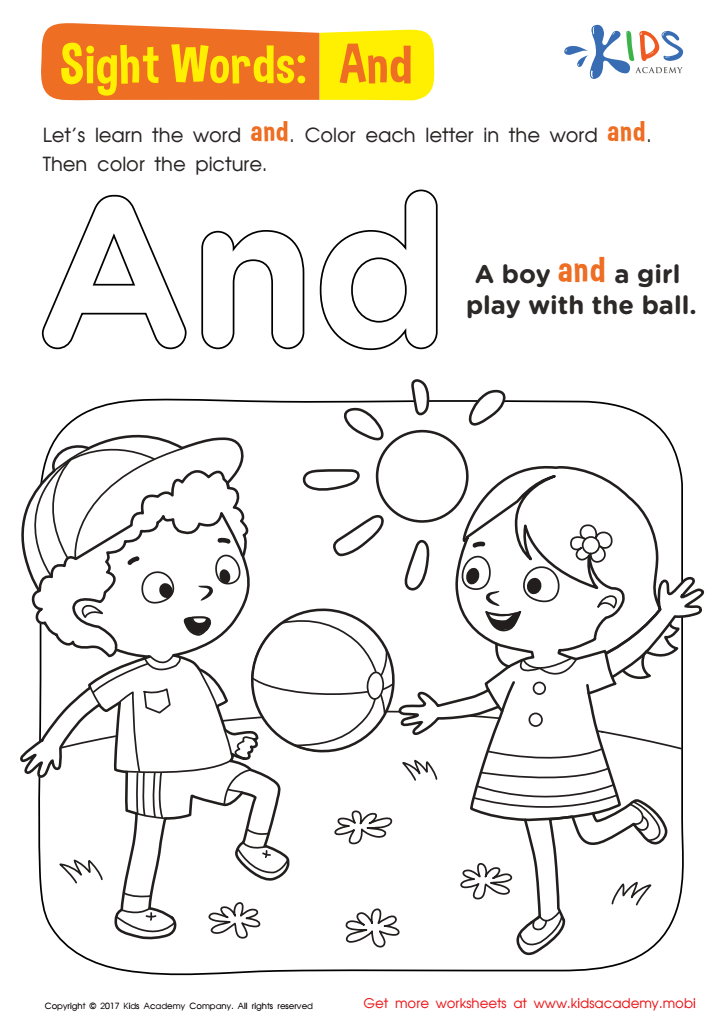
And Worksheet Sight Words Worksheet

And Worksheet Sight Words Worksheet

Help your child get a jumpstart on reading with sight words! Print out this fun worksheet and get your child to read the sentence. Point out the word "and", then color the word and enjoy the rest of the scene! It's a great way to introduce sight words and get their early reading skills going!
Download (PDF)
Assign to My Students
And Worksheet Sight Words Worksheet
Worksheet
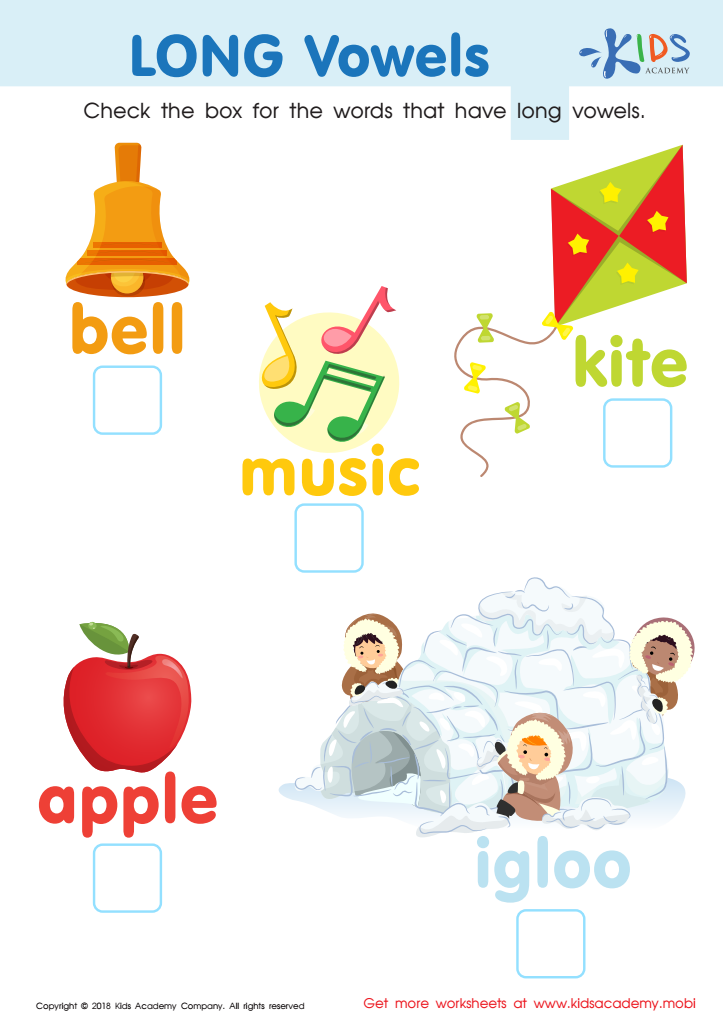
long vowels Worksheet

long vowels Worksheet

Have your early learner identify long vowels with this quick review. Ask them to name each picture aloud and listen out for the long vowel sounds to separate them from the shorter ones. Circle the ones that are long! Watch out for words with two vowels - they can be tricky!
long vowels Worksheet
Worksheet


Reading comprehension is a fundamental skill that sets the groundwork for a child's future academic success and lifelong learning capabilities. Parents and teachers should care deeply about fostering reading comprehension in children as young as ages 3-4 because this is a crucial developmental stage where the foundations for literacy are laid down.

At ages 3-4, children are highly receptive and quick to absorb new information. Introducing them to the Alphabet in an engaging and easy-to-understand manner helps them recognize letters and associate those letters with sounds, a key pre-reading skill known as phonemic awareness. This early familiarity with letters boosts their ability to decode words sooner, making the transition to actual reading smoother and more enjoyable.

Reading comprehension goes beyond just being able to read words on a page; it involves understanding and interpreting the meaning behind those words. By starting early, children can practice listening comprehension skills through activities like storytelling and picture books, which nurture their ability to follow narratives, predict consequences, and connect ideas logically.

Early focus on easy alphabet recognition and comprehension also builds confidence in young learners. It empowers them with the sense that reading is a pleasurable and rewarding activity, making them more likely to develop a love for books and learning as they grow older. Therefore, investing time in building these skills early on is crucial for fostering independent, confident, and capable readers.