Filters

7 filtered results

Clear all filters
Favorites
With answer key
Interactive

7 filtered results

Difficulty Level

Grade


Discover our engaging Vocabulary Enhancement Easy Phonics Worksheets specifically designed for children ages 3-4! These fun and interactive worksheets help young learners expand their vocabulary while developing vital phonics skills. Each activity features vibrant illustrations and simple phonetic exercises, enabling kids to associate words with their meanings and improve language comprehension. With a variety of engaging themes, our worksheets promote learning through play, making it easy for preschoolers to grasp essential language skills. Boost your child’s confidence and literacy foundation with these entertaining phonics resources—perfect for both home and classroom use. Start their educational journey with fun today!

Check out this FREE Trial Lesson on Phonics for age 3-4!

The Letter G Sound

Favorites
With answer key
Interactive
  • 3-4
  • Vocabulary enhancement
  • Phonics
  • Easy
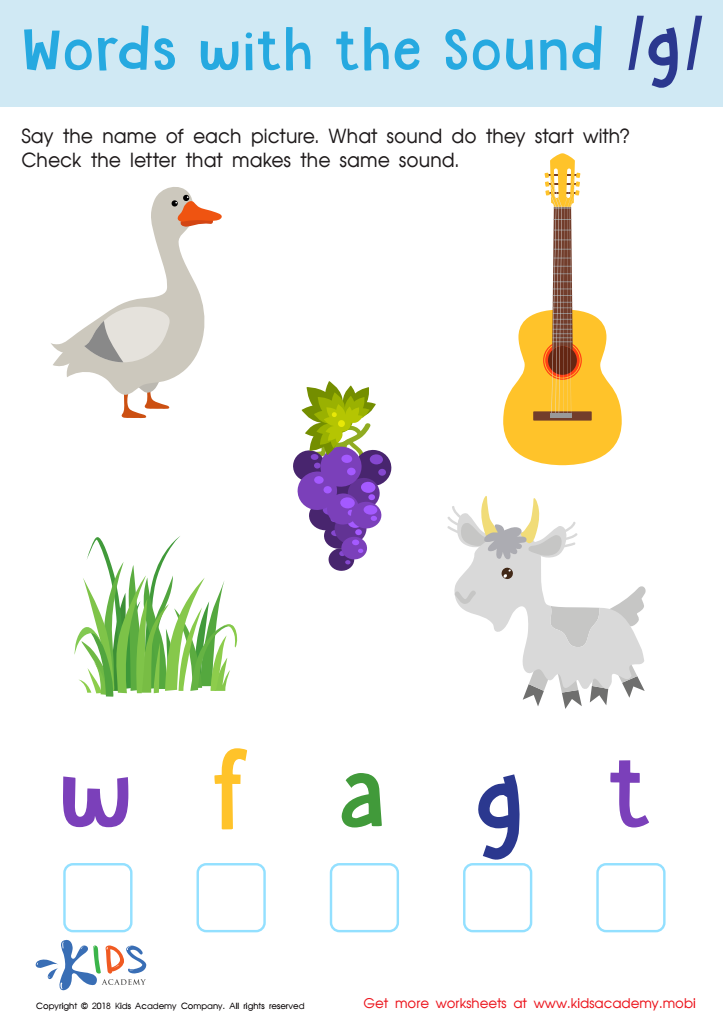
Words with sound g Reading Worksheet

Words with sound g Reading Worksheet

Help your child learn the soft "g" sound with this phonics worksheet. Ask them to name each picture, then identify the letter sound it begins with. If it's "g", they can check the box. Have them repeat each word, listening for the soft "g" sound before moving on to the next page.
Words with sound g Reading Worksheet
Worksheet
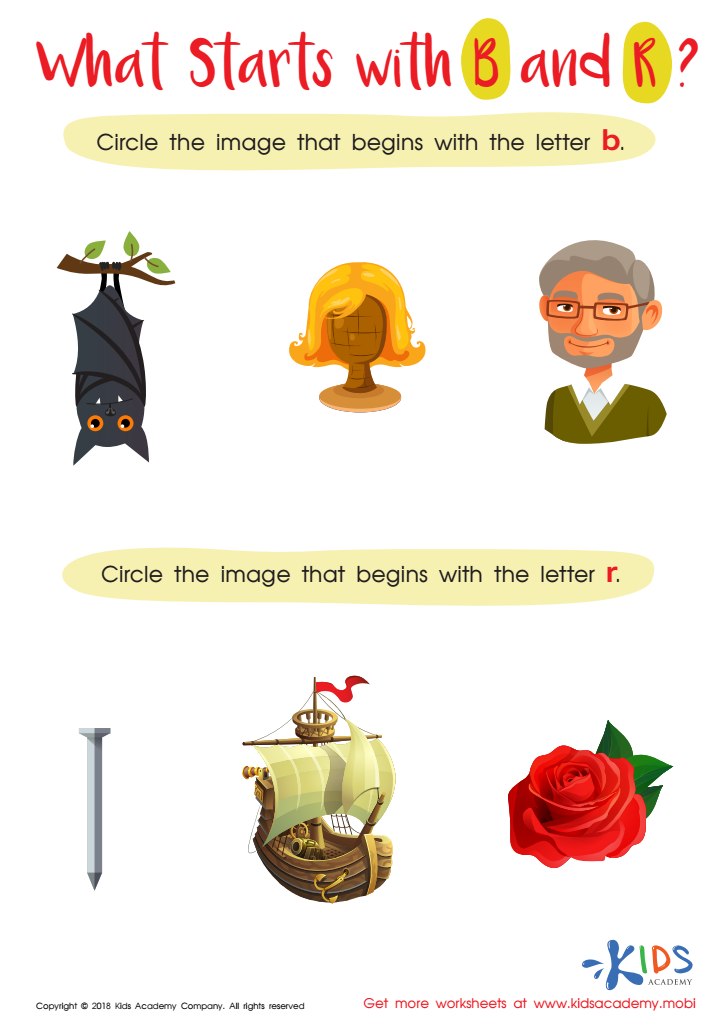
What Starts with B and R? Worksheet

What Starts with B and R? Worksheet

Download this worksheet to help young readers practice visual and motor skills! They'll enjoy matching pictures with "B" and "R" letters while tracing the images. Bright and colorful, this engaging activity will help kids differentiate between words and have fun doing it.
What Starts with B and R? Worksheet
Worksheet
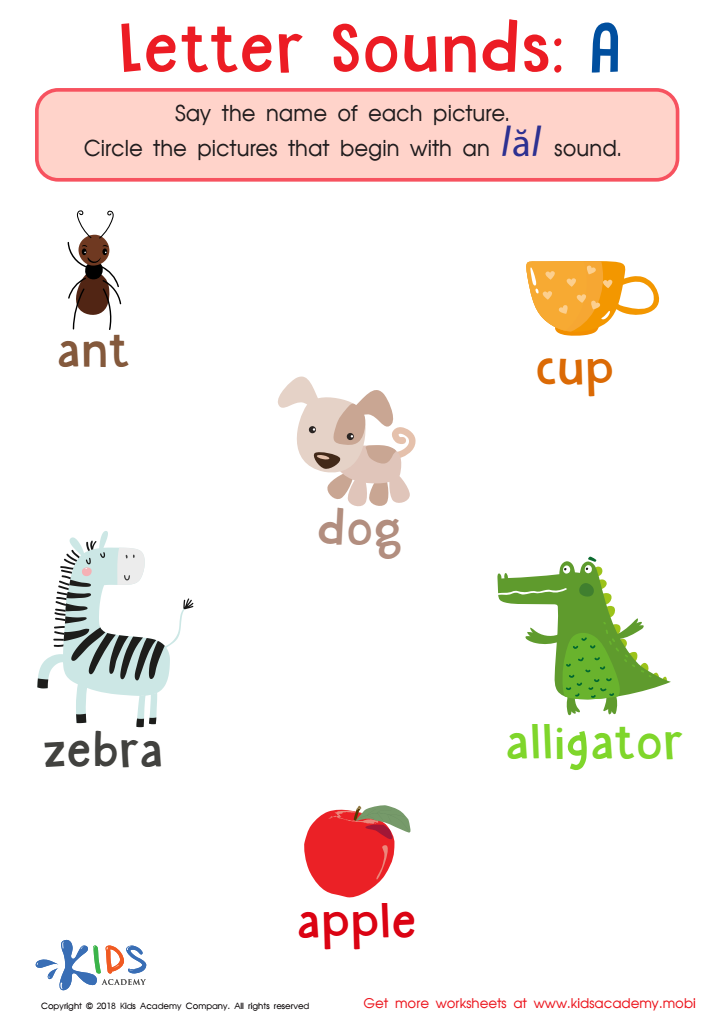
Letter A Sounds Worksheet

Letter A Sounds Worksheet

Encourage your new reader to practice the «ă» sound with this fun, free PDF worksheet. With the help of picture clues, they'll say the name of each word and trace circles around the items that start with «ă». This worksheet is an effective way to boost beginning sound skills while having fun!
Letter A Sounds Worksheet
Worksheet
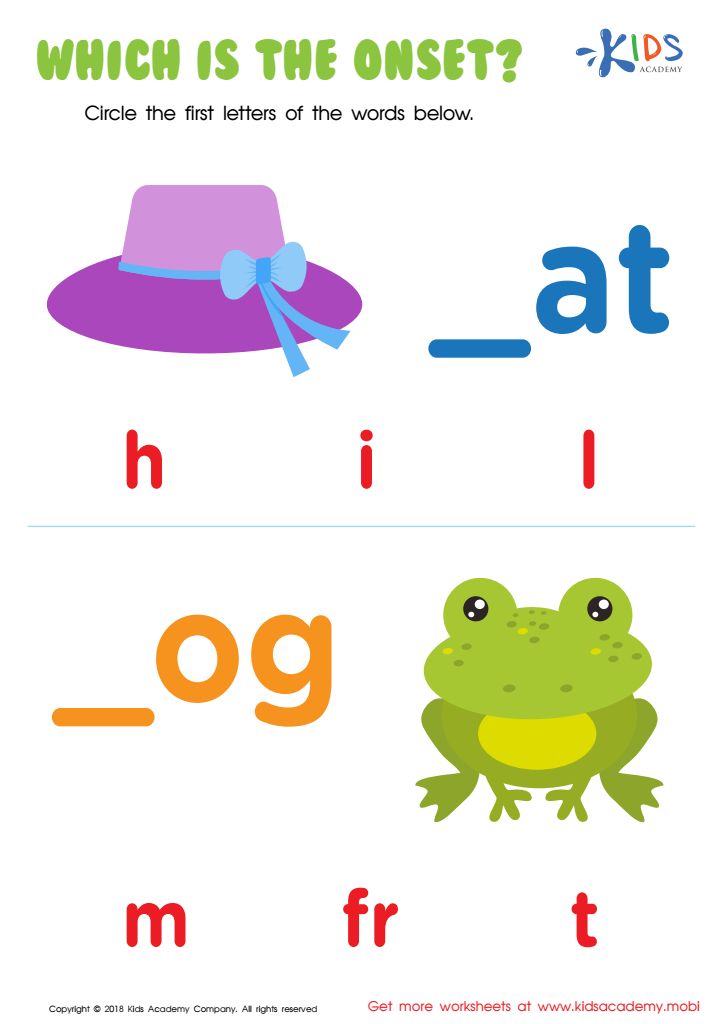
Which Is the Onset? Worksheet

Which Is the Onset? Worksheet

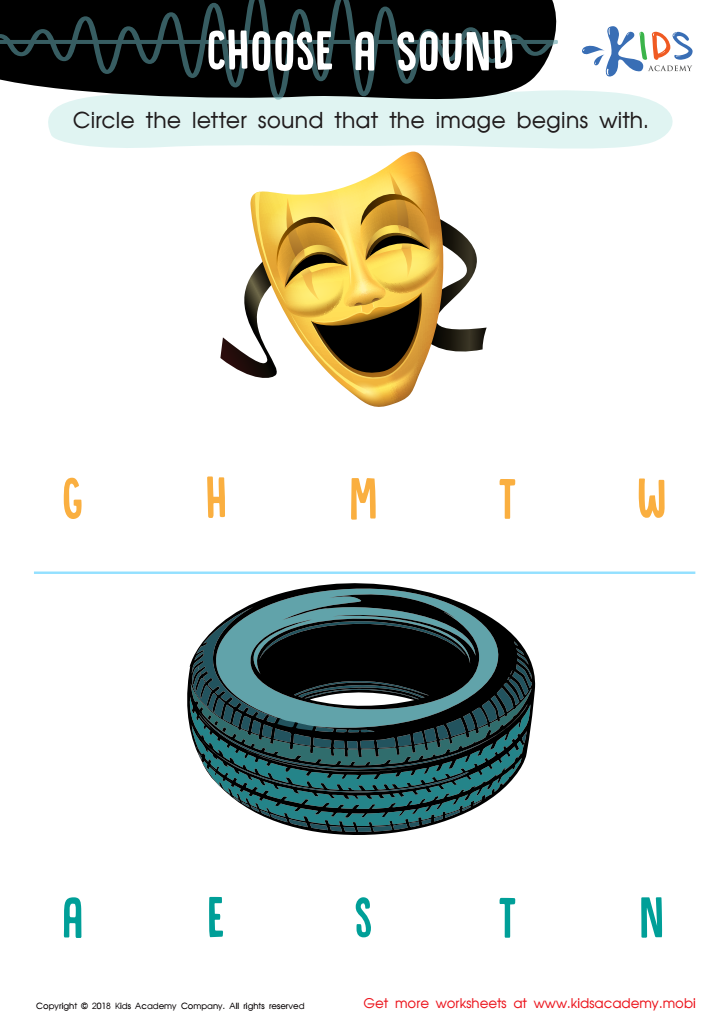
Help your children learn to spell with this bright, fun worksheet. Struggling with spelling small words can make reading and writing sentences difficult. Encourage them to look at the pictures, say the names aloud and circle the correct first letter from the options. They will soon overcome any reluctance to spell.
Which Is the Onset? Worksheet
Worksheet
Choose a Sound Worksheet

Choose a Sound Worksheet

Help your child hone pre-reading skills with this colorful worksheet! They'll practice tracing letter sounds, develop phoneme awareness, and gain confidence. Plus, it's a fun way to work on their fine motor skills.
Choose a Sound Worksheet
Worksheet
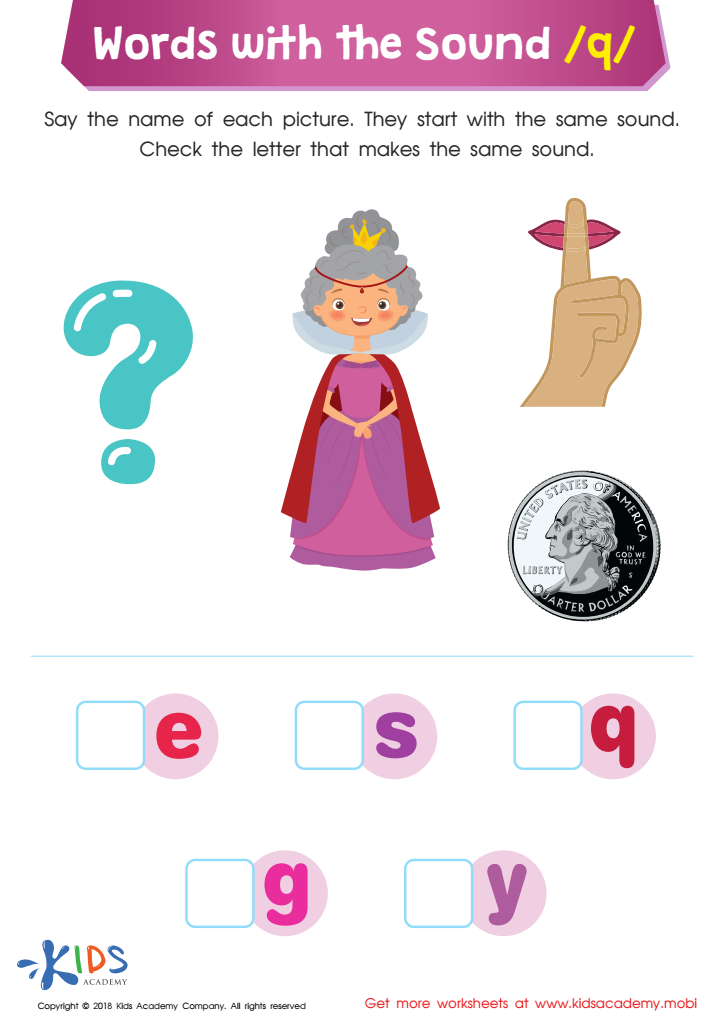
Words with Sound Q Reading Worksheet

Words with Sound Q Reading Worksheet

Beginning readers will love this free PDF worksheet! Bright colors and familiar pictures make it fun, as they say the name of each image and work on fine motor skills. Letters “q” is featured among others, helping to recognize and isolate its sound, which is often seen with a “u” behind it.
Words with Sound Q Reading Worksheet
Worksheet
Finish the Rime Worksheet


Finish the Rime Worksheet

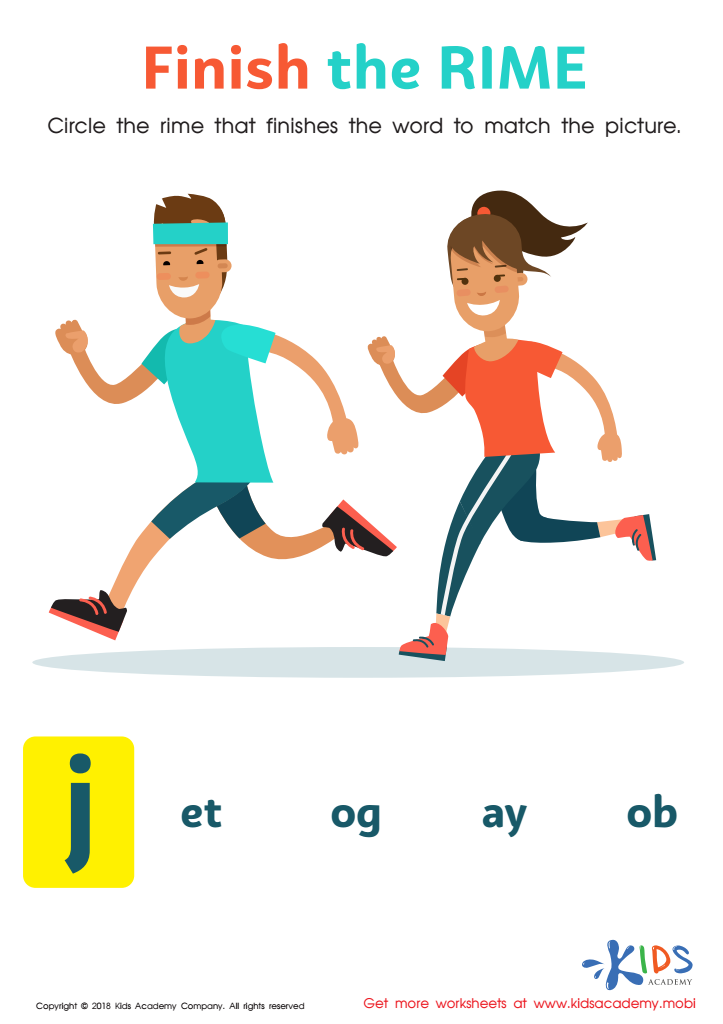
Rimes help kids learn word families and spelling strategies. This PDF worksheet gives new readers practice with initial consonants, pictures, colors and motor skills. It's fun and cheery, and a great way to boost phonological awareness and rime identification.
Finish the Rime Worksheet
Worksheet


Vocabulary enhancement through easy phonics for ages 3-4 is crucial for early language development, laying a strong foundation for literacy skills. At this stage, children are exceptionally receptive to language, making it the perfect time to introduce phonics, which connects sounds to letters. This helps young learners recognize words more effectively and decipher fluent reading in the future.

Parents and teachers should care about this because a rich vocabulary contributes to better communication skills and academic success later in life. Early exposure to phonics not only boosts word recognition but also improves spelling and comprehension. Research indicates that children with strong vocabulary skills tend to draw inferences and understand complex concepts more easily as they progress in school.

Additionally, vocabulary enhancement fosters confidence in communication. Children who learn phonics tools are more likely to engage in discussions, express their ideas, and enjoy storytelling, which further nurtures a love for reading. Ultimately, investing time in vocabulary through phonics ensures that children are well-equipped for future learning adventures, setting them up for both educational success and personal growth.